Most people store their meds in the bathroom. That’s a problem.
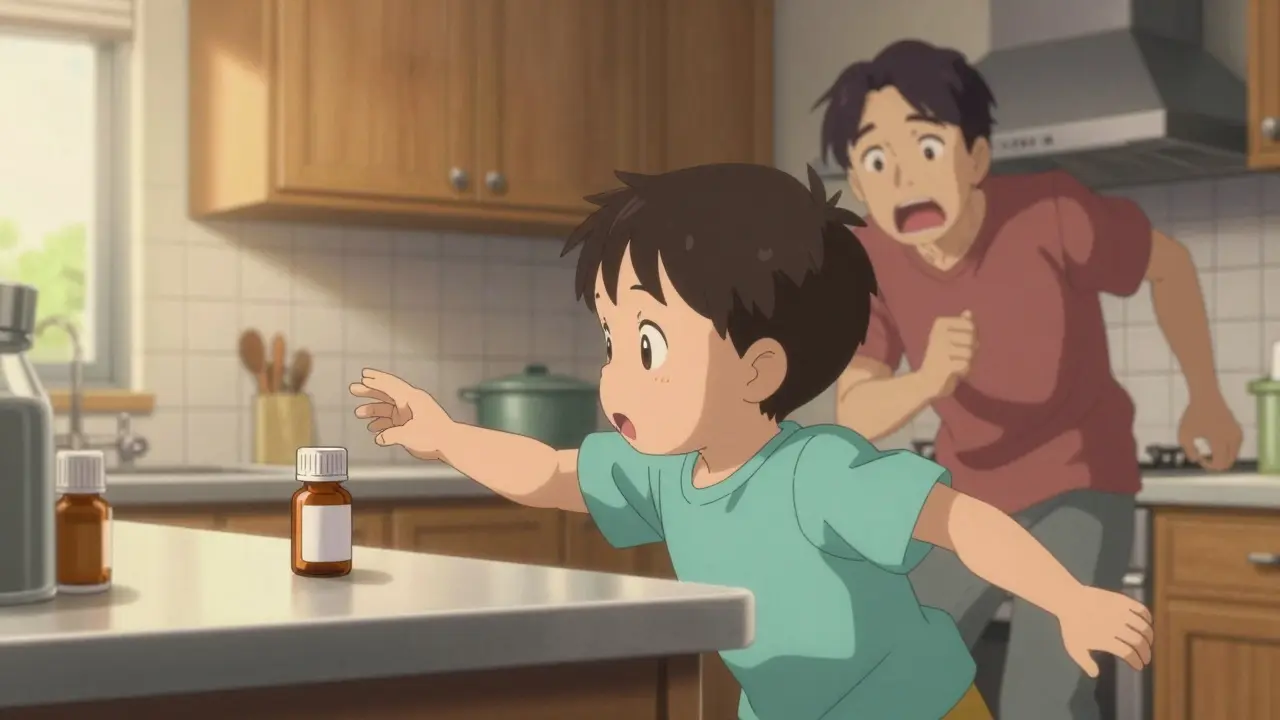
You grab your painkillers after dinner. You leave the bottle on the counter while you wash up. Your toddler climbs onto the chair to reach the cereal box. In under ten seconds, a life-changing accident can happen. This isn’t hypothetical. In Australia, emergency departments see dozens of children every week after swallowing pills they found in unlocked cabinets, purses, or on bathroom counters. The truth is, your medicine cabinet isn’t safe - and neither is your bedside table, your coat pocket, or your handbag.
Where NOT to store your medications
The bathroom is the most common mistake. Humidity from showers and baths degrades pills and liquids. By the time your antibiotics expire, they may already be 67% less effective, according to MedlinePlus. Heat from hot water pipes can break down insulin and thyroid medication. The same goes for storing meds near the stove, in direct sunlight, or on a windowsill.
Leaving pills in your purse or coat pocket is another major risk. Grandparents often carry medications in their bags, and kids - especially those visiting from other homes - can easily grab them. One in four poisoning cases in children comes from visiting a relative’s house where meds aren’t locked away. Even if you think your grandchild is too young to climb or open caps, children as young as 18 months can reach high shelves and twist off child-resistant caps. Studies show half of kids can open them by age five.
Don’t store meds in the car. Temperature swings in vehicles - especially in Perth’s summer heat - can ruin drugs. Insulin, nitroglycerin, and even common pain relievers can become ineffective or unsafe when exposed to temperatures above 30°C for long periods. And if your car gets broken into? Now your medications are in someone else’s hands.
Where to store them instead: The gold standard
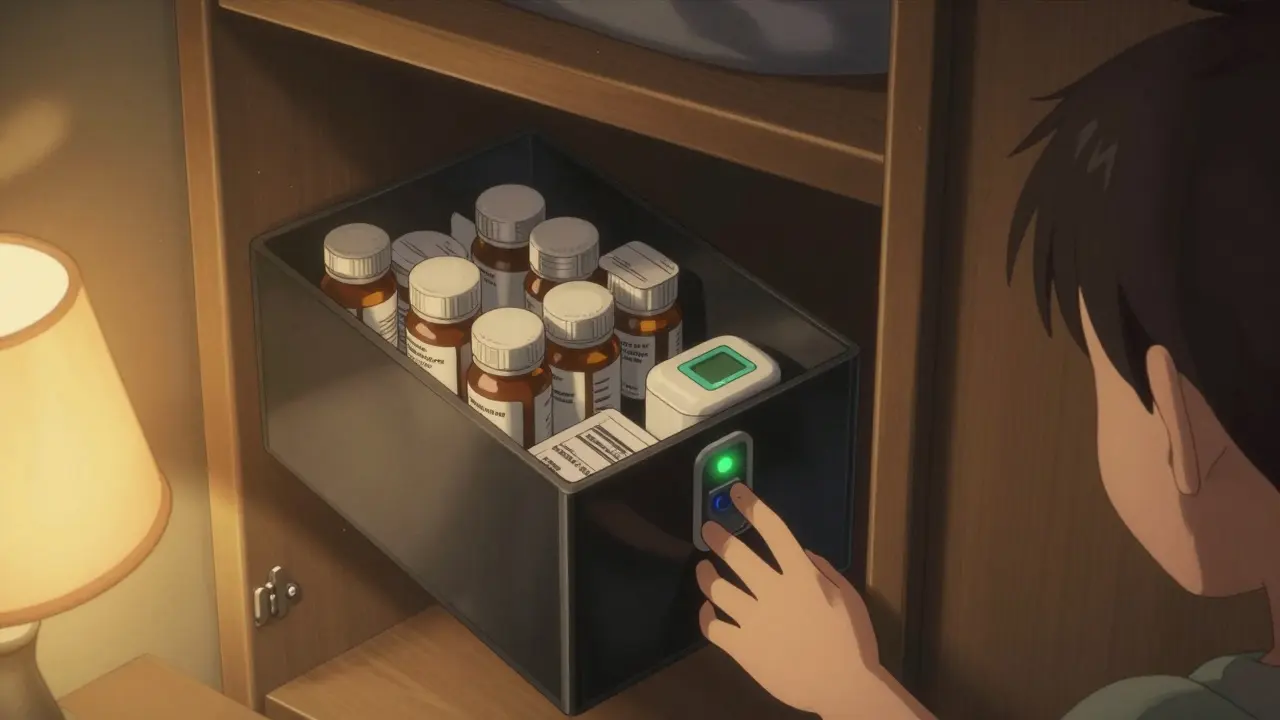
The only truly safe place to store medications is in a locked container, out of sight and out of reach. This isn’t just advice - it’s the standard recommended by the U.S. Food and Drug Administration, the CDC, and Australian health authorities. You don’t need a fancy safe. A simple lockable box, a locked cabinet, or even a locked drawer in a high dresser will do.
Look for places in your home that are already secure. A locked filing cabinet in your home office. A gun safe if you have one. A locked toolbox. Even a small lockbox you can bolt to the wall works. The key is that it requires a key or code to open - not just a push or a twist.
Keep all medications - prescription, over-the-counter, vitamins, supplements - in the same locked space. That way, you know exactly where everything is. No more digging through drawers looking for your sleep aid or cough syrup. And if you have kids, visitors, or teens in the house, this one habit cuts risk dramatically.
Temperature and humidity matter more than you think
Medications aren’t like canned food. They’re chemical compounds that break down when exposed to heat, moisture, or light. The ideal storage temperature is between 20°C and 25°C - room temperature, not hot, not cold. Most homes in Perth meet this range, unless you’re leaving meds in an unairconditioned garage or attic.
Insulin, certain eye drops, and some antibiotics must be refrigerated. Store them in the main fridge, not the door, where temperatures fluctuate. Keep them in their original containers and place them on a shelf away from food. Label the container clearly: “MEDICATIONS - DO NOT EAT.” This prevents accidental mixing with snacks or drinks.
Keep all meds away from direct sunlight. A sunny windowsill can turn your antidepressants or blood pressure pills into useless sludge. Even a clear plastic pill organizer left on the counter can degrade over time.
Never remove pills from their original containers
That pill organizer you use to track your meds? Great - but only if you refill it daily. Never store medications long-term in empty vitamin bottles, yogurt tubs, or ziplock bags. Why? Because if someone finds them, they won’t know what they are. No name. No dosage. No expiration date. No National Drug Code. That’s how accidental overdoses happen - especially in older adults or visitors who don’t know your routine.
The original bottle has everything you need: your name, the doctor’s name, the pharmacy, the strength, the instructions, and the expiry date. That’s not just bureaucracy - it’s safety. Always keep the cap on tight. Child-resistant caps aren’t foolproof, but they’re the first line of defense. Make sure they click when you close them.
What about elderly family members or dementia patients?
This is a tough one. If someone in your home has dementia or memory issues, locking everything away might cause confusion or frustration. In these cases, safety needs to be balanced with accessibility. The solution? A digital medication dispenser with a biometric lock or PIN code. These devices dispense the right dose at the right time and record who opens them. Studies show they block 78% of unauthorized access.
If that’s not an option, consider a daily pill box filled by a caregiver. Keep the master supply locked up, and only give out what’s needed for the day. Never leave extra pills on the table. Even if your loved one seems fine, memory lapses can lead to double-dosing - which is just as dangerous as accidental ingestion by a child.
Dispose of old or unused meds properly
Don’t flush them. Don’t throw them in the bin. Don’t pour them down the sink. Medications that end up in waterways harm fish, wildlife, and eventually, our drinking water. In Australia, the National Drug Strategy recommends returning unused or expired meds to your local pharmacy. Most chemists have a free take-back bin.
If you can’t get to a pharmacy, mix pills with something unappetizing - coffee grounds, cat litter, or dirt - put them in a sealed bag, and throw them in the trash. Remove labels or scratch out personal info before tossing the empty bottles. This prevents someone from fishing them out and misusing them.
One habit that changes everything
Put your meds away - immediately - after each use. That’s not a suggestion. It’s the single most effective way to prevent accidents. Research shows 42% of poisonings happen within five to ten minutes after someone takes a pill. That’s the window when the bottle is left open, on the counter, near the sink, or on the bedside table.
Make it a ritual. After you take your medicine, lock it back up. Same for your partner, your kids, your parents. Make it automatic. Just like you lock your front door, lock your meds.
What if you live in a rental or don’t want to drill holes?
You don’t need to renovate. A simple $25 lockable storage box from any hardware store will do. Look for ones with a combination lock or key. Some even come with a mounting kit so you can screw them to the wall or inside a cupboard without damaging the structure. These are widely available in Perth at Bunnings, Chemist Warehouse, or online from Amazon Australia.
Another option? Use a locked drawer in your dresser or wardrobe. If you have a wardrobe with a lock, that’s perfect. If not, buy a small portable safe that sits on the shelf. The goal isn’t to make it bulletproof - it’s to make it inconvenient enough that a curious child or visitor gives up.
How much does it cost to stay safe?
Basic lockable medication boxes start at $19.99. More advanced ones with digital locks cost up to $150. That’s less than the cost of one emergency room visit. The CDC estimates that preventing just one pediatric poisoning saves over $7,000 in medical costs. Multiply that by the 60,000 cases each year in the U.S. - and you see why this isn’t just about safety. It’s about money, stress, and peace of mind.
In Australia, we don’t have the same statistics, but the risks are identical. And with more multi-generational homes and aging populations, the need is growing.
Final checklist: Your 5-minute home safety audit
- Go to every room in your house. Find every pill bottle, patch, or liquid medicine.
- Are they in their original containers with labels intact?
- Are they locked away - not on the counter, not in the bathroom, not in a purse?
- Are insulin or refrigerated meds stored properly in the fridge, away from food?
- Are expired or unused meds ready to be taken to the pharmacy?
If you answered “no” to any of these, fix it today. One small change - locking your meds - can prevent a lifetime of regret.
Can I store my medications in the kitchen cupboard?
Yes - but only if it’s a locked cupboard, away from heat sources like the stove or dishwasher. The kitchen is often cooler and drier than the bathroom, making it a better option - as long as it’s secured. Avoid storing meds near spices or cleaning products to prevent mix-ups.
What if I forget to lock my meds after taking them?
Set a reminder on your phone: “Lock meds after use.” Or pair it with another habit - like brushing your teeth. After you take your pill, lock the container before you walk to the bathroom. Habit stacking makes it stick. If you’re forgetful, consider a digital dispenser that beeps when it’s time to lock it.
Are child-resistant caps enough?
No. Child-resistant caps are designed to slow down access - not stop it. Half of children can open them by age five. Many toddlers can climb onto chairs or pull down purses. Locking the entire container is the only reliable way to prevent access. Caps are a backup, not a solution.
What should I do with old or expired medications?
Take them to your local pharmacy. Most chemists in Australia have free medication return bins. If you can’t get there, mix pills with coffee grounds or cat litter, seal them in a plastic bag, and throw them in the bin. Never flush them - it pollutes waterways and harms marine life.
Is it safe to store medications in the garage or shed?
No. Garages and sheds in Perth can get hotter than 40°C in summer and colder than 5°C in winter. That’s outside the safe range for most medications. Heat and cold can make pills ineffective or even toxic. Stick to indoor, climate-controlled spaces.
Do I need to lock vitamins and supplements too?
Yes. Iron supplements can be deadly to children in small doses. High doses of vitamin D, zinc, or calcium can cause poisoning. Even “natural” products aren’t harmless. Treat all medications - prescription, OTC, and supplements - the same way: locked away, out of reach.