
Warfarin Vitamin K Consistency Calculator
Food Intake Tracker
Daily Log| Food Item | Serving Size | Vit K (mcg) | Impact | Qty |
|---|---|---|---|---|
| Cooked Kale | 1 cup | 1,062 | Very High | |
| Cooked Spinach | 1 cup | 889 | Very High | |
| Raw Swiss Chard | 1 cup | 299 | High | |
| Brussels Sprouts | 1 cup cooked | 156 | Moderate | |
| Broccoli | 1 cup raw | 85 | Moderate | |
| Green Tea | 1 cup brewed | 65 | Low-Moderate | |
| Asparagus | 1 cup cooked | 70 | Moderate |
Your Results
Total Vitamin K Intake
0 mcg
Enter your food quantities above to see your analysis.
Imagine you’ve been taking Warfarin is an oral anticoagulant medication that prevents blood clots by interfering with the synthesis of vitamin K-dependent clotting factors. Also known as Coumadin, it was first approved for medical use in 1954 and remains a cornerstone therapy for millions of patients worldwide due to its reversibility and cost-effectiveness. every day for years. You know the drill: take your pill, get your blood tested, keep your numbers in range. But then you decide to eat healthier. You start adding big salads with kale and spinach to your lunch routine. A week later, your doctor calls. Your INR (International Normalized Ratio) is a standardized measure of blood clotting time used to monitor warfarin therapy, typically maintained between 2.0 and 3.0 for most conditions. It reflects how long it takes your blood to clot compared to a normal person. has dropped too low. The warfarin isn’t working as well. Why? Because you changed your intake of Vitamin K is an essential nutrient required for the production of proteins involved in blood clotting and bone metabolism, found primarily in leafy green vegetables and some fermented foods.
This scenario plays out more often than you might think. Warfarin works by blocking the recycling of vitamin K in your body. If you suddenly eat way more vitamin K-rich foods, your body has more raw material to make clotting factors, which counteracts the drug. If you eat way less, your blood becomes too thin. The goal isn’t to avoid these foods entirely-it’s to keep your intake steady. Let’s look at how to manage this balance without giving up the foods you love.
Understanding the Mechanism: Why Consistency Matters More Than Restriction
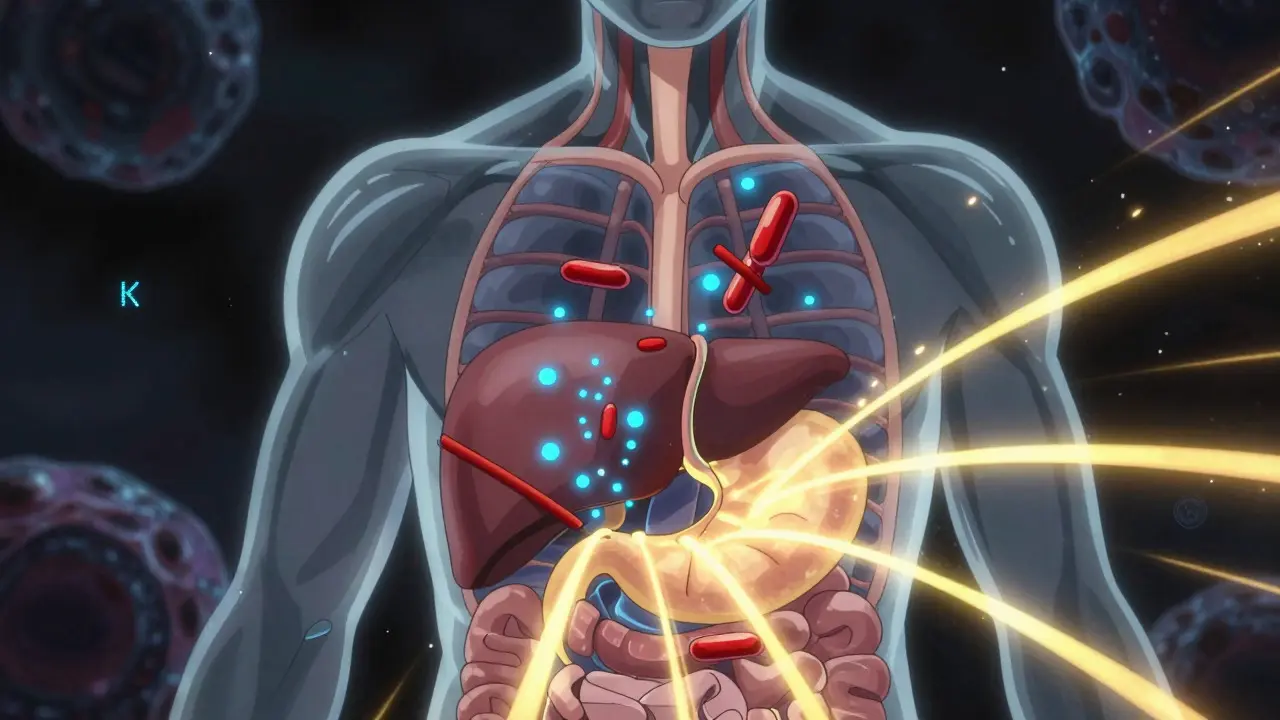
To manage your diet effectively, you need to understand what’s happening inside your body. Warfarin inhibits an enzyme called VKORC1. This enzyme is responsible for turning inactive vitamin K back into its active form. Without active vitamin K, your liver can’t produce enough functional clotting factors II, VII, IX, and X. This makes your blood take longer to clot, which is exactly what you want if you’re at risk for strokes or deep vein thrombosis.
The problem arises because dietary vitamin K bypasses this blockage to some extent. When you eat a meal high in vitamin K, you flood your system with the nutrient your liver needs. If your daily intake varies wildly-say, 50 micrograms one day and 500 the next-your warfarin dose, which stays constant, can no longer predictably control your clotting time. Studies show that patients whose vitamin K intake varies by more than 50% from day to day are over three times more likely to have unstable INR levels. The key insight here is simple: your body thrives on routine, especially when dealing with narrow-therapeutic-index drugs like warfarin.
Identifying High-Vitamin K Foods: What to Watch For
You don’t need to memorize a list of every vegetable, but you do need to recognize the major sources of vitamin K. Most dietary vitamin K comes in the form of phylloquinone (vitamin K1), which is abundant in plant foods. Menaquinones (vitamin K2) are found in fermented foods and animal products, but they generally have a lesser impact on warfarin than K1.
Here are the common culprits that can significantly shift your INR if consumed in large or inconsistent amounts:
- Dark Leafy Greens: Cooked kale contains about 1,062 micrograms per cup. Cooked spinach has roughly 889 micrograms per cup. Swiss chard and collard greens are also very high.
- Cruciferous Vegetables: Brussels sprouts (156 mcg per cup) and broccoli (85 mcg per cup) are moderate sources.
- Other Sources: Asparagus, green tea, and certain vegetable oils (like soybean and canola oil) contain smaller but notable amounts.
Note that cooking methods can affect vitamin K content slightly, but the variation is usually minor compared to portion size changes. The biggest risk isn’t eating these foods; it’s eating them unpredictably. If you love spinach, eat it regularly. If you hate it, skip it consistently. Just don’t alternate between the two extremes.
| Food Item | Serving Size | Vitamin K (mcg) | Impact Level |
|---|---|---|---|
| Cooked Kale | 1 cup | 1,062 | Very High |
| Cooked Spinach | 1 cup | 889 | Very High |
| Raw Swiss Chard | 1 cup | 299 | High |
| Brussels Sprouts | 1 cup cooked | 156 | Moderate |
| Broccoli | 1 cup raw | 85 | Moderate |
| Green Tea | 1 cup brewed | 41-88 | Low-Moderate |
| Asparagus | 1 cup cooked | 70 | Moderate |
Practical Strategies for Maintaining Dietary Consistency
So, how do you actually achieve consistency in real life? It’s not about measuring every gram of food with a scale. It’s about building habits that minimize variability. Here are some actionable steps that healthcare providers recommend:
- Establish a Baseline: Figure out what your typical weekly intake looks like. Do you usually eat salad twice a week? Stick to that. If you never eat greens, don’t suddenly start eating them daily without talking to your doctor first.
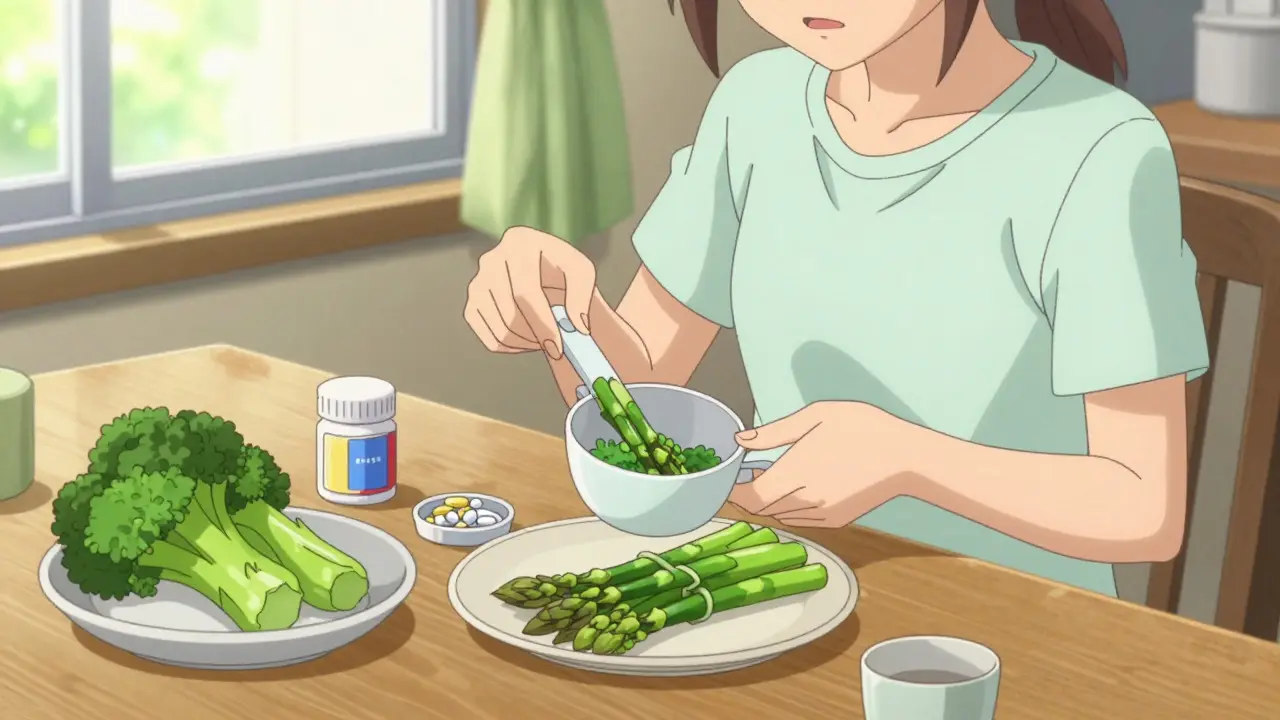
- Use Measuring Cups: When preparing high-vitamin K foods, use standard measuring cups instead of estimating "a handful." A cup of chopped kale is visually different from a cup of whole leaves, so be consistent with how you prep them.
- Keep a Food Diary: For the first month, write down everything you eat. Look for patterns. Did your INR drop after that big holiday meal with stuffing and Brussels sprouts? Noting these connections helps you anticipate future fluctuations.
- Be Careful with Supplements: Multivitamins often contain vitamin K. If you take one, take it every single day at the same time. Never skip days or double up. Check the label to ensure the amount is consistent.
- Communicate with Your Care Team: If you plan to change your diet significantly-for example, starting a keto diet or a vegan cleanse-tell your anticoagulation clinic beforehand. They may adjust your warfarin dose proactively.
Patient data shows that those who receive structured dietary counseling experience 37% fewer out-of-range INR tests. A registered dietitian specializing in anticoagulation can help you create a meal plan that fits your lifestyle while keeping your vitamin K intake within a 20% variation range, which is associated with much better stability.
Navigating Real-World Challenges: Restaurants, Travel, and Illness
Life doesn’t always happen in a controlled kitchen environment. Eating out is a major source of inconsistency because restaurant portions are rarely measured. A side salad at a steakhouse might have three times the spinach of a home-prepared salad. To mitigate this, ask servers about ingredients and portion sizes. Opt for simpler dishes where you can control the greens, like a grilled chicken breast with steamed broccoli instead of a mixed green salad with unknown dressing and toppings.
Travel introduces another layer of complexity. Different regions have different seasonal produce. If you travel to a place where fresh greens are scarce, your intake might naturally drop. Conversely, visiting a region known for leafy greens might spike it. Try to maintain your usual grocery shopping habits even when away from home. Buy familiar brands of frozen vegetables, which tend to have more consistent nutrient profiles than fresh ones that vary by season and farm.
Illness also affects vitamin K absorption and warfarin metabolism. Gastrointestinal issues like vomiting or diarrhea can reduce vitamin K absorption, potentially raising your INR. Infections increase metabolic rate, which can lower INR. During sickness, monitor your symptoms closely and contact your healthcare provider if you suspect your clotting status is changing. Don’t wait for your next scheduled test if you feel unusually bruised or fatigued.
Monitoring and Adjusting: Working with Your Healthcare Provider
Your INR test is your feedback loop. When stable, you’ll likely be tested every 2 to 4 weeks. If you make a dietary change, expect more frequent testing until your new baseline is established. Remember, warfarin has a long half-life, so changes in diet won’t show up in your INR immediately. It can take several days for the effect to stabilize.
If you accidentally consume a large amount of vitamin K-say, you had a huge bowl of spinach soup when you normally avoid it-don’t panic. One unusual meal rarely causes a dangerous event. However, inform your clinic. They might advise you to take a slightly higher dose of warfarin the next day or simply monitor your INR more closely. Never adjust your dose on your own based on guesswork.
Conversely, if your INR is too high, doctors might prescribe a small dose of oral vitamin K to reverse the effect quickly. This highlights the delicate balance: vitamin K is both the enemy and the antidote in warfarin management. Understanding this duality empowers you to take charge of your health rather than feeling restricted by it.
Can I ever eat kale or spinach if I am on warfarin?
Yes, absolutely. You do not need to eliminate dark leafy greens from your diet. The key is consistency. If you eat a specific amount of kale or spinach regularly, your warfarin dose will be adjusted to account for that intake. Avoid sudden increases or decreases in consumption.
How quickly does dietary vitamin K affect my INR?
Changes in vitamin K intake can begin to affect your INR within 24 to 48 hours, but it may take several days for the full effect to stabilize. This is why consistent daily intake is crucial rather than reacting to single meals.
Does cooking vegetables reduce their vitamin K content?
Cooking can alter the bioavailability of vitamin K, but the total amount remains largely similar. Boiling may leach some nutrients into the water, while steaming retains more. However, the variation caused by cooking methods is usually less significant than variations in portion size.
What should I do if I miss a warfarin dose?
If you miss a dose, take it as soon as you remember on the same day. If it is almost time for your next dose, skip the missed one. Do not double up. Contact your healthcare provider for specific advice, as missing doses can lead to INR fluctuations.
Are there any supplements I should avoid?
You should be cautious with herbal supplements like ginkgo biloba, garlic, ginger, and St. John's wort, as they can interact with warfarin independently of vitamin K. Always consult your doctor before starting any new supplement, including multivitamins containing vitamin K.