Hypercalcemia Risk Calculator
Assess Your Risk
This tool calculates your risk of hypercalcemia when taking vitamin D supplements with thiazide diuretics based on key clinical factors.
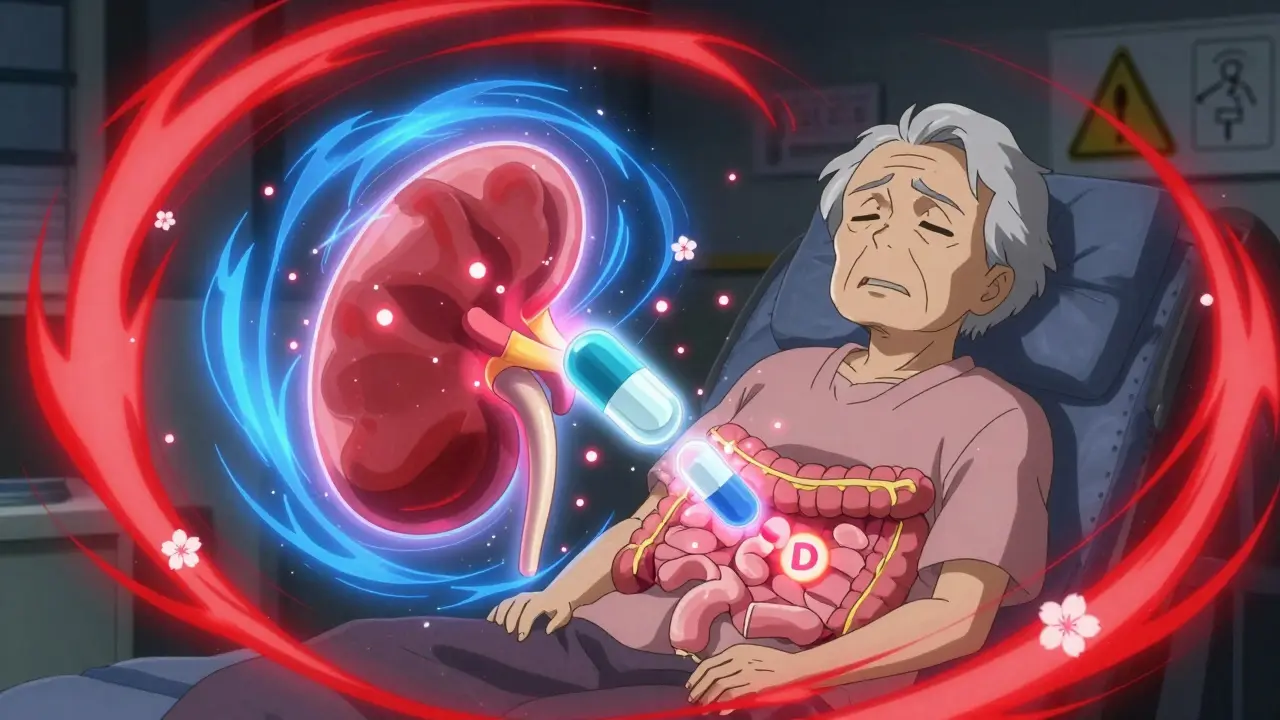
Combining vitamin D supplements with thiazide diuretics might seem harmless-after all, one helps your bones, and the other helps lower blood pressure. But for thousands of people taking both, this combo can quietly push calcium levels into dangerous territory. Hypercalcemia-when blood calcium climbs above 10.5 mg/dL-isn’t just a lab anomaly. It can mean fatigue, nausea, confusion, kidney stones, or even heart rhythm problems. And it’s far more common than most patients or even doctors realize.
Why This Combo Is Risky
Thiazide diuretics like hydrochlorothiazide (Microzide) and chlorthalidone work by blocking sodium reabsorption in the kidneys. But here’s the twist: while they help flush out excess fluid, they also make your kidneys hold onto calcium instead of letting it pass in urine. Studies show this reduces urinary calcium loss by 30-40%. That sounds good-until you add vitamin D. Vitamin D, especially in doses above 2,000 IU daily, boosts how much calcium your gut absorbs from food. The active form, calcitriol, turns on proteins like calbindin-D9k and TRPV6 that pull calcium into your bloodstream. So you’ve got two forces working together: your kidneys are trapping calcium, and your intestines are sucking up more of it. That’s the ‘dual-hit’ effect. The result? Calcium builds up faster than your body can clear it.Who’s at Highest Risk?
It’s not everyone. But certain groups are much more vulnerable:- People over 65-80% of older adults take at least one of these drugs, and kidney function declines with age.
- Those taking high-dose vitamin D supplements-5,000 IU or more daily, often without medical advice.
- Patients with borderline high calcium levels to begin with-above 10.2 mg/dL.
- Those on higher thiazide doses-25 mg of hydrochlorothiazide carries more risk than 12.5 mg.
How It Compares to Other Diuretics
Not all water pills are the same when it comes to calcium. Loop diuretics like furosemide (Lasix) do the opposite-they make your kidneys dump more calcium. That’s why switching from a thiazide to a loop diuretic can sometimes fix high calcium levels overnight. Potassium-sparing diuretics like spironolactone don’t affect calcium much at all. So if you need a diuretic and are taking vitamin D, this might be a safer option. But here’s the catch: thiazides are still the go-to for most doctors because they control blood pressure better over 24 hours. In the SPRINT trial, they outperformed other classes in long-term BP control. So doctors don’t want to stop them-they just need to manage the risk.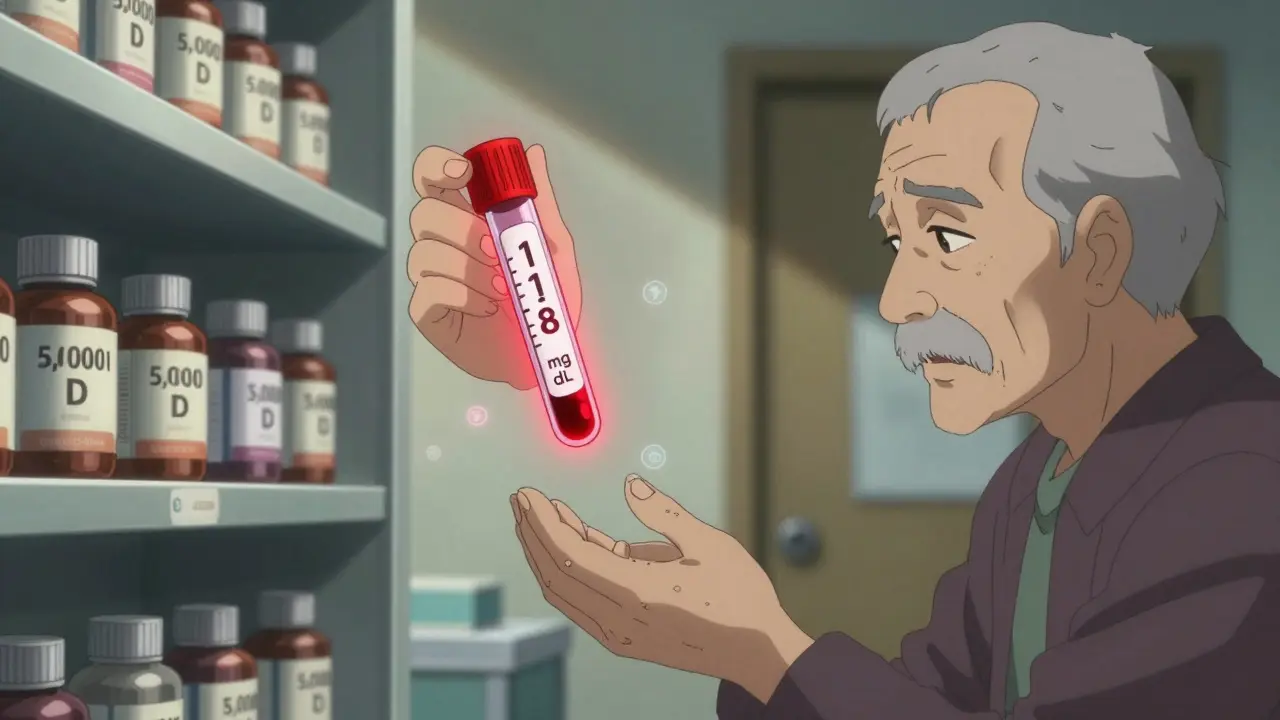
What the Guidelines Say
Major medical groups are sounding the alarm:- The American Society of Nephrology says hypercalcemia affects 2-3% of thiazide users-but jumps to 8-12% if they’re taking more than 4,000 IU of vitamin D daily.
- The European Society of Cardiology recommends capping vitamin D at 2,000 IU/day for anyone on thiazides.
- The American Geriatrics Society Beers Criteria lists this combo as potentially inappropriate for older adults with baseline calcium above 10.2 mg/dL.
- The Endocrine Society advises baseline calcium testing before starting thiazides in people taking vitamin D, then repeat every 3-6 months.
Real Stories, Real Consequences
Reddit’s r/Pharmacy community has dozens of threads from patients and nurses who’ve seen this play out. One nurse practitioner wrote: “I’ve had 3 patients in 6 months with calcium over 11 mg/dL-just from taking 5,000 IU vitamin D with their HCTZ. All ended up in the hospital.” On Drugs.com, 32% of negative reviews for hydrochlorothiazide mention calcium-related issues: muscle weakness, constipation, brain fog. One user wrote, “I felt like I was dying-tired all the time, couldn’t focus. My doctor said it was ‘just aging.’ Turned out my calcium was 11.8.” But it’s not all bad news. A 2022 CureTogether report found that people taking low-dose vitamin D-800-1,000 IU-with thiazides often had normal calcium levels and even improved bone density by 1.8% per year. The key? Dose matters.
How to Stay Safe
If you’re on a thiazide diuretic and taking vitamin D, here’s what to do:- Know your dose. Stick to 800-1,000 IU daily unless your doctor says otherwise. Avoid supplements over 2,000 IU without monitoring.
- Get tested. Ask for a serum calcium test before starting the combo, then every 3-6 months after. Don’t wait for symptoms.
- Check your albumin. Calcium levels can look wrong if you’re low on albumin. Always ask for “corrected calcium.”
- Consider alternatives. If you’re at high risk, ask if a potassium-sparing diuretic like spironolactone could work instead.
- Don’t self-prescribe. Many vitamin D supplements are sold as “immune boosters” or “bone health” products with doses of 5,000-10,000 IU. That’s not harmless.


