
You’ve been taking the same medication for years, but your pharmacy just switched you to a cheaper version. A week later, you’re dealing with heart palpitations, a weird rash, or sudden anxiety. You might think, "It's the same drug, so why is this happening?" The truth is that while the active ingredient remains the same, the rest of the pill isn't. Dealing with generic medication side effects can be confusing because we're told generics are identical to brands, but your body might disagree.
If you're feeling "off" after a pharmacy switch, you need to know which symptoms are just your body adjusting and which ones are red flags that require an immediate trip to the ER. This guide helps you spot the difference and gives you a plan to get your medication back on track.
The Quick Guide: When to Act
| Urgency | Symptoms | Action Required |
|---|---|---|
| Emergency | Swelling of the face/throat, blistering skin, difficulty breathing, priapism | Call 911 or go to ER immediately |
| Urgent | New heart palpitations, severe gut distress (>48 hours), sudden mood shifts | Contact doctor within 24 hours |
| Monitor | Mild nausea, slight headache, mild fatigue | Track for 3-5 days; report if persistent |
Why "Identical" Drugs Cause Different Reactions
When the FDA is the federal agency responsible for protecting public health by ensuring the safety, efficacy, and security of human and veterinary drugs approves a generic, they check for bioequivalence. This means the drug gets into your bloodstream at a similar rate. However, they don't require the "inactive" ingredients to be the same.
These inactive ingredients, called excipients non-medicinal ingredients added to a drug formulation to bulk up the product or stabilize it, are where the trouble usually starts. One manufacturer might use lactose as a filler, while another uses a specific artificial dye like Red 40. If you have a hidden sensitivity to those fillers, you'll react to the generic version even though the actual medicine is the same.
For example, some generic eye drops use benzalkonium chloride as a preservative, while the brand-name version uses a gentler alternative. For a patient with sensitive eyes, that small change in the recipe can cause significant irritation and redness, even if the medication itself is working perfectly.
High-Risk Medications: The Narrow Therapeutic Index
Most drugs have a wide "safety window," meaning a small difference in how much is absorbed doesn't change much. But some drugs are Narrow Therapeutic Index (NTI) drugs medications where a small difference in dose or blood concentration can lead to serious therapeutic failure or toxicity. With these, a tiny variation between different generic manufacturers can be dangerous.
If you are taking any of the following, you should be extra vigilant when your pharmacy switches brands:
- Warfarin: A blood thinner where a slight shift in potency can lead to unexpected bleeding events.
- Levothyroxine: A thyroid hormone where a small change can trigger heart palpitations or anxiety.
- Phenytoin: An anti-epileptic where slight variations can lead to breakthrough seizures.
Because the window for success is so small, these patients are significantly more likely to report side effects when switching manufacturers. If you're on an NTI drug, don't just "wait and see" if a new symptom goes away-call your doctor immediately.

Red Flags That Require Immediate Help
There are some reactions that are never "just a transition period." You need to seek emergency care if you experience any of the following:
Severe Skin Reactions: If you see a painful rash that turns into blisters or affects your mouth and eyes, this could be Stevens-Johnson Syndrome (SJS) a rare, serious disorder of the skin and mucous membranes, often triggered by a reaction to medication. This is a medical emergency that requires hospitalization.
Unexpected Physiological Changes: Priapism-a painful erection lasting more than four hours-is a rare but critical emergency associated with some psychiatric generics like trazodone. Similarly, if you notice a sudden, significant jump or drop in your heart rate (more than 15% from your usual baseline), get help right away.
Severe Allergic Responses: Anaphylaxis, characterized by swelling of the tongue or throat and difficulty breathing, can happen if you are allergic to a specific dye or filler used by a new generic manufacturer.
How to Handle a Suspected Generic Reaction
If you suspect your new generic is the culprit, don't just stop taking your medicine. Stopping abruptly can cause withdrawal or a rebound of your original condition, which is often more dangerous than the side effect itself. Instead, follow these steps:
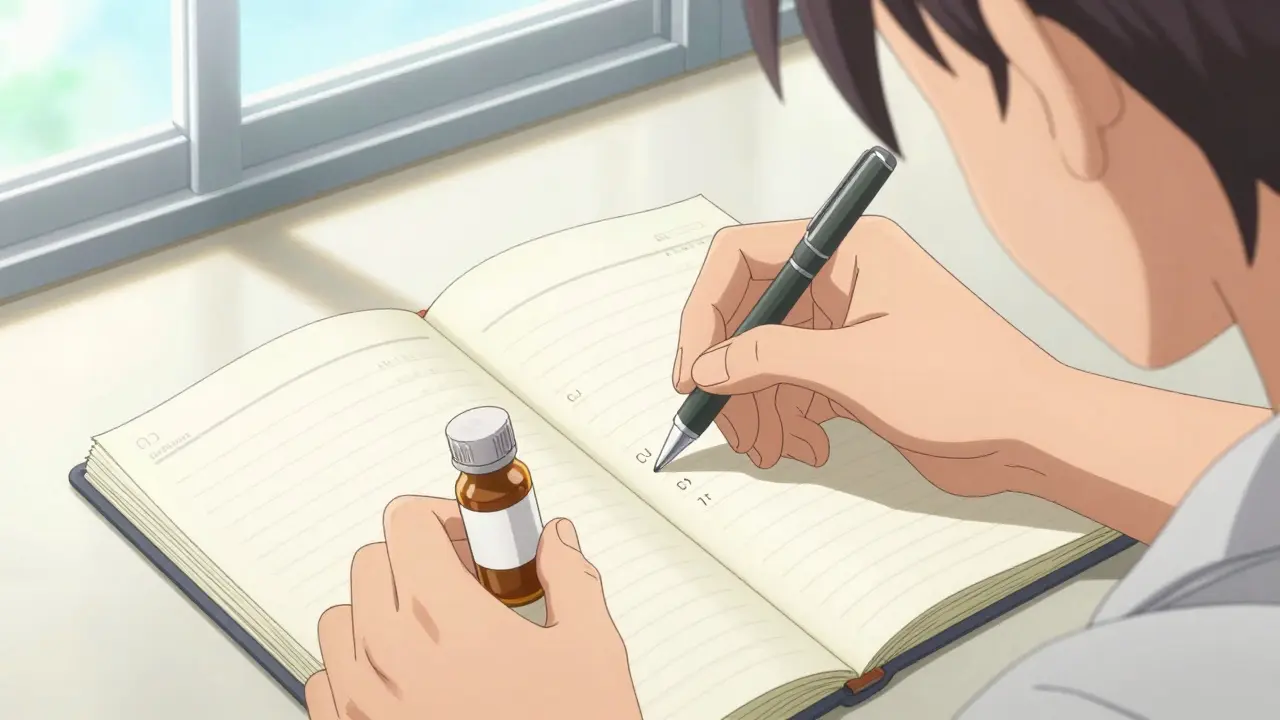
- Document the Lot Number: Look at your prescription bottle. Write down the manufacturer's name and the lot number. This is the only way the FDA can track if a specific batch was contaminated or formulated incorrectly.
- Track Your Timeline: Note exactly when the symptom started. Did it happen within 48 hours of the first dose? Does it happen every time you take the pill?
- Contact Your Pharmacist: Ask them if the manufacturer changed for your latest refill. Often, pharmacies switch suppliers based on cost or availability without telling the patient.
- Report it to MedWatch: Use the MedWatch the FDA's safety information and adverse event reporting program system. Reporting your experience helps identify dangerous batches before they affect thousands of other people.
Pro Tips for Long-Term Medication Safety
You don't have to be a victim of "pharmacy roulette." You can take control of your medication consistency with a few simple habits.
First, ask your doctor to specify "Dispense as Written" (DAW) on your prescription if you are on a high-risk medication. This tells the pharmacist that they must provide the exact brand prescribed and cannot substitute it for a generic. While this may be more expensive, for some patients, it is the only way to maintain stability.
Second, keep a "Manufacturer Log." Every time you pick up a refill, check the bottle for the manufacturer's name. If you find that "Manufacturer A" works perfectly but "Manufacturer B" gives you headaches, you can tell your pharmacist to only use Manufacturer A moving forward. Research shows that documenting specific manufacturers that work for you can reduce medication-related disruptions by nearly 38%.
Are generics actually less safe than brand-name drugs?
For the vast majority of people, no. Generics must meet strict bioequivalence standards. However, because the inactive ingredients (fillers, dyes, binders) vary, a small percentage of patients will have a sensitivity to a specific generic manufacturer's formula while tolerating the brand-name version perfectly.
How do I know if it's a side effect or just a coincidence?
Look at the timing. If a new symptom begins within 1 to 2 weeks of switching to a new generic and doesn't resolve within 3 to 5 days, there is a high probability it is related to the medication. If the symptom disappears when you go back to your previous manufacturer, it's almost certainly the drug.
Can I ask my pharmacist to switch me back to the brand name?
Yes, but you will likely need a new prescription from your doctor that specifies "Dispense as Written" (DAW). Your insurance may also require you to try a different generic manufacturer before they agree to pay for the brand-name version.
What are the most common "hidden" ingredients that cause reactions?
Lactose and gluten fillers are common culprits for those with digestive issues. Artificial dyes like Red 40 or Yellow 5 can cause rashes or headaches. In liquid or eye medications, preservatives like benzalkonium chloride (BAK) are frequent sources of irritation.
Is it normal to feel different symptoms every time I get a refill?
It is not "normal," but it happens if your pharmacy switches generic manufacturers frequently. This is common with psychiatric and thyroid medications. If this happens, request a consistent manufacturer to avoid the "rollercoaster" effect of different formulations.
Next Steps and Troubleshooting
If you're currently experiencing symptoms, your first move should be to check your medication bottle for any change in the manufacturer's name. If the name has changed and you're feeling unwell, call your provider.
For those on thyroid or blood-pressure medications, schedule a follow-up appointment two weeks after any manufacturer change. This allows your doctor to check your blood levels or pressure and ensure the new generic is performing exactly like the old one. If you're in a position to do so, keep a simple diary of your symptoms and the corresponding lot numbers for every refill for six months-this data is gold for your doctor when trying to pinpoint a specific allergen.


