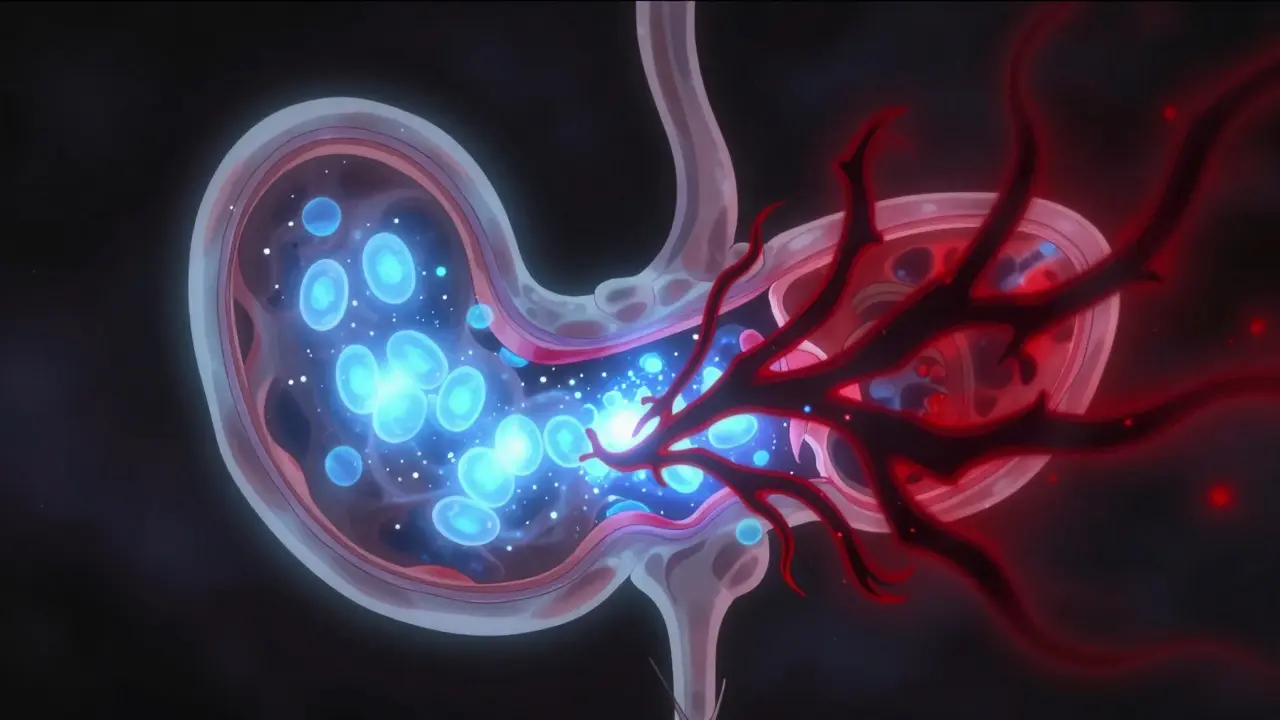
When your immune system turns against your own body, it doesn’t just pick one target. For many people with Type 1 Diabetes, a chronic condition where the body stops making insulin, the focus is entirely on blood sugar. But there’s a deeper layer to this disease that often gets overlooked: the autoimmune attack on the pancreas itself. It’s not just about managing glucose; it’s about understanding how your body’s defense mechanism went rogue.
You might think Type 1 Diabetes is straightforward-low insulin, high sugar, inject more insulin. But the reality is messier. The destruction of pancreatic beta cells isn’t an overnight event. It’s a slow burn, sometimes starting years before you feel any symptoms. And while we’ve gotten better at controlling blood sugar, we’re still figuring out how to stop the immune system from tearing down the pancreas in the first place. If you or someone you love has been diagnosed, you probably have questions that go beyond “how much insulin do I take?” You want to know why this happened, what’s coming next, and how to protect the rest of your health.
Understanding the Autoimmune Attack
To manage Type 1 Diabetes effectively, you need to understand what’s actually happening inside your body. This isn’t a lifestyle disease like Type 2 Diabetes, which involves insulin resistance. In Type 1, your immune system mistakenly identifies your pancreatic beta cells as threats. These beta cells are responsible for producing insulin, the hormone that lets glucose enter your cells for energy. Without them, glucose builds up in your bloodstream, leading to dangerously high blood sugar levels.
The process starts with autoantibodies. Think of these as markers that show your immune system is preparing for war. Researchers have identified several key antibodies, including those targeting glutamic acid decarboxylase (GAD65) and insulinoma-associated antigen-2 (IA-2). When you test positive for two or more of these, you’re in Stage 1 of Type 1 Diabetes, even if your blood sugar is still normal. About 0.4% of the general population falls into this category. By the time you reach Stage 3, where symptoms appear and insulin becomes necessary, your body has already lost most of its ability to produce insulin. At diagnosis, patients typically have less than 5% of normal insulin secretion capacity, measured by C-peptide levels.
Why does this happen? Genetics play a huge role. If you carry certain HLA class II genes, specifically the HLA-DR3 or DR4 haplotypes, your risk jumps by 20 to 30 times compared to the average person. But genetics alone don’t tell the whole story. Environmental triggers, like enteroviral infections (particularly coxsackievirus B), can push your immune system over the edge. Studies show that detecting enterovirus RNA in your serum during the prodromal phase increases your risk by 58%. It’s a combination of loaded gun and pulled trigger.
| Feature | Type 1 Diabetes | Type 2 Diabetes |
|---|---|---|
| Cause | Autoimmune destruction of beta cells | Insulin resistance and relative insulin deficiency |
| Onset | Often rapid, can occur at any age | Gradual, usually in adulthood |
| Insulin Production | Absolute deficiency (<5% at diagnosis) | Variable, often preserved early on |
| Treatment | Lifelong exogenous insulin required | Lifestyle changes, oral meds, possibly insulin |
| C-Peptide Levels | Low (<0.2 nmol/L) | Normal or High (>0.6 nmol/L) |
The Three Stages of Disease Progression
Type 1 Diabetes doesn’t just appear out of nowhere. It progresses through distinct stages, a framework established by the TrialNet consortium. Understanding where you are in this progression can help you anticipate what’s coming and make informed decisions about treatment.
Stage 1: This is the silent phase. You have two or more pancreatic autoantibodies, but your glucose tolerance is still normal. You likely won’t feel any different. However, this stage affects about 0.4% of the general population, meaning millions of people are walking around with pre-diabetes markers without knowing it. Early detection here is crucial because it opens the door to potential interventions that could delay or prevent progression.
Stage 2: Now, dysglycemia enters the picture. Your blood sugar starts to fluctuate abnormally, but you still don’t have classic symptoms like excessive thirst or weight loss. This stage affects roughly 0.15% of the population. It’s a critical window for intervention. Recently, the FDA approved teplizumab (Tzield) for Stage 2 patients. This drug, the first disease-modifying therapy for Type 1 Diabetes, has been shown to delay clinical diagnosis by a median of 29.8 months. It’s a game-changer for those caught in this stage.
Stage 3: This is symptomatic hyperglycemia. Your body can no longer compensate, and you experience classic symptoms: frequent urination, extreme thirst, fatigue, and unexplained weight loss. At this point, insulin therapy is non-negotiable. About 20-30% of newly diagnosed children present with diabetic ketoacidosis (DKA), a life-threatening complication requiring immediate hospitalization. The rate of beta-cell destruction varies wildly between individuals. Children tend to lose their remaining function quickly, with a median time from first autoantibody to diagnosis of just 2.8 years. Adults, particularly those with Latent Autoimmune Diabetes in Adults (LADA), progress more slowly, often retaining some insulin production for years.

Daily Management: Beyond Insulin Injections
Managing Type 1 Diabetes is a full-time job. It’s not just about taking shots; it’s about constant calculation, monitoring, and adjustment. The American Diabetes Association (ADA) recommends multiple daily injections (MDI) using a combination of rapid-acting analogs (like insulin aspart) before meals and long-acting basal insulin (like insulin glargine U-300). The goal is to keep your hemoglobin A1c below 7.0%, which reduces the risk of long-term complications.
But numbers on a fingerstick aren’t enough anymore. Continuous Glucose Monitoring (CGM) systems, such as the Dexcom G7, have revolutionized care. These devices measure interstitial glucose levels every few minutes, sending data directly to your phone or pump. Studies show CGMs can reduce HbA1c by 0.4-0.6% and cut hypoglycemic events by 40-50%. They give you trends, not just snapshots, allowing you to predict highs and lows before they happen.
For those who want even more automation, closed-loop systems, often called "artificial pancreases," are changing the landscape. Devices like Tandem’s Control-IQ algorithm adjust insulin delivery based on real-time CGM data. Research indicates these systems achieve a time-in-range (70-180 mg/dL) of 71-74%, compared to 51-55% with traditional sensor-augmented pumps. While not perfect, they significantly reduce the mental burden of constant decision-making.
- Basal-Bolus Strategy: Start with 0.5 units/kg/day of total daily insulin, split evenly between basal and bolus doses. Adjust based on frequent glucose checks.
- Target Ranges: Aim for preprandial glucose of 80-130 mg/dL and postprandial levels under 180 mg/dL.
- Hypoglycemia Awareness: Know the signs: shakiness, sweating, confusion. Always carry fast-acting carbs like glucose tablets.
- Exercise Planning: Physical activity lowers blood sugar. Monitor closely before, during, and after workouts to avoid dangerous drops.

The Rare Link: Autoimmune Pancreatitis
Here’s where things get tricky. Type 1 Diabetes targets the endocrine part of the pancreas-the islets that make insulin. But rarely, the immune system attacks the exocrine part too, causing Autoimmune Pancreatitis (AIP). This occurs in about 0.3% of Type 1 Diabetes cases. AIP causes inflammation of the pancreatic ducts and tissue, leading to abdominal pain, jaundice, and digestive issues.
If you have Type 1 Diabetes and experience persistent gastrointestinal symptoms, malabsorption, or unusual abdominal pain, mention it to your doctor. AIP is classified into two types. Type 1 is associated with IgG4-related disease and responds well to corticosteroids, with 95% of patients seeing improvement within four weeks. Type 2 is linked to inflammatory bowel disease. Diagnosing AIP requires a combination of imaging, serological markers (elevated IgG4 in 85% of Type 1 cases), and histological evidence.
Managing both conditions simultaneously is complex. Corticosteroids used to treat AIP can raise blood sugar levels, requiring careful adjustments to your insulin regimen. You’ll need close coordination between an endocrinologist and a gastroenterologist. Don’t ignore gut symptoms; they could be a sign of a broader autoimmune issue affecting your entire pancreas.
Emerging Therapies and Future Hope
The landscape of Type 1 Diabetes treatment is evolving rapidly. We’re moving beyond just replacing insulin to trying to preserve beta-cell function and modulate the immune response. Teplizumab was just the beginning. Other immunotherapies, like abatacept, have shown promise in slowing C-peptide decline by 59% at two years in recent-onset cases.
Stem cell research offers another frontier. Vertex Pharmaceuticals’ VX-880 trial demonstrated that stem cell-derived islet cells could restore insulin independence in 89% of participants within 90 days. While still experimental and requiring immunosuppression to prevent rejection, this approach holds immense potential for a functional cure.
We’re also looking at the gut-pancreas axis. Research shows 67% of Type 1 Diabetes patients have altered intestinal microbiota, with reduced levels of butyrate-producing bacteria like Faecalibacterium prausnitzii. This imbalance correlates with faster beta-cell decline. Probiotics and dietary interventions targeting gut health may become part of standard care in the near future.
Is Type 1 Diabetes reversible?
Currently, Type 1 Diabetes is considered a lifelong condition because the destroyed beta cells do not regenerate naturally. However, new therapies like stem cell transplants and immunotherapies are showing promise in preserving or restoring function. For now, management focuses on controlling blood sugar and preventing complications.
What is the difference between Type 1 and Type 2 Diabetes?
Type 1 Diabetes is an autoimmune disease where the body destroys insulin-producing cells, leading to absolute insulin deficiency. Type 2 Diabetes involves insulin resistance, where the body doesn't use insulin effectively. Type 1 requires lifelong insulin therapy, while Type 2 can often be managed with lifestyle changes and oral medications initially.
Can diet reverse Type 1 Diabetes?
No, diet cannot reverse Type 1 Diabetes. Since the underlying cause is autoimmune destruction of beta cells, no amount of dietary change will restore insulin production. However, a balanced diet is crucial for managing blood sugar levels and reducing the risk of complications like heart disease and neuropathy.
What are the early signs of Type 1 Diabetes?
Early signs include frequent urination, excessive thirst, unexplained weight loss, increased hunger, fatigue, blurred vision, and irritability. In children, bedwetting after being dry trained can also be a sign. If you notice these symptoms, seek medical attention immediately, as untreated Type 1 Diabetes can lead to diabetic ketoacidosis.
How does continuous glucose monitoring work?
Continuous Glucose Monitoring (CGM) uses a small sensor inserted under the skin to measure glucose levels in interstitial fluid every few minutes. This data is transmitted to a receiver or smartphone, providing real-time readings and trend arrows. It allows users to see how food, exercise, and insulin affect their blood sugar, helping them make proactive adjustments.