
Imagine using a cream your doctor prescribed to calm a rash-only for the rash to get worse. That’s not uncommon. In fact, topical medication allergy is one of the most overlooked causes of persistent skin irritation. People assume the treatment is working, but the real problem is hidden in the ingredients. This isn’t just a minor annoyance. It’s a full-blown allergic reaction called allergic contact dermatitis, and it affects 10% to 17% of patients who get patch tested for unexplained skin rashes.
What Exactly Is Allergic Contact Dermatitis?
Allergic contact dermatitis isn’t a rash from scratching or dryness. It’s your immune system overreacting to something that touched your skin. Unlike irritant contact dermatitis-where the skin gets damaged by harsh chemicals like soap or bleach-this is a delayed immune response. You might use a cream for days without issue, then suddenly, redness, itching, and blisters show up. That’s because your body needs time to recognize the allergen as a threat.
The most common culprits? Antibiotics, corticosteroids, local anesthetics, and NSAIDs. Neomycin, found in many over-the-counter ointments, triggers reactions in nearly 10% of patch-tested patients. Bacitracin isn’t far behind. Even hydrocortisone, the go-to treatment for rashes, can cause an allergic reaction in 0.5% to 2.2% of users. That’s the irony: the medicine meant to heal ends up making things worse.
Why Doctors Miss It
Most patients see their doctor with a worsening rash. The doctor sees a flare-up and prescribes a stronger steroid. The patient comes back two weeks later-still itchy, still red. This cycle repeats for months. Why? Because clinicians rarely consider the treatment itself as the problem. Dr. Erin Warshaw, former president of the American Contact Dermatitis Society, says 40% to 60% of these cases are misdiagnosed at first. Patients often visit three or more doctors before someone asks: What else are you putting on your skin?
And it’s not just prescription creams. Lotions, sunscreens, makeup, and even bandages can contain hidden allergens. A 2023 study found that 30% of allergic reactions come from products patients don’t even think of as medications. One woman with eczema used a moisturizer labeled “hypoallergenic.” It contained fragrance and neomycin. Her rash never cleared until she stopped using it.
How Patch Testing Works
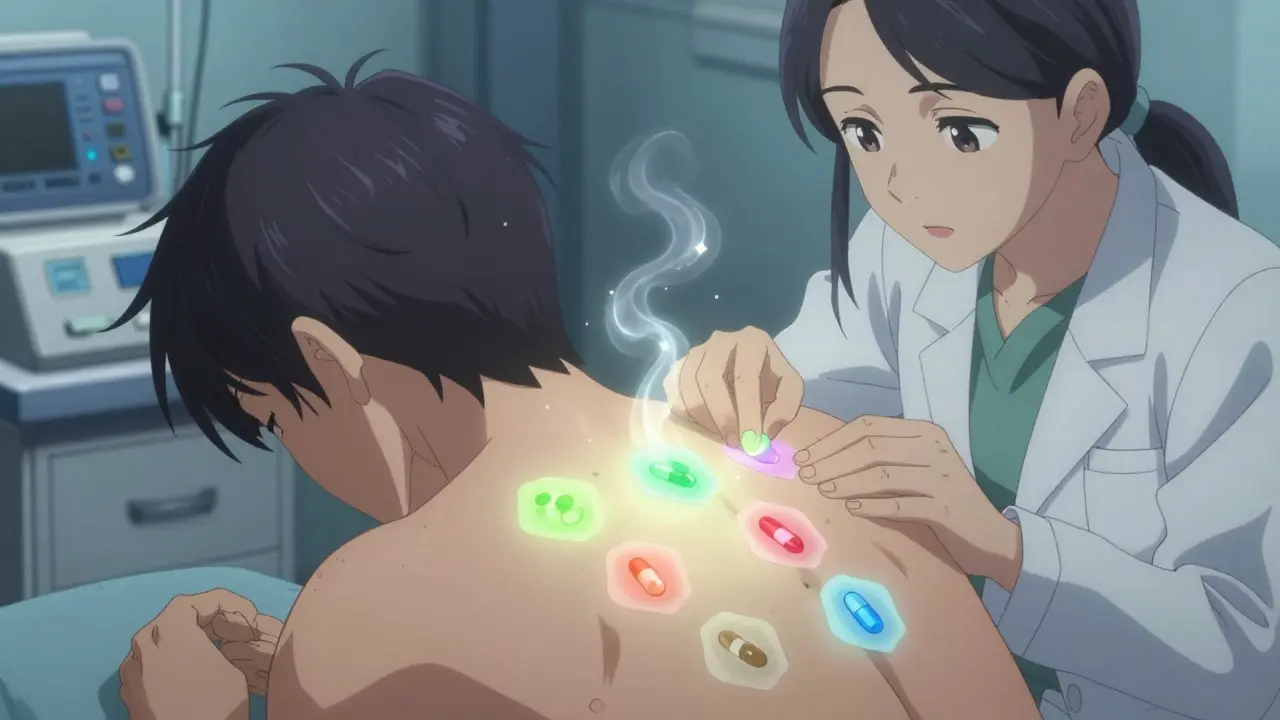
If you’ve had a rash for more than six weeks and standard treatments aren’t working, patch testing is your next step. It’s simple: small amounts of common allergens-like corticosteroids, antibiotics, and preservatives-are taped to your back. You leave them on for 48 hours, then return for readings at 48 and 96 hours. The test doesn’t hurt. It just tells you what your skin is reacting to.
When done right, patch testing identifies the trigger in about 70% of cases. The International Contact Dermatitis Research Group has standardized this method for decades. But it’s not perfect. Patients with broken skin, like those with severe eczema, often get false negatives. New research from Johns Hopkins shows that diluting the test solution 10-fold cuts false negatives from 32% down to just 9%. That’s a game-changer for people with compromised skin barriers.
What Happens After the Diagnosis?
The first rule? Stop using the allergen. That’s it. No more creams, no more ointments with the offending ingredient. Sounds simple, but it’s harder than it sounds. Many products contain the same allergens under different names. Neomycin might be listed as “antibiotic” or “antiseptic.” Benzocaine could be hiding in throat sprays or hemorrhoid creams.
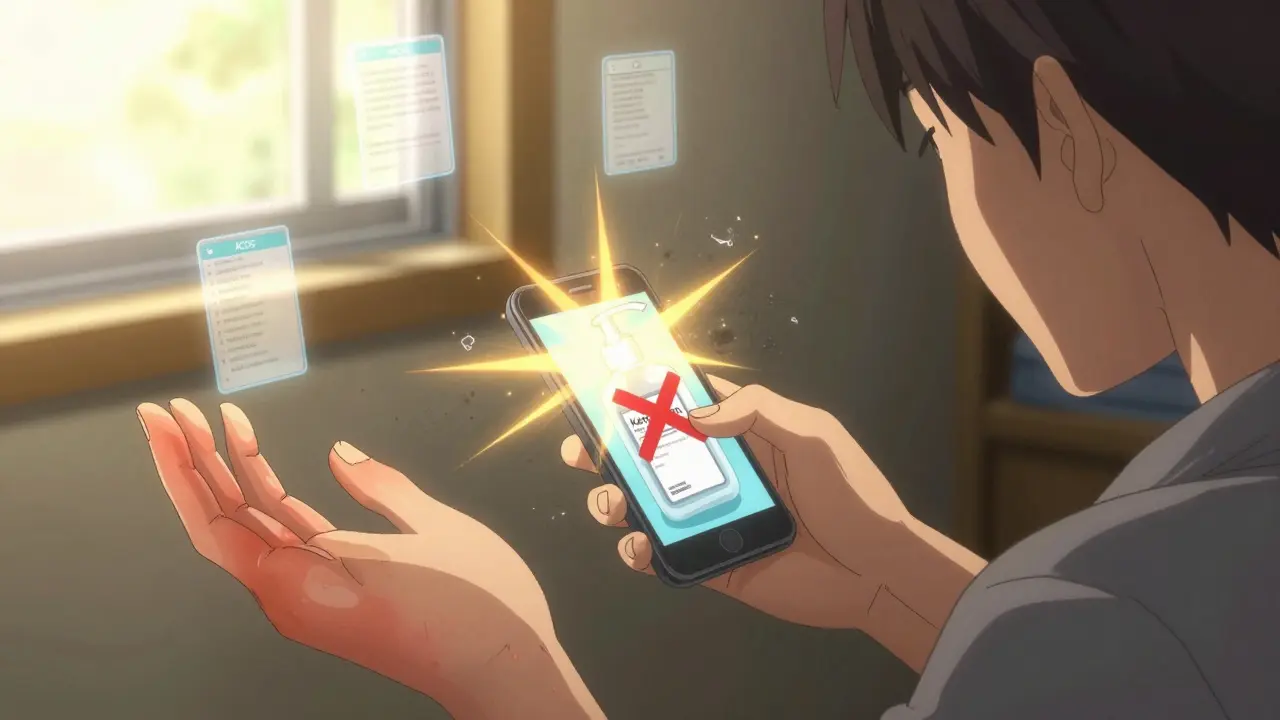
The American Contact Dermatitis Society offers a free mobile app that lets you scan product barcodes and check for over 3,500 allergens. Nearly half of patch-tested patients use it to avoid hidden triggers. One man with chronic hand dermatitis discovered his daily hand sanitizer contained ketoprofen-an NSAID he was allergic to. He switched brands, and his skin cleared in three weeks.
Treatment Options: Beyond Steroids
Once you avoid the trigger, healing begins. For mild cases, over-the-counter hydrocortisone (0.5%-1%) can help. But if symptoms persist after a week, you likely need prescription treatment. Mid- to high-potency steroids like triamcinolone or clobetasol are first-line for body rashes. But here’s the catch: don’t use them on your face, eyelids, or groin. These areas have thin skin. Using strong steroids there for more than two weeks can cause skin thinning in up to 35% of users.
For sensitive areas, dermatologists turn to desonide or topical calcineurin inhibitors like tacrolimus (Protopic) and pimecrolimus (Elidel). These aren’t steroids, so they don’t cause thinning. Studies show they work in 60% to 70% of cases. RealSelf users report 82% satisfaction with tacrolimus, though 41% say it stings at first. That burning fades within days.
When the rash covers more than 20% of your body, oral steroids like prednisone become necessary. A typical course is 40-60 mg daily for two to three weeks, then tapered. Most patients feel relief within 12 to 24 hours. But steroids are a band-aid. The real fix is avoiding the allergen.
The Steroid Paradox
Here’s the twist: corticosteroids are both the most common treatment and the most common cause of allergic contact dermatitis. Patients with eczema often use hydrocortisone for years. Then, one day, their skin rebels. The very drug they relied on becomes the enemy. But not all steroids are the same. Dermatologists classify them into six groups based on chemical structure. If you’re allergic to group A steroids (like hydrocortisone), you can usually tolerate group B (triamcinolone) or group D (methylprednisolone). Knowing this cuts treatment limitations by 65%.
What to Do Next
If your rash won’t go away despite treatment:
- Stop using all topical products for 48 hours-prescription and OTC.
- Write down every cream, lotion, or ointment you’ve used in the past month.
- Bring them to your dermatologist for ingredient review.
- Ask for patch testing if symptoms persist beyond six weeks.
- Use the ACDS app to scan products and avoid hidden allergens.
Most people see improvement within two to four weeks after removing the trigger. One study found that 89% of chronic cases resolved completely once the allergen was avoided-compared to just 32% with medication alone.
What’s Changing in 2026
Diagnosis is getting smarter. The European Society of Contact Dermatitis introduced a new scoring system in 2023 that boosts diagnostic accuracy from 65% to 89%. The American Academy of Dermatology launched a national registry in January 2023 and has already logged over 1,200 cases. Researchers are now exploring blood tests that could predict allergy risk before first use-potentially preventing 150,000 cases a year.
On the treatment side, microbiome-friendly barrier creams are in Phase 3 trials. Early results show they reduce allergen penetration by 73%. These aren’t cures, but they’re a step toward protecting skin without triggering reactions.
The FDA now requires full ingredient lists on all topical prescriptions. That’s helped reduce misdiagnosis by 15%. But the biggest change? More doctors are listening. The days of blaming the patient for “not using the cream enough” are fading. Awareness is rising-and so are recovery rates.
Can you develop a topical medication allergy even if you’ve used it before without problems?
Yes. Allergic contact dermatitis is a delayed immune response that builds over time. You can use a product for months or even years without issue, then suddenly develop a reaction. This is why people often don’t realize the cream or ointment they’ve been using is the problem. The immune system needs repeated exposure to recognize the substance as a threat.
Is patch testing painful or risky?
No. Patch testing is not painful. Small patches containing allergens are taped to your back and left on for 48 hours. You may feel slight itching or tightness, but no needles or injections are involved. The main risk is a mild flare-up of your rash in the tested area, which is expected and temporary. Serious reactions are rare when done by a trained dermatologist.
Can over-the-counter products cause allergic contact dermatitis?
Absolutely. In fact, 30% of allergic reactions come from non-prescription products like lotions, sunscreens, and even baby wipes. Common culprits include neomycin (in first-aid creams), benzocaine (in numbing sprays), and fragrances. Many people assume OTC means safe, but that’s not true. Always check ingredient labels and avoid anything with known allergens.
How long does it take for a rash to clear after stopping the allergen?
Itching usually improves within 48 to 72 hours of removing the trigger. Visible redness and flaking take longer-typically two to four weeks for full healing. If the rash is widespread or you’ve been using steroids for a long time, it may take up to six weeks. Patience is key. Restarting the allergen, even accidentally, will reset the clock.
Are topical calcineurin inhibitors like Protopic safe for long-term use?
Yes. Unlike potent steroids, calcineurin inhibitors like tacrolimus and pimecrolimus don’t cause skin thinning, stretch marks, or rebound flares. They’re FDA-approved for eczema and widely used off-label for allergic contact dermatitis. The main side effect is temporary burning or stinging when first applied, which fades after a few days. Long-term safety data supports their use, especially on the face and sensitive areas.
What should I do if my rash returns after treatment?
Don’t assume it’s a relapse. It’s likely you’ve been exposed to the allergen again. Check every new product you’ve used since your last flare-up-even shampoo, laundry detergent, or gloves. Use the ACDS app to scan ingredients. If you’re unsure, schedule a repeat patch test. Recurrence is common if the trigger isn’t fully identified and avoided.


