Prescription Transfer Eligibility Checker
Check Your Prescription Transfer Eligibility
Changing pharmacies isn’t as simple as walking into a new store and asking for your meds. If you’re taking any medications-especially controlled ones-there’s a legal process you must follow. The rules changed in August 2023, and many people still don’t know how it works. You can’t just call and ask for a transfer like you used to. Some prescriptions can’t be moved at all. Others can only move once. And if you mess up the details, your refill could be stuck in limbo for days.
What You Need to Give the New Pharmacy
The first thing the new pharmacy needs is your basic info: your full legal name, date of birth, and current address. This isn’t just for formality. It’s how they match your prescription to your identity in their system. If your name is listed as "John Smith" at your old pharmacy but "Jonathan Smith" at the new one, the transfer will fail. Always double-check the spelling and make sure your address matches what’s on file with your prescriber.Next, you need the exact name of each medication, the dosage, how often you take it, and your prescriber’s name. Don’t say "the blue pill for my blood pressure." Say "Lisinopril 10 mg, one tablet daily." Pharmacists deal with hundreds of prescriptions a day. Vague descriptions slow things down and cause errors.
Different Rules for Different Drugs
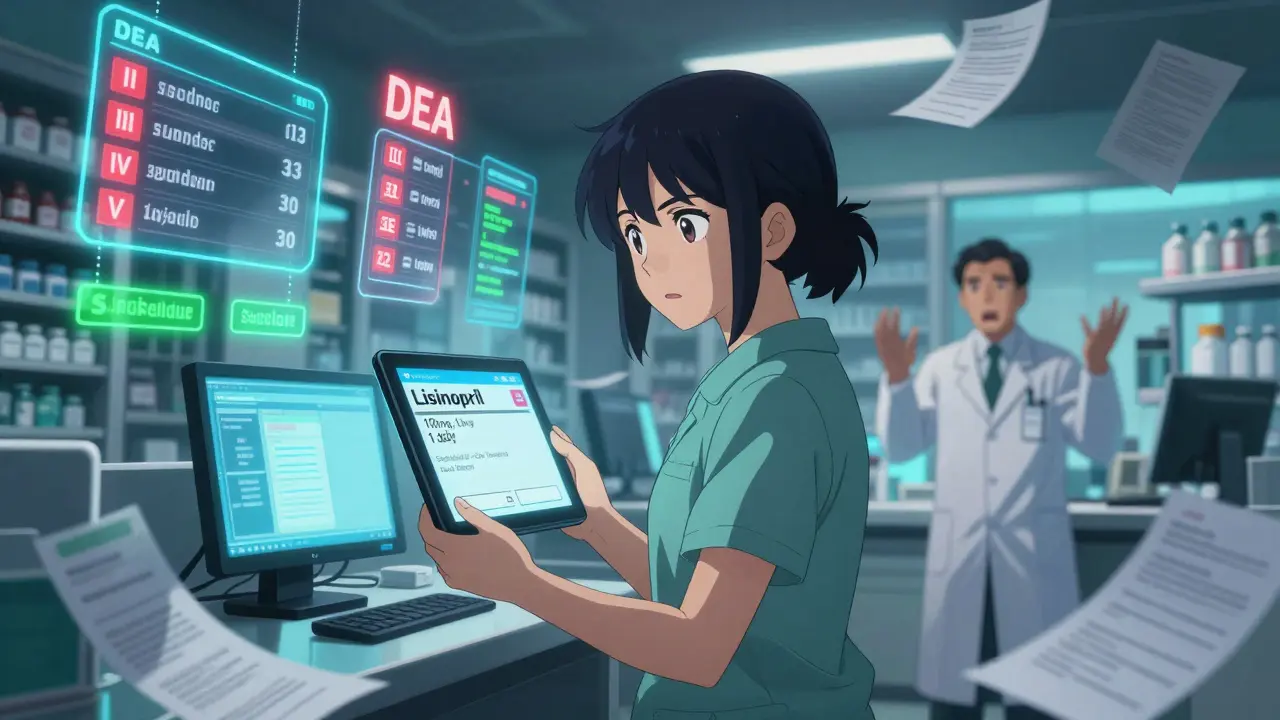
Not all prescriptions are treated the same. The U.S. Drug Enforcement Administration (DEA) classifies medications into five schedules based on abuse potential. This determines how they can be transferred.Schedule II drugs-like oxycodone, Adderall, or fentanyl patches-cannot be transferred at all. If you’re switching pharmacies and take one of these, you must go back to your doctor and get a brand-new prescription. No exceptions. Even if you have refills left, the DEA doesn’t allow any electronic or paper transfer. This rule hasn’t changed since 2023.
Schedule III and IV drugs-such as hydrocodone (in combination with acetaminophen), tramadol, or Xanax-can be transferred one time only. After that, if you need to switch again, you’ll need a new prescription. This applies even if both pharmacies are owned by the same company, like CVS to CVS. The transfer must be electronic and direct between pharmacists. No faxing a copy. No screenshot. No verbal confirmation alone. The system must show the original prescription number, the prescribing doctor’s DEA number, the original fill date, and how many refills remain.
Schedule V drugs-like cough syrups with low-codeine content-follow the same one-time transfer rule as III and IV, though enforcement varies slightly by state.
Non-controlled medications-like statins, thyroid pills, or blood pressure meds without opioids-are much easier. You can transfer them as many times as you need, as long as refills are available. The pharmacy just needs the same basic info: name, dosage, prescriber, and prescription number.
The Transfer Process: What Happens Behind the Scenes
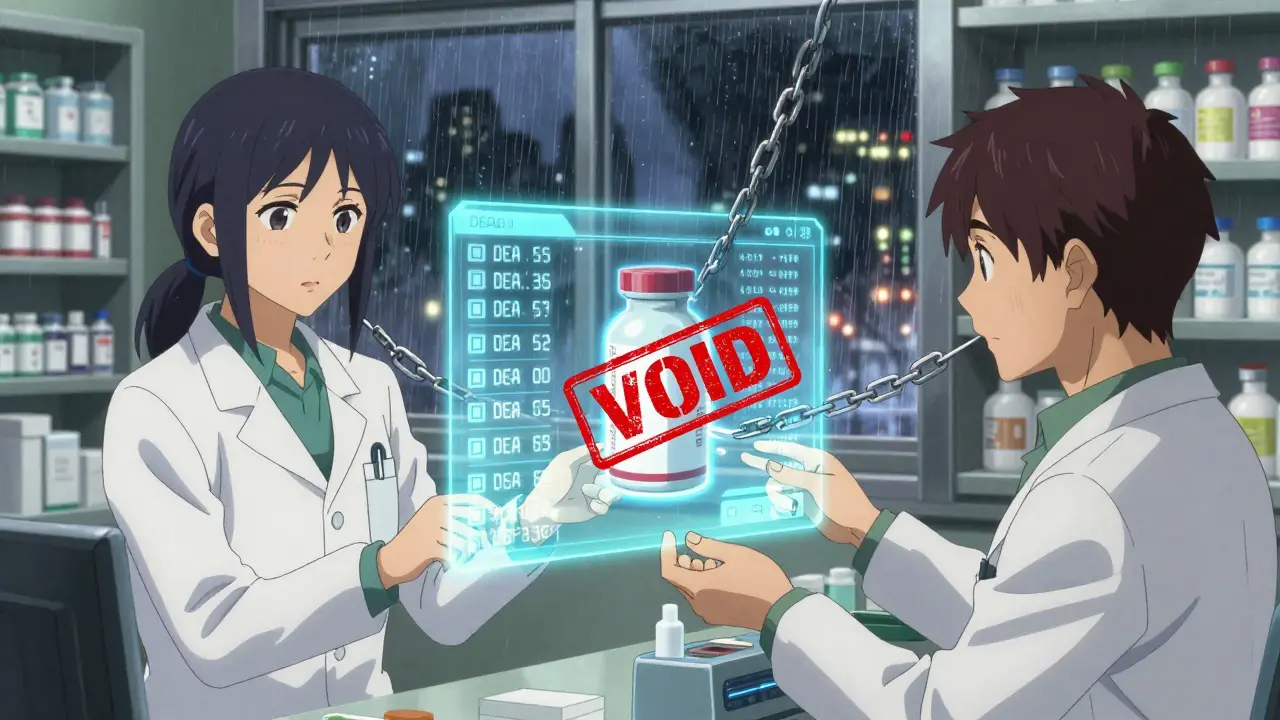
When you ask a new pharmacy to transfer a prescription, they don’t just call your old one. They send a secure electronic request through a DEA-compliant system. The old pharmacy must then verify the prescription is still valid, confirm the number of refills left, and mark it as "transferred" in their system. They also have to write "VOID" on any physical copy or flag it as inactive digitally.The receiving pharmacy must add the word "TRANSFER" to the prescription record, include the name and DEA number of the transferring pharmacy, the date of transfer, and their own pharmacist’s details. All of this must be kept on file for at least two years.
Here’s where things go wrong: if the transferring pharmacist forgets to include their full name or DEA number, the new pharmacy can legally refuse the transfer. It’s not being difficult-it’s following federal law. A 2023 Consumer Reports survey found that 42% of failed transfers were due to incomplete documentation by the old pharmacy, not the patient.
What to Do If the Transfer Gets Refused
If the new pharmacy says no, don’t just walk away. Ask for the reason in writing. By law, they must give you a clear explanation. Common reasons include:- The prescription has no refills left
- It’s a Schedule II drug
- The transfer was already done once (for Schedule III-V)
- The old pharmacy didn’t send all required data
- State law blocks the transfer (some states like California and New York have stricter rules)
If it’s a paperwork error, ask the new pharmacy to contact the old one directly. Many times, the old pharmacy just needs a reminder to complete the transfer in their system. If the issue is state law, you may need to contact your prescriber anyway.
Timing and Realistic Expectations
Don’t expect a same-day transfer. Even with electronic systems, it can take 24 to 48 hours. For controlled substances, it often takes longer because pharmacists have to verify more data points. If you’re switching pharmacies mid-month, plan ahead. Don’t wait until your last pill is gone.Transferring five prescriptions? Expect 1-3 business days per script, especially if some are controlled. Some pharmacies will do it all at once. Others do one at a time. Call ahead and ask how long it usually takes.
State Laws Add Another Layer
Federal rules set the floor, not the ceiling. Some states have tighter restrictions. For example:- California requires written consent from the patient before any controlled substance transfer
- New York mandates that the transferring pharmacist call the receiving pharmacist directly, even if systems are electronic
- Some states won’t allow transfers across state lines unless both pharmacies are in reciprocal states
By September 2023, 42 states had updated their guidelines to match the DEA’s new rule. But the remaining eight still operate under older, sometimes conflicting laws. If you’re moving states, check with your new pharmacy’s compliance officer before you switch.
What About Refills?
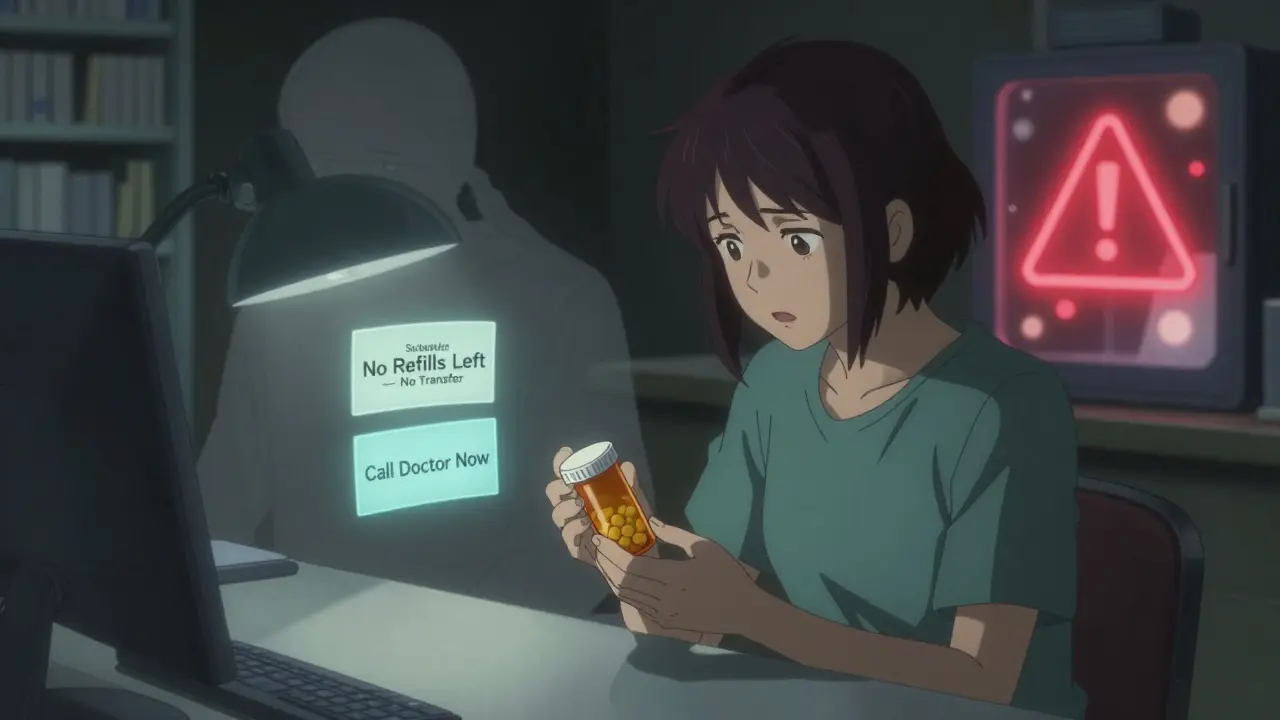
You can’t transfer a prescription that’s out of refills. No exceptions. If your last refill was filled on January 10 and you’re switching on January 15, you’ll need a new prescription. The same applies if you’ve used all refills-even if the prescription is still technically valid for a few more months. The DEA considers a prescription with zero refills as expired for transfer purposes.Pro tip: Before you switch, check your remaining refills. Most pharmacies have apps or online portals where you can see this. If you’re low, call your doctor now. Don’t wait until the last day.
Why This Rule Exists
Before August 2023, if you changed pharmacies and took a controlled substance, you had to go back to your doctor, explain why you switched, and get a new prescription. That meant extra visits, delays, and sometimes missed doses. The DEA changed the rule to make it easier for patients-while still keeping tight controls to prevent drug diversion.The one-time transfer rule is designed to stop "pharmacy shopping"-where people try to get multiple prescriptions from different places. It also reduces the risk of fraud. If a prescription can only move once, it’s harder for someone to steal a script and get it filled in multiple locations.
What’s Next?
The DEA is monitoring how this rule plays out. Their first review is due in Q3 2024. Industry experts believe the one-time limit for Schedule III-V drugs may become multiple transfers within the next two years-especially as more pharmacies adopt seamless digital systems.For now, though, the rules are strict. Know your medication’s schedule. Gather all your info before you call. And don’t assume your new pharmacy knows the rules-many still don’t. Be the person who brings the details. It saves time, stress, and possibly your health.
Can I transfer a prescription for Adderall to a new pharmacy?
No. Adderall is a Schedule II controlled substance, and DEA regulations do not allow any transfer of Schedule II prescriptions between pharmacies. You must get a new prescription from your prescriber if you switch pharmacies.
How many times can I transfer a prescription for Xanax?
Only once. Xanax is a Schedule IV controlled substance, and under DEA rules effective August 2023, these prescriptions can be transferred between pharmacies one time only. After that, you’ll need a new prescription from your doctor.
Do I need to bring my old prescription bottle to the new pharmacy?
Not required, but helpful. The new pharmacy can usually find your prescription electronically if you provide your name, date of birth, and prescriber’s name. But bringing the bottle can help confirm dosage and instructions, especially if there’s confusion about the medication.
Can I transfer prescriptions across state lines?
It depends. Federal law allows it, but state laws vary. Some states have reciprocity agreements; others block out-of-state transfers entirely. Always check with the new pharmacy before initiating the transfer. If you’re moving permanently, plan ahead and contact your prescriber early.
What if my old pharmacy won’t transfer my prescription?
Ask them why. They’re legally required to give you a reason. Common reasons include: no refills left, the prescription is Schedule II, or the transfer was already done. If they say it’s a system error, ask them to call the new pharmacy directly. If they refuse without a valid reason, you can file a complaint with your state pharmacy board.


