Steroid-Induced Hyperglycemia Insulin Calculator
Initial Insulin Calculation
Based on clinical guidelines for steroid-induced hyperglycemia
Results
Important: Always consult your healthcare provider before adjusting medications. This tool provides general guidance based on clinical studies.
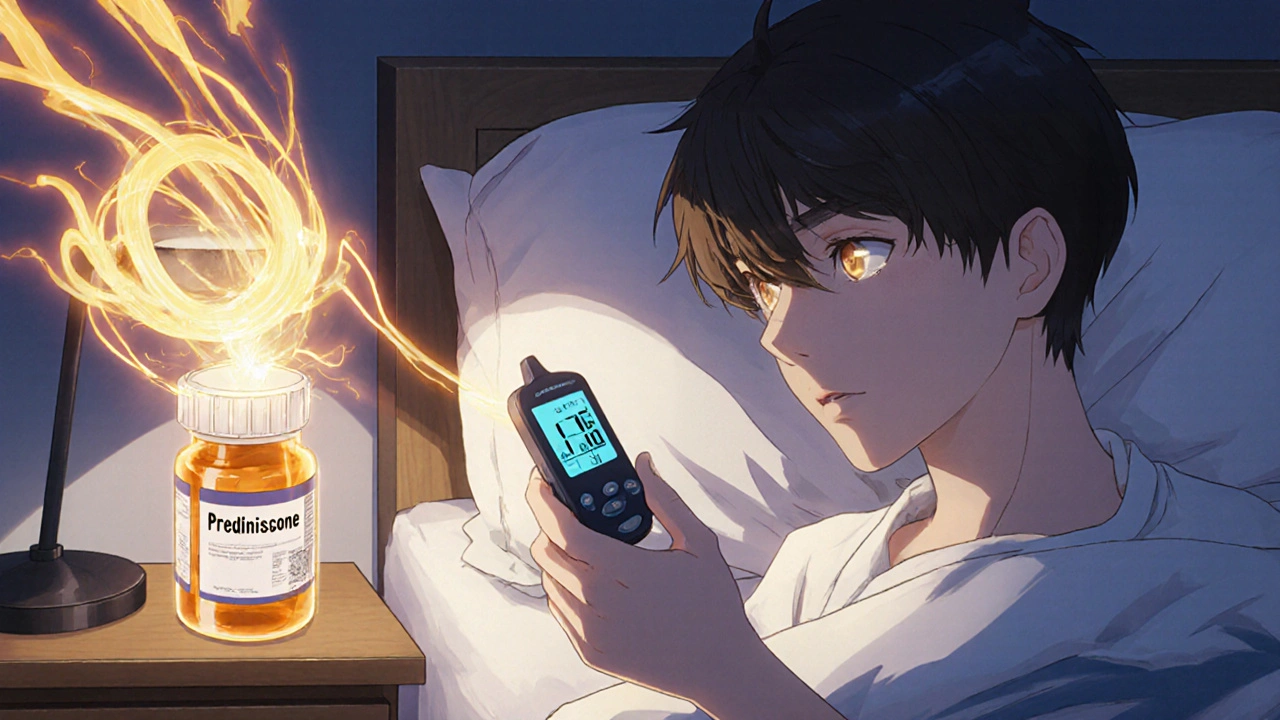
When you’re prescribed steroids like prednisone or dexamethasone for inflammation, asthma, or autoimmune conditions, your blood sugar can spike-even if you’ve never had diabetes before. This isn’t a coincidence. It’s called steroid-induced hyperglycemia, and it happens in 20% to 50% of people taking moderate to high doses. For those already managing diabetes, the rise in blood glucose can be severe, dangerous, and easy to mismanage. The key isn’t just treating high sugar-it’s adjusting your diabetes meds at the right time, in the right way, and knowing when to pull back.
Why Steroids Raise Blood Sugar
Steroids don’t just reduce swelling. They interfere with how your body uses insulin. They make your liver pump out more glucose, block insulin from working properly in your muscles and fat, and even dull your pancreas’s ability to produce insulin when needed. The result? Blood sugar climbs, often within 4 to 8 hours after taking a steroid dose, peaking around 24 hours later. That delay trips up a lot of people. They see normal morning numbers, take their steroid at noon, and by bedtime, their glucose is over 16 mmol/L (288 mg/dL). They blame themselves, not the medicine.Who’s at Risk?
Anyone on steroids is at risk, but some face higher danger. People with prediabetes or type 2 diabetes are more likely to develop noticeable hyperglycemia than those with type 1. But type 1 patients often need bigger insulin adjustments because their bodies produce zero insulin. Studies show type 1 patients may need 30% to 50% more insulin during steroid therapy, while type 2 patients often need 20% to 30%. Even people without diabetes can develop glucose levels high enough to need insulin-especially if they’re on high-dose dexamethasone for more than 5 days.Insulin: The First-Line Treatment
For most people in hospital or on high-dose steroids, insulin is the only reliable tool. Oral meds like metformin or DPP-4 inhibitors can help in mild cases, but they’re not enough when steroids are doing heavy damage. The goal? Match insulin timing to the steroid’s action.Take prednisone, for example. It peaks in your system 18 to 36 hours after you take it. That means a single morning dose of prednisone causes a late-day glucose spike. The best fix? Give NPH insulin in the morning. It lasts 12 to 36 hours, lining up perfectly with prednisone’s effect. Evening NPH? Too late. You’ll miss the peak.
Dexamethasone is trickier. It sticks around for 36 to 72 hours. That’s why long-acting insulins like glargine or detemir are better. A single morning dose of glargine covers the whole duration. No need to split doses or guess.
Here’s how to start insulin if you’re new to it:
- Begin with 0.1 units per kilogram of body weight total per day.
- Split it: 50% as basal (background), 50% as bolus (mealtime).
- Give the bolus insulin right when you take your steroid.
For correction doses:
- If glucose is between 11.1 and 16.7 mmol/L (200-300 mg/dL), give 0.04 units per kg.
- If it’s above 16.7 mmol/L (300 mg/dL), give 0.08 units per kg.
These aren’t guesses. They’re evidence-based starting points from clinical guidelines used in hospitals across Australia, the UK, and the US.
Basal Insulin: When to Increase It
If your fasting blood sugar stays above 11.1 mmol/L (200 mg/dL) for two or three days in a row, your background insulin needs a boost. Don’t wait for it to hit 15 or 20. Start by increasing your basal dose by 10% to 20%. Some clinics use a simpler rule: add 2 units every 2-3 days until you’re in range. But don’t go too fast. Too much basal insulin during steroid therapy can set you up for a crash later.
What About Oral Medications?
If you’re on metformin or a DPP-4 inhibitor and your steroids are low-dose (like 10 mg prednisone or less), you might be able to keep them. But sulfonylureas? Stop them. Drugs like glimepiride or glyburide force your pancreas to pump out insulin. When steroids taper off, your pancreas keeps working-but your liver isn’t dumping glucose anymore. That’s a recipe for low blood sugar. A Johns Hopkins study found 27% of patients on sulfonylureas during steroid treatment ended up in the ER with hypoglycemia. Insulin doesn’t have that problem. It doesn’t force insulin secretion. It just replaces what’s missing.The Biggest Mistake: Not Tapering Insulin
The most common error? Keeping insulin doses the same as steroids are lowered. Steroids don’t vanish overnight. Their effect fades over 3 to 4 days after the last dose. But insulin? It’s still there. And if you don’t reduce it, your blood sugar will plummet.One patient, a 58-year-old woman on 40 mg prednisone for polymyalgia, needed 50% more basal insulin and 75% more mealtime insulin. When her doctor cut the prednisone to 20 mg, she was told to keep her insulin the same. Three days later, she had three hypoglycemic episodes-two at night. She ended up in the ER. This happens all the time.
The fix? Reduce insulin as steroids come down. If you were on 50 units of insulin during 40 mg prednisone, you might only need 35 units at 20 mg. Don’t wait for a low reading to react. Proactively cut insulin by 10% to 20% every 2-3 days as the steroid dose drops. For dexamethasone, wait until 3 full days after the last dose before making major cuts.
Monitoring: Don’t Skip It
Checking your blood sugar once a day isn’t enough. You need at least four checks daily: before meals and at bedtime. If your steroid dose changes, or your sugar spikes above 16.7 mmol/L, check every 2 to 4 hours. Continuous glucose monitors (CGMs) are game-changers. They show trends, not just snapshots. You can see when your sugar starts rising after your steroid, and how long it stays high. The goal? Stay between 3.9 and 10.0 mmol/L (70-180 mg/dL) at least 70% of the time. Spend less than 4% of your day below 3.9 mmol/L.
Insulin Pumps and Smart Tech
If you use an insulin pump, you can adjust your basal rate. During peak steroid effect, increase your basal rate by 25% to 50% for 24 to 48 hours. But when the steroid tapers, drop it back slowly. Many pump users don’t realize their automated features (like SmartGuard) can’t predict steroid effects. You have to override them manually. Some hospitals are now using algorithms that link steroid doses in the electronic record to automatic insulin recommendations. These aren’t everywhere yet-but they’re coming.What Happens After Steroids End?
Once you stop steroids, your body slowly regains insulin sensitivity. But it takes time. Most people need 5 to 7 days to return to their pre-steroid insulin needs. Some, especially those with type 2 diabetes or who gained weight during treatment, may need ongoing adjustments. Don’t assume you’re back to normal just because the steroid bottle is empty. Keep checking your sugar. Talk to your diabetes team. If your fasting numbers stay below 7 mmol/L for 3 days, start reducing insulin by 10% every other day.Real-World Advice from the Front Lines
A 2023 survey of 1,200 people with steroid-induced hyperglycemia found that 68% didn’t know how to adjust their insulin during tapering. Nearly half had at least one low blood sugar episode. The problem isn’t lack of knowledge-it’s lack of clear, personalized plans. If you’re starting steroids, ask your doctor: "What’s my insulin plan if my sugar goes high? When do I cut back?" Write it down. Share it with your family. Put it in your phone.Patients who had written plans were 40% less likely to have hypoglycemia. Simple. But rare.


