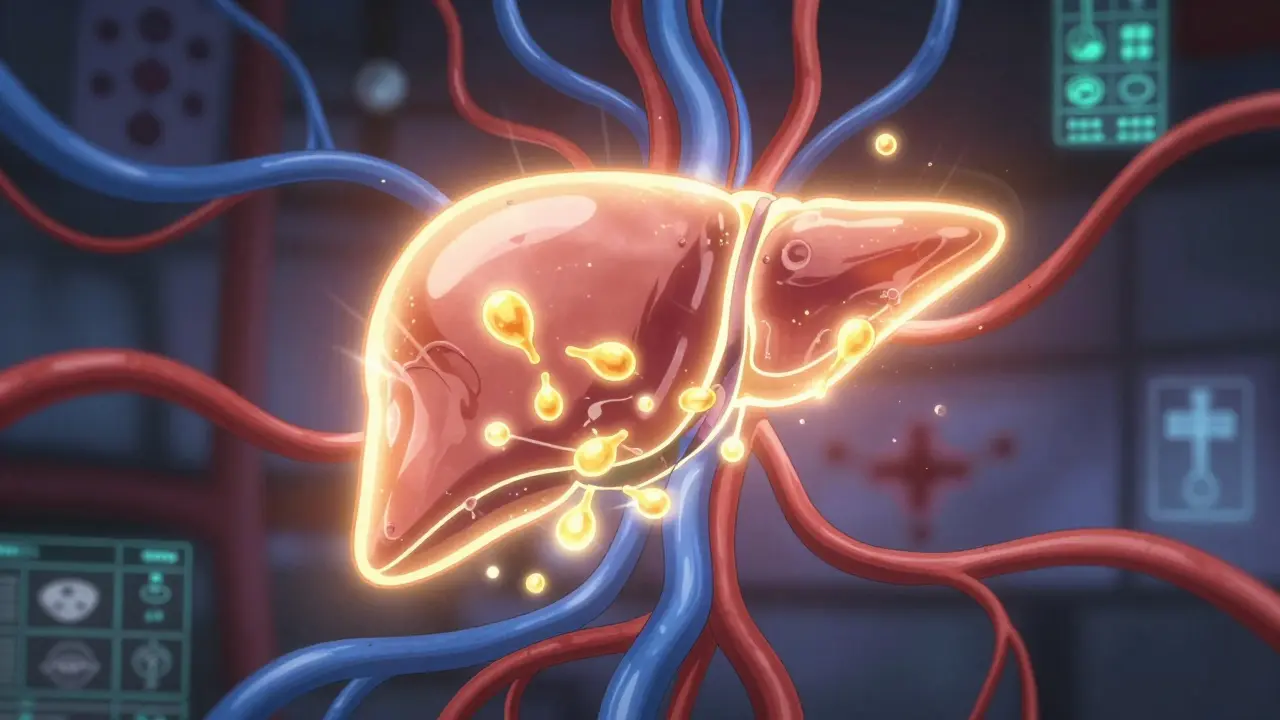
For years, doctors avoided prescribing statins to patients with liver disease. The fear was simple: if your liver is already damaged, wouldn’t adding a drug processed by the liver make things worse? It sounds logical-until you look at the data. Today, we know that statins don’t harm the liver. In fact, they may help it. And for people with chronic liver disease, the cardiovascular benefits are too big to ignore.
Why Statins Are Not Dangerous for the Liver
Statins work by blocking HMG-CoA reductase, the enzyme your liver uses to make cholesterol. When that enzyme is inhibited, your liver pulls more LDL (bad) cholesterol out of your bloodstream. That’s how LDL drops by 25% to 60%, depending on the statin and dose. But here’s the key: this process doesn’t damage liver cells. It actually helps them function better.
Early concerns came from isolated cases of elevated liver enzymes in the 1990s. But those weren’t signs of liver injury-they were temporary fluctuations. The American Heart Association reviewed over 18,000 patients in the JUPITER trial and found no difference in liver problems between those taking rosuvastatin and those on placebo. A 1994 study with 8,000 patients on lovastatin showed zero cases of symptomatic hepatitis. That’s not an anomaly. It’s the pattern.
Severe liver injury from statins? It happens in about 1 out of every 100,000 patient-years. That’s rarer than being struck by lightning. Meanwhile, liver damage from alcohol, fatty liver, or viral hepatitis is common. Statins don’t add to that burden. In fact, studies show they can reduce liver inflammation and even improve liver enzyme levels over time.
The Heart Benefits Are Real-Even With Cirrhosis
People with chronic liver disease, especially cirrhosis, have a much higher risk of dying from heart disease than from liver failure. That’s right. Their biggest threat isn’t bleeding varices or ascites-it’s a heart attack or stroke. And statins cut that risk.
A 2023 study in Gastroenterology Research followed over 2,000 patients with compensated cirrhosis. Those taking statins had a 38% lower risk of variceal bleeding, a 22% lower risk of liver decompensation, and a 26% lower risk of death. How? Statins don’t just lower cholesterol. They reduce inflammation, improve blood flow in the liver, and stabilize blood vessels.
One study gave 40 mg of simvastatin to 30 cirrhotic patients. Within 30 minutes, hepatic blood flow increased by 20%, and liver vessel resistance dropped by 14%. That’s not magic-it’s science. Statins boost nitric oxide production, which relaxes blood vessels. For someone with portal hypertension, that’s a game-changer.
Which Statins Are Safest for Liver Patients?
Not all statins are the same when it comes to liver metabolism. Some are broken down heavily by liver enzymes (CYP3A4), which can be a concern if you’re on other medications. Others are mostly cleared by the kidneys or use minimal liver processing.
For patients with liver disease, the best choices are:
- Pravastatin - Minimal CYP metabolism, mostly excreted by kidneys
- Rosuvastatin - Only 10% metabolized by liver, mostly unchanged in feces
- Pitavastatin - Low interaction potential, safe even with mild cirrhosis
Avoid simvastatin and lovastatin if you’re on multiple medications-they’re processed by CYP3A4, which can interact with antibiotics, antifungals, or even grapefruit juice. Atorvastatin is okay for most, but pravastatin and rosuvastatin are the go-to options for liver patients.
Dosing matters too. Start low. For most patients with chronic liver disease, begin with pravastatin 20 mg or rosuvastatin 5-10 mg. Only increase if needed and if tolerated. High-intensity statins like atorvastatin 80 mg or rosuvastatin 40 mg are not needed for most liver patients unless they have a history of heart attack or very high LDL.

What About Liver Enzymes? Should You Monitor Them?
Doctors used to check liver enzymes every 3 months on statins. That’s outdated. The American Heart Association and American Association for the Study of Liver Diseases both say: don’t do routine monitoring.
Liver enzymes (ALT, AST) can rise slightly in the first few weeks of starting a statin. That’s normal. It doesn’t mean damage. It’s just your liver adjusting. If enzymes rise above 3 times the upper limit of normal-and stay there-then pause the statin. But that’s rare. In most cases, enzymes go back down on their own.
Don’t stop a statin because your ALT is 60. If you have NAFLD, your ALT was probably 100 before you even started the pill. What matters is whether you’re feeling well, whether your heart risk is high, and whether your liver is stable-not a single lab number.
What Patients Are Saying
On patient forums like HealthUnlocked and PatientsLikeMe, people with liver disease are sharing real-world experiences. One woman with NAFLD and high cholesterol wrote: “My ALT dropped from 98 to 42 after 6 months on atorvastatin. My doctor was shocked.” Another with compensated cirrhosis said: “I used to get dizzy when I stood up. After starting rosuvastatin, that stopped. My blood pressure stabilized.”
A Reddit thread in r/liverdisease had 58 users on statins. Only 9 reported mild, temporary enzyme spikes. None had to stop the medication. Meanwhile, 12% reported muscle aches-typical for statins in general-but not liver problems.
The biggest complaint? Doctors refusing to prescribe. One patient said: “I had to bring three studies to my hepatologist before he’d agree to give me rosuvastatin.” That’s the real barrier-not safety. It’s outdated thinking.
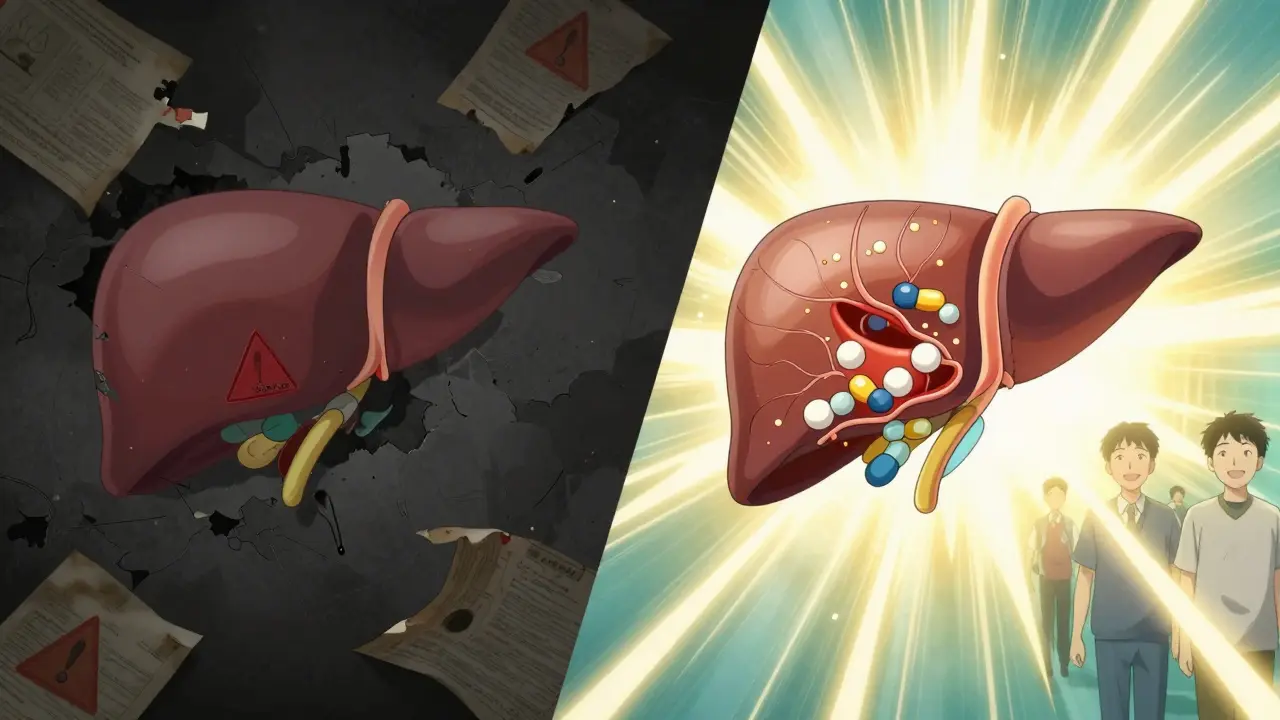
When Not to Use Statins
Statins aren’t for everyone. Avoid them if:
- You have active hepatitis B or C with ongoing inflammation and high viral load
- Your liver function is severely impaired (Child-Pugh Class C) and you’re unstable
- You have unexplained, persistently high liver enzymes without a clear cause
- You’re on multiple interacting drugs and can’t switch to a safer statin
Even in Child-Pugh C, statins aren’t automatically off-limits. A 2024 study showed patients with advanced cirrhosis still benefited from low-dose rosuvastatin (5 mg) when carefully monitored. But start slow, watch closely, and involve a liver specialist.
The Bigger Picture: Statins Are Underused
In 2015, only 12% of liver disease patients on cardiovascular medications were taking statins. By 2023, that jumped to 25%. That’s progress-but it’s still too low. Over half of cirrhotic patients die from heart disease, not liver failure. Yet many still aren’t getting the one drug proven to reduce that risk.
Guidelines from the European Association for the Study of the Liver and the American College of Cardiology now clearly recommend statins for liver patients with high cardiovascular risk. The evidence is solid. The safety profile is excellent. The benefits are measurable.
Statins aren’t just for cholesterol. They’re for blood flow. For inflammation. For survival. For people with liver disease, they might be the most important pill they never thought to take.
Are statins safe if I have fatty liver disease?
Yes. Statins are not only safe in non-alcoholic fatty liver disease (NAFLD), they may improve it. Studies show they reduce liver fat, lower inflammation markers, and can even bring down elevated liver enzymes over time. The European Association for the Study of the Liver recommends statins for NAFLD patients with high cardiovascular risk.
Can statins cause liver damage?
No. Severe liver injury from statins occurs in about 1 in 100,000 patients per year. That’s rarer than being hit by lightning. Most cases of elevated liver enzymes on statins are mild, temporary, and not linked to actual damage. Statins do not cause progressive liver injury.
Which statin is best for someone with cirrhosis?
Pravastatin and rosuvastatin are the safest choices. They’re processed minimally by the liver and don’t interact much with other medications. Start with pravastatin 20 mg or rosuvastatin 5-10 mg. Avoid simvastatin and lovastatin if you’re on multiple drugs.
Should I get my liver enzymes checked every month on statins?
No. Routine liver enzyme monitoring is no longer recommended by major guidelines. Get a baseline test before starting, then only recheck if you develop symptoms like jaundice, dark urine, or severe fatigue. Most enzyme changes are harmless and don’t require stopping the medication.
Do statins help with portal hypertension?
Yes. Statins improve blood flow in the liver by increasing nitric oxide and reducing vascular resistance. One study showed a 14% drop in hepatic resistance within 30 minutes of a single dose of simvastatin. This can reduce pressure in the portal vein and lower the risk of dangerous bleeding.
Can I take statins if I have hepatitis C?
Yes-if your hepatitis C is treated and stable. If you’re actively inflamed or have uncontrolled viral replication, hold off until treatment is complete. Once the virus is suppressed and liver enzymes are stable, statins are safe and recommended for cardiovascular protection.
What if my doctor won’t prescribe a statin because of my liver disease?
Ask for a referral to a hepatologist or cardiologist who specializes in liver disease. Bring the 2022 AASLD guidelines or the 2018 AHA Scientific Statement. Many doctors still rely on old warnings. The evidence now clearly supports statin use in stable liver disease. You’re not asking for a risk-you’re asking for protection.
What’s Next?
The STATIN-CIRRHOSIS trial, expected to finish in late 2025, will give us the clearest answer yet on whether statins help patients with decompensated cirrhosis. Until then, the data we have is strong enough to act on.
If you have liver disease and high cholesterol, high blood pressure, or a history of heart disease, ask your doctor about statins. Don’t wait for them to bring it up. Your liver might be damaged-but your heart still needs protection. And statins are one of the few drugs that can help both.


