When You’re Sick and Have Diabetes, Your Body Isn’t Playing Fair
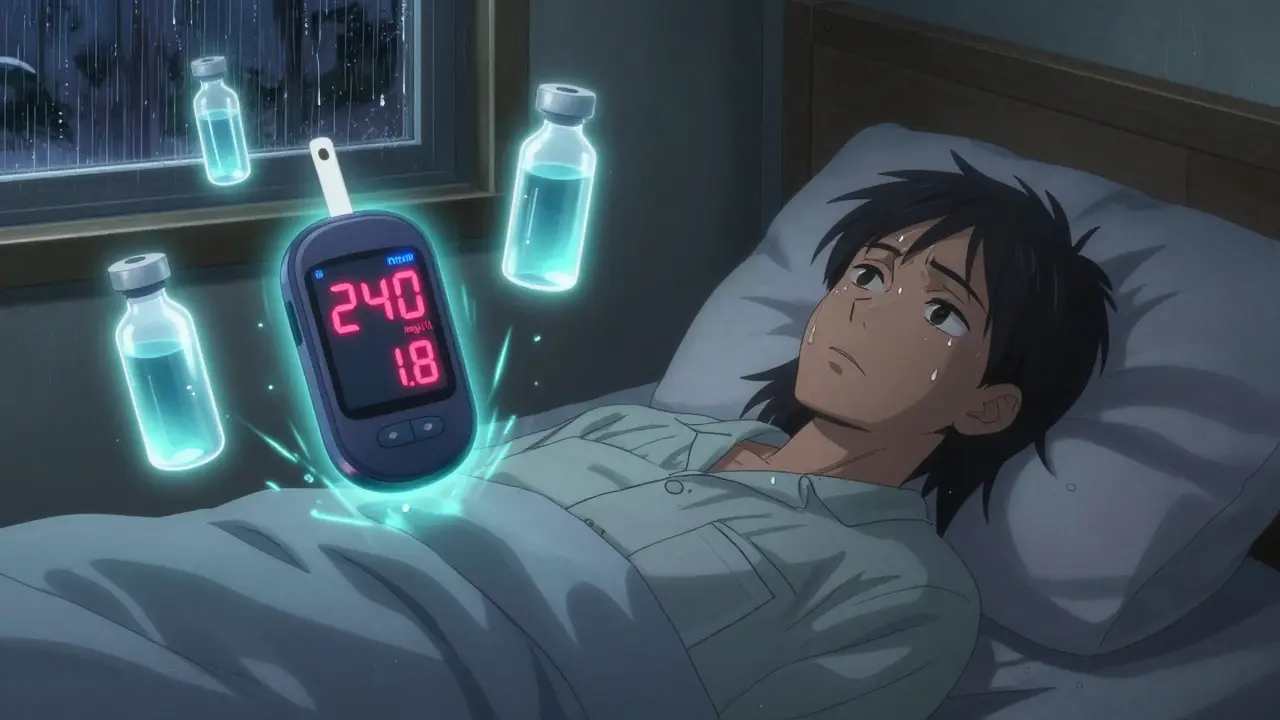
Feeling under the weather is hard enough. But if you have diabetes, a cold, flu, or stomach bug can turn dangerous fast. Your body releases stress hormones like cortisol and adrenaline when you’re sick - even if you’re not eating. These hormones fight insulin, causing blood sugar to spike, sometimes to dangerous levels. And here’s the scary part: you might not feel hungry, but your body still needs insulin. Skipping it because you’re not eating is one of the most common mistakes that leads to diabetic ketoacidosis (DKA), a life-threatening condition that sends over 27% of diabetes-related hospitalizations in the U.S. every year.
Never Skip Your Basal Insulin - Even If You Can’t Eat
One rule is non-negotiable: never stop your long-acting insulin (like Lantus, Levemir, or Basaglar) just because you’re not eating. Your body still needs insulin to keep fat from breaking down into ketones. Without it, your blood sugar can climb into the 300-500 mg/dL range, and ketones can build up silently - no vomiting, no nausea, just a slow creep toward DKA.
For Type 1 diabetes, your basal insulin should stay at or above 80% of your usual dose. For Type 2 diabetes on insulin, the same rule applies. Even if you’re only sipping broth, your liver is still pumping out glucose. Skipping insulin during illness is like turning off the brake pedal while going downhill - you’re not in control anymore.
If your blood sugar is high and you’re using an insulin pump, you may need to increase your basal rate by 20% for 12 hours when ketones are moderate or large. This isn’t a guess - it’s based on decades of clinical observation. Don’t wait for your doctor to tell you. Have this plan ready before you get sick.
Check Your Blood Sugar Every 2-4 Hours - No Exceptions
When you’re healthy, checking blood sugar twice a day might feel enough. When you’re sick, that’s not even close. You need to check every 2-3 hours if you’re a child, and every 3-4 hours if you’re an adult. Set alarms. Write it down. Don’t rely on memory.
Here’s what to do based on your numbers:
- Below 100 mg/dL: You’re at risk for low blood sugar. Take 15 grams of fast-acting carbs - juice, glucose tabs, or even regular soda if that’s all you can keep down.
- Between 100-180 mg/dL: You’re in the target zone. Keep hydrating and monitor closely.
- Above 180 mg/dL: Start checking ketones. This is your warning sign.
- Above 240 mg/dL for two checks in a row: Test for ketones immediately. Don’t wait.
Use a blood ketone meter if you have one. Urine strips are outdated and unreliable. They can show “negative” even when your ketones are dangerously high. Blood ketones above 1.0 mmol/L mean you need to act. Above 1.5 mmol/L? That’s an emergency signal.
Hydration Isn’t Optional - It’s Your Lifeline
When your blood sugar is high, your kidneys try to flush out the extra glucose by pulling water from your body. That’s why you feel thirsty, urinate often, and get dehydrated fast. Dehydration makes ketones worse and makes your blood sugar harder to control.
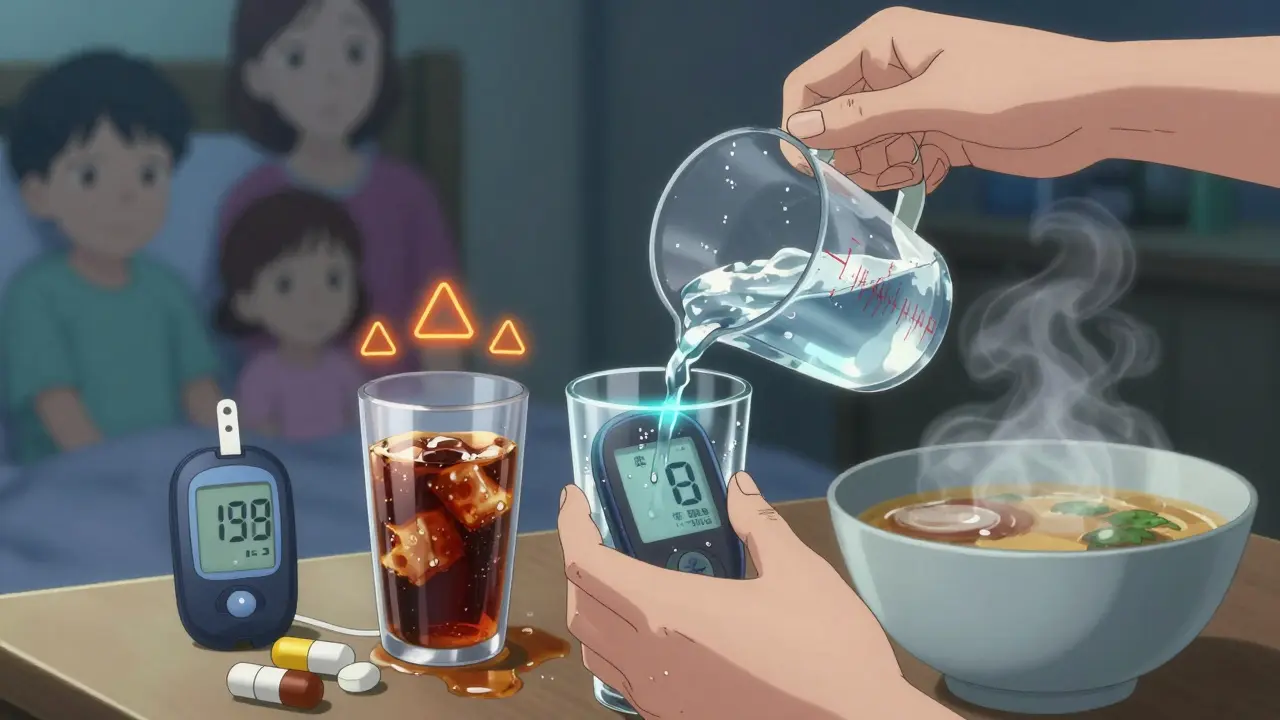
Adults: Drink 6-8 ounces of fluid every hour. That’s about a cup every 60 minutes. Don’t wait until you’re parched. Start early.
What you drink matters just as much as how much:
- If your blood sugar is above 180 mg/dL: Stick to sugar-free fluids - water, diet soda, broth, or unsweetened tea.
- If your blood sugar is between 100-180 mg/dL: Alternate between water and fluids with 15 grams of carbs - like half a cup of regular Gatorade or 4 ounces of apple juice.
- If your blood sugar is below 100 mg/dL: Use sugary fluids to prevent lows. Don’t be afraid to use juice or regular soda.
For kids, the rule is simple: their age in ounces per hour. A 10-year-old needs 10 ounces every hour. That’s a lot. If they’re vomiting, try small sips every 10-15 minutes. If they can’t keep anything down for more than 4 hours, call your doctor or go to the ER. IV fluids are better than waiting for DKA to hit.
Ketone Checks: What the Numbers Really Mean
Not all ketones are created equal. And not all tests tell you the truth.
Blood ketone meters are the gold standard. They give you a number in mmol/L:
- 0.6 mmol/L or lower: Normal. No action needed.
- 0.6-1.5 mmol/L: Moderate ketones. Increase insulin, hydrate, and recheck in 2 hours.
- 1.5 mmol/L or higher: High ketones. This is a red flag. If you’re on a pump, change your infusion site immediately. Call your doctor. If you feel nauseous, have abdominal pain, or your breath smells fruity - go to the ER.
Urine ketone strips? They’re outdated. They can be negative even when your blood ketones are high. They also take hours to show results. By the time you see “large” on the strip, you’re already in danger.
Many people think ketones only matter for Type 1 diabetes. That’s wrong. If you have Type 2 diabetes and you’re on insulin, you’re at risk too. Even if you take pills, if your blood sugar stays above 240 mg/dL for more than a day, test for ketones. You might be slipping into a dangerous state called ketosis-prone Type 2 diabetes - and you won’t know until it’s too late.
What to Do When You Can’t Eat or Keep Fluids Down
When you’re too sick to eat, your body still needs energy. You need 15 grams of carbs every hour if your blood sugar is below 180 mg/dL. If you can’t eat solid food, here’s what works:
- 1/2 cup of regular soda (15g carbs)
- 1/2 cup of apple juice (15g carbs)
- 1 glucose tablet or gel (15g carbs)
- 1/2 cup of regular pudding or ice cream (if you can tolerate it)
If you’re vomiting, try small sips every 10 minutes. Ice chips count. Gatorade pops count. The goal is to keep carbs and fluids coming - even in tiny amounts. If you can’t keep anything down for more than 4 hours, don’t wait. Go to the hospital. IV fluids and insulin can be given safely there. DKA doesn’t wait for your next doctor’s appointment.
Your Sick Day Kit: Don’t Wait Until You’re Ill
Preparation saves lives. Build a sick day kit now - before you get sick. Here’s what to keep on hand:
- Unopened ketone test strips (check expiration - they lose accuracy after 6 months)
- Extra insulin (at least a 7-day supply)
- Glucose tabs or gel
- Sugar-free and sugary fluids (juice, broth, electrolyte drinks)
- A measuring cup (8 oz size) - don’t guess your fluid intake
- A list of emergency contacts and your doctor’s number
- A logbook or app to record blood sugar, ketones, fluids, and insulin doses
Store it in a visible spot - not buried in a cabinet. When you’re feverish and confused, you won’t remember where you put it.
Watch Out for Hidden Sugar and Alcohol in Cold Medicines
Over-the-counter cough syrups, cold pills, and throat sprays often contain sugar, alcohol, or both. Alcohol can mask low blood sugar. Sugar can spike it. Always check the label. Look for “sugar-free” versions. If you’re unsure, call your pharmacist. A single teaspoon of syrup can have 5-10 grams of sugar. That’s half your hourly carb goal.
Also avoid decongestants like pseudoephedrine - they can raise blood sugar. Antihistamines are usually safer. When in doubt, ask your doctor or diabetes educator for a list of safe meds.
When to Call for Help - Don’t Wait
These are signs you need emergency care:
- Blood ketones above 1.5 mmol/L
- High blood sugar (over 240 mg/dL) for more than 6 hours with ketones
- Vomiting for more than 4 hours
- Difficulty breathing or fruity-smelling breath
- Confusion, extreme fatigue, or drowsiness
- Weight loss of 5 pounds or more in a few days
Don’t wait to see your doctor. Go to the ER or call 911. DKA can progress fast - especially in kids and older adults. The CDC reports that 2-5% of DKA cases are fatal. You can prevent that with quick action.
What’s Changed in 2026 - CGMs and Closed-Loop Systems
If you use a continuous glucose monitor (CGM) or a closed-loop insulin system (like a hybrid artificial pancreas), your rules are evolving. New guidelines say: if more than half your CGM readings are above 250 mg/dL for 12 hours straight, treat it like a high blood sugar with ketones - even if your meter says you’re fine.
But here’s the catch: some closed-loop systems automatically reduce or stop insulin if they sense you’re not eating. That’s dangerous during illness. You need to override that setting. Check your device manual. Know how to switch to manual mode. If you don’t, you’re relying on software that wasn’t built for sickness.
There’s no app that can replace your judgment. Your body is fighting an infection. It needs more insulin - not less.
Common Mistakes People Make - And How to Avoid Them
- Mistake: Skipping insulin because you’re not eating. Fix: Basal insulin is your safety net. Never skip it.
- Mistake: Waiting until you feel awful to test ketones. Fix: Test as soon as your blood sugar hits 180 mg/dL.
- Mistake: Using urine strips instead of blood ketone meters. Fix: Blood ketones give real-time data. Get a meter if you don’t have one.
- Mistake: Drinking too much water and forgetting carbs. Fix: Hydration is key, but you still need fuel. 15g carbs every hour if blood sugar allows.
- Mistake: Not having a plan. Fix: Write it down. Practice it. Keep your kit ready.
Sick days don’t care if you’re busy, tired, or scared. They happen. But with the right plan, you can get through them without ending up in the hospital. You’ve managed your diabetes this long - now you’ve got the tools to handle illness, too.
Can I skip my insulin if I’m not eating because I’m sick?
No. You should never skip your long-acting insulin, even if you’re not eating. When you’re sick, your body still needs insulin to prevent fat from breaking down into ketones. Skipping insulin can lead to diabetic ketoacidosis (DKA), even if your blood sugar seems normal. Keep your basal insulin at 80% or more of your usual dose.
How often should I check my blood sugar when I’m sick?
Check every 2-3 hours if you’re a child, and every 3-4 hours if you’re an adult. If your blood sugar is above 180 mg/dL, start checking ketones. If it’s above 240 mg/dL for two checks in a row, call your doctor. Don’t wait - high blood sugar during illness can turn dangerous quickly.
Should I use urine or blood ketone tests?
Always use a blood ketone meter if you have one. Urine strips are slow, inaccurate, and can give false negatives. Blood ketones give you real-time numbers in mmol/L. A reading above 1.5 mmol/L means you need immediate action - change your pump site, increase insulin, and seek medical help if you’re feeling worse.
What fluids should I drink when I’m sick with diabetes?
If your blood sugar is above 180 mg/dL, drink sugar-free fluids like water, diet soda, or broth. If it’s between 100-180 mg/dL, alternate between water and fluids with 15 grams of carbs - like half a cup of regular Gatorade or apple juice. If it’s below 100 mg/dL, use sugary fluids to prevent lows. Drink 6-8 ounces every hour. Don’t wait until you’re thirsty.
When should I go to the ER during a sick day?
Go to the ER if you have blood ketones above 1.5 mmol/L, are vomiting for more than 4 hours, have trouble breathing, feel confused or extremely tired, or have lost 5 pounds or more in a few days. Also go if your blood sugar stays above 240 mg/dL for more than 6 hours with ketones present. These are signs of diabetic ketoacidosis - it’s an emergency.
Do I need to worry about ketones if I have Type 2 diabetes?
Yes - if you take insulin, you’re at risk for ketones and DKA during illness. Even if you take pills only, test for ketones if your blood sugar stays above 240 mg/dL for more than a day. Some people with Type 2 diabetes can develop a dangerous form of ketosis called ketosis-prone Type 2 diabetes, especially if they’re dehydrated or have an infection.
Can over-the-counter cold medicines affect my blood sugar?
Yes. Many cough syrups, lozenges, and cold tablets contain sugar or alcohol. Sugar can raise your blood glucose. Alcohol can hide signs of low blood sugar and interfere with liver function. Always choose sugar-free versions. If you’re unsure, ask your pharmacist or check the label for carbs per serving.
What should I include in my sick day kit?
Your sick day kit should include: unopened blood ketone test strips, extra insulin (at least 7 days’ supply), glucose tabs or gel, sugar-free and sugary fluids, a measuring cup (8 oz), a logbook or app to track readings, and emergency contact numbers. Store it in an easy-to-find place. Don’t wait until you’re sick to build it.


