You’re standing at the pharmacy counter, holding a prescription for your cholesterol medication. The pharmacist says it’s $180 out of pocket. You feel your stomach drop. Then they ask: "Have you tried a discount card?" You nod, unsure. You’ve seen ads for GoodRx, Blink Health, and manufacturer coupons promising $50 or $100 off. But do they really work? Or are they just another marketing trick?
The short answer: yes, they work - but only if you know how to use them. And that’s where most people get stuck.
How Prescription Discounts Actually Work
There are three main types of prescription discount programs: manufacturer coupons, third-party discount cards, and prescription assistance programs (PAPs). Each works differently - and each has limits.
Manufacturer coupons come straight from drug companies. They’re usually for brand-name drugs like Lyrica or Humira. You sign up on the company’s website, print or download a coupon, and present it at the pharmacy. The coupon cuts your copay - sometimes to $0. But here’s the catch: it doesn’t lower the drug’s list price. The insurance company or Medicare still pays the full amount. That’s why the Congressional Budget Office estimates these coupons could add $2.7 billion to Medicare Part D spending each year. They help you, but they don’t help the system.
Third-party discount cards like GoodRx, SingleCare, and Blink Health are different. They don’t come from drugmakers. Instead, they negotiate cash prices directly with pharmacies. Think of them like a bulk-buying club for prescriptions. You enter your drug name and zip code, and the app shows you which local pharmacy has the lowest cash price. For generics, the savings are huge. One 2022 study found a 90-day supply of metformin dropped from $52.80 to $18.60 using GoodRx. That’s a 65% cut. For brand-name drugs? Not so much. The same study showed a heart failure combo that cost $1,300 came down to just $1,212 - barely a 7% discount.
Prescription assistance programs are for people with no insurance or very low income. These are run by nonprofits or clinics. You apply, prove your income, and if you qualify, you get the medication free. One Tennessee free clinic saved patients an average of $3,649 per person over 13 months. That’s life-changing money. But the process is slow. You need paperwork, proof of income, and sometimes a doctor’s letter. It’s not instant, but it’s the most powerful tool if you qualify.
When Discount Cards Save You the Most
If you’re trying to save money, focus on generics. That’s where the real savings live.
Take a look at these real examples from 2024:
- Metformin (generic for type 2 diabetes): $15 with GoodRx vs. $42 with insurance
- Lisinopril (blood pressure): $4 for 30 tablets with discount card vs. $30 with Medicare
- Atorvastatin (generic Lipitor): $7 for 90 tablets vs. $58 with insurance
These aren’t outliers. A 2024 JAMA study showed coupon use cuts out-of-pocket costs by nearly 85% - but only when it’s for generics. For brand-name drugs, the average savings is under 12%. That’s why Blue Cross Blue Shield found 54% of people who abandoned their prescriptions because of cost ended up using discount cards - mostly for generics.
Here’s a simple rule: If your drug is available as a generic, always check a discount card first - even if you have insurance. Sometimes the cash price is lower than your copay. And you don’t need to tell your insurer you’re using it.
When They Don’t Help - And Why
Not all coupons work for everyone. And some actually make things worse.
First, Medicare Part D doesn’t allow you to combine manufacturer coupons with your plan. If you’re on Medicare, using a coupon might not even be allowed. Some plans will reject it. Others will let you use it, but then count the coupon amount toward your deductible - which means you pay more later. It’s a mess.
Second, brand-name coupons often lock you into expensive drugs. A 2024 study found that when patients got coupons for brand-name statins, they were 60% more likely to stay on the brand instead of switching to a cheaper generic. That’s good for the drug company. Not so good for your wallet - or the system.
Third, pricing is inconsistent. One user on Reddit saved $47 on metformin using GoodRx. Another saved just $1.20 on Lyrica. Why? Because pharmacies set their own cash prices. The same drug can cost $12 at Walgreens and $28 at CVS - even with the same coupon. You have to shop around. And that takes time.
Pharmacists don’t always know how to process these cards. One in four users reported confusion at the counter. You might have to explain it. Or go to a different pharmacy. That’s frustrating - but it’s the reality.
Real People, Real Savings
Let’s talk about actual experiences.
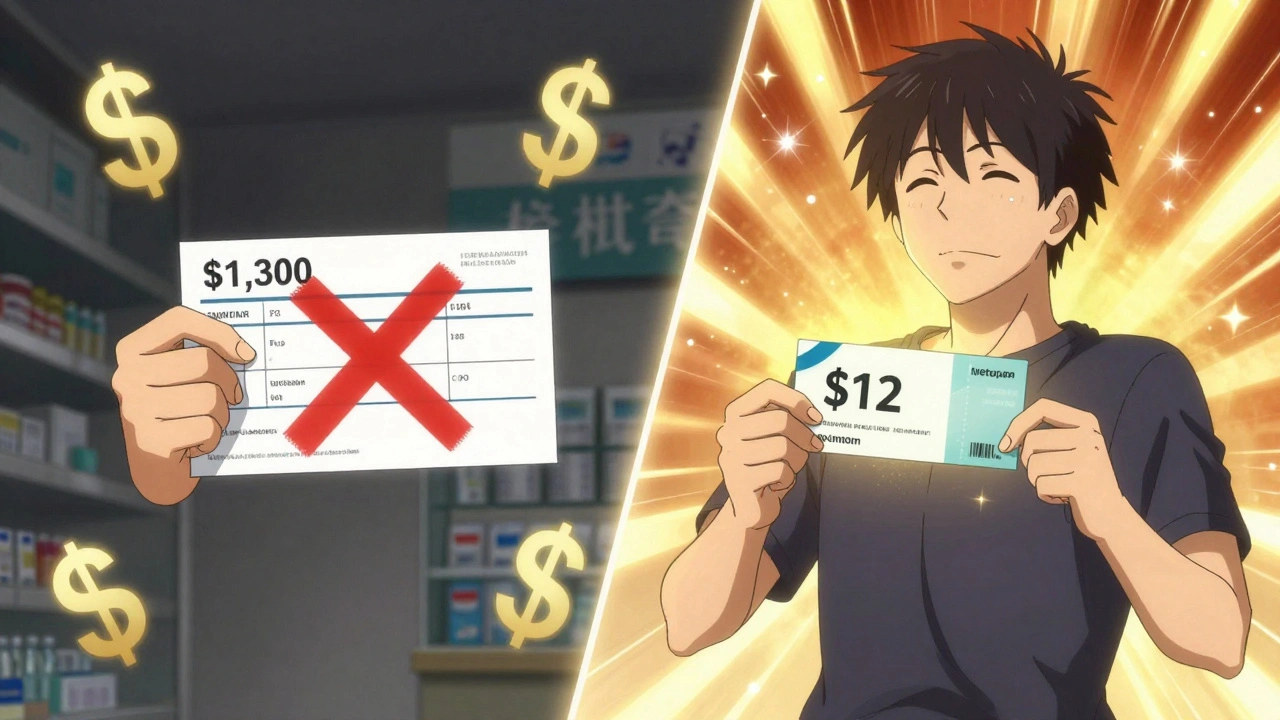
One woman in Ohio, on a fixed income, was paying $98 a month for her thyroid medication. Her insurance only covered $50. She found a GoodRx coupon that brought it down to $12. She now saves $1,000 a year. That’s groceries, gas, or a dentist visit.
A veteran in Texas had a $1,300 monthly prescription for a rare autoimmune drug. He didn’t qualify for PAPs. He used a manufacturer coupon - and paid $0. He’s been on it for two years. Without it, he’d have stopped taking it.
But then there’s the flip side: a man in Florida used a coupon for his brand-name asthma inhaler. It saved him $3. He still paid $87. He says, “It felt like a trick. They made me think I was getting a deal.”
The pattern is clear: the bigger the gap between the brand-name price and the generic, the more you save. If your drug has a cheap generic version - use it. If it doesn’t? Then coupons might help - but don’t expect miracles.
How to Use Them Without Getting Screwed
Here’s how to use discount programs the smart way:
- Check your drug’s generic status. Use Drugs.com or MedlinePlus. If a generic exists, it’s your best bet.
- Compare prices on GoodRx, SingleCare, and Blink Health. Enter your drug, dosage, and zip code. Look at all nearby pharmacies.
- Call your pharmacy and ask: “What’s your cash price for this?” Don’t assume the app is right - prices change daily.
- If you’re on Medicare, talk to your pharmacist before using a manufacturer coupon. Some plans ban them.
- For expensive brand-name drugs, check if the manufacturer has a patient assistance program. Go to NeedyMeds.org - it’s free and trustworthy.
- Don’t use a coupon if your insurance already gives you a lower price. You’re not saving anything.
Pro tip: Download the GoodRx app. Set up price alerts. You’ll get notified when your drug drops below a certain price. It takes 30 seconds to set up - and could save you hundreds a year.
What’s Changing in 2025
The game is shifting. The Inflation Reduction Act caps Medicare Part D out-of-pocket costs at $2,000 a year starting in 2025. That’s huge. For seniors on expensive drugs, this could make discount cards less necessary.
Also, Medicare is now negotiating prices for 10 high-cost drugs in 2025 - with more coming each year. That means the gap between brand-name and generic prices may shrink. If that happens, the need for coupons will drop.
But until then? They’re still a lifeline - especially for the 21% of Americans without insurance, or those with high-deductible plans.
Bottom Line: Do They Work?
Yes - but not for everyone, and not for every drug.
If you’re paying cash for a generic medication, discount cards can cut your bill by 60-80%. That’s real money.
If you’re on Medicare or have good insurance, check your copay first. Sometimes it’s cheaper than the coupon.
If you’re stuck with an expensive brand-name drug and no insurance, go straight to the manufacturer’s patient assistance program. Don’t waste time on coupons - they won’t help enough.
And if you’re confused? Ask your pharmacist. They’re not paid to sell you coupons - they’re paid to help you get your meds. Most of them know which programs actually work.
Prescription discounts aren’t magic. But if you use them the right way - they’re one of the few tools left that actually lower your drug costs.


