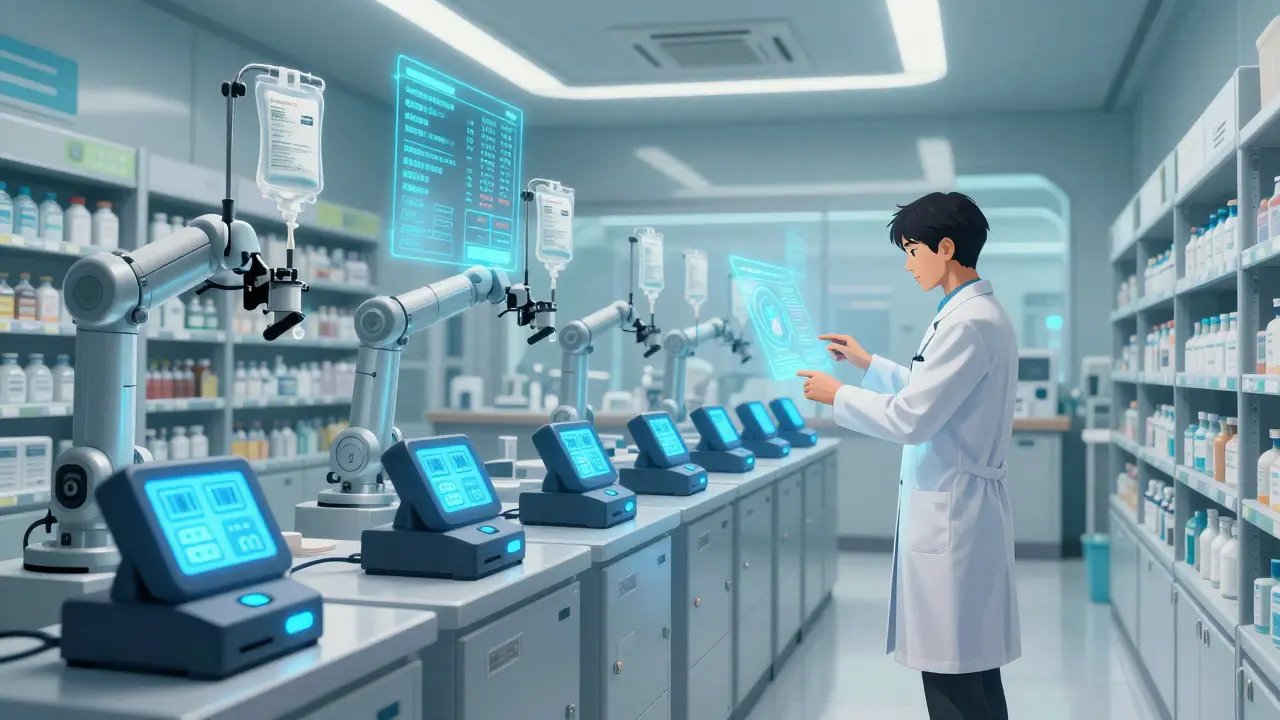
Every year, tens of thousands of patients in the U.S. are harmed or killed by medication errors - many of them avoidable. These aren’t just mistakes made by tired pharmacists. They’re often the result of broken workflows, manual checks, and systems that haven’t kept up with the complexity of modern medicine. That’s why pharmacy workflow and error prevention systems aren’t just nice-to-have tools anymore. They’re essential for keeping patients safe.
What Exactly Is a Pharmacy Workflow?
A pharmacy workflow is the sequence of steps a pharmacy follows to get a medication from prescription to patient. It starts when a doctor sends an e-prescription, or when a paper script comes in. Then comes verification, dispensing, labeling, counseling, and finally, handing the bottle to the patient. Sounds simple? It’s not. Each step has multiple points where something can go wrong.Think about it: a pharmacist has to confirm the right drug, the right dose, the right patient, the right route, and check for allergies or interactions. All while juggling 50 other scripts, answering phone calls, and managing inventory. One missed interaction, one misread label, one wrong vial - and someone could end up in the ER.
That’s where workflow systems come in. These aren’t just fancy computers. They’re integrated networks of hardware and software designed to remove guesswork. Barcode scanners that check every vial against the prescription. Robots that mix IV bags with milligram precision. Software that flags drug interactions before the pharmacist even opens the chart. Systems like BD Pyxis™ and Wolters Kluwer’s Simplifi+ IV Workflow Management don’t just speed things up - they stop errors before they happen.
How These Systems Prevent Dispensing Errors
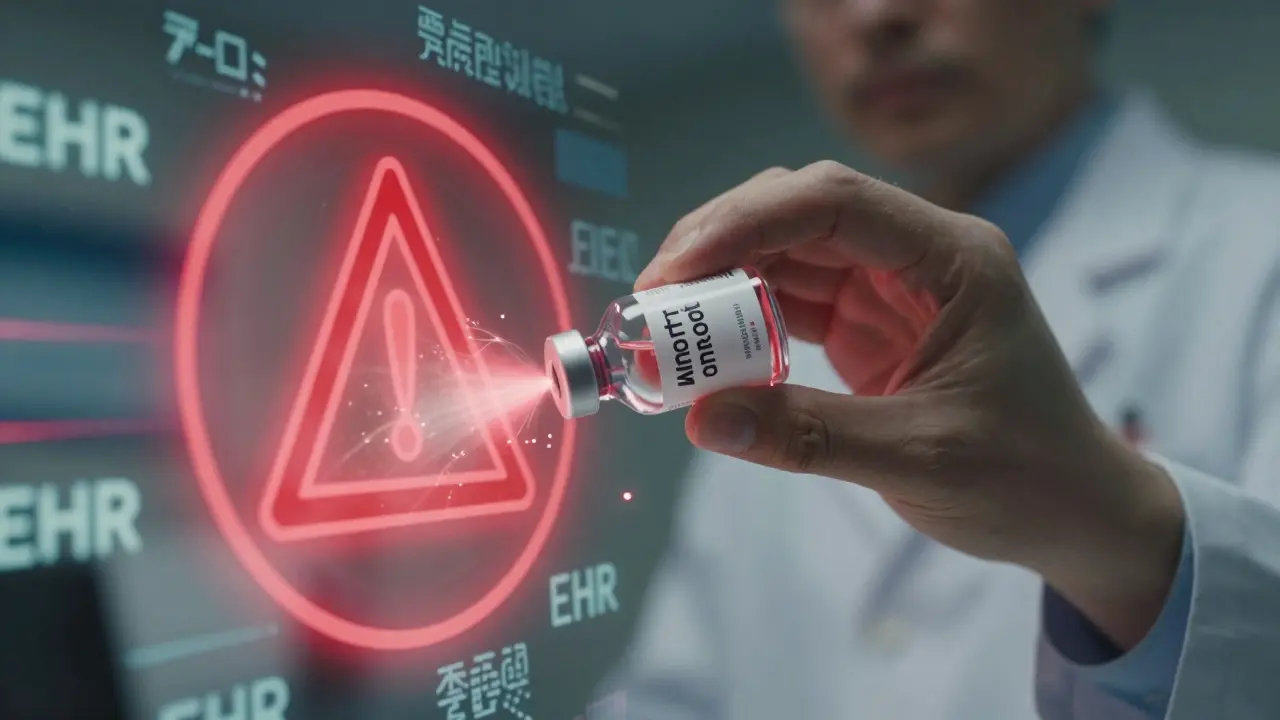
The most powerful feature of modern pharmacy systems is automation with verification. Let’s say a prescription comes in for warfarin. The system doesn’t just pull the bottle off the shelf. It scans the barcode on the bottle, compares it to the e-prescription, checks the patient’s allergy history in the EHR, and runs a drug interaction screen. If the patient is also on amiodarone - a known dangerous combo - the system flashes a red alert. The pharmacist sees it before touching the medication.Studies show these systems detect 14 times more errors than manual checks alone. That’s not a guess. It’s from peer-reviewed data in hospital pharmacy journals. The reason? Machines don’t get tired. They don’t skip steps. They don’t misread handwriting. They don’t assume “this looks right.”
IV compounding is where these systems shine the most. Mixing chemotherapy or antibiotics by hand is risky. A single drop too much or too little can be fatal. Systems like Simplifi+ use robotic arms that measure liquids to within 0.1 mL. They document every step in real time. They tag the bag with a unique barcode linked to the patient. If the nurse scans it at the bedside and the system says it’s not the right patient, the IV doesn’t go in.
Inventory management is another silent hero. Expired medications? The system flags them days before they’re due. Low stock? It auto-orders. This isn’t just about saving money - it’s about preventing errors from using the wrong substitute or running out of a critical drug during an emergency.
Key Components of Modern Pharmacy Systems
These systems aren’t one-size-fits-all. They’re made of modules that work together:- Barcode Verification - Every bottle, vial, and IV bag has a unique code. Scanning it confirms it matches the prescription and patient.
- Electronic Prescription Processing - No more deciphering scribbles. Prescriptions come in digitally from clinics and hospitals.
- Drug Interaction Alerts - Real-time checks against patient history, allergies, and current meds. These aren’t generic warnings - they’re tailored to the individual.
- Inventory Tracking - Tracks expiration dates, lot numbers, and stock levels. Alerts pharmacists when something’s about to expire or run out.
- EHR Integration - Uses HL7 protocols to pull patient data directly from electronic medical records. No more logging into three different systems.
- Robotics and Automation - Especially for IV compounding, robots handle mixing, labeling, and packaging with zero human touch.
- Workflow Management Software - Tools like Cflow and KanBo assign tasks, track progress, and notify staff when a script is stuck or delayed.
These components don’t work in isolation. They talk to each other. A barcode scan triggers a drug interaction check. A low inventory alert triggers an order. An EHR update triggers a refill reminder. That’s what makes the system powerful - it’s a closed loop.
Top Systems Compared
Not all systems are built the same. Here’s how some of the most common ones stack up:| System | Best For | Key Feature | Integration | Cost Range (Annual) |
|---|---|---|---|---|
| BD Pyxis™ | Hospital pharmacies, automated dispensing | Secure medication cabinets with biometric access | HL7, Epic, Cerner | $80,000-$200,000 |
| Simplifi+ IV Workflow (Wolters Kluwer) | IV compounding centers, infusion clinics | Robotic compounding with compliance tracking | HL7, USP <797> certified | $60,000-$180,000 |
| Cflow | Community and outpatient pharmacies | Customizable dispensing templates | Telus Health Kroll, EHRs | $40,000-$120,000 |
| KanBo | Workflow tracking and task management | Visual card system for prescription tracking | API-based, flexible | $30,000-$90,000 |
Big hospitals usually go with Pyxis or Simplifi+ because they need full compliance with USP <797> and <800> standards for sterile compounding. Smaller pharmacies often choose Cflow or KanBo because they’re easier to set up and cheaper. The key isn’t which one is “best” - it’s which one fits your workflow.
Implementation Challenges
Installing a new system sounds great - until the staff resists it. Many pharmacies spend 2 to 6 months transitioning. The biggest hurdles aren’t technical - they’re human.Pharmacists and techs are used to doing things a certain way. A barcode scanner might feel like extra work at first. The software might have a steep learning curve. Some staff feel like the system doesn’t trust them - which is a real emotional barrier.
That’s why successful implementations don’t just buy software. They redesign the workflow. They train staff in teams. They involve pharmacists in choosing the system. The American Society of Health-System Pharmacists (ASHP) says it clearly: “Technology alone won’t fix errors. Workflow redesign and training will.”
One hospital in Texas switched to Simplifi+ and saw a 78% drop in IV compounding errors within six months - but only after they held weekly feedback sessions and let staff suggest changes to the interface. That’s the secret: involve the people who use it every day.
Regulations and Compliance
You can’t just install any system and call it safe. In the U.S., pharmacies must follow strict rules:- USP <797> - Standards for sterile compounding. Systems must document every step, from cleaning to final check.
- USP <800> - Handling hazardous drugs like chemotherapy. Systems must track exposure and waste.
- HIPAA - Patient data must be encrypted and access-controlled. Cloud systems need 99.9% uptime and audit logs.
Systems that don’t meet these standards are a liability. A pharmacy using a non-compliant tool could face fines, lawsuits, or even lose its license. That’s why vendor certifications matter. Always ask: “Is this system audited for USP <797> and HIPAA?” Don’t take their word for it - ask for documentation.

What’s Next? AI and Predictive Analytics
The next wave isn’t just automation - it’s prediction. Some systems are now using AI to forecast inventory needs based on seasonal trends, patient volume, and even weather patterns. If flu season is coming, the system might auto-order more Tamiflu before the rush hits.Other systems are starting to flag patients at high risk for adverse reactions - not just based on their meds, but on their age, kidney function, or past hospital visits. One pilot program in Australia reduced readmissions by 22% by using AI to predict which patients were likely to miss refill reminders or have drug interactions.
Telehealth integration is also growing. If a patient gets a new prescription from a virtual visit, the system auto-flags it for pharmacist review before dispensing. No more delays from faxed scripts or lost paperwork.
Real Results, Real Impact
A community pharmacy in Perth switched to Cflow in early 2024. Before, they averaged 3 dispensing errors a month - mostly wrong doses or mislabeled bottles. After six months, they had zero. Why? Because the system forced double-checks. It didn’t let them skip the barcode scan. It didn’t let them override alerts without a second signature.They also cut prescription fill time from 22 minutes to 11. Staff morale improved. They weren’t rushing. They weren’t second-guessing. They knew the system had their back.
That’s the goal. Not just fewer errors - better work. Pharmacists get to do what they trained for: counseling patients, reviewing complex cases, catching subtle risks. Not chasing down misplaced scripts or scanning barcodes by hand.
Is This Right for Your Pharmacy?
Ask yourself these questions:- Do you ever miss a drug interaction because you were busy?
- Do you have to manually check expiration dates every week?
- Do you get complaints about long wait times?
- Have you ever had to recall a batch of meds because of a labeling error?
If you answered yes to any of these, you’re already paying the cost of not having a system. The cost isn’t just money. It’s risk. It’s stress. It’s the fear that one mistake could hurt someone.
There’s no perfect system. But there’s a better one than doing nothing. Start small. Pick one pain point - maybe IV prep or refill delays. Test a solution. Train your team. Measure the results. Then expand.
Medication safety isn’t about being perfect. It’s about building layers of protection. And today, those layers are digital.
What are the most common causes of dispensing errors in pharmacies?
The top causes are manual transcription errors, look-alike/sound-alike drug names, poor handwriting on paper prescriptions, rushed workflows, and lack of double-checking. Systems with barcode scanning and automated alerts reduce these by forcing verification at every step.
Can pharmacy automation systems replace pharmacists?
No. Automation handles repetitive, high-risk tasks like counting pills or checking interactions. But pharmacists are still needed to interpret complex cases, counsel patients, manage drug therapy, and make clinical decisions. The system supports them - it doesn’t replace them.
How long does it take to implement a pharmacy workflow system?
Most implementations take 3 to 6 months. The timeline includes vendor selection, staff training, system customization, integration with existing EHRs, and testing. Rushing it leads to errors and resistance. The best results come from phased rollouts and ongoing feedback.
Are these systems expensive for small pharmacies?
Enterprise systems can cost over $100,000 a year, but smaller solutions like Cflow or KanBo start around $30,000 annually. Many vendors offer subscription models with monthly payments. For small pharmacies, the ROI comes from fewer errors, less waste, faster fills, and lower liability risk - often paying for itself in under a year.
Do these systems work with electronic health records (EHRs)?
Yes - and they must. Modern systems use HL7 protocols to communicate bidirectionally with EHRs like Epic, Cerner, or Meditech. This lets them pull real-time patient data: allergies, lab results, current meds. Without this integration, the system can’t catch drug interactions or verify patient identity properly.
What’s the biggest mistake pharmacies make when adopting these systems?
Thinking it’s just a tech upgrade. The biggest failure is installing the software without changing workflows or training staff properly. Systems fail when pharmacists find workarounds because the tool doesn’t fit how they work. Success comes from involving frontline staff in design, testing, and feedback - not just buying and clicking “install.”


