
When you pick up a prescription, you might not realize the pharmacist is about to swap your brand-name drug for a cheaper generic - without telling you. In many states, that’s legal. But you have the right to stop it. You don’t have to accept a substitution. You can ask for the brand. And if you’re told you can’t, you’re being misled.
What Is Generic Substitution?
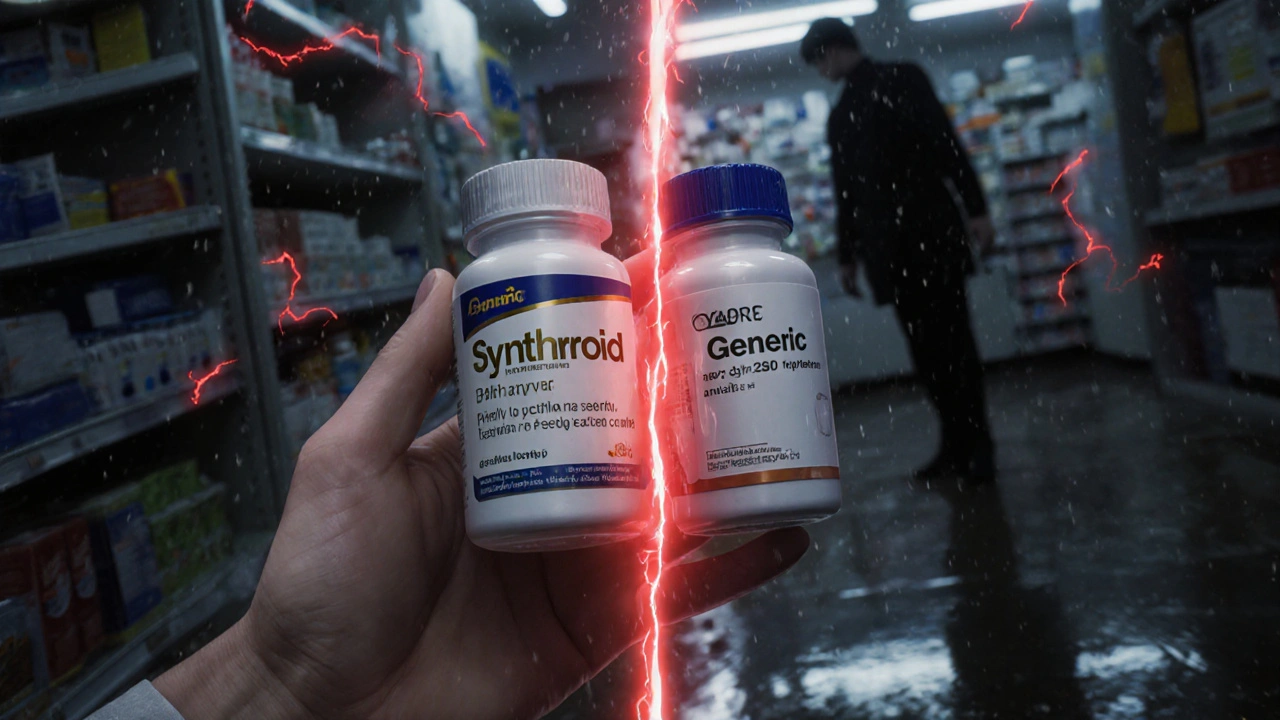
Generic substitution means a pharmacist replaces the brand-name drug your doctor prescribed with a chemically identical version. These generics have the same active ingredient, strength, and dosage form. They’re approved by the FDA and must meet the same safety standards. The difference? Generics cost 80-85% less. That’s why pharmacies, insurers, and pharmacy benefit managers (PBMs) push them. But here’s the catch: not all drugs are created equal. For medications with a narrow therapeutic index - like levothyroxine (Synthroid), warfarin, or certain seizure drugs - even tiny changes in how the body absorbs the drug can cause serious problems. A patient on stable thyroid medication who switches to a generic might feel fatigued, gain weight, or develop heart issues. One small study found that 1 in 5 patients on levothyroxine reported symptoms after switching. That’s not rare. It’s predictable.Your Legal Right to Say No
You don’t need a doctor’s note to refuse a generic. In 43 states, simply saying, “I decline substitution,” is enough. That’s it. No argument. No paperwork. Just say it clearly at the counter. Some states go further. In Alaska, Connecticut, Hawaii, Maine, Massachusetts, New Hampshire, and Vermont - plus Washington, D.C. - pharmacists must get your permission before swapping your drug. If they don’t ask, they’re breaking the law. And in 31 states and D.C., they’re required to notify you in writing or verbally that a substitution is happening. If they don’t, you can file a complaint with your state pharmacy board. Even if your state allows automatic substitution, you still have the final say. Pharmacists can’t force you to take a generic. They can’t pressure you by saying, “It’s mandatory,” or “You’ll pay more if you don’t.” Those are lies. If you’re told that, ask for the manager. Cite your state law. Most won’t risk a complaint.When You Need the Brand
Some drugs aren’t interchangeable - even if the FDA says they are. For example:- Levothyroxine (Synthroid, Tirosint): Small differences in absorption can throw off thyroid levels.
- Antiepileptics (Dilantin, Lamictal): Seizure control is fragile. Switching can trigger breakthrough seizures.
- Biosimilars (Basaglar, Humira): These aren’t generics. They’re complex biologics. Switching without notice can cause immune reactions or loss of effectiveness.
- Warfarin (Coumadin): Blood thinners require precise dosing. Generic switches can lead to clots or bleeding.
What to Do at the Pharmacy
Here’s how to handle it when you’re handed a generic you didn’t ask for:- Check the label. Does it say the brand name? If not, ask: “Is this the same as what my doctor prescribed?”
- If it’s a generic, say: “I decline substitution.” That’s all you need to say.
- If they push back: “I know my state law requires my consent. Can you check your policy?”
- If they still refuse: Ask for the manager. Say: “I’m exercising my legal right to refuse. I’d like to speak with someone about this.”
- If they still won’t comply, file a complaint with your state pharmacy board. They track these incidents.
Costs and Insurance: What You Might Not Know
You might think refusing a generic means paying more. Not always. Before 2018, many pharmacies were legally blocked from telling you when paying cash for the brand-name drug was cheaper than using your insurance co-pay. That’s because of “gag clauses” buried in contracts with PBMs. The 2018 Know the Lowest Price Act banned those clauses. Now, pharmacists can - and sometimes will - tell you: “The brand costs $15 cash. Your co-pay is $45.” If you’re paying out of pocket, always ask: “What’s the cash price for the brand?” You might be surprised. GoodRx and other apps can help you compare prices across pharmacies. Sometimes, the brand is cheaper than the generic with insurance. Also, some drugmakers offer patient assistance programs. Pfizer, Merck, and others have programs that give brand-name drugs for free or at low cost to qualifying patients. Ask your pharmacist or visit the manufacturer’s website.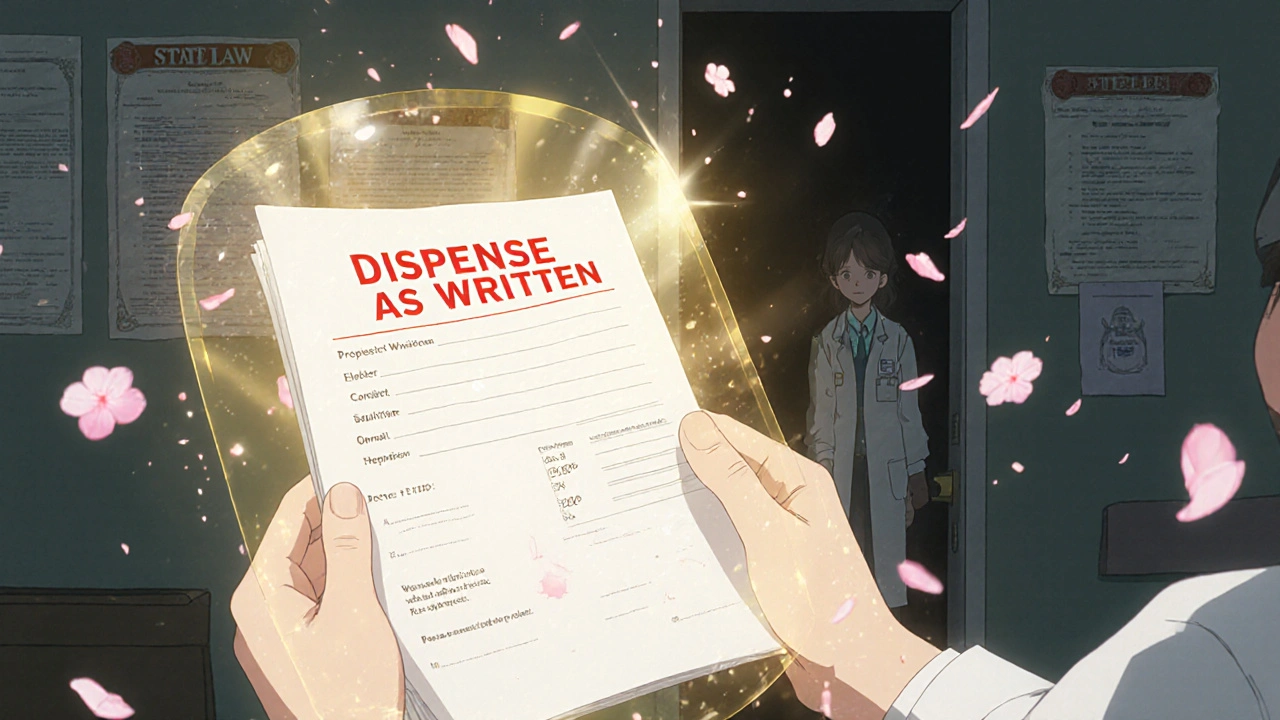
What to Do If You’ve Already Been Switched
If you didn’t know a substitution happened - and you feel different since then - act fast.- Check your pill bottle. Compare the name and shape to your last prescription.
- Call your doctor. Tell them you suspect a switch. Ask for a blood test if it’s a drug like warfarin or levothyroxine.
- Request your prescription be labeled “dispense as written” going forward.
- Report any adverse reaction to the FDA’s MedWatch system. Even one report helps track problems.
Resources to Protect Yourself
You don’t have to figure this out alone:- Visit your state pharmacy board’s website. All 50 states have one. Search “[Your State] pharmacy board substitution laws.”
- Use the FDA’s Orange Book to check if your drug is rated therapeutically equivalent. Type your drug name into the search tool.
- Call the National Consumers League’s Medication Safety Hotline for free guidance.
- Join patient groups like the National Organization for Rare Disorders (NORD) if you’re on a specialty drug.
Bottom Line: You’re in Control
Generic drugs are great - for many people, for many drugs. But they’re not right for everyone. Your health isn’t a cost-saving metric. You have the right to know what you’re getting. You have the right to say no. And you have the right to insist on the medication your doctor prescribed. Don’t wait for a bad reaction to learn your rights. Know them now. Say it clearly. Keep records. Speak up. Your body, your choice.Can a pharmacist substitute my brand-name drug without telling me?
In 19 states, yes - pharmacists can substitute automatically. But in 31 states and Washington, D.C., they must notify you. In 7 states plus D.C., they must get your permission first. If you weren’t told, they broke the law. Always check your prescription label and ask if a substitution occurred.
Do I need a doctor’s note to refuse a generic?
No. In 43 states, simply saying “I decline substitution” is legally enough. But if you have a medical reason - like sensitivity to a generic version of levothyroxine or an antiepileptic - ask your doctor to write “dispense as written” or “brand medically necessary” on the prescription. That legally blocks substitution in 48 states.
Is it safe to switch from a brand to a generic for thyroid medication?
Levothyroxine has a narrow therapeutic index, meaning small changes in absorption can cause symptoms like fatigue, weight gain, or heart palpitations. While the FDA says generics are equivalent, many endocrinologists and patients report issues after switching. If you’re stable on Synthroid or Tirosint, it’s safer to stay on it. Ask your doctor to write “dispense as written.”
Can I be charged more if I refuse a generic?
Sometimes, but not always. Your insurance might charge a higher co-pay for the brand. But under the 2018 Know the Lowest Price Act, pharmacists can now tell you if paying cash for the brand is cheaper than using insurance. Always ask: “What’s the cash price?” You might pay less out of pocket.
What if the pharmacy refuses to give me my brand-name drug?
Ask for the manager. If they still refuse, file a complaint with your state pharmacy board. They investigate violations of substitution laws. You can also report the incident to the FDA’s MedWatch system. Pharmacies cannot legally deny your right to refuse substitution - and many will comply once you assert your rights clearly.


