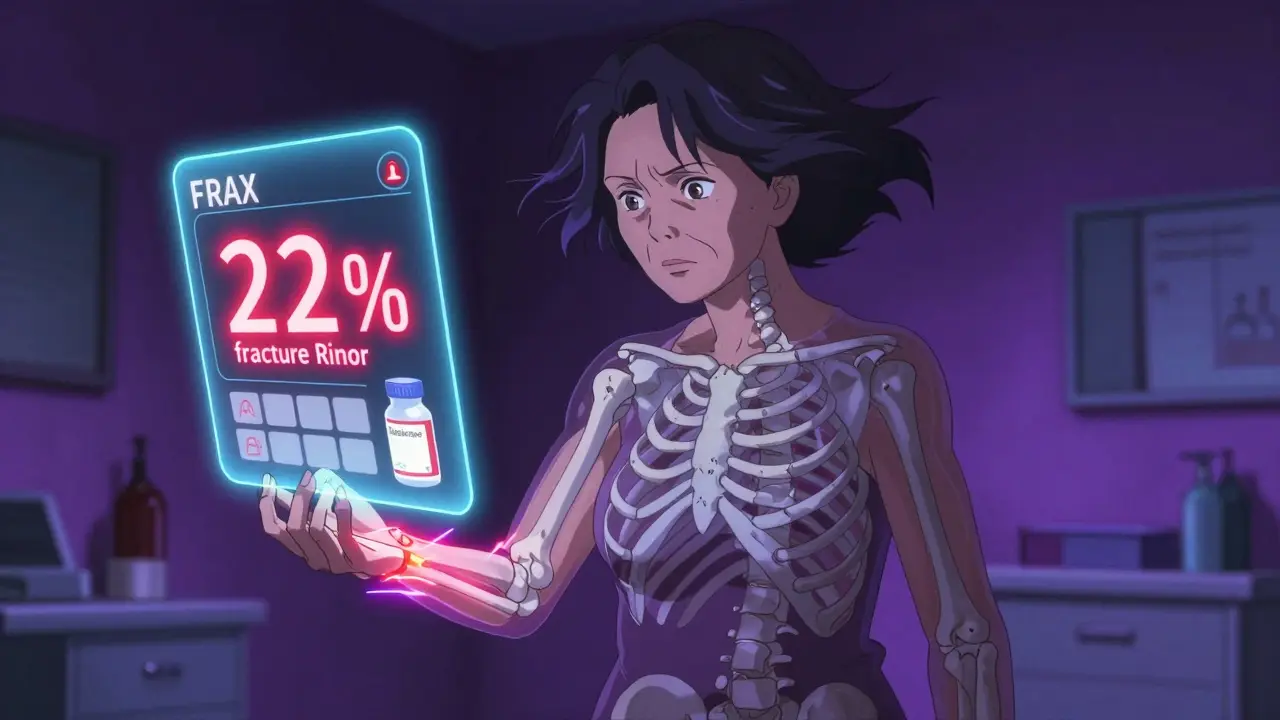
When your hormones are out of balance, your bones pay the price. Conditions like type 1 diabetes, overactive thyroid, low testosterone, or early menopause don’t just affect energy, mood, or weight-they quietly weaken your skeleton. This isn’t just about getting older. It’s about how specific endocrine disorders sabotage bone strength in ways that regular bone density scans often miss. That’s where the FRAX tool and bisphosphonates come in. Together, they form the backbone of modern fracture prevention for people with endocrine diseases.
Why Endocrine Disorders Break Bones
Your bones aren’t just static structures. They’re alive, constantly being broken down and rebuilt. Hormones control this process. When something goes wrong in your endocrine system, the balance tips-and bone loss accelerates. Take type 1 diabetes. People with this condition have a 6 to 7 times higher risk of breaking a bone-even when their bone mineral density (BMD) looks perfectly normal on a DEXA scan. That’s the "diabetic paradox." The problem isn’t density; it’s quality. High blood sugar damages bone structure at a microscopic level, making bones brittle even if they seem thick. Hyperthyroidism is another silent killer of bone. Too much thyroid hormone speeds up bone turnover. Studies show even mild, untreated cases raise fracture risk by 15-20%. Hypogonadism-whether from natural hormone decline, prostate cancer treatment, or premature menopause-can cause bone loss at 2-4% per year. That’s faster than most postmenopausal women lose bone. And it’s not just hormones. Chronic malnutrition, liver disease, and long-term steroid use all pile on. These aren’t random risks. They’re predictable, measurable, and treatable-if you know how to look for them.What Is FRAX, and Why It Matters More Than a DEXA Scan Alone
The FRAX tool isn’t fancy tech. It’s a simple calculator. But it’s the most important tool in osteoporosis management today. Developed by the University of Sheffield and used in over 120 countries, FRAX estimates your 10-year risk of a major fracture (like hip, spine, wrist, or shoulder) or a hip fracture specifically. Here’s what it uses: age, sex, weight, height, whether you’ve had a prior fracture, if your mom or dad broke a hip, if you smoke, if you drink more than three alcoholic drinks a day, if you have rheumatoid arthritis, or if you’re on long-term steroids. For people with endocrine diseases, FRAX includes those conditions as risk factors. But here’s the catch: FRAX underestimates fracture risk in type 1 diabetes by about 30%. That’s not a glitch-it’s a blind spot. The tool was built on data from the general population. It doesn’t fully account for how diabetes damages bone quality. That’s why FRAX is never used alone. It’s a gatekeeper. If your FRAX score puts you near or above the treatment threshold, you get a DEXA scan. If your BMD is low, you get treatment. If your BMD is normal but your FRAX score is high? You still might need treatment. The thresholds are clear: treat if you’ve had a prior hip or spine fracture. Or if your T-score is -2.5 or lower. Or if you have osteopenia (T-score between -1 and -2.5) AND your 10-year risk of major fracture is 20% or higher-or your hip fracture risk is 3% or higher. These numbers aren’t arbitrary. They’re based on decades of clinical trials.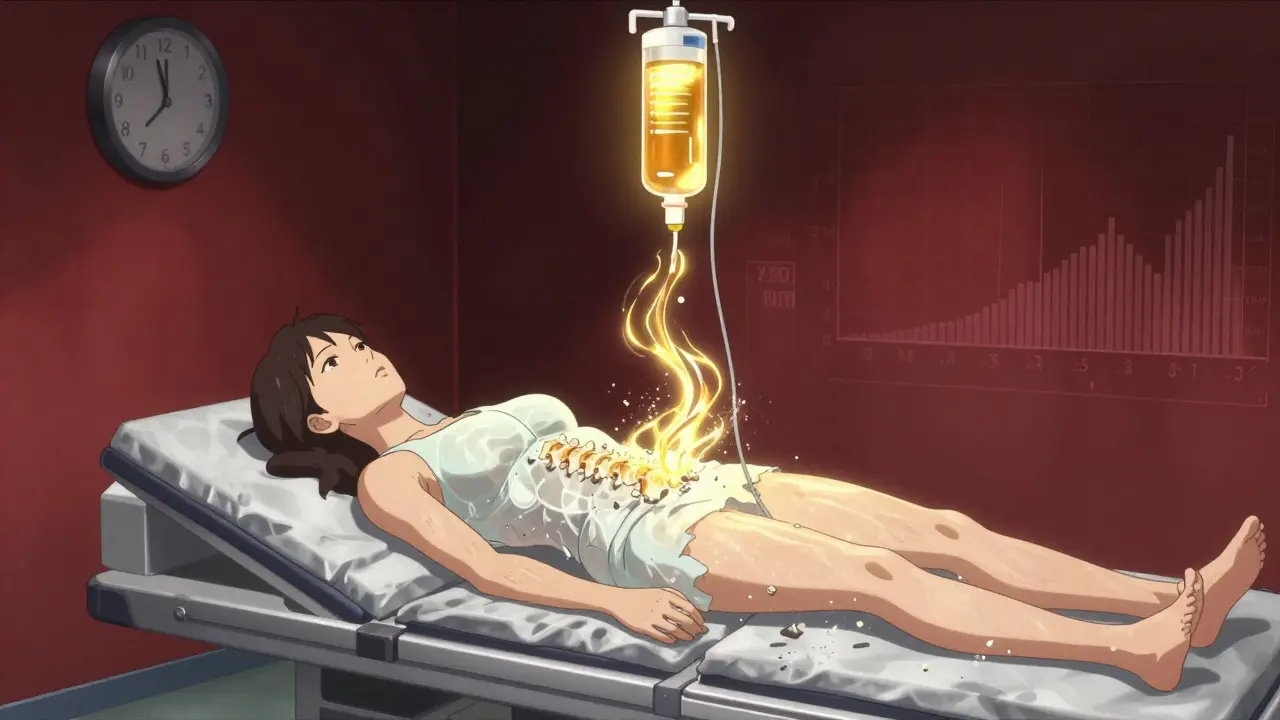
Bisphosphonates: The First-Line Defense
If your risk is high, bisphosphonates are the go-to treatment. These drugs-like alendronate (Fosamax), risedronate (Actonel), and zoledronic acid (Reclast)-work by shutting down bone-eating cells called osteoclasts. They don’t build new bone. They stop the destruction. The numbers speak for themselves: bisphosphonates cut vertebral fractures by 40-70% and hip fractures by 40-50%. That’s not a small improvement. That’s life-changing. A hip fracture in someone over 65 carries a 20% risk of death within a year. Preventing that? That’s the goal. For people with endocrine disorders, the same rules apply. If you meet the FRAX or BMD thresholds, you’re a candidate. But there’s nuance. In type 1 diabetes, even with normal BMD, if your FRAX score is high, bisphosphonates are still recommended. Why? Because the fracture risk is real-even if the scan looks fine. Treatment length matters too. Oral bisphosphonates are usually taken for 3-5 years. Zoledronic acid, given as an annual IV infusion, is typically used for 3 years. After that, your risk is reassessed. Some people stop. Others keep going. It depends on your ongoing risk. There’s one big exception: if you’ve had multiple fractures or a recent hip fracture. Then, you’re in the "very high risk" category. Doctors may consider stronger or longer treatment-even switching to newer drugs like denosumab or teriparatide if bisphosphonates aren’t enough.How Doctors Use FRAX in Real Life
It’s not rocket science. Here’s how it works in practice: - A 68-year-old woman with type 2 diabetes and a history of wrist fracture walks in. She’s not on steroids. She doesn’t smoke. Her FRAX score without BMD: 18% for major fracture, 2.5% for hip. That’s borderline. She gets a DEXA scan. Her T-score is -2.1. She’s osteopenic. Her FRAX score with BMD: 22% for major fracture. She starts alendronate. - A 55-year-old man with hypothyroidism and low testosterone. His FRAX score is 12% for major fracture. His BMD is normal. He doesn’t qualify for bisphosphonates. But his doctor checks his vitamin D, orders a TBS (trabecular bone score), and suggests lifestyle changes. He’s monitored yearly. - A 42-year-old woman with premature menopause. Her FRAX score is 25% for major fracture. Her BMD is -2.8. She starts zoledronic acid. No debate. She’s treated. The key? FRAX helps avoid both under-treatment and over-treatment. You don’t scan every 50-year-old woman. You scan the ones who need it. And you treat the ones whose risk can’t be ignored.
The Hidden Gap: Where FRAX Falls Short
FRAX is powerful-but not perfect. In type 1 diabetes, it misses about 30% of the real risk. In chronic kidney disease, in severe malabsorption, in long-term glucocorticoid use-it can still underestimate. That’s why experts now use FRAX plus TBS (trabecular bone score). TBS analyzes the texture of bone on a DEXA scan. It tells you if the bone’s internal structure is crumbling-even if the density looks okay. A 2023 study showed TBS improved fracture prediction by 15-20% in endocrine patients. It’s not yet in every clinic, but it’s becoming standard in endocrinology centers. And the future? Researchers are building diabetes-specific FRAX adjustments. Early versions improve accuracy by 25%. By 2025, most endocrinologists will likely use these enhanced tools. But for now, if you have diabetes and your FRAX score is near the line, don’t wait for perfect data. If you’ve had a fracture or have other risk factors, treat.What You Can Do Right Now
If you have an endocrine disorder: - Ask your doctor if you’ve been screened for osteoporosis. - If you’re a woman over 50 or a man over 60, ask about FRAX. - If you’ve broken a bone after age 50, don’t assume it was "just an accident." Get evaluated. - Don’t ignore vitamin D and calcium. Most people with endocrine disease are deficient. - Avoid smoking. Limit alcohol. Stay active. Weight-bearing exercise is bone-building. You don’t need to wait for a fracture to act. Fractures are preventable. But only if you know your risk-and if you’re willing to act on it.Is FRAX reliable for people with type 1 diabetes?
FRAX underestimates fracture risk in type 1 diabetes by about 30%. While it’s still useful as a screening tool, doctors should consider additional factors like prior fractures, bone quality (via TBS), and overall health. If you have type 1 diabetes and a history of fractures-even with normal bone density-treatment may still be recommended.
Can bisphosphonates be used if I have kidney problems?
Bisphosphonates are generally avoided in people with severe kidney disease (eGFR below 30-35 mL/min). Zoledronic acid, in particular, can worsen kidney function. If you have kidney issues, your doctor may choose an alternative like denosumab, which doesn’t rely on kidney clearance. Always get your kidney function checked before starting treatment.
Do I need a DEXA scan if my FRAX score is low?
No. Guidelines from the USPSTF and NIH recommend against routine DEXA scans for people with low FRAX scores and no other risk factors. Scanning is reserved for those with scores near or above treatment thresholds, or those with clinical risk factors like endocrine disease, prior fractures, or steroid use.
How long should I take bisphosphonates?
Most people take oral bisphosphonates for 3-5 years, or annual zoledronic acid infusions for 3 years. After that, your doctor will reassess your fracture risk using FRAX and BMD. Some people stop safely. Others continue, especially if they have ongoing risk factors like endocrine disease or prior fractures.
What if I can’t take bisphosphonates?
If you can’t tolerate bisphosphonates due to stomach issues, kidney problems, or other reasons, alternatives include denosumab (Prolia), which is an injectable medication given every 6 months, or teriparatide (Forteo), a daily injection that stimulates new bone growth. These are typically reserved for high-risk patients or those who don’t respond to bisphosphonates.


