
When your eyes feel gritty, burning, or like they’re full of sand-even after blinking-it’s not just fatigue. It’s likely meibomian gland dysfunction, or MGD, the hidden cause behind most cases of dry eye. This isn’t a minor irritation. It’s a chronic condition where the tiny oil glands in your eyelids stop working right, and without those oils, your tears evaporate too fast. Left untreated, MGD can lead to corneal damage, blurred vision, and even permanent gland loss. The good news? We know exactly how to treat it. And it starts with understanding what’s really going on.
What Exactly Is Meibomian Gland Dysfunction?
Your eyelids have about 25 to 40 meibomian glands on each side. These aren’t just pores-they’re specialized oil factories. Every time you blink, they squeeze out a thin layer of lipid that sits on top of your tear film like a waterproof seal. Without it, your eyes dry out in minutes, especially in dry climates, air-conditioned rooms, or when staring at screens for hours.
MGD happens when these glands get clogged or stop producing the right kind of oil. There are two main types: obstructive MGD, where the gland ducts are blocked by thickened oil or scar tissue, and hypersecretory MGD, where glands make too much oil-but it’s watery and useless. Obstructive is far more common, affecting up to 86% of people diagnosed with dry eye disease.
It’s not just an older person’s problem. While prevalence jumps after age 50, people in their 30s and 40s-especially those using digital devices 8+ hours a day-are seeing it more than ever. In fact, nearly half of all patients visiting eye clinics show signs of MGD. And if you’ve been told your dry eye is "just stress" or "allergies," you might be missing the real culprit.
Why Standard Dry Eye Drops Don’t Fix MGD
Most people reach for artificial tears first. They help-briefly. But they don’t address the root issue: blocked glands and poor oil quality. Think of it like trying to fix a leaky roof by mopping the floor. You’re dealing with the symptom, not the cause.
Even prescription drops like cyclosporine or lifitegrast, which reduce inflammation, only work partially. Studies show they can cut corneal staining scores by half in severe cases, but they don’t unclog glands. That’s why many patients feel temporary relief, then spiral back into discomfort after a few months. The key to lasting improvement? You need to clear the blockage and calm the inflammation.
The Three Pillars of MGD Treatment
Effective MGD care isn’t about one miracle fix. It’s a three-part system: heat, expression, and hygiene. Skip any one of them, and recurrence is almost guaranteed.
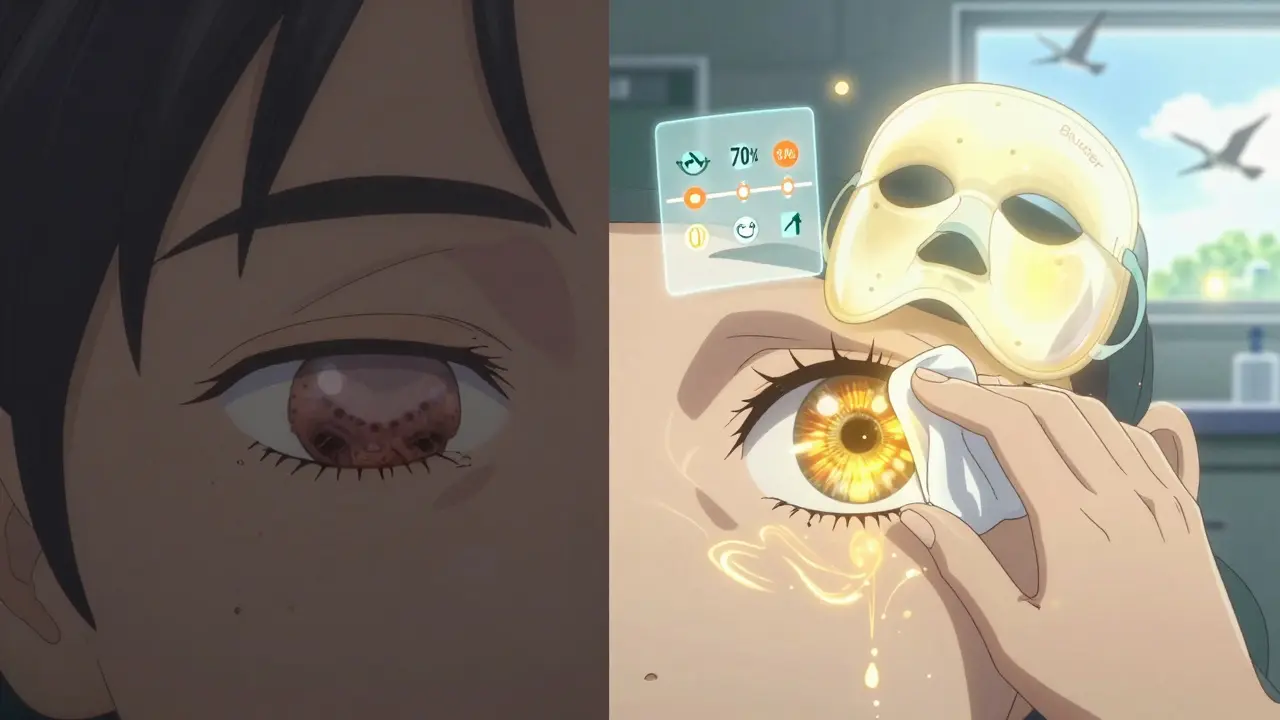
1. Heat Therapy - The first step is melting the waxy buildup inside the glands. Home remedies like warm washcloths help, but they rarely reach the right temperature (40-42°C) or last long enough. Clinical-grade devices like the Bruder Mask deliver consistent, targeted heat for 10 minutes. Studies show consistent use improves gland expressibility by 40% in just 4 weeks.
2. Gland Expression - After heat softens the blockage, the oil needs to be physically pushed out. This is done manually by an eye care professional using a specialized tool. It’s not painful, but it’s not something you can do yourself reliably. In-office expression, often paired with heat, can restore gland function in one session. But without follow-up, glands re-clog within weeks.
3. Lid Hygiene - Daily cleaning with hypochlorous acid solutions (like OCuSOFT Lid Scrub) removes bacteria and biofilm that contribute to inflammation. Skipping this step is like brushing your teeth once a week-eventually, everything breaks down.
In-Office Procedures: What Works and What Doesn’t
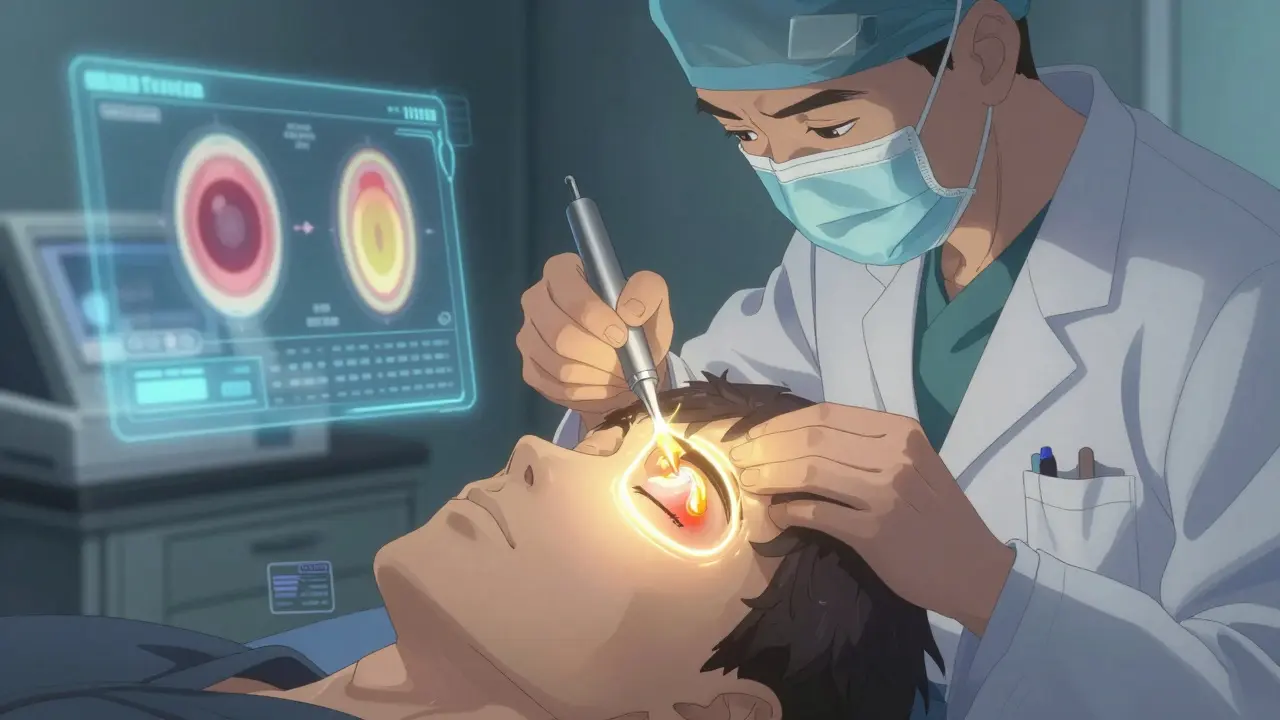
When home care isn’t enough, there are three proven in-office treatments. Each has pros, cons, and ideal candidates.
- LipiFlow: This FDA-cleared device heats the inner eyelid while applying gentle pressure to express glands. It’s the most studied option, with 68% of obstructive MGD patients showing major improvement at 12 months. Each session takes about 12 minutes per eye, and most people return to work the same day. But it costs $1,500-$2,500, and insurance rarely covers it.
- IPL (Intense Pulsed Light): Originally used for skin conditions, IPL targets abnormal blood vessels near the eyelids that drive inflammation. It’s not a direct gland treatment-it works by calming the immune response. Used with gland expression, it improves dry eye symptoms by 40% more than expression alone. Four sessions, 3 weeks apart, are typical. Cost: $800-$1,200 per session.
- Meibomian Gland Probing (MGP): This advanced technique uses a thin probe to physically open blocked ducts. It’s especially effective for patients with long-standing MGD and fibrosis (scar tissue). Studies show 85% sustained improvement at 12 months when combined with heat and anti-inflammatories. But it’s not widely available and requires a specialist trained in the technique.
Here’s the catch: LipiFlow works best for obstructive MGD. IPL shines when inflammation is the main driver. Probing is for advanced cases where glands are permanently narrowed. The best results come from combining them-heat + expression + anti-inflammatory meds.
Medications That Actually Help
Oral antibiotics are often prescribed for MGD, but not all are equal. Doxycycline was the go-to for years, but it requires 30 days of daily use and causes sun sensitivity, nausea, and yeast infections in nearly 30% of users.
Azithromycin changed the game. A 5-day course (500 mg on day one, then 250 mg daily) gives the same symptom relief as doxycycline-with only 3% side effects. It also has anti-inflammatory properties that last weeks after the last pill. That’s why top cornea specialists now prescribe it as first-line oral therapy.
Topical lifitegrast (Xiidra) reduces inflammation markers in severe cases. In one study, corneal staining dropped from 12.4 to 5.7 in just 12 weeks. But it’s expensive, causes stinging, and isn’t a standalone fix. It’s best used alongside mechanical treatments.
Real Patients, Real Results
On patient forums, stories are split. One user, "DryEyeWarrior87," posted after three LipiFlow sessions: "My OSDI score dropped from 48 to 18. But if I skip my Bruder mask for 3 days, my eyes feel like sandpaper again." Another, "MGDstruggles," had stage 4 MGD with 70% gland loss: "LipiFlow gave me 2 months. IPL with expression? That’s what saved me. But $2,000 per session? No insurance. I’m paying out of pocket."
Real-world data from clinics shows 82% satisfaction with combined MGP and LipiFlow-but only 43% of patients stick to daily lid hygiene after six months. That’s the silent killer: non-compliance. Without daily care, even the most expensive procedure fails.
What You Can Do Today
You don’t need to wait for a specialist to start improving your eyes. Here’s your simple, science-backed daily routine:
- Apply a warm Bruder Mask (or clean washcloth heated in the microwave) to closed eyelids for 10 minutes.
- While the mask is on, gently massage your eyelids with your fingertip-move from the outer corner toward the nose.
- After removing the mask, clean your eyelid margins with a hypochlorous acid wipe (OCuSOFT or Avenova).
- Do this twice a day for 2 weeks, then once daily for maintenance.
That’s it. No expensive devices. No prescriptions. Just consistency. Studies show 85% compliance with this routine leads to 70% symptom reduction in 3 months.
The Future of MGD Care
Research is moving fast. Exosome therapy-using natural healing signals from stem cells-is showing 92% improvement in early trials. Nanomicellar cyclosporine (Cequa) delivers drugs deeper into the glands with fewer side effects. And genetic studies are uncovering links between MGD and immune pathways like IL-17, which could lead to targeted biologic drugs.
But the biggest shift? MGD is no longer seen as a side effect of dry eye-it’s the root cause. The 2023 Dry Eye Workshop II now recommends treating MGD before cataract surgery, even if the patient has no symptoms. Why? Because untreated MGD triples the risk of post-surgery inflammation and poor vision outcomes.
Still, cost and access remain huge barriers. Most insurance plans treat MGD as cosmetic. LipiFlow and IPL are often denied. Patients pay thousands out of pocket. Until that changes, the most powerful tool you have is daily care. It’s not glamorous. But it works.
Can meibomian gland dysfunction be cured?
MGD can’t be permanently cured in most cases because it’s a chronic condition tied to aging, screen use, and inflammation. But it can be effectively managed. With consistent daily care and periodic professional treatments, symptoms can disappear for months or years. The goal isn’t a cure-it’s control.
Is LipiFlow worth the cost?
If you have obstructive MGD and haven’t responded to home care, LipiFlow is one of the most effective options. Studies show 68% of patients get major improvement lasting over a year. But it’s only worth it if you commit to daily lid hygiene afterward. Without it, glands re-clog within 6 months. For many, the upfront cost ($1,500-$2,500) is justified by the relief and reduced need for future treatments.
Can I treat MGD without seeing a specialist?
Yes-for mild to moderate cases. Daily warm compresses, lid massage, and cleaning with hypochlorous acid can improve symptoms significantly. But if you’ve had symptoms for over a year, your glands may be scarred or atrophied. That’s when you need a specialist to assess gland health with meibography and recommend advanced treatments like probing or IPL.
Does screen time cause MGD?
Screen time doesn’t directly cause MGD, but it makes it worse. When you stare at a screen, you blink 60% less. Less blinking means less pressure on the glands to release oil. Over time, this leads to stagnation, thickening, and blockage. People who use screens 8+ hours a day are 3x more likely to develop MGD.
Why do some people get MGD and others don’t?
It’s a mix of genetics, environment, and lifestyle. People with rosacea, acne, or autoimmune conditions are more prone. Hormonal changes (like menopause), contact lens wear, and poor eyelid hygiene increase risk. But the biggest factor is how often you blink and whether you clean your lids. Even with risk factors, daily hygiene can prevent or delay MGD.


