
Nasal Spray Usage Tracker & Recovery Guide
Track Your Nasal Spray Usage
This tool helps you determine if you've exceeded the safe usage limit and provides guidance on your recovery path.
Have you ever used a nasal spray to clear your nose, only to find that your congestion came back worse than before? You’re not alone. This isn’t just bad luck - it’s a real medical condition called rhinitis medicamentosa, or rebound congestion. It happens when you use over-the-counter nasal decongestant sprays for too long. What starts as quick relief turns into a cycle you can’t escape: spray, feel better, spray again, feel worse, repeat. And the more you use it, the more your nose depends on it.
How Nasal Decongestants Cause More Congestion
Nasal decongestant sprays like Afrin, Neo-Synephrine, and others contain chemicals such as oxymetazoline, phenylephrine, or xylometazoline. These work by shrinking swollen blood vessels in your nose. That’s why you feel clear right away - your nasal passages open up, and breathing gets easier. But here’s the catch: your body doesn’t like being told to constrict blood vessels for days on end. After three or four days of use, your nasal lining starts to rebel. The blood vessels dilate even more than before, causing worse swelling. Now, you need more spray to get the same relief. Soon, you’re using it every few hours. This isn’t addiction in the drug sense - it’s a physical rebound effect. The American Academy of Otolaryngology calls this a well-documented, predictable response. Studies show that over 90% of people who use these sprays longer than 10 days end up with rebound congestion.What Rebound Congestion Feels Like
If you’re stuck in this cycle, you might notice:- Nasal stuffiness that gets worse after the spray wears off
- No runny nose - just pure blockage
- Needing to use the spray more often just to breathe
- Difficulty sleeping because you can’t breathe through your nose
- Dry mouth from breathing through your mouth all night
- Nasal lining that looks red, swollen, or even crusty when checked by a doctor
The Only Way Out: Stop the Spray
The good news? Rebound congestion can be reversed. The bad news? You have to stop using the spray completely. No exceptions. No half-measures. This is the only proven way to break the cycle. But stopping cold turkey can be brutal. Many people say the first week feels worse than the original congestion. That’s normal. Your body is adjusting. The key is not to give in and reach for the spray again. Doctors at the Mayo Clinic recommend a smart approach: stop using the spray in one nostril first. Wait until that side clears up - usually within a few days - then stop in the other. This reduces the shock to your system. A WebMD survey found that 63% of patients who used this method said their symptoms were manageable, compared to only 41% who stopped both sides at once.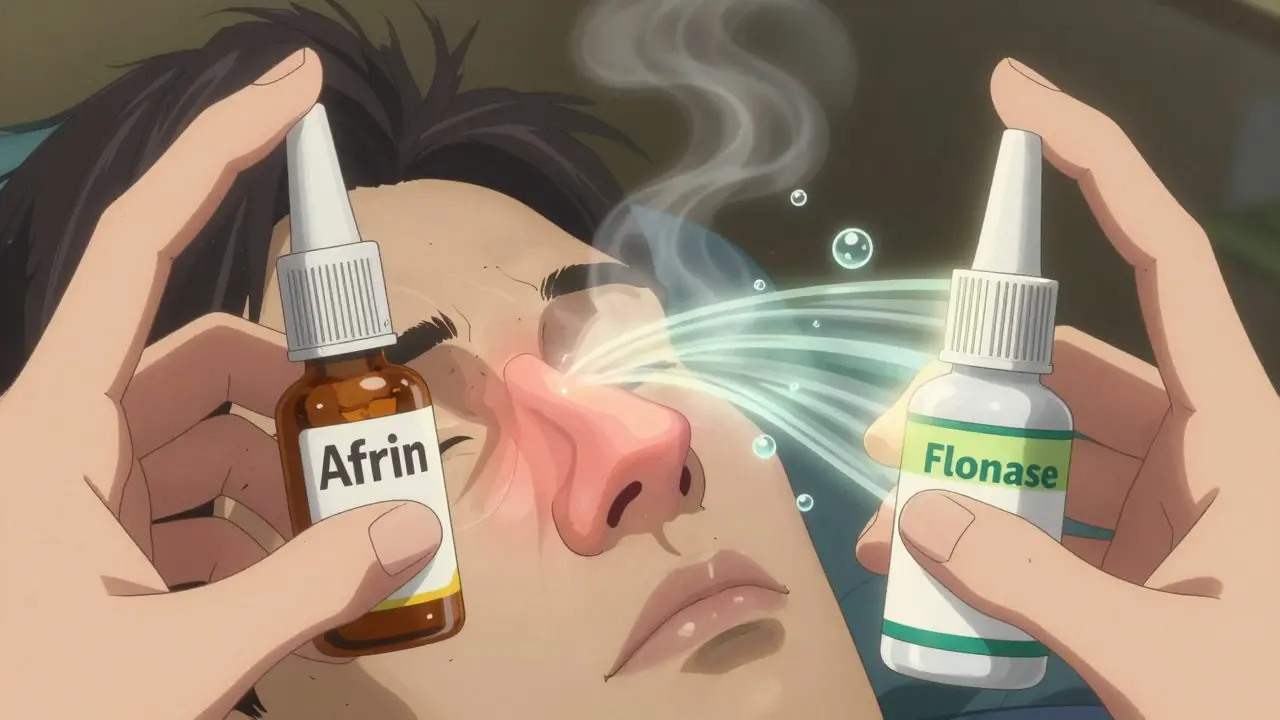
What to Use Instead: Proven Relief Options
While your nose heals, you need alternatives. Here’s what actually works:1. Intranasal Corticosteroids
These are your best friend during withdrawal. Sprays like Flonase (fluticasone) and Nasonex (mometasone) don’t just relieve congestion - they reduce inflammation in the nasal lining. They’re not decongestants. They work slowly, over days or weeks, but they heal the root cause. Studies show 68-75% of patients see major improvement within two to four weeks of daily use. The American Academy of Otolaryngology gives these a strong recommendation. Use them twice a day for the first week, then once daily as your nose improves. Don’t stop too soon - give them time to work.2. Saline Nasal Irrigation
Saltwater rinses are simple, safe, and effective. A 2022 review in the Journal of Allergy and Clinical Immunology found that 60% of patients got relief from congestion using saline sprays or neti pots. It washes out irritants, keeps the nasal lining moist, and reduces swelling without chemicals. Use it every 2-3 hours during the worst days. You can buy pre-made solutions or make your own with distilled water and non-iodized salt.3. Short-Term Oral Steroids
For severe cases, doctors may prescribe a short course of prednisone - usually 0.5 mg per kilogram of body weight for five days. A 2021 clinical trial found this approach worked for 82% of patients. It’s not for long-term use, but it can give you a critical window to get through the worst of withdrawal.4. Capsaicin Spray (Emerging Option)
Capsaicin, the compound that makes chili peppers hot, is being studied as a nasal treatment. European trials show it reduces congestion in about 55% of users. It works by desensitizing nerve endings in the nose. It’s not widely available in the U.S. yet, but it’s a promising option for those who haven’t responded to other treatments.What Not to Do
Some people try to swap one decongestant for another. Don’t. Oral decongestants like pseudoephedrine (Sudafed) can help with congestion, but they’re not a fix for rebound rhinitis. They can raise blood pressure - especially dangerous if you have heart issues. One study found that 1 in 7 hypertensive patients had dangerous spikes in blood pressure after using oral decongestants. Also avoid antihistamines unless you have allergies. They dry out your nasal passages, which can make congestion feel worse. And never use nasal sprays longer than three days - even if you think you need it. That’s the line between help and harm.How Long Does It Take to Get Better?
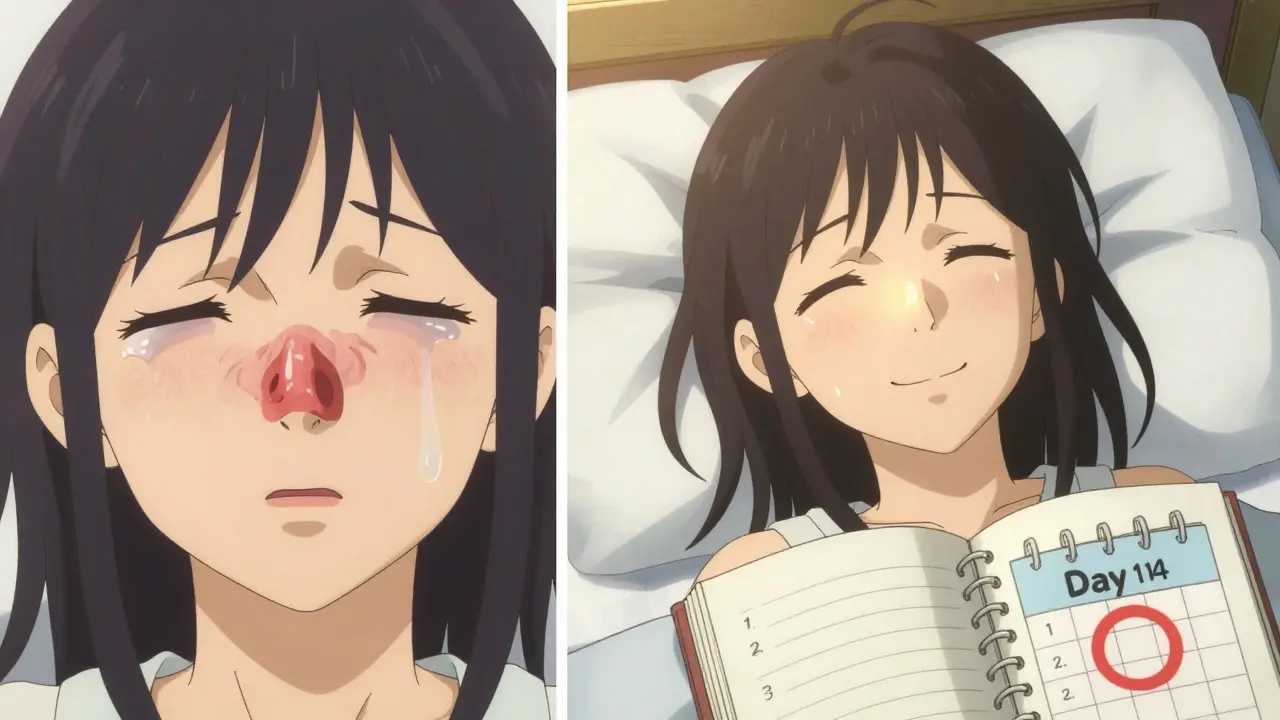
Recovery isn’t instant, but it follows a pattern:- Days 1-3: Worst congestion. You may feel like you can’t breathe. Use saline rinses every few hours. Stick to your corticosteroid spray.
- Days 4-7: Gradual improvement. You’ll start breathing better at night. Sleep gets easier.
- Days 8-14: Significant relief. Most people report their nose is clear or mostly clear by day 14.
Why People Relapse - and How to Avoid It
The biggest problem isn’t the physical symptoms - it’s the urge to go back to the spray. A Cleveland Clinic registry found that 22% of patients who didn’t get counseling relapsed. Only 7% relapsed when they had structured support. To avoid slipping back:- Throw out the old spray. Out of sight, out of mind.
- Keep a symptom journal. Write down how your nose feels each day. Seeing progress helps.
- Get support. Talk to your doctor or join a patient group. Reddit’s r/allergies has thousands of people who’ve been through this.
- Plan ahead. If you feel a cold coming, use saline or a corticosteroid spray - not decongestants.
How to Prevent It From Happening Again
The FDA now requires OTC nasal sprays to have clear warning labels: “DO NOT USE MORE THAN 3 DAYS.” But many people still miss it. Only 28% of customers get proper usage instructions when they buy these sprays. Here’s how to stay safe:- Never use nasal decongestant sprays longer than 3 days - even if you feel better.
- Use saline irrigation first for any congestion. It’s safe for daily use.
- If congestion lasts more than a week, see a doctor. You might have allergies, a sinus infection, or another issue.
- Keep a nasal spray calendar. Mark the day you start. Set a phone alert for day 3.
When to See a Doctor
You don’t need to suffer through this alone. See a doctor if:- Your congestion lasts longer than 10 days without improvement
- You’ve been using nasal sprays for more than a week
- You’re having trouble sleeping or breathing
- You notice bleeding, crusting, or pain inside your nose
- You’ve tried to quit but keep going back to the spray
Can nasal decongestant sprays cause permanent damage?
Yes, if used for months or years, nasal decongestant sprays can cause long-term damage to the nasal lining. This includes thinning of the mucous membrane, chronic swelling, and an increased risk of nasal polyps. In rare cases, it can lead to structural changes that require surgery. The good news is that stopping the spray early - within a few weeks of symptoms starting - usually allows the tissue to heal fully.
Is it safe to use saline spray every day?
Yes, saline nasal sprays and rinses are safe for daily, long-term use. They don’t cause rebound congestion or dependency. In fact, experts recommend them as the first step for managing congestion, not just during recovery. Daily use helps keep nasal passages moist, flushes out allergens, and reduces inflammation naturally.
Why does my nose feel worse when I stop the spray?
This is called rebound congestion. The decongestant spray shrinks blood vessels in your nose. When you stop using it, your body overcompensates by letting those vessels swell even more than before. It’s a temporary physiological reaction, not a sign that something is broken. Symptoms usually peak around days 3-5 and improve steadily after that.
Can I use Flonase while quitting Afrin?
Yes, and you should. Flonase (fluticasone) is one of the most effective treatments for rebound congestion. It reduces inflammation and helps your nasal lining heal. Use it twice daily during the first week of withdrawal, then once daily as your symptoms improve. Many patients report their congestion clears up within 10-14 days when they combine Flonase with stopping the decongestant spray.
Are there any natural remedies that work?
Saline irrigation is the most proven natural remedy. Steam inhalation, humidifiers, and staying hydrated can help ease symptoms, but they don’t treat the underlying inflammation. Avoid essential oils or herbal sprays - they can irritate your nasal lining further. Stick to evidence-based options: saline, corticosteroids, and time.
If you’ve been relying on nasal sprays for more than a few days, the solution isn’t more spray - it’s a reset. It takes patience, but your nose can heal. Thousands of people have done it. You can too.