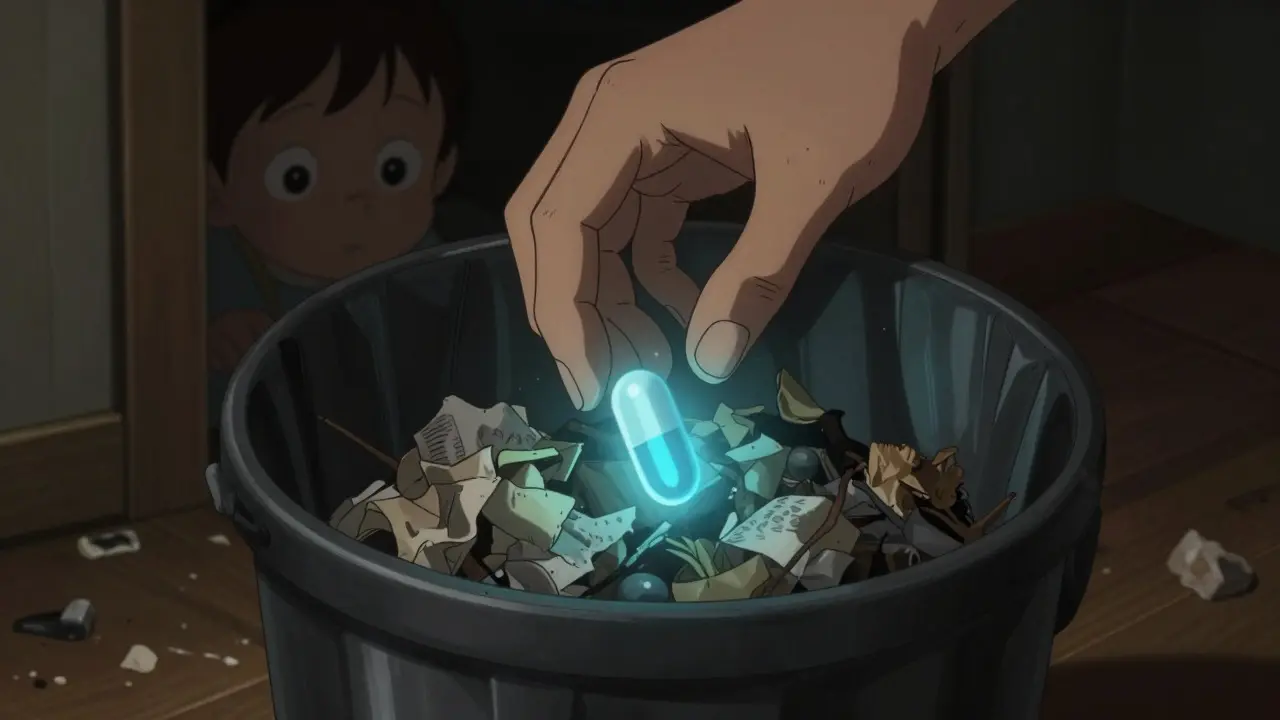
Imagine finding a single blue pill in your neighbor's trash bin. To you, it’s just garbage. To a child or someone struggling with addiction, it could be a death sentence. This isn't a hypothetical scenario; it happens more often than we think. When you throw away leftover prescriptions, you aren't just clearing out a drawer-you're potentially creating a hazard for your community. But here is the catch: not all medicines should go in the bin. In fact, some are so dangerous that the FDA Flush List is a specific set of medications identified by the U.S. Food and Drug Administration that must be flushed down the toilet rather than placed in household trash due to their high risk of fatal overdose from a single dose. If you have these drugs sitting in your cabinet, knowing exactly which ones belong in the toilet versus the trash can save lives.
The Core Problem: Why Trash Is Dangerous for Certain Drugs
Most people assume that throwing meds in the trash is the eco-friendly choice. And generally, that’s true. However, for a select group of powerful opioids and sedatives, the risk of misuse outweighs the environmental impact. The primary reason these drugs stay off the trash pile is their potency. Take Fentanyl is a synthetic opioid analgesic that is 50 to 100 times more potent than morphine, making even a tiny amount lethal if ingested accidentally. A single patch or a few milligrams of powder left in a bag can kill an adult or a child. According to the Centers for Disease Control and Prevention (CDC), opioids were involved in over 70% of drug overdose deaths in 2021. That statistic drives home why immediate destruction is necessary for these specific compounds.
The danger isn't just about intentional abuse. It’s also about accidental exposure. Children explore everything. If a toddler finds a colorful blister pack in the recycling bin, they might pop out a tablet and chew on it. For standard painkillers like ibuprofen, this might cause an upset stomach. For methadone or hydromorphone, it can stop breathing. The FDA created the flush list protocol specifically to close this gap between "storage" and "destruction." Until the drug is gone, it is a risk.
The Official List: What You Must Flush
So, which drugs make the cut? The FDA’s list is specific. If your prescription contains any of the following active ingredients, you should flush them when you no longer need them. Note that brand names vary, but the active ingredient is what matters:
- Buprenorphine: Found in products like Suboxone and Subutex.
- Fentanyl: Available as patches (Duragesic) or lozenges (Actiq).
- Hydromorphone: Often prescribed as Exalgo.
- Meperidine: Known by the brand name Demerol.
- Methadone: Used for pain and addiction treatment (Dolophine, Methadose).
- Morphine: Includes MS Contin, Kadian, and Avinza.
- Oxymorphone: Sold as Opana or Opana ER.
- Tapentadol: Brand name Nucynta.
- Sodium Oxybate: Used for narcolepsy (Xyrem, Xywav).
- Diazepam Rectal Gel: Specifically DiaSTAT or DiaSTAT Acudial.
- Methylphenidate Transdermal System: The Daytrana patch.
If you see these names on your bottle label, do not put them in the regular trash. Do not wait for a take-back day. Flush them immediately. This applies to expired meds too. An expired fentanyl patch is still dangerous; the potency may drop slightly, but it remains potent enough to be hazardous.
What About Everything Else? The Safe Trash Method
Now, what if you have leftover antibiotics, blood pressure pills, or antidepressants? These are generally not on the flush list. Flushing them contributes to pharmaceutical pollution in waterways, which affects aquatic life and drinking water sources. For these medications, the goal is to make them unrecognizable and unappealing before they hit the landfill.
Here is the step-by-step process recommended by health authorities for non-flush-list medications:
- Remove the pills from their original containers. Keep the labels separate if you want to dispose of those too.
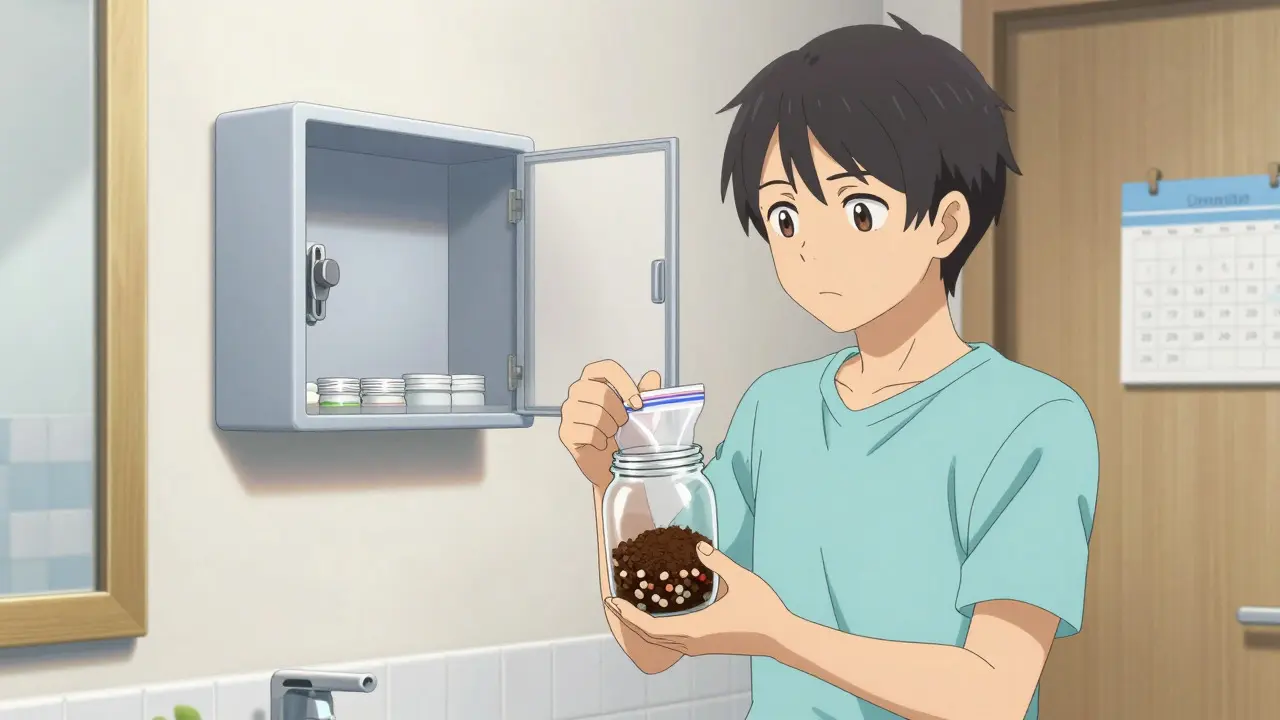
- Mix them with something nasty. Use used coffee grounds, cat litter, or dirt. The idea is to create a sludge that no one would want to eat or sell.
- Do not crush tablets or capsules. While older advice said to crush them, current guidelines suggest mixing whole pills to avoid spreading dust or breaking extended-release coatings prematurely in a way that creates a mess. Just mix them into the bulk material.
- Seal the mixture. Place the wet sludge in a sealed plastic bag or a metal tin. This prevents leaks and odors.
- Throw it away. Put the sealed container in your household trash.
This method ensures that even if someone digs through the trash, they find a bag of muddy coffee grounds, not a neat row of white pills.
Take-Back Programs: The Best Option for Most People
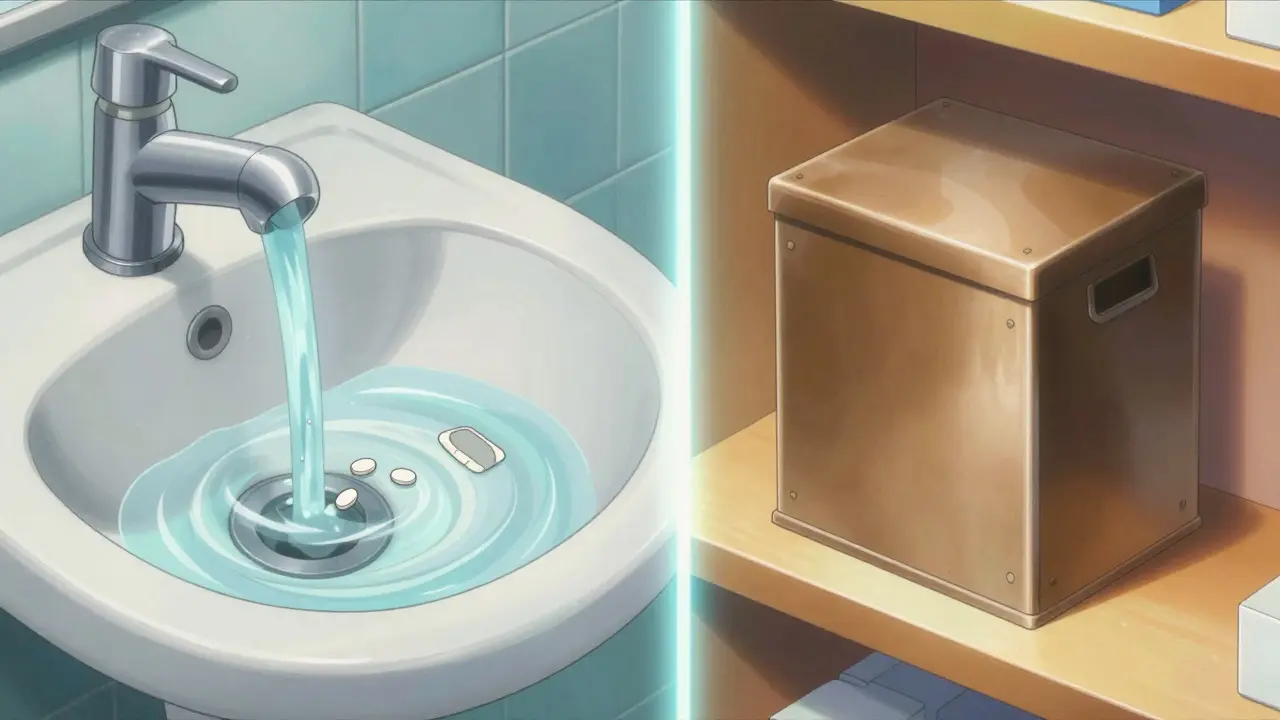
Before you reach for the toilet or the trash can, check if you have access to a drug take-back program. This is widely considered the safest and most environmentally friendly option. Pharmacies, police stations, and hospitals often host collection boxes. In the United States, there are thousands of designated collection sites. In Australia, similar services exist at pharmacies like Chemist Warehouse or independent chemists, though local council waste facilities may also accept certain hazardous household items including medications.
Why is take-back better? Because professional incineration destroys the chemical structure completely. There is no risk of diversion, and no chemicals end up in the water table. If you live in an area with a take-back box within a five-minute drive, use it. It solves both the safety problem and the environmental concern simultaneously.
| Method | Best For | Risk Level | Environmental Impact |
|---|---|---|---|
| Flushing | FDA Flush List items only | Low (Immediate destruction) | High (Water contamination) |
| Household Trash | Non-controlled, low-risk meds | Medium (Potential for recovery) | Low (Landfill containment) |
| Take-Back Box | All medications (Ideal) | Very Low (Professional handling) | Lowest (Incineration) |
Common Mistakes and How to Avoid Them
Even with clear rules, people make mistakes. One common error is confusing "expired" with "safe to keep." Many people hoard old meds thinking they might need them later. This clutters cabinets and increases the chance of accidental ingestion. Set a reminder on your phone for the expiration date. When it hits, decide immediately: flush, trash, or take-back.
Another mistake is assuming liquid medications are safe to pour down the sink. Unless the label says otherwise, treat liquids like pills. Pour them into coffee grounds or kitty litter and seal them in a bag. Pouring large volumes of liquid meds directly into the drain can overwhelm local wastewater filters, leading to higher concentrations in local streams.
Finally, don't forget the patches. Fentanyl and nicotine patches stick well. If you throw a used fentanyl patch in the trash without peeling it off, it might stick to the inside of the bag or get pulled out later. Peel it back on itself, tape it closed, and then dispose of it according to the flush list rules.
Environmental Concerns vs. Human Safety
You might wonder, "But isn't flushing bad for the planet?" Yes, it is. Wastewater treatment plants remove only 30-90% of pharmaceutical compounds. Some drugs pass straight through into rivers. Dr. Daniel Snow from the University of Nebraska noted that certain compounds show less than 20% removal efficiency. So why does the FDA say to flush? Because the alternative is worse. A study in the Journal of Environmental Health Perspectives highlights that while pharmaceutical contamination is a real issue, the immediate threat of a single-dose fatal overdose from a diverted opioid is a more urgent public health crisis. The EPA acknowledges this dilemma, stating that for controlled substances with high abuse potential, the "immediate life-threatening risks" necessitate flushing. It’s a calculated trade-off: we accept a small environmental cost to prevent a guaranteed human tragedy.
Practical Tips for Your Medicine Cabinet
To make this easier, try implementing a "medication audit" once a year. Go through your bathroom cabinet and garage storage. Look for bottles that are half-empty or fully empty. Check the expiration dates. Sort them into three piles: Flush, Trash, and Take-Back. Doing this annually prevents the buildup of dangerous clutter. Also, consider buying smaller quantities of long-term maintenance meds if possible. Less inventory means less to dispose of later.
For parents, keep all medications, including vitamins, locked up. Even if a med isn't on the flush list, a child eating a handful of iron supplements or acetaminophen can be serious. Lockboxes are inexpensive and highly effective. Combine this with proper disposal habits, and you significantly reduce the risk profile of your home.
Can I flush expired medications?
Yes, if they are on the FDA Flush List. Expiration reduces potency but does not eliminate danger for potent opioids. If it is on the list, flush it. If not, use the trash or take-back method.
Where can I find a drug take-back box near me?
Check your local pharmacy, police station, or hospital. In the US, the DEA website lists authorized collectors. In Australia, ask your local pharmacist or check your city council’s hazardous waste facility schedule.
Is it safe to throw pills in the recycling bin?
No. Recycling bins are processed for paper, glass, and plastic. Pills can contaminate the batch or get sorted into materials destined for reuse. Always use general trash (after mixing) or a dedicated take-back box.
What if I lose the label and don't know the drug name?
If you are unsure, play it safe. Call your pharmacist with a description of the pill (color, shape, markings). They can identify it. If it looks like a potent opioid or you are uncertain, treat it as a flush-list item or use a take-back box. Avoid putting unidentified strong-looking pills in the regular trash.
Does crushing pills help with disposal?
Current FDA guidance suggests mixing whole pills with unappealing substances like coffee grounds rather than crushing them. Crushing can create dust that is hard to contain and may spread residue. Mixing keeps the mass together for easier sealing.


