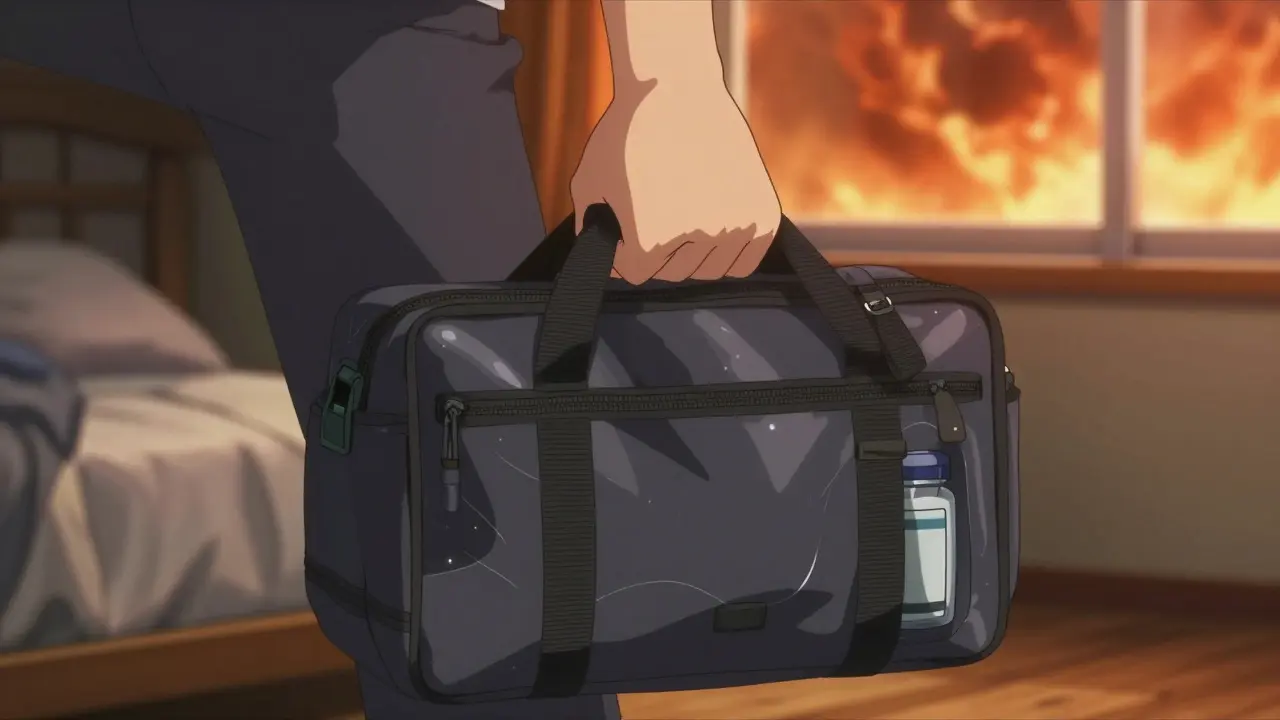
Imagine you have ten minutes to leave your house because of a flash flood or a wildfire. You've grabbed your passport, your laptop, and some clothes. But did you remember your heart medication or your insulin? For many of us, the thought is terrifying. According to the American College of Emergency Physicians, nearly 38% of emergency room visits during disaster recovery are caused by people losing access to their regular medications. It is a preventable crisis that can turn a stressful evacuation into a life-threatening medical emergency.
A medication go-bag is a portable, water-resistant collection of essential medicines and health documents designed for immediate access during an evacuation. It is not just a first-aid kit with bandages and aspirin; it is a specialized survival tool for anyone who relies on prescriptions to stay stable. The goal is to bridge the critical 72-hour gap immediately following a disaster when pharmacies are closed and hospitals are overwhelmed.
The Essential Checklist: What Actually Goes Inside
You don't need to pack your entire medicine cabinet, but you do need a strategic selection. While FEMA suggests a minimum 7-day supply, real-world experience tells a different story. People evacuating during Hurricane Ian found that a week wasn't enough, as they couldn't return home for nearly two weeks. For this reason, aiming for a 14-day supply is a much safer bet.
Your bag should include these core components:
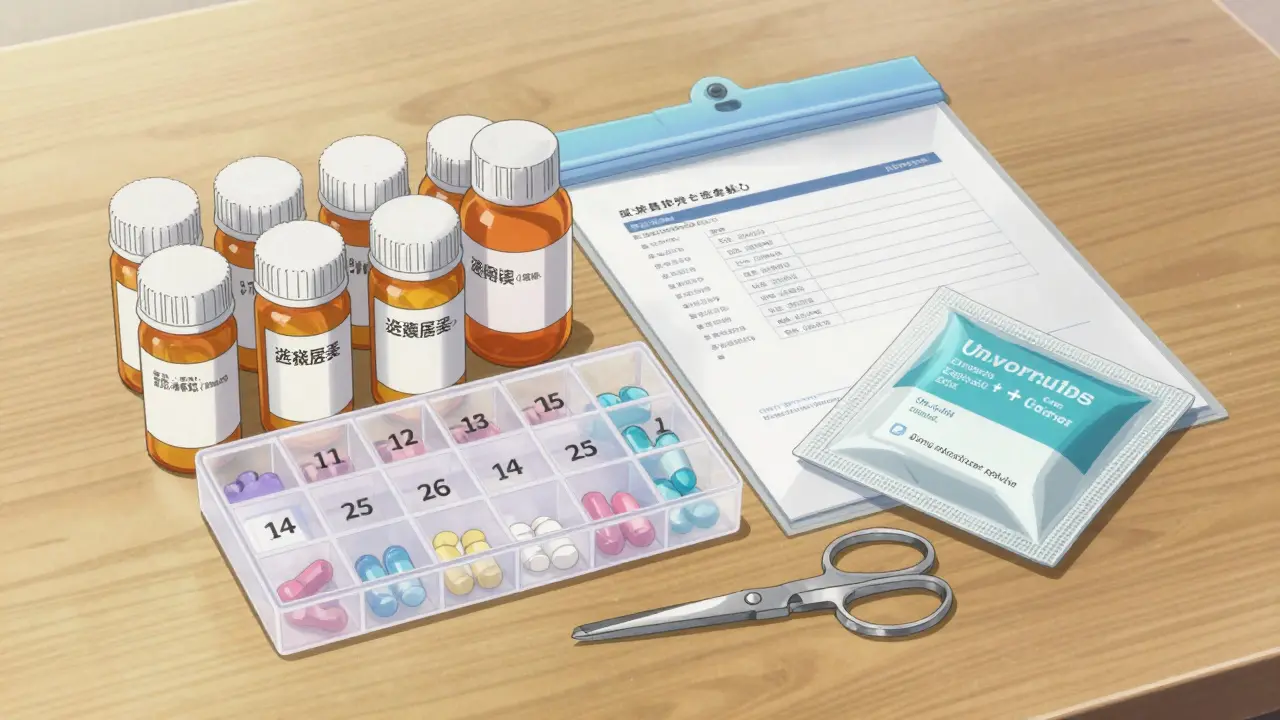
- Prescription Medications: A two-week supply of all critical meds. If you can, ask your doctor for 90-day refills so you always have a surplus to pull from.
- Over-the-Counter (OTC) Basics: Pain relievers, antihistamines, and digestive aids. Don't forget a small supply of electrolytes or oral rehydration salts.
- Medical Documentation: A physical list of every medication you take, the exact dosage, the reason you take it, and your pharmacy's contact info.
- Health ID: Copies of your insurance cards, a list of known drug allergies, and any advance directives or DNR orders.
- Basic Tools: A pill organizer with date labels, a small pair of scissors, and a few alcohol wipes.
| Organization | Recommended Supply | Primary Focus |
|---|---|---|
| American Red Cross | 7 Days | General disaster preparedness |
| Alert San Diego | 14 Days | High-risk regions (e.g., earthquakes) |
| CDC | 14 Days | Chronic condition management |
| FEMA | 3-7 Days | Immediate evacuation window |
Solving the Cold Chain Challenge
For the millions of people using biologics or insulin, a simple bag isn't enough. Temperature-sensitive medications can degrade quickly in a hot car or a humid shelter, leading to dangerous therapeutic failure. A common mistake is relying on a standard cooler, which can actually freeze the medication, ruining it just as effectively as heat would.
To keep these meds stable, look into specialized cooling gear. The Frio Wallet is a widely used tool that uses evaporative cooling to keep insulin below 86°F for up to 48 hours without needing a fridge. For those who need more precision, newer systems like the MedAngel ONE provide smartphone alerts when temperatures drift outside the safe zone. If you don't have high-tech gear, keep your meds in a small, insulated pouch and store it in the coolest part of your bag, away from direct sunlight.
How to Manage Your Supplies Without Waste
One of the biggest hurdles is medication expiration. You can't just pack a bag and forget it for three years; by then, your life-saving epinephrine or blood pressure meds could be useless. The trick is a "rotation system." Every time you get a new prescription refill, take the oldest pills from your go-bag and move them into your daily pillbox, then replace them with the fresh ones from the pharmacy.
Here is a simple workflow to keep your kit current:
- The Refill Trigger: Fill your prescriptions on the first day you are eligible. This ensures you always have the maximum overlap for your go-bag.
- The Semi-Annual Audit: Mark your calendar for every six months (e.g., January and July) to check expiration dates and update your medical contact list.
- The Document Refresh: Update your medication list every time your doctor changes a dose. A list from 2023 is dangerous if you started a new blood thinner in 2025.
The Role of Your Pharmacist in a Crisis
What happens if you lose your bag or run out of meds before you can find a pharmacy? You aren't necessarily stranded. In a declared emergency, many states allow pharmacists to dispense a limited supply of essential medications without a current doctor's authorization. This is a safety valve designed specifically for disaster zones.
However, you shouldn't rely on this as your primary plan. Building a relationship with your local pharmacist now can make a huge difference. They can help you identify which of your meds are "critical" (meaning you can't miss a single dose) and which are "elective" (things you can stop for a few days if necessary). This prioritization helps you decide what absolutely must fit in a small, portable bag.
Common Pitfalls and Pro Tips
Many people make the mistake of stripping medications out of their original packaging to save space. While a pill organizer is great for daily use, keep at least one full original bottle or blister pack in your bag. Why? Because emergency responders and pharmacists need to see the official label, the NDC (National Drug Code), and the prescribing doctor's name to verify the medication and avoid dangerous drug interactions.
Also, consider the environment. Your go-bag should be stored in a cool, dry place-not the bathroom, where humidity can break down pills, and not the garage, where temperatures fluctuate wildly. A high shelf in a bedroom closet is usually the sweet spot: safe from children but easy to grab in seconds.
Can I just use a general first-aid kit instead of a go-bag?
No. A general first-aid kit is for treating injuries like cuts and burns. A medication go-bag is specifically for maintaining the treatment of chronic conditions. Missing a dose of cardiovascular or respiratory medication can lead to a crisis that a bandage or antiseptic cannot fix.
How do I handle medications that require refrigeration during an evacuation?
Use specialized cooling pouches like the Frio Wallet or temperature-monitoring systems. Avoid using standard ice packs that might freeze the medication. Always keep a list of the required storage temperature for each drug so you can communicate it to emergency personnel.
What should I do if my medications expire while in the bag?
Implement a rotation system. Whenever you get a new refill, replace the medications in your go-bag with the new ones and use the older (but still valid) ones for your daily doses. Perform a full audit of your kit every six months.
Is a 7-day supply really enough?
While some agencies suggest 7 days, many experts and disaster survivors recommend 14 days. This provides a safety buffer in case roads are blocked or pharmacy systems are down longer than expected.
What documents are most important to include?
Include a comprehensive medication list (drug name, dose, frequency), a list of allergies, insurance information, and contact details for your primary care physician. Keep these in a waterproof container or a sealed plastic bag.
Next Steps for Different Needs
If you are a caregiver or parent, you need a separate go-bag for each dependent. Ensure pediatric dosages are clearly marked, as children's medications are often calculated by weight, which is critical information for a paramedic to have.
For seniors or those with multiple chronic conditions, prioritize the "critical list." Identify the three medications that, if missed for 24 hours, would result in hospitalization. These should be the most accessible items in your bag, perhaps in a separate, bright-colored pouch.
If you are young and healthy but take occasional maintenance meds, you may not need a full 14-day kit, but having a 3-day supply and a digital copy of your prescriptions on your phone can still save you from a lot of stress during an unexpected trip or emergency.


