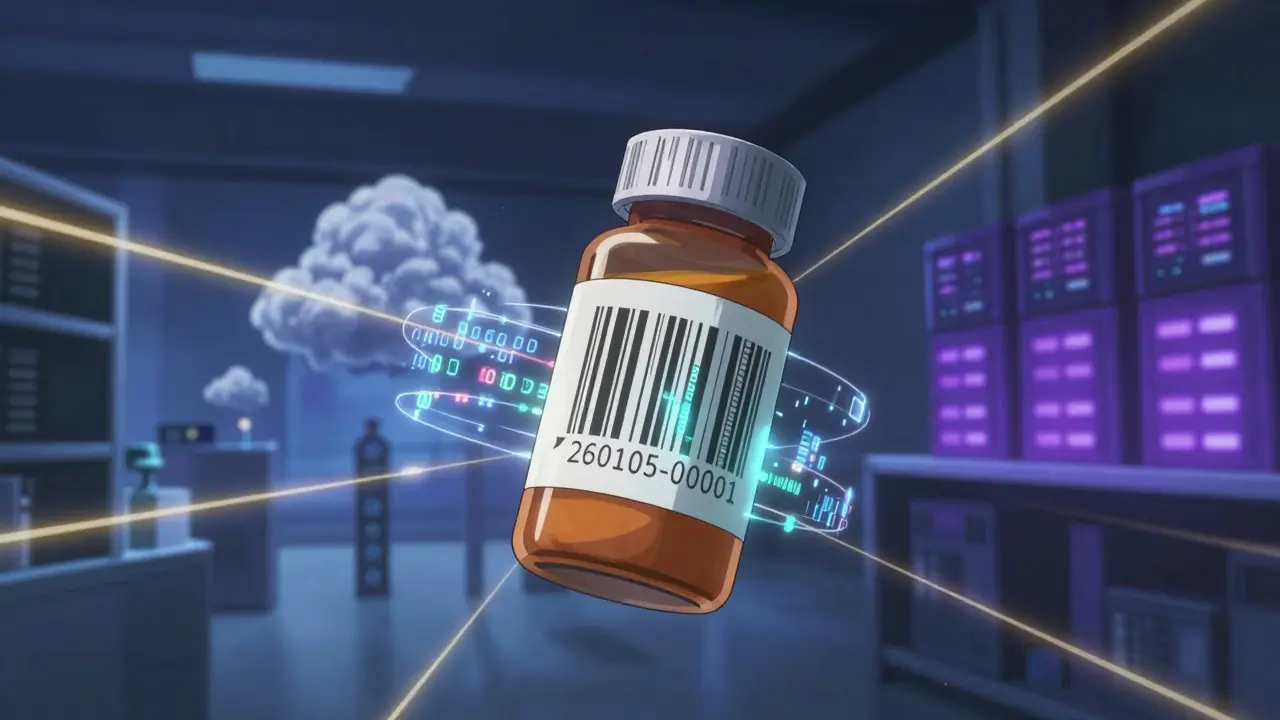
Every pill you swallow has a story. Not the kind you read in a novel, but a digital trail of numbers and codes that trace its journey from factory to pharmacy. In the fight against counterfeit drugs, lot numbers and serial codes aren’t just bureaucratic details-they’re lifelines.
What’s the Difference Between Lot Numbers and Serial Codes?
Think of a lot number like a group ID. It’s assigned to a batch of pills made at the same time, with the same ingredients, on the same machine. If 10,000 bottles of a blood pressure medication were produced in one shift on January 5, 2026, they all share the same lot number: say, L260105A. That’s it-one number for thousands of units.
Serial codes are different. They’re like fingerprints for each individual bottle. Every single one gets its own unique code: S260105-00001, S260105-00002, and so on. No two are alike. This isn’t just for show. It lets pharmacies, regulators, and even patients verify that the exact bottle they’re holding is real and hasn’t been tampered with.
Lot tracking catches problems at scale. If a batch of pills turns out to have the wrong dosage, you recall just that lot. Serial tracking catches individual fakes. If someone slips a counterfeit bottle into a shipment, the system flags it because its serial code doesn’t match the manufacturer’s database.
Why This Matters for Fake Drugs
Counterfeit medicines are a global crisis. The WHO estimates that 1 in 10 medical products in low- and middle-income countries are fake. But even in places like Australia, the U.S., or Europe, fake pills are showing up-often disguised as popular painkillers, weight-loss drugs, or erectile dysfunction meds. Some contain no active ingredient. Others have too much, too little, or toxic fillers like fentanyl or rat poison.
Without track-and-trace, you can’t tell which pills are real. A fake bottle might look identical to the real one. But if the lot number doesn’t match the manufacturer’s records-or if the serial code isn’t registered in the system-you know it’s not legit.
In 2023, the FDA traced a deadly outbreak of counterfeit diabetes medication back to a single lot number. That one number let them pull 18,000 bottles off shelves in 14 states-without touching the other 2 million bottles made in the same factory. That’s precision. Without it, they’d have had to recall everything. The cost? Millions. The risk? Lives.
How the System Works in Real Life
Here’s how it actually plays out on the ground:
- A pharmaceutical company produces a batch of metformin. They assign it lot number L260103B and print a unique serial code on each bottle.
- Each code is scanned and logged into a secure cloud database linked to the manufacturer’s system.
- The batch ships to a distributor, then to a pharmacy. At each stop, the lot and serial codes are scanned again-confirming the product hasn’t been swapped or tampered with.
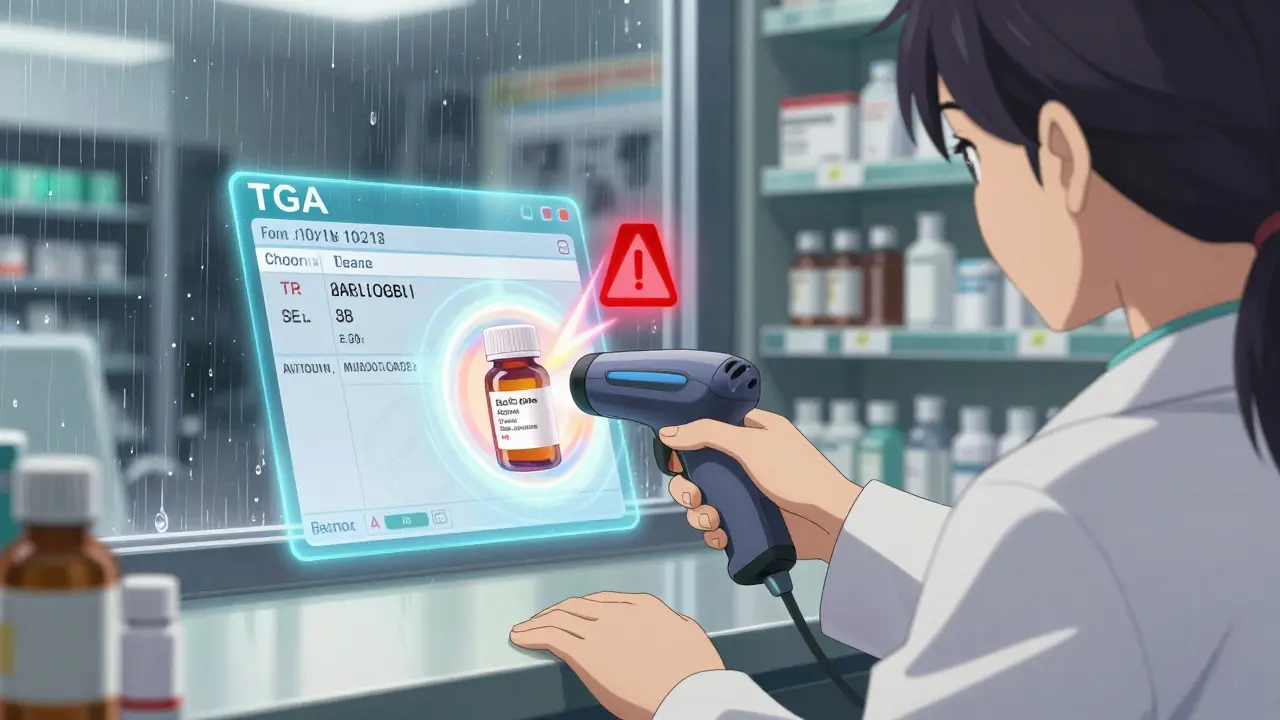
- When you buy the bottle, the pharmacist can scan the code on the label. Their system checks: Is this lot approved? Is this serial number registered? Is it still within expiry?
- If something’s wrong, the system alerts them. The bottle is pulled. The manufacturer is notified. And the fake is blocked before it reaches another customer.
This isn’t science fiction. It’s standard in Australia under the Therapeutic Goods Administration’s (TGA) requirements. All prescription medicines sold here must have traceable identifiers. The same goes for the EU’s Falsified Medicines Directive and the U.S. Drug Supply Chain Security Act (DSCSA), which fully rolls out in 2025.
What Happens When the System Fails
Not every company does this right. In 2022, a small U.S. distributor was fined $1.2 million for selling fake insulin. The problem? They didn’t scan serial codes on receipt. They just took the box, put it on the shelf, and called it done.
Another case: a hospital in Ohio received 300 bottles of a cancer drug. The lot number looked right. But when they scanned the serial codes, 12 of them didn’t exist in the manufacturer’s system. Turns out, someone had copied the label design, printed new labels, and slipped them onto empty bottles. The fake drugs had the correct lot number-but wrong serials. Without scanning, they’d have been given to patients.
Human error is still the biggest weakness. If someone types in a lot number instead of scanning it, typos happen. That’s why barcode and QR code scanning are non-negotiable. Studies show systems using scanning cut data errors from 13% to under 0.5%. No scanning? You’re gambling with safety.
What’s Changing in 2025-2026
The rules are tightening. By the end of 2025, every prescription drug sold in the U.S. must have a 2D data matrix barcode containing the product identifier, serial number, lot number, and expiry date. That’s not optional. It’s law.
In Australia, the TGA is rolling out a national digital ledger for high-risk medicines. By 2026, pharmacists will be required to verify serial codes against this system before dispensing. If the code isn’t verified, the system blocks the sale.
Even bigger changes are coming with blockchain. Some companies are now linking lot and serial data to immutable blockchain records. Once a code is logged, it can’t be altered. That makes forgery nearly impossible.
And it’s not just drugs. The EU’s Digital Product Passport, launching in 2027, will require serialized tracking for batteries, electronics, and textiles. The same tech that stops fake pills is now being used to stop fake solar panels and fake baby formula.

What You Can Do as a Patient
You don’t need to be a tech expert to use this system. Here’s how to protect yourself:
- Always ask your pharmacist to scan your prescription before you leave. If they hesitate, ask why.
- Check the packaging. Real medicines have clear, sharp barcodes. Fakes often have blurry, smudged, or misaligned labels.
- Don’t buy from online pharmacies that don’t require a prescription or won’t let you verify their license. If it’s too cheap, it’s probably fake.
- Use the TGA’s online portal to check if your medicine is registered. Enter the product name and batch number. If it’s not listed, it’s not legal.
Real medicine has a trail. Fake medicine has no trail. If you can’t trace it, don’t take it.
The Bigger Picture
This isn’t just about catching bad actors. It’s about trust. When you know your medicine is real, you take it as prescribed. When you know your doctor’s orders are safe, you get better faster.
Lot numbers and serial codes are the invisible backbone of modern drug safety. They’re not glamorous. They don’t make headlines. But when a child gets the right dose of antibiotics, or an elderly person avoids a stroke because their blood thinner was genuine-that’s the quiet power of track-and-trace.
It’s not perfect. It’s not foolproof. But without it, the system collapses. And people die.
What’s the difference between a lot number and a serial number on medicine?
A lot number identifies a group of products made together under the same conditions-like a batch of 10,000 pills. A serial number is unique to each individual unit, like a fingerprint for one bottle. Lot numbers help recall entire batches if there’s a problem. Serial numbers catch fake or tampered individual items.
Can I check if my medicine is real using the lot number?
Yes, but only if you also have the serial number. Lot numbers alone aren’t enough-many legitimate batches exist. You need the full product identifier (usually printed as a barcode) and the serial code to verify authenticity through your country’s medicine registry, like Australia’s TGA database.
Do all medicines have serial codes now?
In Australia, all prescription medicines must have traceable identifiers under TGA regulations. In the U.S., the DSCSA requires full serialization by 2025. Over-the-counter drugs and supplements often don’t, which is why counterfeiters target them. Always check with your pharmacist if you’re unsure.
Why do some fake drugs have correct lot numbers?
Counterfeiters copy labels, including lot numbers, to look real. But they can’t replicate the unique serial codes registered in the manufacturer’s database. That’s why scanning the barcode is essential-systems flag mismatches between the serial code and the official registry, even if the lot number looks correct.
What should I do if I suspect my medicine is fake?
Don’t take it. Return it to your pharmacy immediately. Ask them to report it to the Therapeutic Goods Administration (TGA) or your local health authority. If you’ve already taken it and feel unwell, seek medical help right away. Reporting fake medicine helps protect others.
Is track-and-trace only for big pharmaceutical companies?
No. Even small manufacturers and distributors must comply. The system works because every link in the chain-from raw material supplier to pharmacy-is required to scan and log codes. Cloud-based software now makes this affordable and easy, even for small businesses. Non-compliance means fines, recalls, or worse-being shut down.
Next Steps for Safer Medicines
If you work in a pharmacy or supply chain, start by auditing your current tracking process. Are you scanning every barcode? Are your staff trained to recognize mismatched codes? Are your systems integrated with the national registry?
If you’re a patient, make verification part of your routine. Ask questions. Demand transparency. Your life depends on it.
Counterfeit drugs don’t disappear because of laws. They disappear because people use the tools we already have. Lot numbers and serial codes aren’t just data-they’re the last line of defense. Use them.


