
Most people don’t think about their kidneys until something goes wrong. But by the time symptoms show up, up to half the kidney function may already be gone. That’s why kidney function tests-like creatinine, GFR, and urinalysis-are so important. They don’t just check if your kidneys are working. They catch problems early, when treatment can actually make a difference.
What Your Kidneys Do (And Why It Matters)
Your kidneys are like your body’s filtration system. Every day, they clean about 120 to 150 quarts of blood, removing waste, extra fluid, and toxins. They also help control blood pressure, make red blood cells, and keep your bones strong. If they start to fail, waste builds up fast. That’s when you feel tired, swollen, or sick.
The problem? Kidneys are quiet workers. They don’t scream when they’re in trouble. That’s why doctors rely on three key tests: blood tests for creatinine and GFR, and a urine test called urinalysis. Together, they give a full picture.
Creatinine: The Simple Blood Test That Tells a Big Story
Creatinine is a waste product from your muscles. Every day, your body makes a steady amount of it. Healthy kidneys filter creatinine out of your blood and into your urine. When kidney function drops, creatinine builds up in your blood.
That sounds simple, right? But here’s the catch: creatinine doesn’t rise until you’ve lost about half your kidney function. That’s why it’s not a perfect early warning sign. A person with strong muscles-like an athlete or bodybuilder-might have naturally higher creatinine levels, even with healthy kidneys. Same goes for older adults or people with low muscle mass.
Normal creatinine levels vary by gender and body size:
- Men: 0.7 to 1.3 mg/dL
- Women: 0.6 to 1.1 mg/dL
But numbers alone don’t tell the full story. That’s why doctors don’t look at creatinine alone. They use it to calculate something more powerful: GFR.
GFR: The Real Measure of How Well Your Kidneys Are Filtering
GFR stands for Glomerular Filtration Rate. It’s the gold standard for measuring kidney function. It tells you how many milliliters of blood your kidneys filter per minute. The higher the number, the better your kidneys are working.
But you can’t measure GFR directly in a routine blood test. So labs calculate it using your creatinine level, age, sex, and sometimes race. This calculated number is called eGFR-estimated Glomerular Filtration Rate.
The most common formula used today is the CKD-EPI equation. It replaced the older MDRD equation because it’s more accurate, especially for people with near-normal kidney function.
Here’s what eGFR numbers mean:
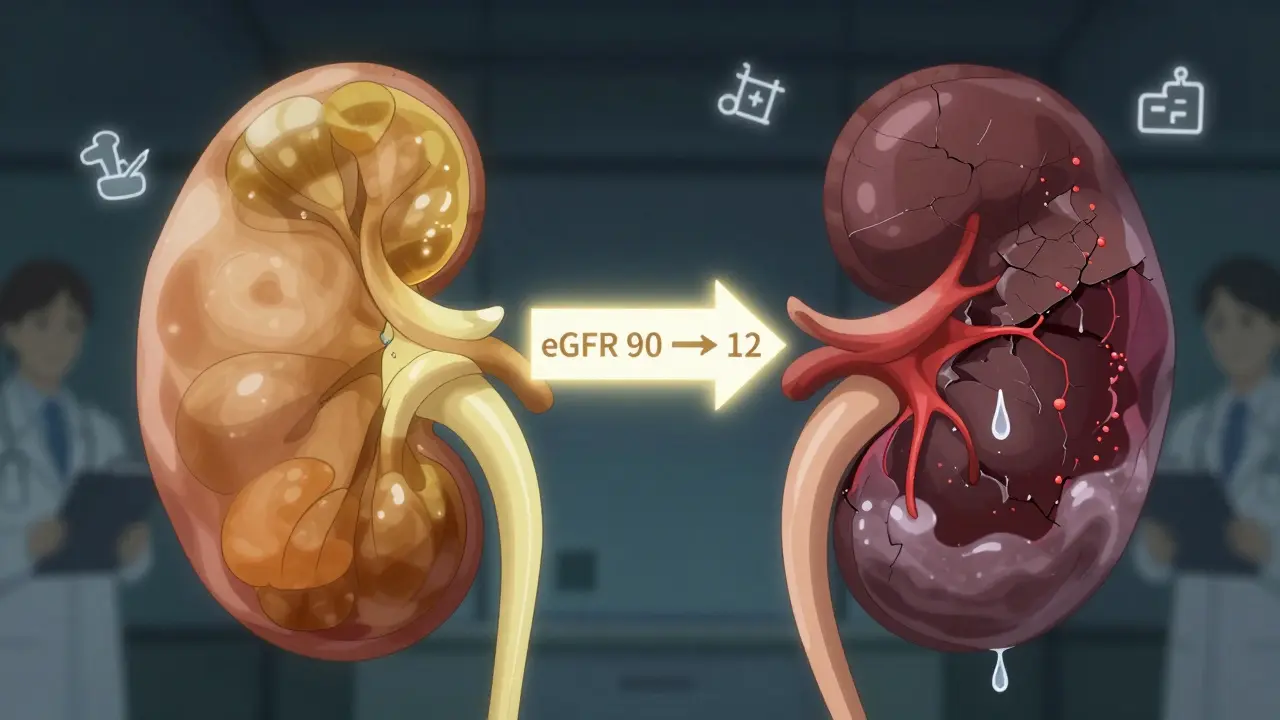
- 90 or above: Normal kidney function
- 60-89: Mildly reduced function (Stage 2)
- 45-59: Mild to moderate reduction (Stage 3a)
- 30-44: Moderate to severe reduction (Stage 3b)
- 15-29: Severe reduction (Stage 4)
- Below 15: Kidney failure (Stage 5)
Stage 3 is where most people are diagnosed. Many don’t feel sick yet. But that’s exactly when treatment matters most. Controlling blood pressure, managing diabetes, and changing diet can slow or even stop the damage.
Important note: eGFR isn’t perfect. It can be inaccurate if you’re under 18, pregnant, very muscular, or very overweight. In those cases, doctors may use cystatin C-a different blood marker-to estimate GFR. It’s not used as often, but it’s more reliable in tricky situations.

Urinalysis: The Hidden Clue That Often Comes First
While blood tests show how well your kidneys are filtering, urine tests show what they’re leaking. And here’s the big secret: protein in your urine is often the very first sign of kidney damage.
Healthy kidneys keep protein inside your blood. But when tiny filters in the kidneys get damaged-usually from high blood pressure or diabetes-protein starts to leak into your urine. That’s called proteinuria. The most common type is albuminuria.
Doctors don’t use old-fashioned dipstick tests anymore. Those are too unreliable. Instead, they use a precise test called the Albumin-to-Creatinine Ratio (ACR). It measures how much albumin (a type of protein) is in your urine compared to creatinine.
ACR results are measured in mg/mmol:
- Under 3: Normal
- 3 to 70: Mild protein leakage (needs retesting)
- Over 70: Significant proteinuria (clear sign of kidney damage)
If your ACR is in the 3-70 range, your doctor will ask you to repeat the test on an early morning urine sample. One high result could be from dehydration, infection, or exercise. Two or three high results mean something’s wrong.
Some people also get a 24-hour urine collection. This measures total protein, sodium, potassium, and other substances over a full day. It’s more accurate but harder to do at home. Most doctors start with ACR because it’s easier and just as effective.
Who Needs These Tests-and How Often?
You don’t need to get kidney tests every year unless you’re at risk. But if you have any of these, you should be tested regularly:
- Diabetes (type 1 or 2)
- High blood pressure
- Heart disease
- Obesity
- Family history of kidney failure
- Previous episode of acute kidney injury
- Age 60 or older
The UK Kidney Association and the American Kidney Fund both recommend that people in these groups get both an eGFR and a urine ACR test at least once a year. Some doctors test every 3 to 6 months if kidney disease is already diagnosed.
Even if you feel fine, if you have diabetes or high blood pressure, these tests are non-negotiable. That’s because kidney damage often happens silently. By the time you feel tired or swollen, it’s too late to reverse it.
What Happens If the Tests Show a Problem?
If your eGFR is low or your ACR is high, your doctor won’t panic. They’ll look at the full picture. Did you have a recent infection? Are you dehydrated? Are you on any medications that affect the kidneys? Sometimes, a single abnormal result is just a fluke.
If the problem continues, they’ll likely refer you to a kidney specialist (nephrologist). Treatment usually focuses on the root cause:
- For diabetes: tighter blood sugar control
- For high blood pressure: ACE inhibitors or ARBs (medications that protect the kidneys)
- For obesity: weight loss and diet changes
- For smoking: quitting
There’s no magic pill to fix damaged kidneys. But lifestyle changes and the right medications can slow the decline by years-even decades.
What to Ask Your Doctor
Don’t just accept a test result. Ask questions:
- “What’s my eGFR and ACR number?”
- “What stage is my kidney function?”
- “Do I need to repeat these tests?”
- “Could my medications be affecting my kidneys?”
- “Should I see a kidney specialist?”
Most doctors will give you your numbers. But if they don’t, ask. Knowledge is power.
Bottom Line: Don’t Wait for Symptoms
Kidney disease doesn’t come with warning signs until it’s advanced. But creatinine, GFR, and urinalysis can catch it early-when you still have a chance to protect your kidneys.
If you’re over 50, have diabetes or high blood pressure, or just want to know your kidney health, ask your doctor for these three simple tests. They’re cheap, quick, and non-invasive. And they might just save your kidneys-and your life.
Can I check my kidney function at home?
There are no reliable at-home tests for eGFR or ACR. You need a blood draw and a urine sample analyzed in a lab. Some companies sell urine dipstick kits, but they’re not accurate enough for diagnosis. Always rely on tests ordered by your doctor.
Can drinking more water improve my GFR?
Drinking water won’t raise your GFR if your kidneys are damaged. In fact, forcing yourself to drink too much can be harmful. The goal isn’t to flush your kidneys-it’s to keep them working with the right balance of fluids. If you have kidney disease, your doctor will tell you how much water is safe for you.
Why does my doctor check my urine for blood?
Blood in the urine (hematuria) can signal kidney stones, infection, inflammation, or even cancer. If your urine test shows blood, your doctor will repeat the test and may order imaging like an ultrasound to find the cause. It’s not always serious, but it always needs checking.
Is a high creatinine level always a sign of kidney disease?
Not always. Athletes, bodybuilders, or people with high muscle mass can have naturally higher creatinine levels. Older adults or those with low muscle mass may have lower levels even with kidney problems. That’s why doctors look at eGFR, not creatinine alone.
How often should I get tested if I have diabetes?
If you have type 1 diabetes, get tested once a year starting five years after diagnosis. If you have type 2 diabetes, get tested annually from the time you’re diagnosed. If your results are normal, yearly tests are enough. If they’re abnormal, your doctor may recommend testing every 3 to 6 months.


