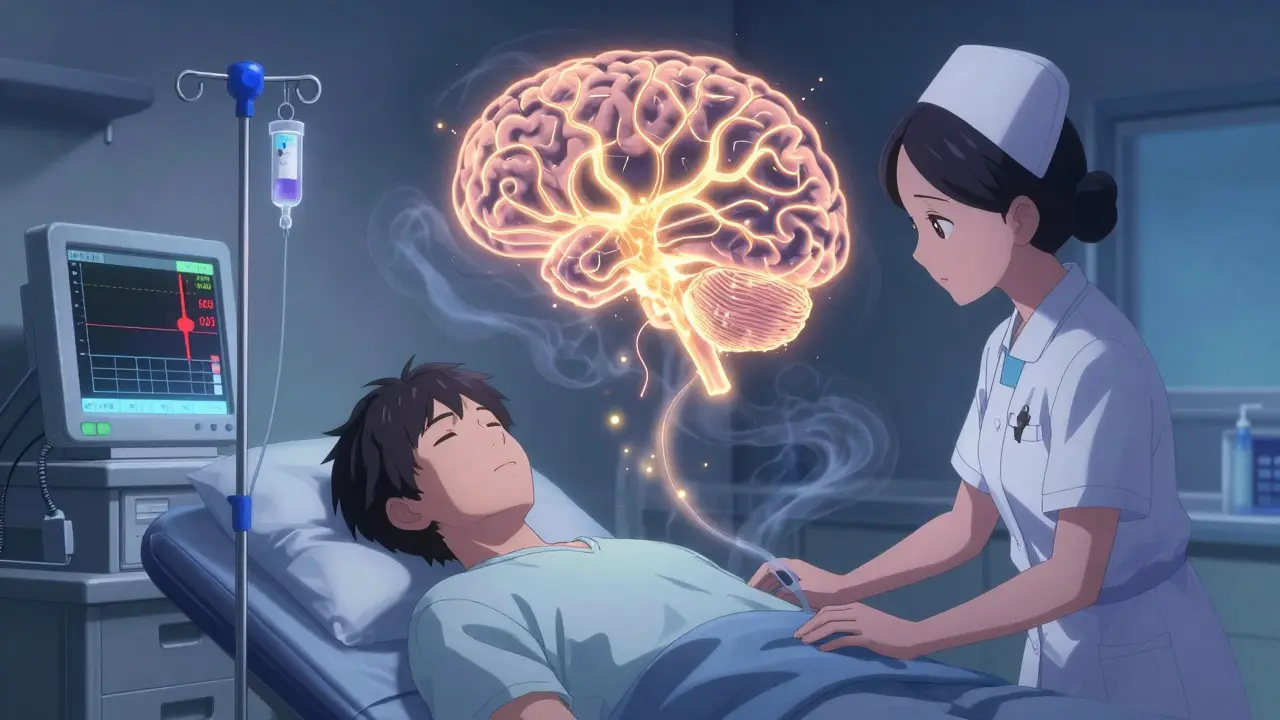
When antidepressants don’t work, what’s next? For nearly 30% of people with major depression, standard medications fail to lift the fog. That’s where ketamine and esketamine come in - two fast-acting options that can shift the needle in hours, not weeks. Unlike traditional SSRIs that take months to show effects, these drugs can bring relief after just one treatment. But they’re not the same. And understanding the difference could mean the difference between life-changing relief and a frustrating, expensive dead end.
How Ketamine and Esketamine Work
Ketamine was first approved in 1970 as an anesthetic. It’s been used in emergency rooms and battlefields for decades. But in the 2000s, doctors noticed something strange: patients recovering from surgery sometimes reported feeling lighter, even euphoric. That’s when researchers started asking - could this drug help with depression?
The answer turned out to be yes. Ketamine works differently than any other antidepressant. Instead of targeting serotonin or norepinephrine, it blocks NMDA receptors in the brain. This triggers a cascade of effects: new connections form between neurons, inflammation drops, and the brain’s stress response calms down. The result? A rapid shift in mood.
Esketamine is a chemical cousin. It’s the (S)-enantiomer of ketamine - meaning it’s one half of the full ketamine molecule. Because it’s more targeted, it produces fewer hallucinations and dissociative effects. But that also means it might not be as powerful. Think of it like this: ketamine is a full-spectrum tool. Esketamine is a refined version, designed for safety, not maximum punch.
Administration: IV vs. Nasal Spray
How you get the drug matters just as much as what you get.
IV ketamine is given through a vein over 40 minutes. It’s done in a clinic with monitors, trained staff, and emergency equipment. Patients feel a floating sensation, sometimes mild hallucinations, or a sense of detachment. These effects peak within 20 minutes and fade within an hour. Most people report feeling clearer-headed within hours.
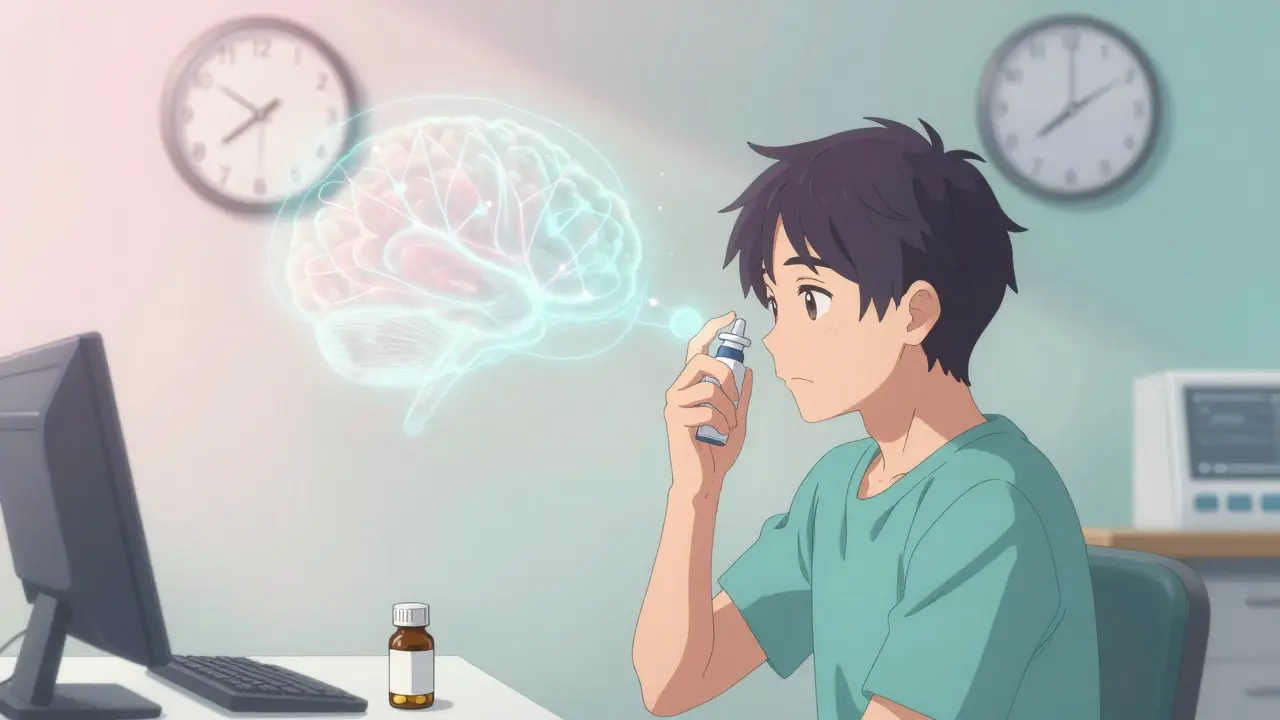
Esketamine (Spravato®) comes as a nasal spray. You sit in a doctor’s office, spray it up your nose, and wait. The dose is controlled - either 56 mg or 84 mg - and you’re monitored for two hours after. Dissociation is milder, but still present. The key difference? You can’t just walk in and get it. You need to be on an oral antidepressant at the same time. That’s not optional. It’s FDA-mandated.
Efficacy: Which One Works Better?
A major 2025 study from Mass General Brigham tracked 153 patients with treatment-resistant depression. 111 got IV ketamine. 42 got esketamine. The results were clear.
- IV ketamine reduced depression scores by 49.22% after the full course.
- Esketamine reduced scores by 39.55%.
That’s not a small gap. It’s clinically significant. And it wasn’t just about the final number. Ketamine worked faster. Patients felt better after the first session. Esketamine? Most needed at least two treatments before they noticed any change.
A 2020 meta-analysis of 12 studies backed this up: IV ketamine consistently outperformed nasal esketamine across all time points - from 24 hours to eight weeks.
Real-world data from PatientsLikeMe adds another layer. 63.2% of IV ketamine users said they felt significant relief within 24 hours. Only 51.7% of esketamine users said the same. The numbers don’t lie: if speed and strength matter, ketamine wins.
Safety and Side Effects
Both drugs carry risks. But they’re different.
IV ketamine causes dissociation in 42.3% of patients. That means feeling detached from your body or surroundings. Some describe it as a dreamlike state. Others find it unsettling. Hallucinations, increased blood pressure, and nausea are common. There’s also a risk of misuse - ketamine is a Schedule III controlled substance.
Esketamine? Less intense. Only 28.7% of users reported dissociation. The nasal route delivers a slower, more controlled release. That’s why the FDA approved it for outpatient use - with monitoring. But it’s not risk-free. Blood pressure spikes still happen. And because it’s a nasal spray, some patients report nosebleeds, throat irritation, or a bitter taste.
One thing both share: you can’t drive yourself home. Both require two hours of supervised recovery. That’s non-negotiable.
Cost and Insurance
Money talks. And it’s a big barrier.
A full course of eight IV ketamine treatments costs between $4,200 and $5,600. That’s out-of-pocket unless your insurance covers it. And here’s the catch: only 38.2% of commercial insurers cover IV ketamine for depression. Most still see it as experimental.
Esketamine? More expensive. A full course runs $5,800 to $6,900. But here’s the twist: 67.4% of insurers cover it. Why? Because it’s FDA-approved specifically for depression. That gives it legitimacy. Insurance companies are more willing to pay for something with a branded name and clear guidelines.
When you factor in long-term outcomes, IV ketamine actually comes out ahead. A 2025 JAMA Psychiatry study found it costs $14,327 per quality-adjusted life year (QALY) gained. Esketamine? $18,764. That’s a 31% difference. More bang for your buck - if you can get it.
Who Gets Which Treatment?
There’s no one-size-fits-all. But experts are starting to draw lines.
Dr. John Krystal from Yale says IV ketamine is best for “life-threatening depression” - people who are actively suicidal, hospitalized, or not responding to anything else. It’s fast. It’s strong. It can pull someone back from the edge.
Dr. Christine Denny from Columbia sees esketamine differently. She calls it the “maintenance option.” If you’ve already stabilized with ketamine, or if you can’t tolerate the intensity of IV infusions, esketamine’s gentler ride makes sense. It’s easier to fit into daily life. You go to a clinic, spray it, sit for two hours, and leave.
Real patients echo this. On forums, 78.4% of esketamine users rated their experience as “good” or “excellent.” Only 62.9% of IV ketamine users did. Why? The side effects. The IV process feels clinical. The nasal spray feels more like a routine check-up.

Access and Availability
Even if you’re a perfect candidate, you might not be able to get either.
Only 12.4% of U.S. counties have certified Spravato® centers. That’s barely one in eight. And IV ketamine? Even fewer clinics offer it. Many are private, cash-only, and located in big cities. If you live in rural America, your options are slim to none.
There’s also a supply problem. The number of ketamine clinics jumped from 142 in 2020 to over 1,000 in 2025. But demand is still outpacing supply. Wait times for first appointments can be 6-8 weeks.
And here’s the kicker: neither treatment is a cure. They’re tools. Most people need ongoing sessions - every 1-3 weeks - to stay stable. That’s expensive. That’s time-consuming. That’s a burden.
What’s Next?
The science is moving fast. In September 2025, the FDA accepted Janssen’s application for a higher-dose esketamine spray (112 mg). That could mean fewer sessions and better results.
Meanwhile, trials are underway for intramuscular ketamine - a middle ground between IV and nasal. No IV line. No nasal spray. Just a shot in the muscle. If it works, it could be the sweet spot: faster than esketamine, easier than IV.
And researchers are looking at brain patterns. A 2025 study in Nature Mental Health found that patients who responded to ketamine showed a spike in gamma brain waves after treatment. That could mean one day, a simple EEG scan could predict who will benefit - before they even take the first dose.
Final Thoughts
Ketamine and esketamine aren’t magic bullets. But for people who’ve tried everything else, they’re the best shot we’ve got. If you need fast, powerful relief - and can handle the side effects - IV ketamine is the stronger choice. If you want something gentler, more predictable, and easier to fit into your life, esketamine might be the way to go.
The real question isn’t which is better. It’s: which one fits you?
Is ketamine FDA-approved for depression?
Ketamine itself is not FDA-approved for depression. It was approved in 1970 as an anesthetic. Its use for depression is off-label, though widely supported by clinical research. Esketamine (Spravato®), however, is FDA-approved specifically for treatment-resistant depression and major depression with suicidal thoughts.
Can I take ketamine or esketamine at home?
No. Both require medical supervision. IV ketamine must be given in a clinic with monitoring equipment and trained staff. Esketamine is administered as a nasal spray in a certified provider’s office, and you must stay for two hours afterward. Home use is not permitted under current regulations.
How long does the effect last?
The antidepressant effect typically lasts 3-7 days after a single dose. Most patients need maintenance treatments every 1-3 weeks to sustain improvement. Long-term studies show about half of responders stay in remission with regular dosing over six months.
Do I need to be on an antidepressant while using esketamine?
Yes. The FDA requires that esketamine be used alongside an oral antidepressant. This is not optional. It’s built into the approved protocol. The combination appears to improve long-term outcomes and reduce relapse risk.
Are there long-term risks?
Long-term data is still limited. Chronic use of ketamine has been linked to bladder and liver issues in recreational users, but clinical doses are much lower and carefully monitored. So far, no major organ damage has been reported in medical settings. Regular check-ups and urine tests are standard practice to catch early signs of problems.
Can ketamine cure depression?
No. Neither ketamine nor esketamine is a cure. They’re tools for rapid symptom relief. They work best as part of a broader plan - including therapy, lifestyle changes, and sometimes ongoing medication. Think of them as a bridge, not a destination.


