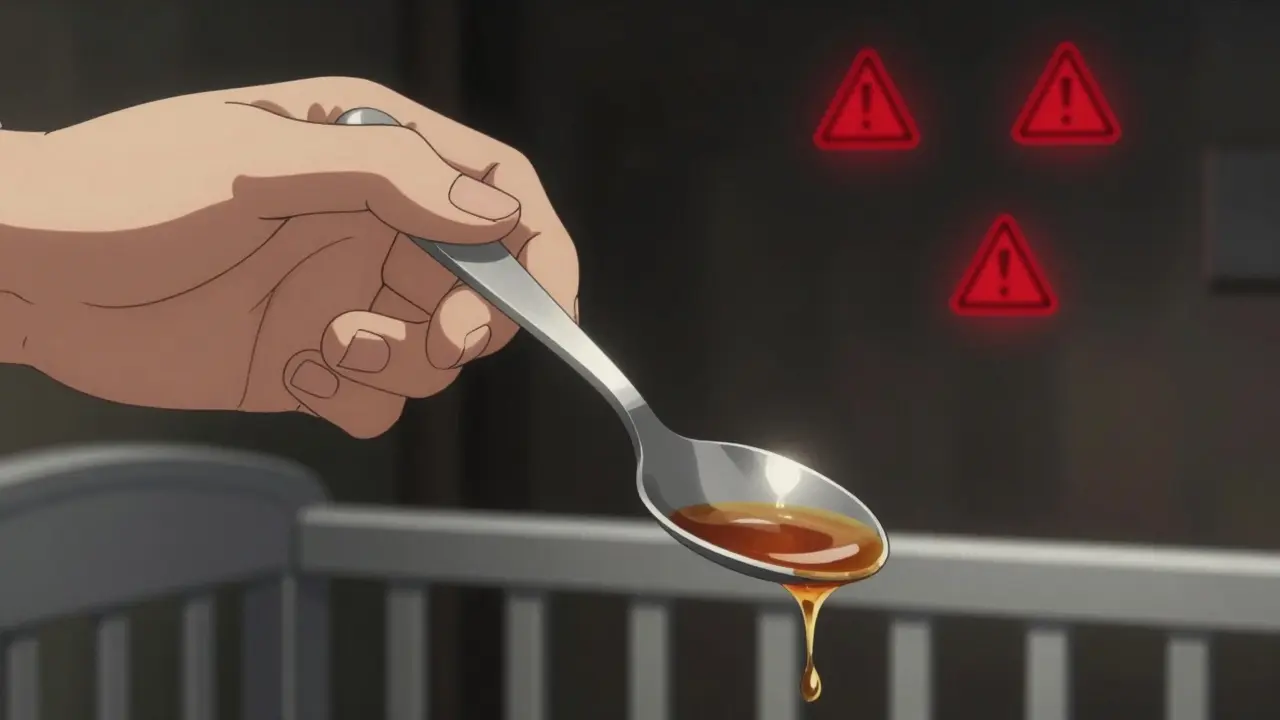
Imagine this: your baby has a fever. You reach for the bottle of liquid medicine, grab a kitchen spoon from the drawer, and pour in what looks like "half a teaspoon." It seems simple enough. But that half-teaspoon could be dangerously off. In fact, using household spoons instead of proper medical tools leads to dosing errors that vary by more than 20% in over half of cases. This isn't just a minor mistake; it's a serious safety risk.
Giving medicine to infants under one year old requires precision that most parents don't realize they need. The difference between a safe dose and an overdose can be as small as a few milliliters. With approximately 50,000 children under five visiting emergency rooms annually for medication poisoning incidents every year, understanding how to handle drops, concentrations, and dosage is not optional-it's essential.
Why Infant Medication Errors Happen
You might think you're careful, but data tells a different story. A 2022 study published in Pediatrics found that 41.2% of caregivers made at least one dosing error when giving liquid meds to their babies. Why does this happen so often? It usually comes down to three main traps: confusing measurements, misreading labels, and using the wrong tools.
The first trap is measurement confusion. We are taught early on that a teaspoon equals 5 milliliters (mL). But a standard kitchen teaspoon holds anywhere from 4.9 mL to 7.8 mL depending on its shape and how full you fill it. When you add up those tiny variances over several doses in a day, you can easily give your child too much or too little medicine.
The second trap is label confusion. For years, there were two types of acetaminophen (Tylenol) for kids: "infant" drops and "children's" liquid. They looked similar but had vastly different strengths. The concentrated infant drops were twice as strong as the regular children's version. If you used the cup meant for the weaker version with the stronger drops, you could accidentally double-dose your baby.
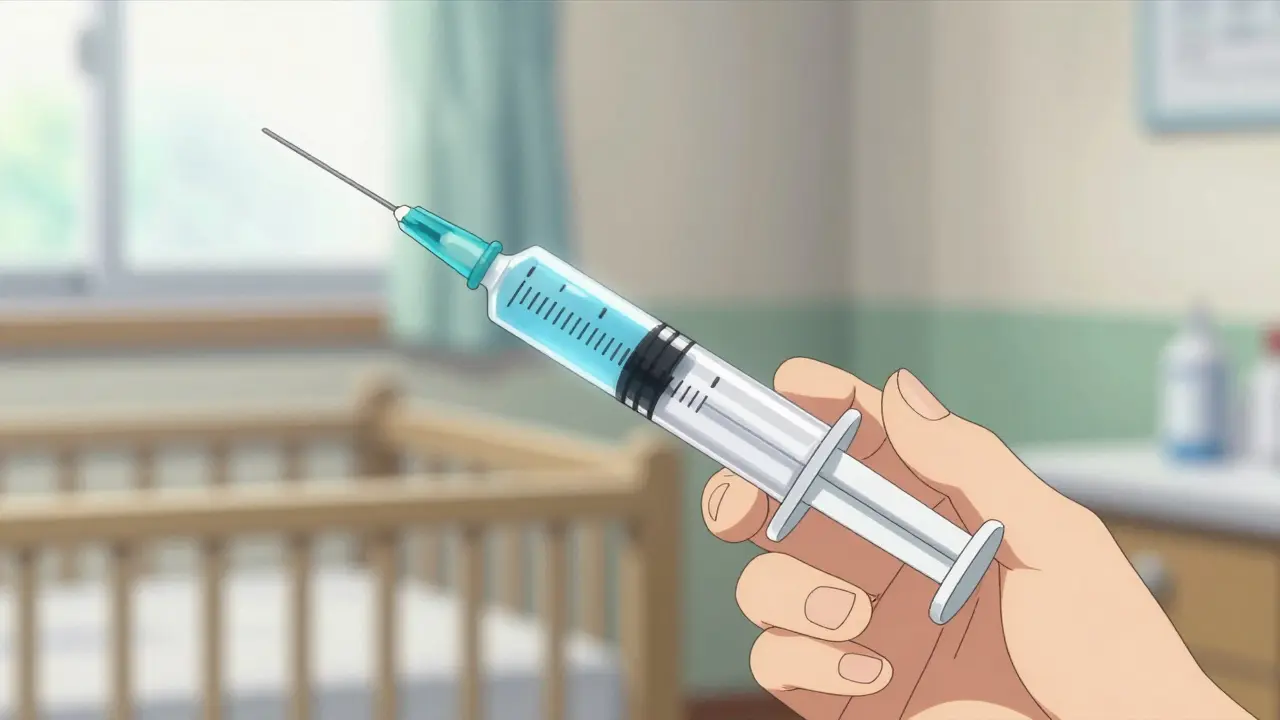
The third trap is tool failure. Many parents still use the plastic cups that come with medicine bottles. These cups have wide openings and vague markings. A 2020 trial at Cincinnati Children's Hospital showed that oral syringes achieved 89.3% accuracy in dosing, while medicine cups only hit 62.1%. That gap is huge when dealing with a tiny body.
Understanding Concentration: The Hidden Danger
To stay safe, you must understand what "concentration" means. Concentration refers to how much active drug is packed into each milliliter of liquid. It is written on the label as something like "160 mg/5 mL." This means there are 160 milligrams of medicine in every 5 milliliters of fluid.
| Product Type | Concentration | Strength Level | Risk Factor |
|---|---|---|---|
| Old Infant Drops (Discontinued) | 80 mg / 1 mL | Highly Concentrated | Very High (Easy to overdose) |
| Standard Infant Liquid | 160 mg / 5 mL | Standard | Moderate (If confused with children's) |
| Children's Liquid | 160 mg / 10 mL | Less Concentrated | Low (Safer margin) |
In 2011, the U.S. Food and Drug Administration (FDA) stepped in to fix this chaos. They mandated that all liquid acetaminophen for infants must use the same concentration: 160 mg per 5 mL. This eliminated the dangerous "drops" formulation that caused half of all liquid medication overdases in infants before 2010. Since then, overdose calls to poison control dropped by nearly 44%.
However, vigilance is still required. Always check the box. Look for the words "infant" and verify the concentration matches what your doctor prescribed. Never assume that because a bottle says "acetaminophen," it’s the same strength as the last one you bought.
How to Calculate the Right Dose
Dosing for infants is based on weight, not age. Age is a rough guide, but weight is the scientific standard. The general rule for acetaminophen is 10 to 15 milligrams per kilogram (mg/kg) of body weight per dose. You can give this dose every 4 to 6 hours, but never exceed five doses in 24 hours.
Here is how to do the math safely:
- Weigh your child: Get their current weight in kilograms. If you only know pounds, divide by 2.2 to get kg. (Example: 15 lbs ÷ 2.2 = ~6.8 kg).
- Calculate the range: Multiply the weight by 10 and by 15. (Example: 6.8 x 10 = 68 mg; 6.8 x 15 = 102 mg). Your target dose is between 68 and 102 mg.
- Check the concentration: Look at your bottle. It likely says 160 mg/5 mL.
- Convert to volume: Use the formula: (Target mg / Concentration mg) x Volume mL. For 80 mg (a middle-ground dose): (80 / 160) x 5 mL = 2.5 mL.
If this math feels overwhelming, you are not alone. Most doctors will write the exact milliliter amount on the prescription. If you are buying over-the-counter, ask your pharmacist to calculate it for you. Do not guess.
The Best Tools for Measuring
Your measuring device matters as much as the calculation. Throw away the kitchen spoons. Stop using the flimsy plastic cups if you can avoid them.
The gold standard is an oral syringe. Specifically, look for one with clear metric markings (milliliters) and fine graduations. For infants under six months, the American Academy of Pediatrics recommends syringes with 0.1 mL or 0.2 mL marks. These small increments reduce dosing errors by 67% compared to standard cups.
What about droppers? Droppers are tricky. The size of a "drop" varies wildly depending on the viscosity of the liquid and the tip of the dropper. One manufacturer's drop might equal 0.05 mL, while another's equals 0.02 mL. A 2018 study found that 73.6% of parents got the dose wrong when using droppers because of this inconsistency. Unless the medication specifically comes with its own calibrated dropper, stick to the syringe.
Safety Checklist for Every Dose
Create a routine. Medication errors often happen when we are tired, stressed, or rushing. Slow down. Follow this five-step verification process recommended by the CDC:
- Confirm Weight: Has your child grown recently? Re-calculate if needed.
- Verify Concentration: Read the label aloud. "160 mg per 5 mL."
- Use the Right Tool: Pull out the oral syringe. Check that it is clean.
- Measure Precisely: Draw the liquid to the exact line. Hold the syringe at eye level to avoid parallax error (where the angle makes the number look different).
- Double-Check: If possible, have a second adult verify the amount before administering.
This protocol reduces dosing errors by 82%. It takes extra time, but it buys peace of mind.
Special Risks: Cold Meds and Multi-Symptom Drugs
A word of warning about cold and cough medicines. The FDA advises against using over-the-counter cough and cold products in children under six years old. These medications often contain multiple active ingredients-like antihistamines, decongestants, and pain relievers-in one bottle.
The risk here is accidental duplication. If you give a multi-symptom cold medicine that contains acetaminophen, and then also give plain acetaminophen for a fever, you could overdose your child on the pain reliever without realizing it. Between 2004 and 2005, these multi-symptom drugs were linked to thousands of emergency room visits for toddlers. Stick to single-ingredient medications unless your doctor explicitly tells you otherwise.
When to Call for Help
If you suspect you have given too much medicine, do not wait for symptoms to appear. Contact the Poison Control Center immediately. In the U.S., the number is 1-800-222-1222. They are available 24/7 and can guide you through next steps. Their database shows that quick intervention prevents most severe outcomes.
Also, consider using digital aids. Apps and online calculators from reputable sources like the National Poison Center or HealthyChildren.org can help verify doses in real-time. Just ensure the app asks for weight and checks the specific concentration of your bottle.
Can I use a kitchen spoon to measure infant medicine?
No, you should never use a kitchen spoon. Standard teaspoons vary in size and can hold significantly more or less than the 5 mL required for accurate dosing. This variability leads to dosing errors in over 50% of cases where spoons are used. Always use an oral syringe or the measuring cup provided with the medication, though syringes are far more accurate.
What is the difference between infant and children's acetaminophen?
Historically, infant acetaminophen was much more concentrated (80 mg/mL) than children's acetaminophen (160 mg/5 mL or 32 mg/mL). However, since 2011, the FDA has standardized infant acetaminophen to 160 mg/5 mL to match the strength of older children's formulations, reducing confusion. Always check the concentration on the label to ensure you are using the correct strength for your child's weight.
How do I calculate the correct dose for my baby?
Doses are calculated based on weight, not age. The standard dose for acetaminophen is 10-15 mg per kilogram of body weight. First, convert your baby's weight to kilograms (divide pounds by 2.2). Then multiply the weight by 10 and 15 to find the safe range in milligrams. Finally, check your bottle's concentration to determine how many milliliters equal that milligram amount. When in doubt, ask your pharmacist.
Are oral syringes safer than medicine cups?
Yes, oral syringes are significantly safer. Studies show that oral syringes achieve nearly 90% accuracy in dosing, whereas medicine cups only reach about 62% accuracy. Syringes allow for precise measurement in small increments (0.1 mL or 0.2 mL), which is crucial for infants who require very small doses. Medicine cups often have wide bases and unclear markings that lead to estimation errors.
Is it safe to give cough and cold medicine to infants?
No, the FDA advises against using over-the-counter cough and cold medicines in children under six years old. These products can cause serious side effects, including rapid heart rate, convulsions, and even death. Additionally, multi-symptom formulas increase the risk of accidental overdose if combined with other medications containing similar ingredients like acetaminophen. Consult your pediatrician for safe alternatives.