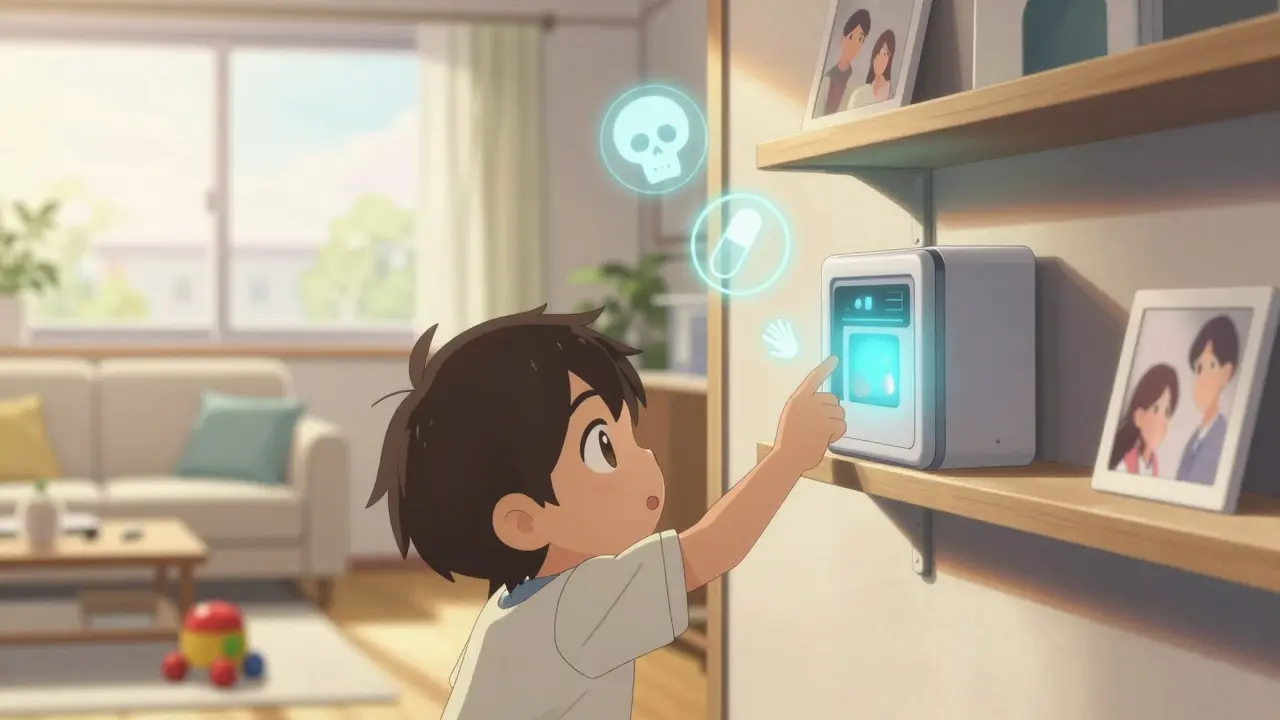
Every year, 60,000 children end up in emergency rooms because they got into medications left within reach. Many of these cases involve opioids, anxiety pills, or ADHD medications-drugs that can be deadly even in small doses. The solution isn’t just keeping pills out of sight. It’s not enough to put them on a high shelf or rely on child-resistant caps. The only proven way to stop accidental poisonings and misuse is to use a medication lockbox.
Why Lockboxes Are Non-Negotiable
Child-resistant caps? They’re designed to slow kids down, not stop them. Studies show half of children aged 4 to 5 can open them in under a minute. Hidden spots? A 2023 Hennepin Healthcare study found 72% of kids find hidden stashes within 30 minutes. Even a locked medicine cabinet isn’t safe if a child can reach the key or combination.Lockboxes change everything. They’re physical barriers. No matter how curious, clever, or determined someone is, they can’t get in without the key, code, or fingerprint. The CDC, American Academy of Pediatrics, and SAMHSA all agree: if you have high-risk medications at home, you need a lockbox. This isn’t optional safety-it’s essential.
Which Medications Need a Lockbox?
Not all pills are equally dangerous. But some carry serious risks if misused or accidentally ingested. These are the ones you must lock away:- Opioids: Hydrocodone (Vicodin, Norco), oxycodone (Percocet, OxyContin), fentanyl patches
- Benzodiazepines: Alprazolam (Xanax), clonazepam (Klonopin), diazepam (Valium)
- Stimulants: Dextroamphetamine-amphetamine (Adderall), methylphenidate (Ritalin)
- Other high-risk drugs: Sleep aids like zolpidem (Ambien), certain pain patches, and even some over-the-counter medications in large quantities (like cough syrups with dextromethorphan)
Even if you think “no one would take them,” the reality is different. Teens often get drugs from home medicine cabinets. Young siblings explore everything. Elderly relatives with memory issues might accidentally take double doses. A lockbox removes all those risks at once.
Choosing the Right Lockbox
Not all lockboxes are the same. The right one depends on your household, the number of medications, and who needs access.Size matters. For one person with a few prescriptions, a 6x4x3 inch box works. For families with multiple prescriptions, go bigger-12x8x6 inches holds dozens of bottles. Weight capacity? Stick to models that hold 1-5 pounds. Too heavy and it’s hard to move; too light and a child might knock it over.
Lock type:
- Key lock: Simple, cheap, reliable. But you must keep the key in a separate, hidden spot-never on the box. Lose the key? You’re locked out.
- Combination lock: No keys to lose. Most use 3-4 digit codes. Good for households with 1-2 trusted adults. But if someone forgets the code, you’re stuck.
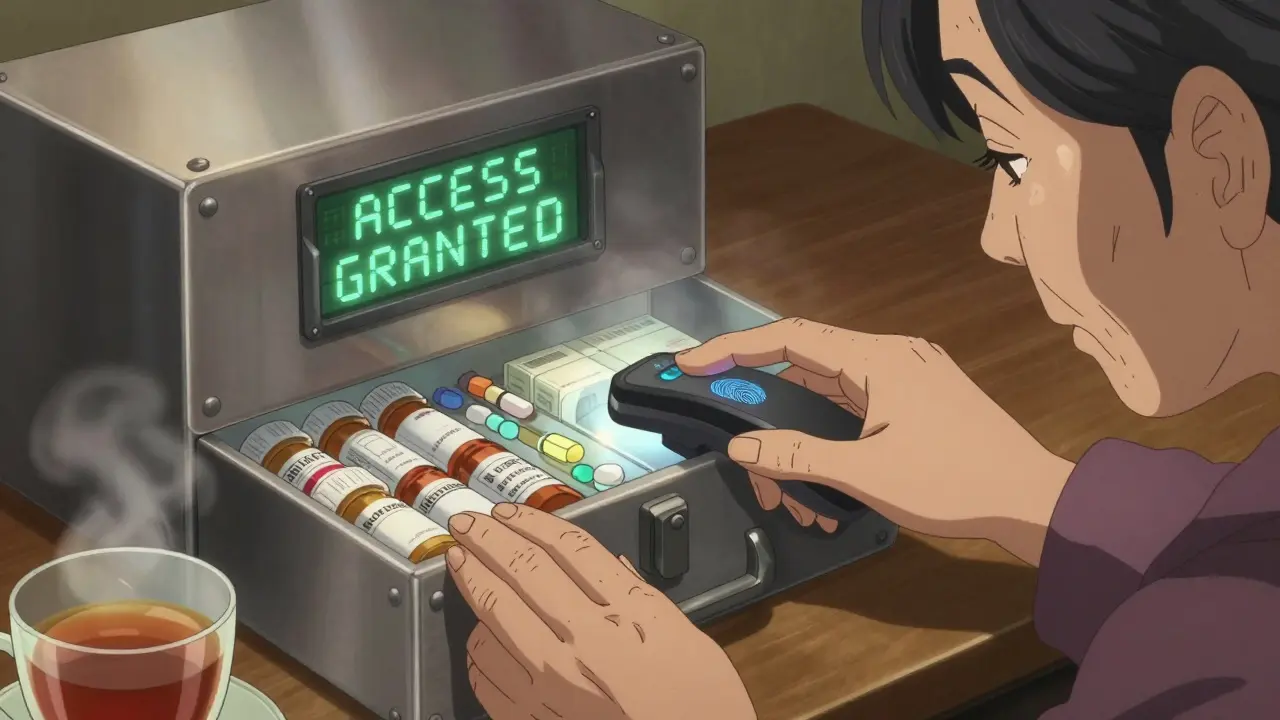
- Biometric (fingerprint): Best for elderly users or households with multiple authorized people. No codes, no keys. Just scan a finger. These cost more-around $35-$60-but eliminate access issues.
Material and safety: Look for reinforced steel or thick ABS plastic. Fire resistance is a bonus-some lockboxes can survive 30 minutes at 1,700°F. That’s not just for fires; it means the box won’t melt if left near a heater.
Climate control? If you store insulin or other refrigerated meds, you need a special lockbox with a cooling unit. Standard boxes are fine for room-temperature pills, but never store them in bathrooms. Humidity ruins medications.
Where to Put It
Location is just as important as the lockbox itself.Don’t put it:
- In the bathroom (too damp)
- On a nightstand or dresser (easily reached)
- Behind a book or under a pile of clothes (kids find it)
Do put it:
- On a high shelf, out of a child’s reach
- Inside a closet or cabinet with a latch (adds another layer)
- Mounted to the wall (prevents tipping or moving)
Make sure the person who needs to use it daily-like an elderly parent or caregiver-can access it without strain. If they have arthritis, a biometric model is worth the extra cost.
How to Set It Up Right
Follow these five steps to get it right the first time:- List all high-risk meds. Go through every cabinet. Write down each pill that falls into the dangerous categories above.
- Pick your lockbox. Match size, lock type, and features to your needs. Don’t buy the cheapest one if it won’t hold everything.
- Choose your location. Secure, dry, and accessible only to authorized users. Wall-mounting is ideal.
- Set access rules. Only two adults should know the code, have the key, or be registered on the biometric system. No kids. No guests. No exceptions.
- Test it. After setting up, try to open it yourself. Make sure the code works. Check that the key fits. If it’s biometric, test it with all authorized fingers.
Most people get the hang of it in 2-3 days. But don’t skip the test. A lockbox that doesn’t open when you need it is worse than no lockbox at all.
What to Avoid
Here are the most common mistakes-and how to fix them:- Mistake: Using a lockbox but leaving it on the floor. Solution: Mount it or place it on a shelf higher than 5 feet.
- Mistake: Giving the code to everyone in the house. Solution: Limit access to two people max. If someone moves out or no longer needs access, change the code or reset the biometrics.
- Mistake: Forgetting to update the lockbox when prescriptions change. Solution: Check it monthly. Remove empty bottles. Add new ones.
- Mistake: Assuming child-resistant caps are enough. Solution: They’re not. Never rely on them alone.
Real Stories, Real Results
One mother on Reddit shared how her 3-year-old nearly got into a fentanyl patch. After installing a Master Lock Medication Lockbox, she said: “Eight months later, zero incidents. I sleep better now.”Another user, caring for an 80-year-old father, struggled with a combination lock he kept forgetting. They switched to a fingerprint model. “It costs more,” she wrote, “but it’s the best $35 we ever spent.”
Consumer Reports surveyed 1,200 households. 78% said the lockbox gave them peace of mind. Only 22% said it was inconvenient-and most of those were people who hadn’t chosen the right type for their needs.
What’s Next? Smart Lockboxes Are Here
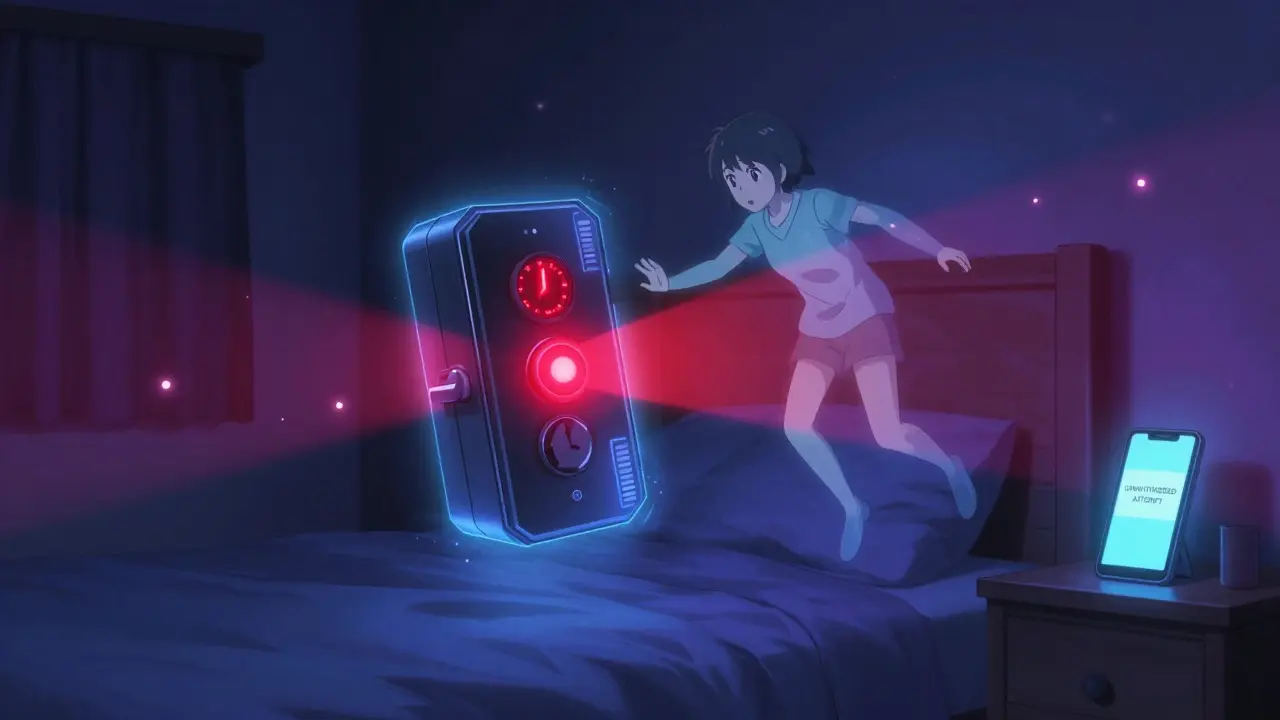
The latest innovation? Smart lockboxes. The FDA approved the first one in May 2023-the MediVault Pro. It doesn’t just lock. It records who opened it, when, and how often. If someone tries to open it at 3 a.m., it sends an alert to your phone. It even tracks when a dose is taken.Future models will connect to prescriptions, remind users when to take pills, and block access if a dose was taken too soon. The National Institute on Drug Abuse just funded $2.5 million in research to build fingerprint-verified dispensers that only release the exact dose prescribed.
By 2024, new home builders are required to include a lockbox space in “Healthy Home” certification. This isn’t a trend. It’s becoming standard.
Get One Today
You don’t need to wait for a crisis. If you have any of the high-risk medications listed above, act now. Free lockboxes are available in at least 22 states through public health programs like “Locks Save Lives.” Check with your local pharmacy, hospital, or health department. Many offer them at no cost.Otherwise, they cost between $15 and $60. That’s less than a single prescription co-pay. The peace of mind? Priceless.
Can I use a regular lockbox for medications?
Yes, but only if it’s designed for medication storage. Regular toolboxes or gun safes may be too large, too heavy, or lack features like humidity resistance. Medication-specific lockboxes are built to protect pills from moisture, heat, and accidental damage. Stick to models labeled for medication use.
What if I forget the combination or lose the key?
Most lockboxes have a reset mechanism or a backup key. Check the manufacturer’s instructions. If you can’t reset it, contact the company-they often send replacements. For biometric models, you can usually register multiple fingerprints. Always keep a backup access method written down and stored separately.
Do I need a lockbox if I don’t have kids?
Yes. Teens might visit. Guests might help themselves. Elderly users with memory issues might take extra doses. Even if you think no one else will access the meds, the risk is real. A lockbox protects not just children, but everyone in the home.
Can I store insulin in a lockbox?
Only if the lockbox has temperature control. Regular lockboxes don’t cool. Insulin must stay between 36°F and 46°F when unopened, and below 86°F after opening. Use a specialized medical lockbox with refrigeration, or store insulin in the fridge and keep a backup dose in a standard lockbox for emergencies.
Are lockboxes covered by insurance?
Most insurance plans don’t cover lockboxes. But some Medicaid programs and state health departments offer free ones. Check with your pharmacy, local health department, or organizations like SAMHSA. Many provide them at no cost as part of overdose prevention programs.


