Drug safety isn’t just about what’s on the label. It’s about what happens when real people take real medicines in real clinics, hospitals, and homes. Every year, thousands of adverse drug reactions go unreported because traditional reporting systems are slow, fragmented, or too complicated. But today, clinician portals and apps are changing that. They turn scattered data into early warnings - helping doctors catch dangerous side effects before they become crises.
What Exactly Are Clinician Portals for Drug Safety?
These aren’t fancy dashboards for IT teams. They’re practical tools built into the daily workflow of nurses, pharmacists, and physicians. Think of them as embedded safety nets. When a patient’s blood pressure drops after starting a new medication, or their liver enzymes spike unexpectedly, these systems flag it - automatically. They pull data from electronic health records (EHRs), clinical trial databases, lab results, and even patient-reported symptoms. Then they connect the dots in real time.
Platforms like Cloudbyz, IQVIA’s AI tools, and open-source clinDataReview don’t just collect reports. They analyze them. They compare your patient’s reaction to similar cases across thousands of other users. They check for drug interactions you might have missed. And they help you file reports to regulators like the FDA or EMA without leaving your charting system.
How Do These Tools Actually Work?
Modern systems run on cloud platforms and use standard medical data formats like HL7 and FHIR. That means they can talk to almost any EHR - Epic, Cerner, or even older systems. You don’t need a supercomputer. Just a browser. Open Chrome or Firefox. Log in. And start seeing safety signals pop up as you review patient charts.
Here’s how it plays out in practice:
- A 68-year-old patient on warfarin gets prescribed a new antibiotic. The portal instantly checks for known interactions and highlights a 40% increased risk of bleeding.
- A nurse enters a note: “Patient reported sudden rash after first dose.” The system auto-tags it as a potential hypersensitivity reaction and links it to the drug’s history in similar patients.
- Within 12 minutes, the safety dashboard updates with a new signal - a cluster of three similar cases in the last week. A pharmacovigilance officer gets a notification.
This speed matters. Traditional methods - paper forms, email submissions, manual database entries - take weeks. These apps cut detection time by up to 70%. In clinical trials, that means faster responses to emerging risks. In hospitals, it means fewer preventable hospitalizations.
Key Platforms Compared: What Works Where?
Not all tools are made the same. Your choice depends on your setting, budget, and technical capacity.
| Platform | Best For | Key Strength | Limitation | Cost (Annual) |
|---|---|---|---|---|
| Cloudbyz | Clinical trials, pharma companies | Integrates with CTMS and EDC systems; reduces signal detection time by 40% | Requires 6-8 weeks of integration; complex setup | $185,000 |
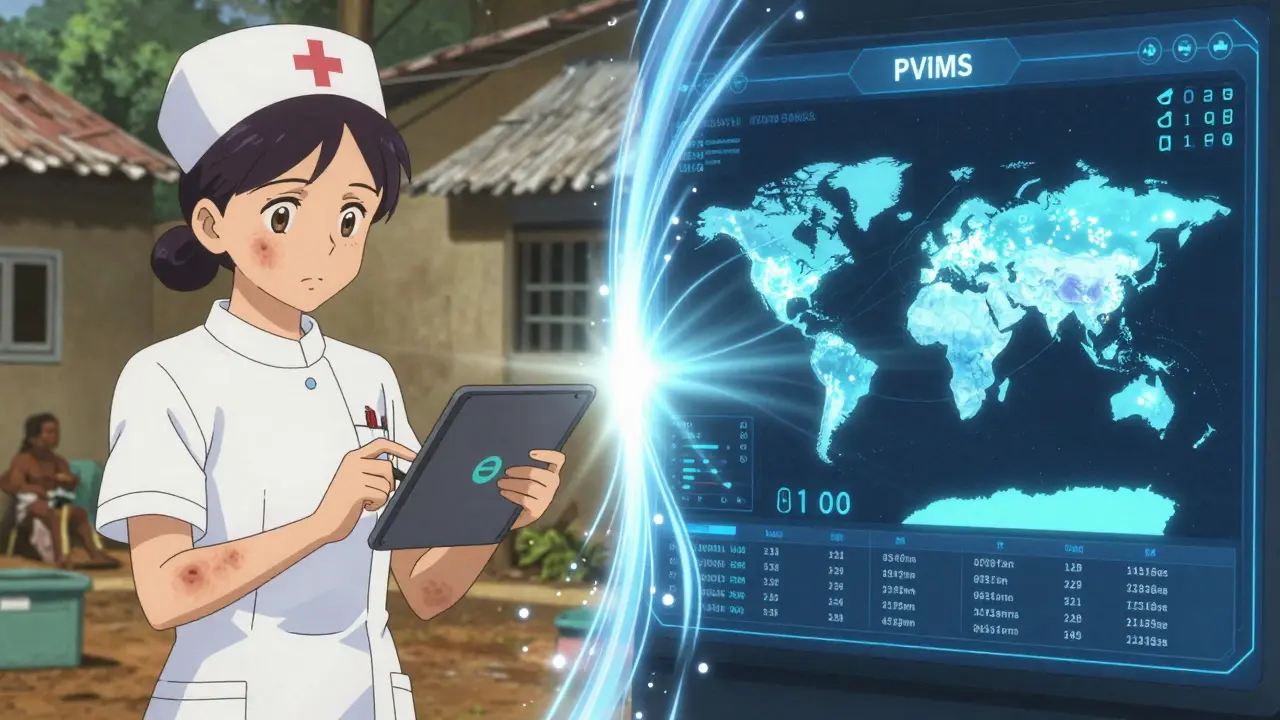
| PViMS | Low-resource clinics, LMICs | Free, simple interface; 95% adoption in 17 countries | No advanced analytics; needs stable internet | $0 (donor-funded) |
| IQVIA AI Tools | Large pharma, data-rich environments | 85% fewer false positives with AI; real-time evidence synthesis | Needs 50,000+ patient records; AI transparency concerns | $150,000-$300,000 |
| clinDataReview | Regulatory teams, academic research | 100% FDA/EMA compliance; reproducible analysis | Requires R programming skills; steep learning curve | Free (open-source) |
| Medi-Span (Wolters Kluwer) | Hospitals, outpatient clinics | 43% market share in US hospitals; 187 prevented events in 6 months | Alert fatigue; 60% false positives in some settings | $22,500-$78,000 |
For a small clinic in rural Australia? PViMS or Medi-Span might be your best bet. For a biotech running Phase III trials? Cloudbyz or IQVIA deliver the depth you need. And if you’re a researcher focused on compliance? clinDataReview gives you full audit trails without vendor lock-in.
What Skills Do You Need to Use These Tools?
You don’t need to be a data scientist. But you do need to understand three things:
- Clinical pharmacology - Know how drugs work, how they interact, and what side effects are common versus rare.
- Data literacy - Understand what the numbers mean. A spike in ALT levels isn’t just a number - it’s a potential sign of liver injury.
- Regulatory awareness - Know when and how to report. In Australia, that’s the TGA. In the US, it’s the FDA’s MedWatch. In the EU, it’s EudraVigilance.
Most teams need 80-120 hours of training to get comfortable. That includes learning how to interpret alerts, override false positives, and document your reasoning. Don’t skip this. Skipping training leads to missed signals - or worse, ignoring real ones because you’re overwhelmed by noise.
The Hidden Risks: When Tech Makes Things Worse
It’s easy to think automation solves everything. But it doesn’t.
Here’s what goes wrong:
- Alert fatigue - If your system pings you 20 times a day with low-risk warnings, you start ignoring them. One hospital reported clinicians disabling alerts entirely after three months.
- Over-reliance on AI - The FDA found that 22% of false signals in 2023 came from AI tools that didn’t understand clinical context. A patient with a fever and rash? AI flagged it as a drug reaction. But the patient had just returned from a tropical trip. Human review caught it.
- Integration gaps - If your portal can’t talk to your lab system or pharmacy records, you’re missing half the story. One study found EHRs only extract 65-78% of adverse events from free-text notes.
The solution? Always pair tech with human judgment. A portal can highlight a signal. But only a clinician can say: “This patient was also on a new supplement. This isn’t the drug.”
What’s Next? The Future Is Real-Time and AI-Augmented
By 2026, expect two big shifts:
- Predictive analytics - Platforms like Cloudbyz’s version 5.0 will start predicting risks before symptoms appear. If a patient’s genetic profile and lab trends match a pattern linked to a rare reaction, you’ll get a heads-up before they even take the second dose.
- AI co-pilots - IQVIA’s new tool doesn’t just flag events. It pulls up relevant studies, past cases, and regulatory guidance - all while you’re reviewing a case. It cuts validation time by 35%.
But here’s the catch: regulators are tightening rules. The FDA’s upcoming 2026 guidance will require all AI tools to explain how they reached a conclusion. No more black boxes. That means better safety - but slower adoption for vendors who cut corners.
Real-World Impact: Stories from the Field
In a clinic in Nairobi, a nurse used PViMS to report a pattern of severe dizziness in elderly patients on a new antihypertensive. Within 11 days, the manufacturer updated the prescribing guidelines. Lives were saved.
In a US hospital using Medi-Span, a pharmacist noticed 12 patients on statins had abnormal liver tests. The portal flagged a recent change in generic suppliers. Testing revealed a contamination. The batch was recalled.
At a biotech firm, a team using Cloudbyz caught a rare cardiac side effect in a Phase II trial. They paused enrollment, revised dosing, and avoided a Phase III failure - saving millions.
These aren’t hypotheticals. They’re happening now.
Getting Started: Your Action Plan
If you’re ready to use these tools effectively:
- Assess your setting - Are you in a hospital? A trial site? A rural clinic? Match your needs to the right platform.
- Check integration - Can it connect to your EHR? Your lab system? Your pharmacy records? If not, demand it.
- Train your team - Don’t just hand out logins. Run workshops. Practice interpreting alerts. Role-play false positives.
- Start small - Pilot one drug class. Monitor one type of reaction. Build confidence before scaling.
- Keep humans in the loop - Every alert needs a human review. Never automate judgment.
Drug safety isn’t about technology. It’s about people - patients, clinicians, and the systems that support them. The best portal in the world won’t help if no one trusts it, understands it, or uses it right.
Start with one patient. One alert. One decision. That’s how safety changes.
Can I use these portals if I’m not a pharmacist?
Yes. While pharmacists and safety officers handle formal reporting, any clinician - including doctors, nurses, and even physician assistants - can and should use these tools. They’re designed to support frontline decision-making. If you prescribe, administer, or monitor medications, you’re part of the safety chain. The portal helps you spot risks before they become problems.
Are these tools free for public clinics?
Some are. The PViMS platform is free for low- and middle-income countries and is used in over 28 countries across Africa and Southeast Asia. In high-income regions like Australia, most systems are paid. However, some government-funded health networks offer subsidized access to tools like Medi-Span. Check with your local health authority or pharmaceutical regulatory body.
How do I know if a safety alert is real or a false alarm?
Look at context. Ask: Did the patient have other conditions? Were they on other drugs? Did symptoms appear after a dosage change? Compare the reaction to known patterns in databases like WHO’s VigiBase. If multiple similar cases appear in a short time, it’s likely real. If it’s a single outlier with no other supporting data, it’s probably a false signal. Always document your reasoning - regulators will ask for it.
Do I need special training to use these systems?
Yes. Most organizations require 80-120 hours of training to use these tools effectively. Training covers how to interpret alerts, understand data sources, recognize false positives, and complete regulatory reports. Many vendors offer online modules. Hospitals and clinics often run internal workshops. Don’t skip this - untrained users miss real signals or trigger unnecessary investigations.
What happens if I don’t report a suspected adverse reaction?
You might miss a chance to prevent harm to others. Regulatory agencies rely on clinician reports to detect emerging safety issues. In Australia, the TGA receives over 90% of its serious adverse event reports from healthcare providers. Failing to report can delay recalls, update warnings, or change guidelines. In some cases, failure to report may carry legal consequences, especially if harm occurs and documentation shows awareness of the risk.
Can these apps work offline?
Most cloud-based platforms require internet access to sync data. But PViMS and some hospital systems offer limited offline modes - you can enter data locally and upload it later. In areas with unreliable connectivity, this is essential. Always confirm offline capabilities before choosing a system. For clinical trials or urban hospitals, online access is standard. In remote clinics, offline function is non-negotiable.
How do these tools affect patient trust?
When used well, they build trust. Patients notice when clinicians ask, “Have you noticed any new symptoms since starting this?” - because the portal helped identify the pattern. But if alerts are ignored or overused, patients feel dismissed. Transparency matters. Explain that you’re using a tool to keep them safe. Most patients appreciate that.
Next Steps: What to Do Now
If you’re a clinician: Start by asking your institution if they use a drug safety portal. If not, ask why. If yes, request training. If you’re in management: Audit your current system. Is it integrated? Is it used? Is it trusted? If you’re in a small practice: Explore free or low-cost options like PViMS or open-source tools. Don’t wait for a crisis. The next dangerous interaction could be in your next patient file.


