Every year, millions of people take the wrong pill, at the wrong time, or skip doses entirely. It’s not because they’re careless-it’s because managing multiple medications is confusing. One study found that 50% of people with chronic illnesses don’t take their meds as prescribed. That’s half of all patients. And it’s not just about feeling worse-it’s about ending up in the hospital, costing the U.S. healthcare system over $200 billion annually. The good news? Simple tools like blister packs and pill organizers can cut those mistakes in half.
Why Medication Mistakes Happen
Think about your own routine. You’ve got a morning pill for blood pressure, an afternoon one for cholesterol, an evening pill for pain, and a bedtime one for sleep. Maybe you’ve got a few more. Now imagine doing this every day for months or years. Your brain gets tired. Memory fades. Pills look similar. Labels fade. You open a bottle and wonder: Did I take this already? Did I take the right one? Did I take too much? This isn’t rare. It’s normal. And it’s dangerous. Taking too much can cause overdose. Skipping doses can make conditions worse. A 2022 study in the American Journal of Epidemiology tracked 180 people with high blood pressure. Those using standard pill bottles missed doses 36% of the time. Those using blister packs? Only 13%.What Are Blister Packs?
Blister packs are those clear plastic cards you see in pharmacies. Each pill sits in its own sealed bubble, labeled with the day and time-like Mon AM, Tue PM, Wed Bedtime. They’re not just convenient. They’re engineered for safety. Each compartment is tamper-evident. If someone opens it, you’ll know. The label includes the drug name, dose, and exact time to take it. No guesswork. No reading tiny print. You just pop out the pill and swallow. No counting. No sorting. No confusion. These aren’t new. Blister packaging was patented in 1950. But it wasn’t until the 1990s that pharmacies started using them as adherence tools-especially for seniors. Today, 78% of U.S. nursing homes use them. And for good reason: a 2023 study from Home Instead Senior Care found blister packs reduce medication errors by 67% compared to regular bottles.How Blister Packs Prevent Mistakes
Let’s say you’re taking five different pills, three times a day. That’s 15 pills daily. With bottles, you’re juggling five containers. With a blister pack, you have one card. Each day has three rows: morning, afternoon, night. You can see everything at a glance. If you miss a dose? You’ll notice. The empty bubble stares back at you. No need to remember. No need to count. Just look. If it’s still there, you didn’t take it. If it’s gone, you did. That visual check is powerful. A caregiver on Reddit shared that after switching her 82-year-old mom to blister packs, missed doses dropped from 3-4 per week to 1-2 per month. A 2022 study found blister packs improved adherence by 23% compared to standard bottles. And for people with memory issues? That jump was even higher. Dr. Sarah Johnson from Johns Hopkins says blister packs reduce medication errors by 42% in home care settings-especially for those with mild dementia.What Are Pill Organizers?
Pill organizers are simpler. Usually a plastic box with 7 compartments-one for each day. Some have 2, 3, or even 4 slots per day: morning, noon, evening, bedtime. You fill them once a week. You can buy them for as little as $4 online. They’re great if you’re taking just a few pills. But here’s the catch: you have to fill them yourself. And that’s where mistakes creep in. Imagine trying to sort 15 different pills into 28 compartments. Your hands shake. Your eyes blur. You grab the wrong bottle. You miscount. You put a pill in the wrong slot. A 2021 study of arthritis patients found that 37% of pill organizer users made errors during refilling. One caregiver on AgingCare.com said her dad with dementia kept taking extra doses because he thought he’d missed one. Switching to blister packs stopped that completely.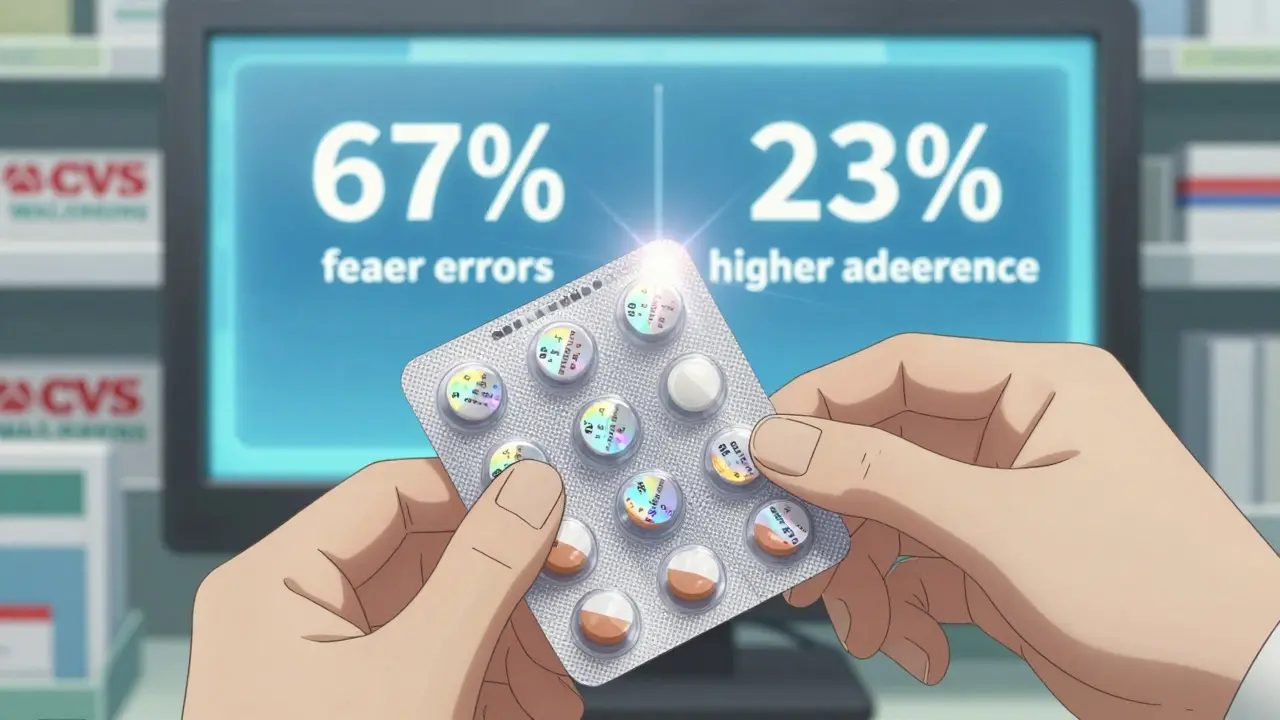
Blister Packs vs. Pill Organizers: Which Is Better?
| Feature | Blister Packs | Pill Organizers |
|---|---|---|
| Accuracy in dosing | 98% | 72% |
| Adherence improvement | 23-28% | 10-18% |
| Manual effort required | None | High (weekly refilling) |
| Changes to meds | Requires full repackaging | Easy to adjust |
| Best for | 5+ daily meds, memory issues, complex schedules | 1-3 daily meds, stable routines |
| Cost per month | $45-$105 | $5-$15 (plus time) |
How to Get Blister Packs
You can’t buy them off the shelf. You need a pharmacy that offers blister packaging services. Most large chain pharmacies, like CVS or Walgreens, offer this. So do specialty pharmacies like Langford Pharmacy or Pharmcare USA. The process is simple:- Ask your pharmacist if they offer blister pack services.
- Bring a list of all your meds-including vitamins and supplements.
- The pharmacy reviews your regimen (1-2 days).
- They create a custom pack with labels for each day and time (2-3 days).
- You pick it up. They show you how to use it (15-20 minutes).
What If You Can’t Open Blister Packs?
A big complaint? They’re hard to open. Especially if you have arthritis or weak hands. 28% of users struggle with this. But there’s a fix. Many pharmacies now offer easy-open blister packs. These have perforated edges or are designed to peel open with minimal pressure. Some even come with a small tool to help pop out pills. Facebook groups like Medication Management for Seniors (over 14,000 members) have dozens of posts on how to open packs without hurting your fingers. One tip: use a butter knife or a bottle opener. Gently slide under the edge. It pops right off.