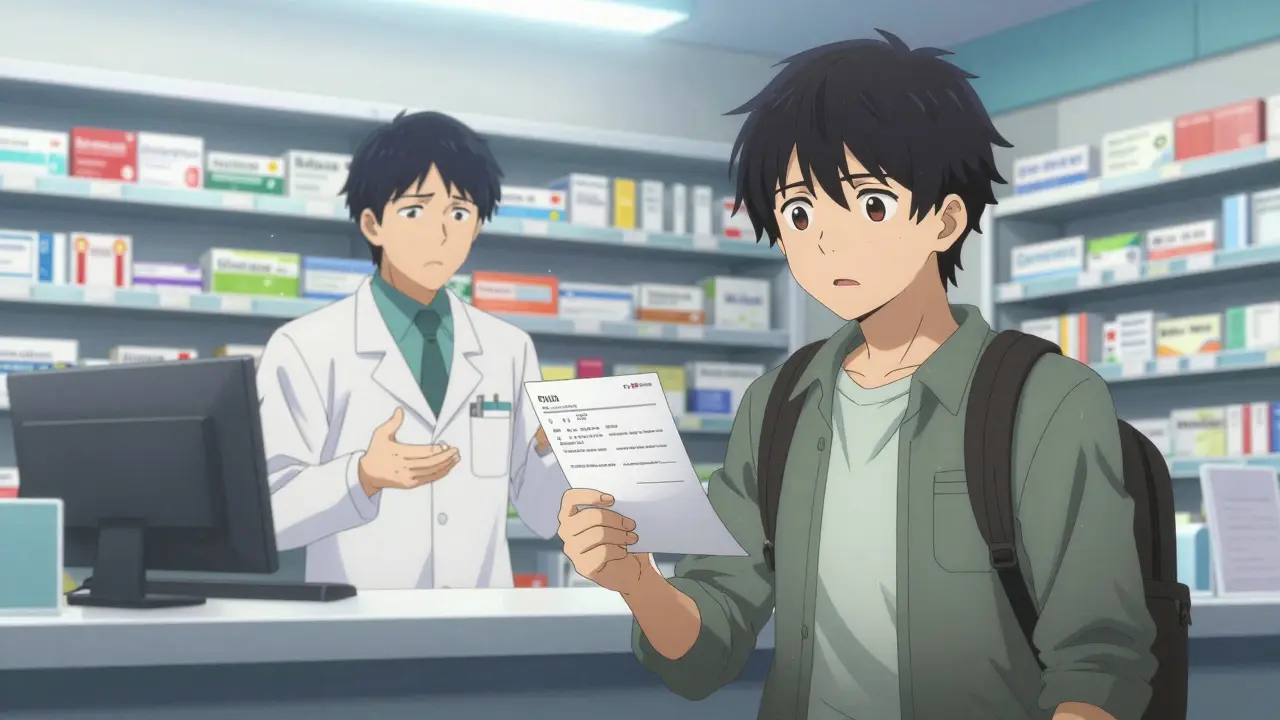
You are standing in a pharmacy in Paris, Tokyo, or Buenos Aires. You hand the pharmacist your prescription from home. They look at it, frown, and shake their head. The drug name is different. The dose format looks wrong. The instructions are in a language they don't recognize. This is not just an inconvenience; it is a potential medical emergency.
Translating medication names and doses for foreign pharmacies is one of the most critical skills for any traveler with chronic health conditions. Getting it wrong can lead to severe adverse reactions, hospitalization, or worse. According to data from First Databank, medication non-adherence costs the healthcare system billions annually, largely because patients simply do not understand how to take their medicine correctly when crossing linguistic borders. With over 25 million Americans having limited English proficiency, this issue affects both travelers abroad and immigrants visiting pharmacies at home.
Why Brand Names Fail Across Borders
The biggest hurdle you will face is that brand names are not universal. A drug called Advil in the United States is known as Ibuprofène in France and Abfen in Poland. They contain the exact same active ingredient-ibuprofen-but the names look completely unrelated. If you ask for "Advil" in Paris, the pharmacist might not know what you mean, or worse, they might suggest a different product entirely.
This naming discrepancy creates dangerous confusion. Consider the difference between Ambyen, a medication used for irregular heartbeat in Great Britain, and Ambien, a popular sleep aid in the United States. The names sound nearly identical, but their effects are vastly different. Confusing these two could lead to life-threatening consequences. Professional translation services emphasize that relying on brand names alone is never safe. You must always identify the generic name of the drug.
| Active Ingredient (Generic) | Brand Name (USA) | Brand Name (France) | Brand Name (Poland) |
|---|---|---|---|
| Ibuprofen | Advil, Motrin | Ibuprofène | Abfen |
| Acetaminophen | Tylenol | Doliprane | Efferalgan |
| Omeprazole | Prilosec | Mopsid | Omeprozol |
| Cetirizine | Zyrtec | Cetrine | Zyrtec |
The Gold Standard: International Nonproprietary Names (INN)
To solve the brand name problem, the World Health Organization established the International Nonproprietary Name (INN) system. These are standardized generic names used globally to identify active pharmaceutical ingredients. When traveling, your primary goal should be to find the INN of your medication. For example, instead of asking for "Lipitor," you ask for "Atorvastatin." Instead of "Ventolin," you ask for "Salbutamol" or "Albuterol" depending on the region.
Most reputable pharmacies worldwide stock medications by their INN. However, some countries still rely heavily on local brand names. In these cases, carrying a doctor’s note that explicitly lists the INN alongside the brand name is essential. The American Society of Health-System Pharmacists recommends that pharmacists verify translated prescriptions by cross-referencing the active ingredient with the WHO INN database rather than relying solely on brand name translations. As a patient, you can do the same using resources like Drugs.com or the WHO INN list online before you leave home.
Decoding Dosage Formats and Units
Even if you have the correct drug name, the dosage format can trip you up. Different countries use different units and decimal separators. In the United States, we often write "1000 mg" or "1 g." In many European countries, a comma is used as a decimal separator, so "1,000 mg" might be interpreted as "1 milligram" if the context is unclear, or "1 g" might be written as "1g" without a space. A misread decimal point can lead to a thousand-fold overdose or underdose.
Pill sizes and strengths also vary. A tablet that comes in 500 mg strength in the US might only come in 200 mg or 800 mg strengths in another country. You may need to adjust the number of pills you take to match the prescribed total daily dose. For instance, if your prescription calls for 1000 mg twice a day, but the local pharmacy only has 500 mg tablets, you would need to take two tablets per dose. Always confirm this calculation with the local pharmacist. Never assume that a pill looking similar to yours contains the same amount of active ingredient.

Essential Documents for Travelers
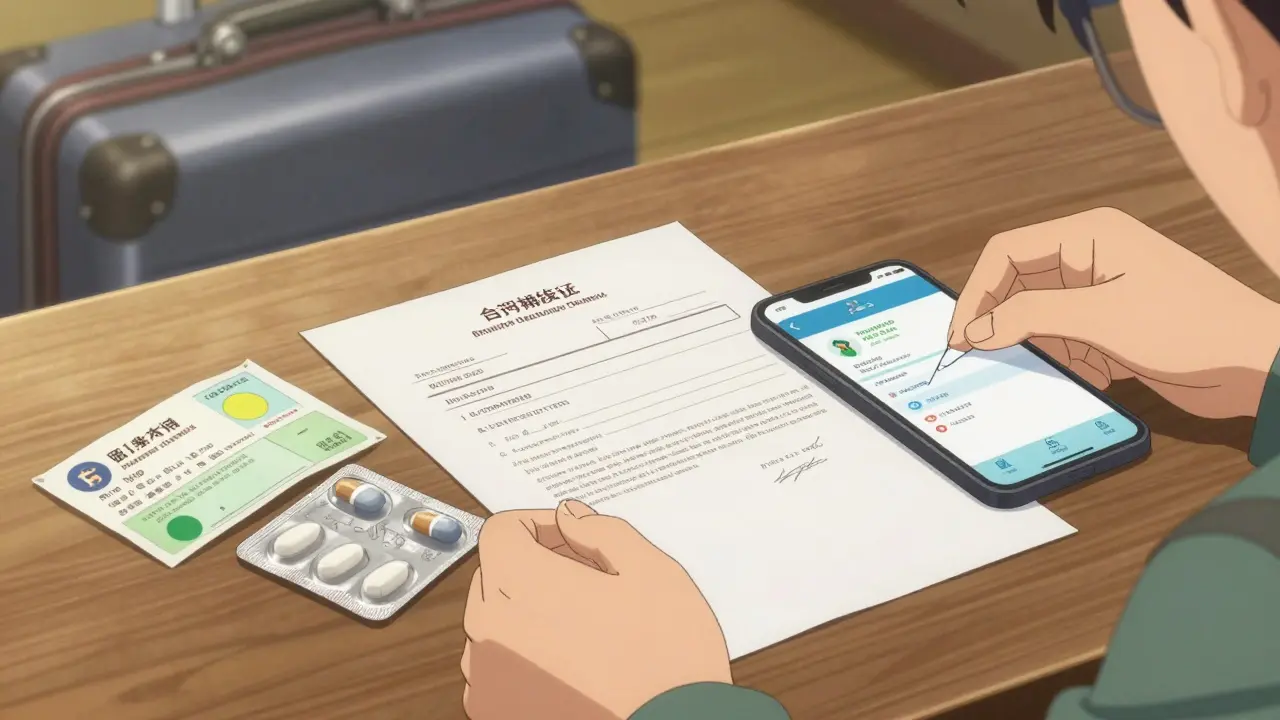
Preparation is your best defense against medication errors. Before you travel, gather the following documents:
- A detailed letter from your doctor: This should include your diagnosis, the generic name (INN) of each medication, the specific dosage, frequency, and route of administration. It should be signed and dated by your physician.
- Original packaging: Bring your medications in their original containers with the labels intact. The label provides crucial information about the manufacturer, batch number, and expiration date, which helps pharmacists verify authenticity.
- Translation of your prescription: Use a certified medical translation service or a professional translator to translate your prescription into the local language of your destination. Do not rely on Google Translate for this step. AI tools lack the pharmaceutical precision required for safety, as noted by ASAP Translate. Errors in interpreting complex prescription details can be fatal.
- List of allergies: Clearly state any drug allergies in both English and the local language. This prevents accidental exposure to harmful substances.
The United Language Group recommends completing these steps at least two weeks before departure. This gives you time to resolve any issues with your doctor or pharmacist back home. If you are filling prescriptions from another country upon return, ensure you have a clear description of the drug name, strength, and dosage, along with proof of patient identity, as required by many border control agencies.
Navigating Local Pharmacy Regulations
Every country has its own rules about what medications are available over-the-counter (OTC) versus those requiring a prescription. Some drugs that are OTC in the US, like pseudoephedrine (used for congestion), may be strictly controlled or banned in other countries due to their potential use in manufacturing illegal substances. Conversely, some prescription-only drugs in the US might be available OTC elsewhere.
In Europe, many antibiotics require a prescription, while in some Asian countries, they might be sold more freely. However, buying antibiotics without a proper diagnosis is dangerous and contributes to antibiotic resistance. Always consult a local doctor or pharmacist before purchasing new medications. In countries like Dubai, hospitals serve patients from dozens of different nations, making accurate translation essential for continuity of care. Understanding local regulations helps you avoid legal trouble and ensures you get the right treatment.
When to Seek Professional Help
If you run out of medication or need a refill abroad, visit a licensed pharmacy or clinic. Look for signs indicating "Pharmacy" or "Apotheke" (German), "Farmacia" (Spanish/Italian), or "Pharmacie" (French). Speak directly to the pharmacist, who is trained to handle such queries. Show them your doctor’s letter and original packaging. Ask them to explain the medication in simple terms. Repeat back the instructions to ensure understanding.
For complex regimens involving multiple drugs, consider using a professional translation service like RxTran or Stepes if you are managing care for a family member or yourself long-term. These services integrate with pharmacy systems to provide accurate Patient Instructions (SIGs) and Consumer Medication Information (CMI) in your native language. While they cost money, the price is negligible compared to the risk of a medication error. Dr. Elena Rodriguez from Johns Hopkins Hospital notes that misinterpreting a single dosage instruction due to poor translation can lead to adverse drug reactions with high mortality rates in vulnerable populations.
Technology Tools and Limitations
While technology can help, it has limits. Apps like Medisafe or MyTherapy can remind you to take your meds, but they do not translate prescriptions accurately. Online databases like Drugs.com offer international equivalents, which is useful for quick checks. However, always verify with a human expert. Automated translation systems without pharmacist verification create new risks, according to Dr. Michael Chen at Harvard. Use technology as a supplement, not a replacement, for professional advice.
Can I use Google Translate for my prescription?
No, you should not rely solely on Google Translate for prescriptions. While it can help with basic communication, it lacks the medical precision needed for drug names and dosages. A small error in translation can lead to serious health risks. Always use a certified medical translator or show your original prescription to a pharmacist.
What is the INN of my medication?
The INN (International Nonproprietary Name) is the generic name of the active ingredient in your drug. You can find it on your prescription bottle or by searching the brand name on websites like Drugs.com or WebMD. For example, the INN for Tylenol is Acetaminophen (Paracetamol in many countries).
Do I need a doctor's note to carry medication abroad?
Yes, it is highly recommended. A doctor's note should include your diagnosis, the generic name of the medication, dosage, and frequency. This helps customs officials and foreign pharmacists verify that the medication is for personal use and legally obtained.
How do I handle different dosage units abroad?
Be aware that some countries use commas as decimal separators (e.g., 1,5 mg instead of 1.5 mg). Always confirm the strength of the pill with the pharmacist. If the local strength differs from yours, calculate the equivalent number of pills needed to match your prescribed daily dose, and double-check this with the pharmacist.
Are there medications banned in certain countries?
Yes, some common medications in the US, such as those containing codeine or pseudoephedrine, may be restricted or banned in other countries due to their potential for misuse. Always check the import regulations of your destination country before traveling with these drugs.