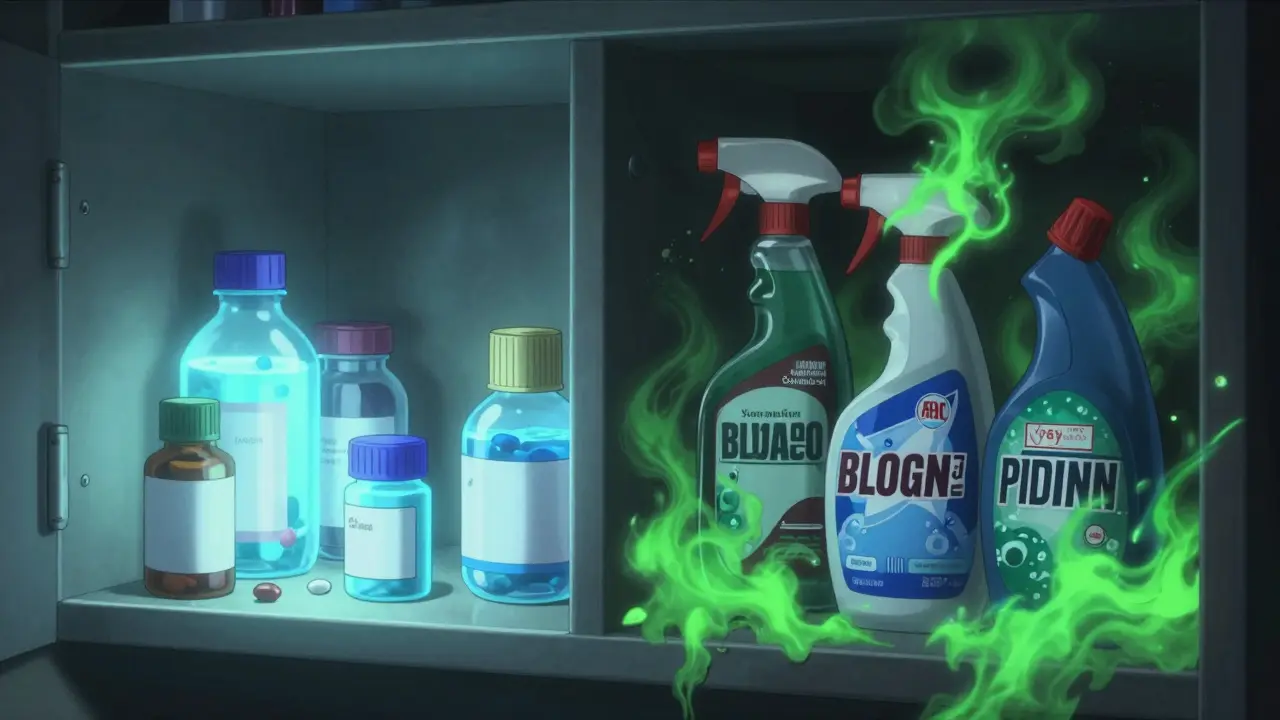
Imagine opening your bathroom cabinet for a headache pill and grabbing a bottle of bleach instead. It’s a terrifying scenario, but it happens more often than you might think. Keeping medicines and cleaning supplies in the same space is a recipe for disaster. Not only does it increase the risk of accidental poisoning, especially for children, but it can also ruin your medications through chemical reactions. You need to create a clear physical divide between these two categories of items.
The good news is that separating them doesn’t require a home renovation. With a few strategic changes to where you store these items, you can drastically reduce risks. This guide will walk you through exactly how to separate household chemicals from medication storage to keep your family safe and your meds effective.
Why Mixing Them Is Dangerous
You might think that as long as the caps are on tight, everything is fine. But science says otherwise. When volatile household chemicals sit near medications, they release gases into the air. These gases can interact with your pills or liquids. Dr. Lewis Nelson from New York University Langone Health found that medications stored within just two feet of household chemicals degrade 37% faster. That means your medicine might not work when you actually need it.
The danger isn't just about efficacy; it's about immediate safety. The Centers for Disease Control and Prevention (CDC) reports that 60,000 children end up in emergency rooms every year due to accidental medication poisoning. A huge chunk of these cases happen because kids access meds stored in bathrooms-the very place most people keep their toilet cleaners and drain openers. If a child mistakes a colorful vitamin bottle for candy, or worse, mixes something toxic, the results can be fatal. Separating these items removes the temptation and the opportunity for error.
Temperature and Environment Rules
Medications and chemicals have different needs. Most medicines want a cool, dry spot. The ideal temperature range is between 58°F and 86°F. Bathrooms are usually out because showers create humidity and heat swings that destroy drug stability. On the flip side, many household chemicals, like hydrogen peroxide or certain acids, degrade if they get too warm, but they don't mind the dampness as much as pills do.
Here is a critical rule: never store flammable household chemicals in a standard refrigerator. Standard fridges have sparks inside when the light turns on or the compressor kicks in. That spark can ignite fumes from paint thinners or aerosols. However, some liquid medications do need refrigeration. If you have insulin or certain antibiotics, they go in the fridge, but they must be in a lockable box away from food-and definitely away from any cleaning sprays you might have left in there by mistake.
| Item Type | Ideal Temperature | Key Hazard | Best Location |
|---|---|---|---|
| Medications | 58°F - 86°F (Cool/Dry) | Degradation, Poisoning | Locked high cabinet |
| Household Cleaners | Away from heat sources | Corrosion, Fumes | Ventilated low shelf |
| Flammables (Paint/Aerosols) | Cool, well-ventilated | Fire/Explosion | Garage/Shed (No sparks) |
| Refrigerated Meds | 36°F - 46°F | Contamination | Main fridge body (not door) |
The Physical Separation Strategy
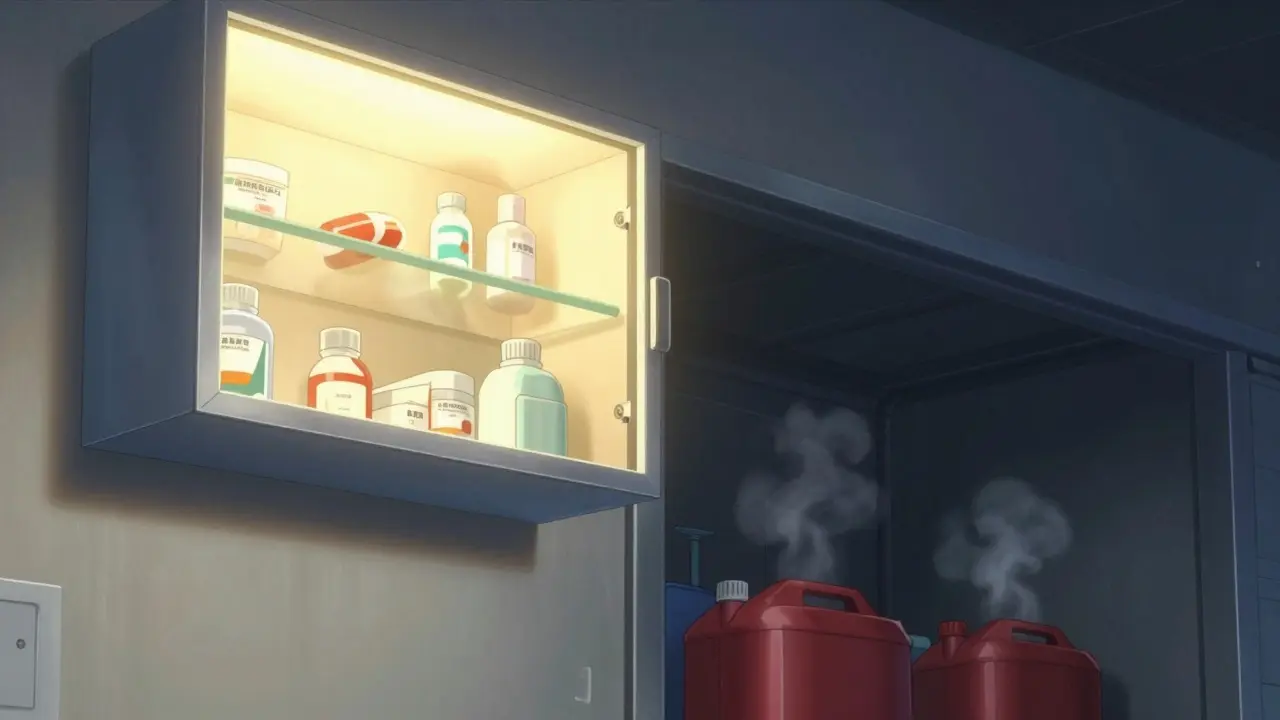
To truly separate these items, you need distance and barriers. Experts recommend a minimum physical separation of 6 feet between your medication storage area and your chemical storage area. If you live in a small apartment, this might feel impossible, but you can achieve vertical separation instead.
Store your medications high up. The CDC recommends keeping all meds at least 48 inches off the floor to keep them out of reach of toddlers. Ideally, use a locked cabinet. Studies show that locked boxes reduce child access by 92%. For chemicals, follow Occupational Safety and Health Administration (OSHA) guidelines: store corrosive substances below eye level in secondary containment. This means if a bottle breaks, the spill stays contained. By putting meds high and locked, and chemicals low and contained, you create two distinct zones that don't overlap.
If you share a single cabinet, do not put them on adjacent shelves. Use the entire top section for meds and the bottom for non-hazardous items, but ideally, move the chemicals entirely out of the room. A garage, basement, or utility closet is perfect for heavy-duty cleaners. Keep the bedroom or bathroom strictly for health products.
Organizing Your Spaces
Once you’ve chosen the locations, how you organize them matters. Color-coding helps prevent mix-ups. Use blue bins for medications and red bins for chemicals. This visual cue trains your brain to recognize the difference instantly. The InfantRisk Center found that color-coded systems reduced confusion incidents by 62%.
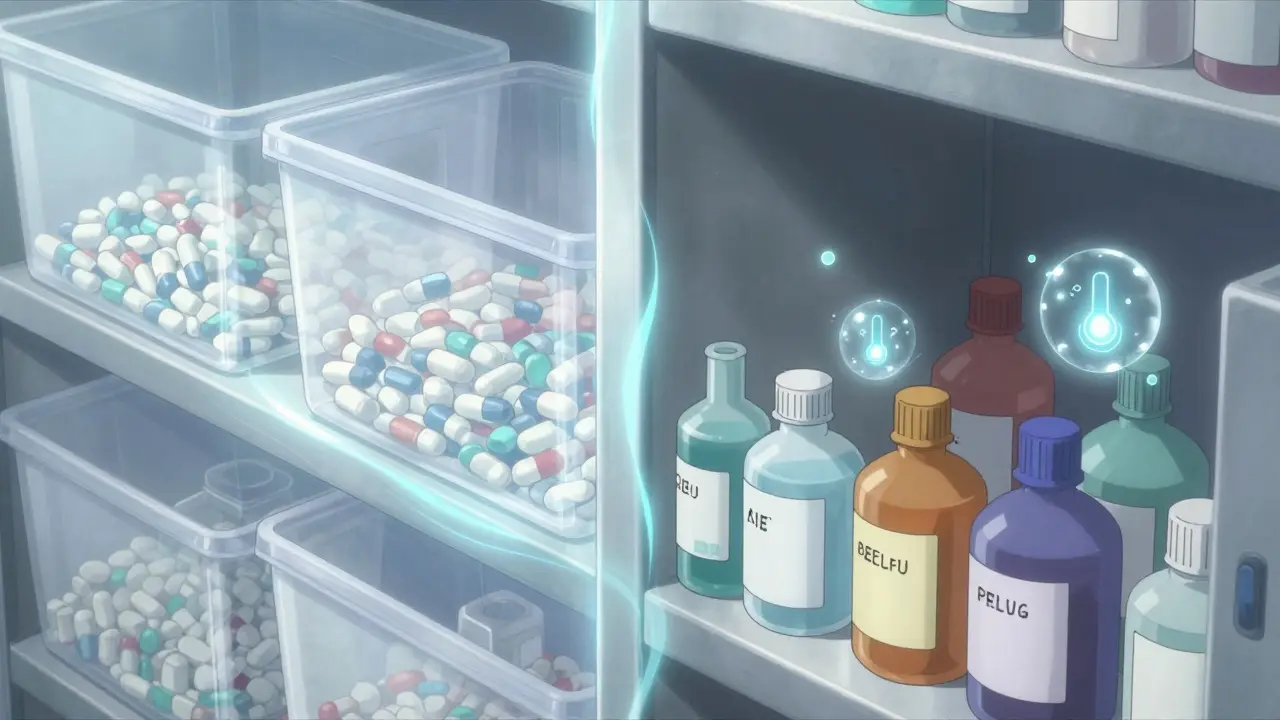
Keep medications in their original containers. Never transfer pills to unmarked jars or old snack bags. Clear labels help you identify what you’re holding without squinting. If you have liquid meds that need refrigeration, use clear, sealable plastic bins inside the fridge. This keeps them together and away from food, preventing cross-contamination. Seattle Children's Hospital reported a 45% drop in contamination incidents when households used this method.
For chemicals, ensure every bottle has a legible label. If a cleaner’s label fades, write its contents on masking tape and stick it to the bottle. Never assume you remember what’s inside an unlabeled spray. Group similar chemicals together-acids away from bases-to prevent dangerous reactions if leaks occur.
Common Mistakes to Avoid
Many people make the same errors when trying to save space. Here are the biggest pitfalls:
- The Bathroom Cabinet Trap: Storing both Tylenol and toilet bowl cleaner here is the most common mistake. Humidity ruins meds, and proximity invites accidents. Move the cleaner to the laundry room.
- Kitchen Drawer Chaos: About 38% of households store meds in kitchen drawers. This puts them right next to dish soap and degreasers. Keep meds out of the kitchen entirely.
- Refrigerator Door Storage: The door is the warmest part of the fridge, swinging wildly in temperature. Store temp-sensitive meds in the main body, not the door, and never near cleaning supplies.
- Ignoring Ventilation: Flammable chemicals need airflow. Locking them in a tiny, sealed cabinet without ventilation can build up explosive fumes. Ensure chemical storage areas breathe.
Smart Tools for Safety
Technology can help enforce these rules. Smart storage systems now monitor humidity and temperature. Devices like the SafeMed Home System alert you if conditions threaten your meds. For families with young kids, consider RFID-tagged containers. These experimental tools, tested by the National Institute of Standards and Technology, can alert you if incompatible substances are placed too close together.
If you’re on a budget, simple lockboxes work wonders. Dedicated medication lockboxes, such as the MedLock Pro 3000, have been shown to reduce accidental poisoning incidents by 89%. They provide a secure, separate environment that keys alone can’t match.
Next Steps for Your Home
Start today by auditing your current storage. Walk through your house and list where every med and chemical lives. Identify overlaps. Then, pick one new location for your chemicals-likely the garage or a utility closet-and move them there. Install a locked cabinet or buy a lockbox for your medications. Label everything clearly. This small shift creates a safer home for everyone.
Can I store medicines and cleaning supplies in the same room?
It is best to avoid storing them in the same room if possible. If you must, keep them at least 6 feet apart vertically or horizontally. Medications should be high and locked, while chemicals should be low and in secondary containment. Never store them in the same cabinet.
Where is the safest place to store household chemicals?
The safest place is a well-ventilated area away from heat sources, such as a garage, basement, or utility closet. Store corrosive chemicals below eye level in leak-proof containers. Never store flammable chemicals in standard refrigerators or near electrical outlets.
Why shouldn't I store medications in the bathroom?
Bathrooms are humid and experience temperature fluctuations from showers. This environment degrades many medications, reducing their effectiveness. Additionally, bathrooms are often where cleaning chemicals are kept, increasing the risk of accidental mixing or poisoning.
Do I need a locked cabinet for medications?
Yes, especially if you have children or pets. Locked cabinets reduce child access by 92%. Even for adults, locks prevent accidental ingestion by ensuring medications are kept separate from other household items like vitamins or supplements that might look similar.
How do I know if my medication has been damaged by chemicals?
Look for changes in color, texture, or smell. Pills may become soft or crumbly, and liquids may change clarity. If you suspect exposure to chemical fumes, discard the medication and consult your pharmacist. Do not rely on appearance alone, as some degradation is invisible.