
Ever felt a strange itch, a sudden wave of dizziness, or an upset stomach after taking a new pill and wondered, "Is this just me, or is it the medicine?" Trying to remember exactly when a symptom started while sitting in a doctor's office two weeks later is nearly impossible. Memory fades quickly-studies show cognitive recall drops significantly after just 48 hours. This is why a symptom diary is your most powerful tool. It turns vague guesses into hard data, helping your doctor spot a pattern and potentially save you from a dangerous reaction.
What Exactly is a Symptom Diary?
At its core, Symptom Diary is a structured record where you document medication doses, timing, and your body's physical responses. It isn't just a journal about how you feel; it's a clinical tool designed to establish a "temporal relationship." In plain English, that means proving that Symptom X happened shortly after Medication Y. When you have this evidence, you move from saying "I think this drug makes me tired" to "Every time I take this dose at 8 AM, I feel exhausted by 10 AM." That's the kind of detail that leads to a faster diagnosis.
The Essential Data You Need to Track
If you just write "felt sick today," your doctor can't do much with that. To make your diary useful, you need to capture specific details. According to guidelines from the National Institute on Aging, a high-quality log should include these nine elements:
- Exact Timing: The date and time you took the medicine, down to the minute.
- Dosage and Route: How much did you take, and how (pill, injection, cream)?
- Concurrent Meds: List every other pill, vitamin, or herbal supplement you're taking. This is where many people trip up-forgetting that a "natural" supplement might be interacting with a prescription.
- Symptom Description: Be specific. Instead of "pain," write "sharp stabbing pain in the lower right abdomen."
- Onset Time: Exactly how long after the dose did the symptom start?
- Duration: How long did the feeling last?
- Environmental Factors: Were you stressed? Was it 40 degrees Celsius outside? Were you exercising?
- Remedial Actions: Did you take an antacid? Did you lie down? Did it help?
- Resolution: Did the symptom go away on its own, or is it still there?
Choosing Your Tracking Method: Paper vs. Digital
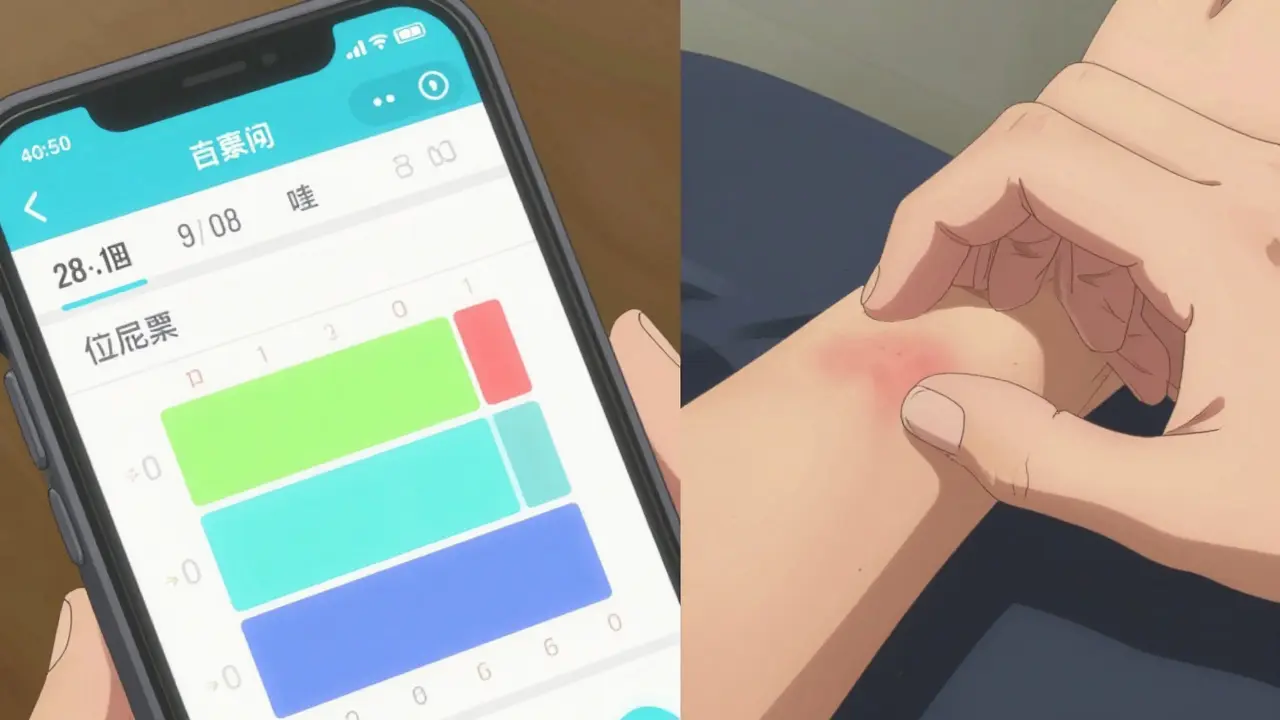
Depending on your lifestyle, you might prefer a notebook or an app. Both have pros and cons. Paper is reliable and requires no battery, but people often abandon paper logs because they're cumbersome to carry. Digital tools, on the other hand, provide automatic timestamps, which drastically reduce timing errors.
| Feature | Paper Log | Digital Apps (e.g., Medisafe, CareClinic) |
|---|---|---|
| Ease of Setup | Instant | Requires download/account |
| Timing Accuracy | Dependent on manual entry | Automatic timestamps |
| Visual Analysis | Manual review | Automatic correlation charts |
| Persistence | High abandonment rate | Higher retention via reminders |
| Visual Proof | Notes only | Ability to attach photos |
How to Grade Your Symptoms
Not all reactions are equal. A mild itch is different from a closing throat. To help your doctor understand the severity, you can use a grading scale. Professionals often use the Common Terminology Criteria for Adverse Events (CTCAE). While you don't need to be a medical expert, using a simple 1-5 scale helps:
- Grade 1 (Mild): You notice it, but it doesn't interfere with your day. (e.g., a slight dry mouth).
- Grade 2 (Moderate): It's bothersome and might change how you do things. (e.g., mild nausea that makes you skip breakfast).
- Grade 3 (Severe): It interferes significantly with your daily life. (e.g., severe dizziness where you cannot walk safely).
- Grade 4 (Life-threatening): Urgent medical intervention is needed.
- Grade 5: Death.
Pro Tips for Maximum Accuracy
The biggest mistake people make is "retrospective reporting"-trying to remember what happened three days ago. To avoid this, follow these rules of thumb:
- The 5-Minute Rule: Record the symptom within 5 minutes of it happening. If you wait, you'll likely misremember the exact start time.
- Snap a Photo: If you develop a rash or swelling, take a clear photo. The European Medicines Agency found that photos increase diagnostic accuracy for skin reactions by 78%.
- Use Objective Tools: If you suspect a heart-related reaction, don't just write "felt fast heart rate." Use a blood pressure monitor or a smartwatch to record the actual BPM.
- Avoid "Noise": Don't log every single tiny thing that happens in your day. Focus on symptoms that are new, unexpected, or worsening. Over-logging minor, expected side effects can actually hide a serious reaction from your doctor.

Turning Your Data into Action
Once you've kept your diary for a week or two, it's time to bring it to your provider. Don't just hand over the notebook; guide them through the patterns. For example, "I've noticed that my dizziness peaks exactly 90 minutes after my morning dose." This level of specificity allows doctors to make fast adjustments. In some cases, this data can lead to immediate regimen changes within 48 hours, whereas verbal reports might lead to months of "wait and see" monitoring.
Common Pitfalls to Avoid
Many people start strong but stop after 72 hours. To prevent this, set a recurring alarm on your phone to remind you to log your status. Also, be honest about "off-label" use. If you took an extra dose because you felt the first one wasn't working, write it down. Omitting these details can lead to a misdiagnosis of a drug reaction when it was actually a dosage issue.
What is the difference between a side effect and an adverse drug reaction?
A side effect is generally a known, expected, and often mild result of a drug (like drowsiness from an antihistamine). An adverse drug reaction is an unexpected, unintended, and often harmful response that occurs at normal doses. A symptom diary helps distinguish between the two by tracking whether the response is proportional to the dose and if it's a known property of the medication.
How long should I keep a symptom diary before seeing a doctor?
While any data is better than none, a two-week window is often ideal. This allows you to capture several doses and identify if the reaction is consistent or sporadic. However, if you experience severe symptoms like difficulty breathing or widespread hives, do not wait for a diary-seek emergency care immediately.
Can I use a general health app for this?
Yes, but ensure the app allows for specific timestamps and notes. Apps specifically designed for medication management, like Medisafe or MyTherapy, are better because they link the dose event directly to the symptom log, making the correlation much easier for your doctor to see.
Do I need to record my diet in a medication diary?
It's highly recommended. Some drugs react with specific foods (like grapefruit juice or dairy), and certain symptoms, like nausea, can be caused by diet rather than the drug. Noting a major meal or a fasting state provides a cleaner picture of the drug's impact.
What if I forget to log a symptom for a few days?
Fill in what you can remember as best as you can, but mark those entries as "estimated." Be honest with your doctor that those specific dates were based on recall rather than real-time logging. This maintains the integrity of the data and prevents the doctor from relying on potentially inaccurate timing for a critical diagnosis.
Next Steps and Troubleshooting
If you find that documenting everything is too overwhelming, start with a "checkbox" system. Create a list of your most common suspected symptoms (e.g., headache, rash, nausea) and simply check them off next to the time of your dose. This reduces the writing burden while still capturing the vital temporal link.
For those dealing with complex regimens (multiple medications), try a color-coding system. Use a blue pen for morning meds and a red pen for evening meds. This makes it visually obvious to a pharmacist or doctor when a reaction coincides with a specific time of day or a specific combination of drugs.