Herbal Supplement & Birth Control Interaction Checker
Select a supplement below to see its risk level and recommended actions when combined with oral contraceptives.
You trust your birth control to keep you protected. You take it at the same time every day, maybe even set a phone alarm. But what if something else on your shelf is quietly undermining that protection? It’s not just prescription meds that cause trouble. Certain herbal supplements can change how your body processes hormones, leading to unexpected breakthrough bleeding or, worse, unintended pregnancy.
This isn't new-age myth-busting; it's real pharmacology. In 2018, the American College of Obstetricians and Gynecologists (ACOG) highlighted that while most vitamins are fine, specific herbal products pose genuine risks. The culprit? Often, it's an enzyme in your liver called CYP3A4. When certain herbs ramp up this enzyme, they flush out contraceptive hormones faster than usual. Let's break down which supplements matter, why they interfere, and how to stay safe without ditching your wellness routine.
The Big One: St. John's Wort
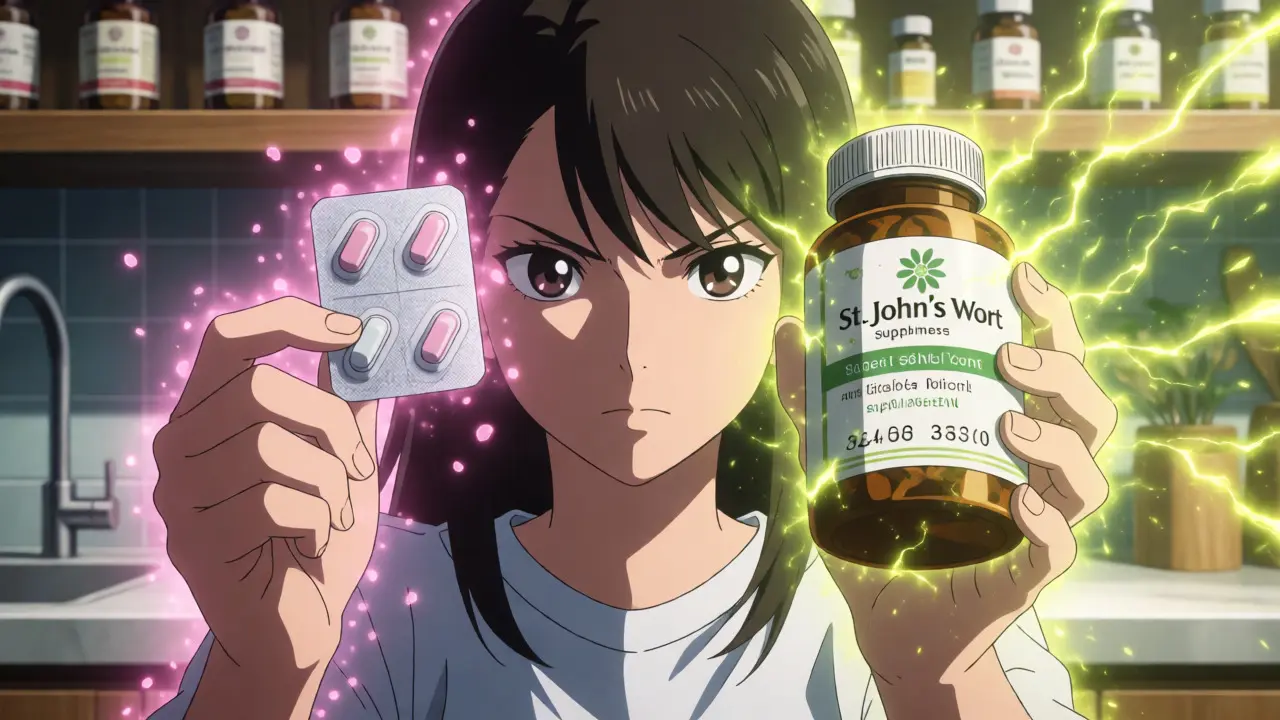
If there is one supplement you need to worry about, it's St. John's wort (Hypericum perforatum). This herb, often used for mood support, is the gold standard for bad news when mixed with oral contraceptives. Research dating back to around 2000 showed that women taking St. John's wort had significantly lower levels of ethinyl estradiol, a key hormone in most birth control pills.
Here is the mechanism: St. John's wort contains a compound called hyperforin. Hyperforin activates a receptor in your body known as PXR (pregnane X receptor). Once activated, PXR tells your liver to produce more CYP3A4 enzymes and P-glycoprotein transporters. Think of these as the cleanup crew for drugs in your blood. More cleanup crew means the birth control hormones get metabolized and eliminated too quickly. Clinical studies have shown that women combining St. John's wort with combined oral contraceptives experienced breakthrough bleeding rates of 23%, compared to just 5% in those who didn't take the herb. That bleeding is often a red flag that hormone levels dropped too low to prevent ovulation.
Soy Isoflavones and Receptor Competition
Soy might seem harmless, especially if you're drinking soy milk or eating tofu. But concentrated soy isoflavones, found in many supplements, work differently than St. John's wort. They don't necessarily speed up metabolism. Instead, they compete for space.
Ethinyl estradiol works by binding to estrogen receptors in your body. Soy isoflavones are phytoestrogens-they mimic estrogen structurally. If you take high-dose soy supplements, these plant compounds can bind to those same receptors, potentially blocking or altering how the synthetic estrogen in your pill works. While occasional dietary soy is generally considered safe, high-concentration supplements present a different risk profile. Studies from 2009 and 2017 documented this pharmacodynamic interaction, suggesting that heavy soy supplementation could theoretically reduce contraceptive efficacy, though the clinical impact is less dramatic than with St. John's wort.

Grapefruit and Other Absorption Blockers
We often hear about grapefruit interfering with statins, but it also affects oral contraceptives. Grapefruit inhibits CYP3A4 enzymes rather than inducing them. This sounds good-it means slower breakdown-but the reality is messy. By slowing metabolism, grapefruit can cause unpredictable spikes in hormone levels, leading to side effects like nausea or headaches. More importantly, inconsistent absorption makes the pill's effectiveness harder to predict.
Then there is activated charcoal. People use it for detoxes or gas relief. Charcoal is highly adsorbent-it binds to substances in your gut. If you take activated charcoal within four hours of your birth control pill, it can literally suck up the hormones before they enter your bloodstream. If you must use charcoal, separate it from your pill by at least four hours, or consider backup contraception during that window.
Supplements Generally Considered Safe
Not everything is dangerous. Many popular supplements show minimal interaction with hormonal birth control. Ashwagandha, an adaptogen widely used for stress, was studied in 2015. The findings suggested it does not significantly affect the enzymes responsible for breaking down hormonal birth control. However, safety data beyond three months is limited, and rare cases of liver irritation have been reported. If ashwagandha causes vomiting or diarrhea, that physical reaction-not the herb itself-could prevent your pill from being absorbed properly.
Vitex (chasteberry) is another common topic. Dr. Jolene Brighten, a naturopathic doctor, notes that Vitex is generally safe with birth control and may even help balance hormones during reproductive years. Similarly, DIM (diindolylmethane), derived from cruciferous vegetables, shows no evidence of interference at standard doses. However, at very high doses (600 mg+), it might influence estrogen metabolism enough to warrant a conversation with your provider.
| Supplement | Mechanism | Risk Level | Action Required |
|---|---|---|---|
| St. John's Wort | Induces CYP3A4 enzymes (faster metabolism) | High | Use backup contraception; stop 1 month prior to starting OCs |
| Soy Isoflavones | Competes for estrogen receptors | Moderate/Low | Avoid high-dose supplements; dietary soy is fine |
| Activated Charcoal | Adsorbs hormones in the gut | High (if timed poorly) | Separate intake by 4+ hours |
| Ashwagandha | No significant enzyme interaction noted | Low | Monitor for GI side effects that affect absorption |
| Vitex | Hormonal modulation | Low | Generally safe; consult if cycle changes occur |

Why Regulation Matters
One major headache is quality control. Unlike prescription drugs, herbal supplements aren't tested as rigorously before hitting shelves. A batch-to-batch variation in active ingredients means one bottle of St. John's wort might hit you harder than the next. The National Center for Complementary and Integrative Health reported that over 23% of U.S. adults use herbal supplements, yet many remain unaware of these interactions. Because manufacturers aren't required to prove therapeutic efficacy with the same strictness as pharmaceutical companies, you're often guessing at potency.
This lack of standardization is why healthcare providers urge caution. A PubMed review pointed out that chemical characterization of active compounds in many supplements is incomplete. You might think you're taking a mild herb, but if it's heavily concentrated, the interaction risk scales up.
Practical Steps for Safety
So, what do you actually do? First, inventory your cabinet. Look specifically for St. John's wort. If you find it, talk to your doctor immediately. You likely need a non-hormonal method or a different type of contraception while using this herb. Remember, the effect lingers-ACOG guidelines suggest waiting a month after stopping St. John's wort before relying solely on the pill again.
Second, check labels on multi-vitamins or "women's health" blends. These often hide soy isoflavones or saw palmetto. Third, timing matters for things like charcoal. Fourth, listen to your body. Breakthrough bleeding isn't just annoying; it's a signal. If you start spotting unexpectedly while adding a new supplement, pause the supplement and consult your provider.
Finally, don't assume "natural" equals "neutral." Natural compounds interact with our biology just as potently as synthetic ones. The goal isn't to fear supplements but to respect their power. Your birth control is a precise medical tool; treating it with precision ensures it does its job.
Does St. John's wort make birth control pills fail?
Yes, it can. St. John's wort induces liver enzymes that break down contraceptive hormones faster, lowering their effectiveness. This increases the risk of ovulation and pregnancy. Backup contraception is recommended while taking it and for one month after stopping.
Can I take soy supplements with my birth control?
Dietary soy is generally safe. However, high-dose soy isoflavone supplements may compete with estrogen receptors. While the risk is lower than with St. John's wort, it's wise to discuss high-dose supplements with your doctor to ensure consistent protection.
Is ashwagandha safe to take with oral contraceptives?
Current evidence suggests ashwagandha does not significantly interfere with the metabolism of hormonal birth control. However, if it causes gastrointestinal issues like vomiting or diarrhea, it could indirectly affect pill absorption. Monitor your body's response.
How long should I wait after stopping St. John's wort to rely on my pill?
Medical guidelines typically recommend using backup contraception for one month after discontinuing St. John's wort. This allows liver enzyme levels to return to baseline, ensuring the birth control hormones are metabolized at normal rates.
Do probiotics affect birth control effectiveness?
No, probiotics do not have documented pharmacokinetic interactions with birth control pills. They are generally considered safe to take alongside oral contraceptives without reducing their effectiveness.


