You probably think of Green Tea Extract as a harmless health booster. It’s packed with antioxidants, right? Maybe it helps you lose weight or keeps your heart healthy. But if you take prescription medications, that "natural" supplement might be quietly sabotaging your treatment plan. The truth is, green tea extract isn't just a mild herbal remedy; it's a potent biological agent that can drastically change how your body processes drugs.
We aren't talking about the occasional cup of brewed tea at breakfast. We are talking about concentrated capsules and powders sold in health stores. These extracts contain high doses of Epigallocatechin gallate (EGCG) and caffeine. When these compounds hit your system alongside specific medications, they can block absorption, speed up elimination, or trigger dangerous spikes in drug levels. Ignoring these interactions doesn't just make your meds less effective-it can put your life at risk.
How Green Tea Messes With Your Meds
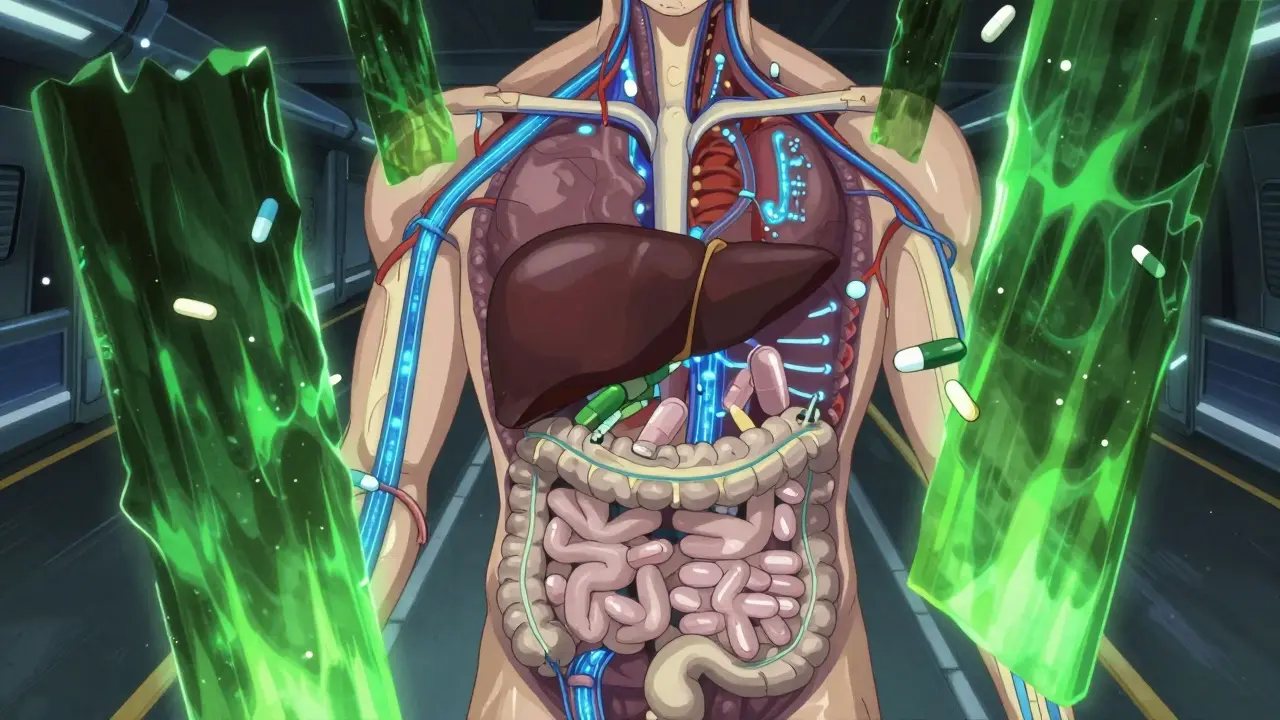
To understand the risk, you have to look at what happens inside your gut and liver. Green tea extract works through two main troublemakers: catechins (specifically EGCG) and caffeine. Think of your body as a busy highway system for drugs. Some enzymes break down medicines so they leave your system, while transporters move them into your blood cells where they work.
EGCG acts like a roadblock. It inhibits key transporters called P-glycoprotein and Organic anion-transporting polypeptides (OATPs). When these transporters are blocked, some drugs can't get into your bloodstream efficiently, rendering them useless. Other times, the blockage prevents drugs from leaving your system, causing toxic buildup. Meanwhile, the caffeine in concentrated extracts adds a stimulant effect that clashes directly with drugs meant to calm your heart or nerves. This dual-action mechanism makes green tea extract far more interactive than simple supplements like milk thistle.
The High-Risk Drug List
Not every medication reacts badly to green tea, but several common classes do. If you are taking any of the following, you need to talk to your doctor before popping a capsule of green tea extract.
| Medication Class | Example Drugs | Interaction Effect | Risk Level |
|---|---|---|---|
| Beta-Blockers | Nadolol (Corgard) | Absorption drops by up to 83% | Severe |
| Statins | Atorvastatin (Lipitor), Rosuvastatin (Crestor) | Drug levels drop by 25-40% | Moderate to Severe |
| Cancer Therapies | Bortezomib (Velcade), Imatinib (Gleevec) | Efficacy reduced by 30-50% | Severe |
| Blood Pressure Meds | Lisinopril | Absorption decreases by ~25% | Moderate |
| Stimulants / ADHD Meds | Adderall, Ritalin | Increased heart rate and palpitations | Moderate |
Let’s look closer at why these numbers matter. For patients on Nadolol, a beta-blocker used for heart conditions, drinking green tea can slash drug absorption by nearly four-fifths. That means your heart protection vanishes almost overnight. Similarly, for cancer patients using Bortezomib to treat multiple myeloma, studies show EGCG binds directly to the drug, cutting its effectiveness in half. In oncology settings, this isn't just an inconvenience; it’s a treatment failure waiting to happen. Even cholesterol drugs like Atorvastatin see their power diminished by up to 40%, leaving arteries vulnerable to plaque buildup despite daily dosing.
Extract vs. Brewed Tea: The Dosage Trap
This is where most people get tripped up. There is a massive difference between sipping a mug of loose-leaf green tea and swallowing a pill labeled "Green Tea Extract." A standard 8-ounce cup of brewed tea contains roughly 50-100 mg of EGCG and 30-50 mg of caffeine. It’s generally safe for most people taking medications, provided you don’t chug gallons of it.
But supplements? They are concentrated bombs. A single capsule of green tea extract often delivers 250-500 mg of EGCG-sometimes five to ten times the amount in your morning brew. The market for these extracts exploded after 2005, driven by claims of metabolic benefits. Today, the global market is worth over $2 billion. However, because these products fall under dietary supplement regulations (like DSHEA in the US), they don’t undergo the same rigorous pre-market testing as pharmaceuticals. Many labels fail to warn users about interaction risks. Only about 12% of green tea extract products clearly state potential drug conflicts, according to industry reviews. You have to assume the worst unless proven otherwise.
Who Is Most at Risk?
If you are young, healthy, and only take a multivitamin, green tea extract is likely fine for you. The danger zone expands rapidly if you fit into one of these profiles:
- Cardiovascular Patients: If you manage high blood pressure, heart failure, or arrhythmias, your meds rely on precise blood levels. Green tea can destabilize this balance. Studies show 22% of heart failure patients use green tea supplements without their doctors knowing, creating hidden risks.
- Oncology Patients: Chemotherapy drugs often have a "narrow therapeutic index," meaning the difference between a helpful dose and a toxic (or useless) dose is tiny. Interfering with drugs like Imatinib or Bortezomib can compromise cancer treatment outcomes significantly.
- Those on Anticoagulants: While warfarin interactions are complex (green tea has Vitamin K, which counters blood thinners), the variable nature of supplement quality makes monitoring INR levels difficult. Unexpected fluctuations in clotting time are a real concern.
- ADHD and Anxiety Sufferers: Combining the caffeine in green tea extract with stimulants like Adderall can lead to excessive cardiac stimulation. Users report heart rates spiking by 20-30 beats per minute, along with severe anxiety and palpitations.
Practical Steps to Stay Safe
You don’t necessarily have to give up green tea entirely, but you do need to manage it intelligently. Here is how to minimize risk without losing the benefits you might enjoy.
- Check the Label for EGCG Content: If a supplement lists EGCG content above 300mg per serving, treat it with extreme caution. Lower doses pose fewer risks, but zero risk is impossible with concentrated extracts.
- Space Out Your Doses: Pharmacokinetic studies suggest that separating green tea consumption from your medication by at least 4 hours can reduce interaction risks by approximately 60%. Never take them at the exact same time.
- Stick to Brewed Tea: If you love the taste and mild antioxidant boost, drink brewed green tea instead of taking pills. Limit yourself to 2 cups a day (under 100mg caffeine). This natural form is far less likely to cause severe transporter inhibition than synthetic extracts.
- Tell Every Doctor: During medication reconciliation, explicitly state: "I take green tea extract supplements." Don't assume they will ask. Pharmacists and physicians need this data to adjust your prescriptions correctly.
- Monitor for Symptoms: Watch for signs that your meds aren't working. Is your blood pressure creeping up? Are you experiencing tremors or rapid heartbeat? These could be signals of an interaction, not just disease progression.
The Regulatory Gap
Why is this still a problem in 2026? Because regulation lags behind science. The FDA has issued warning letters to manufacturers for inadequate labeling, yet compliance remains low. The European Medicines Agency updated its database in early 2023 to flag more interactions, including new concerns with anticoagulants like dabigatran. However, until mandatory standardized warnings appear on all supplement bottles, the burden of safety falls on you.
Experts like Dr. Pablo Werba from the Centro Cardiologico Monzino have warned for years that "more-is-better" logic fails here. Just because green tea is natural doesn't mean it's benign. In fact, its potency is exactly what makes it risky. As we age and polypharmacy (taking multiple drugs) becomes more common-with projections showing 45% of adults over 65 taking five or more meds by 2030-the stakes get higher. Be smart, read the label, and keep your healthcare team in the loop.
Can I drink regular green tea if I am on medication?
Generally, yes. Drinking 1-2 cups of brewed green tea daily is considered safe for most people. The risk primarily comes from concentrated supplements containing high doses of EGCG (epigallocatechin gallate). Brewed tea provides much lower concentrations of active compounds, making significant drug interactions less likely, though you should still mention your tea habit to your doctor.
Which green tea supplement ingredients are most dangerous?
The primary concern is EGCG (epigallocatechin gallate), a powerful catechin that inhibits drug transporters in the gut and liver. Caffeine is also a factor, especially if you are taking stimulants or heart medications. Look for supplements that list high amounts of EGCG (e.g., 300mg+) and approach them with caution.
How long should I wait between taking green tea extract and my meds?
Pharmacokinetic studies suggest a minimum separation of 4 hours between consuming green tea extract and taking affected medications. This window allows the initial absorption phase of the drug to occur before the catechins in the green tea interfere with transporters in your digestive system.
Does green tea interact with birth control pills?
While not always listed as a top-tier interaction, green tea can affect liver enzymes (CYP450 family) that metabolize hormones. Heavy consumption of concentrated extracts might theoretically reduce the efficacy of hormonal contraceptives. It is best to consult your gynecologist, but moderate brewed tea intake is typically not a concern.
Are there safer alternatives to green tea extract for antioxidants?
Yes. Whole foods like berries, dark chocolate, and leafy greens provide antioxidants without the concentrated, unpredictable dosage of supplements. If you want the benefits of green tea, stick to brewed tea rather than pills. This gives you the nutrients without the high risk of transporter inhibition associated with high-dose EGCG supplements.