
Many people take Ginkgo biloba to help with memory, focus, or circulation. It’s one of the most popular herbal supplements in the world, with millions of users in the U.S. alone. But if you’re on a blood thinner-whether it’s aspirin, warfarin, or clopidogrel-you need to pause and think before taking it. The interaction isn’t just a theoretical concern. Real cases of bleeding have been reported. And while science hasn’t given us a clear yes or no, the safest path isn’t guesswork-it’s caution.
What Exactly Is Ginkgo Biloba?
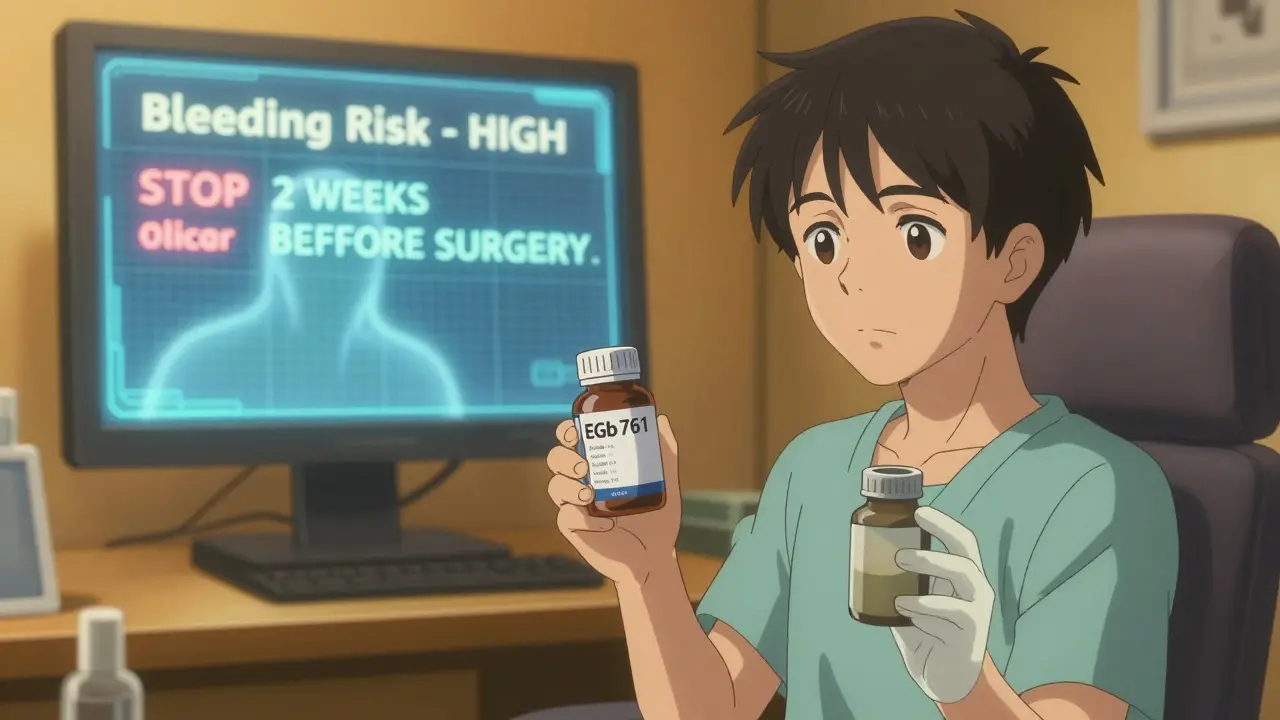
Ginkgo biloba comes from the leaves of a tree that’s been around for over 270 million years. That’s older than dinosaurs. In traditional Chinese medicine, it was used for asthma, coughs, and poor circulation. Today, the standardized extract known as EGb 761 is what most supplements contain. This version has a precise mix: 24% flavonol glycosides and 6% terpene lactones. These compounds are believed to improve blood flow and protect nerve cells.
It’s not a miracle drug. But for some, it helps with mild cognitive decline or leg pain from poor circulation. The problem isn’t the herb itself-it’s what happens when it meets blood thinners. And that’s where things get messy.
How Blood Thinners Work
Blood thinners don’t actually thin your blood. They stop clots from forming too easily. There are two main types:
- Antiplatelets like aspirin and clopidogrel (Plavix) stop platelets from sticking together.
- Anticoagulants like warfarin (Coumadin) and DOACs (rivaroxaban, apixaban) slow down the proteins that help blood clot.
Both are used to prevent strokes, heart attacks, or deep vein clots. But if your blood doesn’t clot well enough, even a small cut or bump can lead to serious bleeding. That’s why mixing them with anything that might amplify this effect is risky.
The Science Behind the Interaction
Ginkgo biloba has two potential ways of interfering with blood clotting. First, it may reduce platelet aggregation-the process where platelets clump together to form a clot. Second, it might affect liver enzymes (CYP2C9) that break down warfarin. If those enzymes slow down, warfarin builds up in your system, making your blood thinner than intended.
But here’s the catch: most studies that found no interaction used high-quality, standardized Ginkgo (EGb 761). Meanwhile, the scary case reports-brain bleeds, nosebleeds that wouldn’t stop, bruising without injury-often came from supplements with unknown strength or contamination. A 2020 study in PLOS ONE found that Ginkgo was involved in 18% of interactions with DOACs and 2.6% with clopidogrel. But these were prescriptions, not random supplements. Real-world use is messy.
Controlled trials? Most say no major effect. A 2012 study gave aspirin and Ginkgo to healthy volunteers. No change in bleeding time. Another trial with warfarin showed no change in INR levels-the standard test for blood thinning. But those were short-term, small, and tightly controlled. Real life? People take Ginkgo for months. They might also take garlic, fish oil, or NSAIDs. Add them all up, and the risk isn’t zero.

What the Experts Say
There’s no consensus. And that’s the problem.
- Mayo Clinic says Ginkgo may raise bleeding risk with aspirin, clopidogrel, or warfarin. They advise caution.
- GoodRx calls warfarin a "high-risk" interaction and says to avoid it entirely. Aspirin and clopidogrel? "Moderate-risk."
- Cleveland Clinic lists blood thinners as a direct contraindication-meaning don’t take it.
- PubMed review (2008) says evidence doesn’t support a real clinical risk. They call case reports low quality.
- Dr. Michael Murray recommends stopping Ginkgo 36 hours before surgery.
- Dr. Tieraona Low Dog and the American Society of Anesthesiologists say stop it two weeks before any procedure.
Why the difference? Because the data is split. Lab studies say one thing. Real-world reports say another. And when someone bleeds inside their skull, no one wants to be the doctor who said "it’s probably fine."
What You Should Do
If you’re on a blood thinner and thinking about Ginkgo-or already taking it-here’s what to do:
- Check your meds. Are you on warfarin? Clopidogrel? Aspirin? Rivaroxaban? Eliquis? Any of these? Then proceed with extreme care.
- Don’t start without talking to your doctor. Even if you’ve been taking Ginkgo for years, your body changes. Your dose might change. Your health might change. A quick chat with your prescriber is worth it.
- Know your supplement. Is it EGb 761? Or just "Ginkgo extract" with no label details? Stick to brands that list the standardized extract. Avoid anything that doesn’t say how much active ingredient it contains.
- Stop before surgery. Whether it’s a dental extraction, knee replacement, or colonoscopy, stop Ginkgo at least two weeks before. This is the safest rule. Your surgeon won’t thank you for a surprise bleed.
- Watch for signs of bleeding. Unexplained bruising, nosebleeds that won’t stop, blood in urine or stool, headaches with vision changes, or sudden weakness on one side of your body? These aren’t normal. Get help immediately.
What About Other Supplements?
Ginkgo isn’t alone. Garlic, ginger, fish oil, danshen, and even evening primrose oil can also affect clotting. If you’re on a blood thinner, treat all supplements like potential threats-not harmless vitamins. Many people assume "natural" means safe. It doesn’t. A 2022 survey of pharmacists found that 78% routinely warn patients about Ginkgo. That’s not paranoia. That’s experience.
Electronic health records now flag Ginkgo-blood thinner combos. Epic’s system alerts for warfarin. Cerner’s alerts for all anticoagulants. That’s not random. It’s based on real cases.
Bottom Line
The science is conflicted. The evidence is mixed. But the consequences of getting it wrong? They’re severe. Brain bleeds, internal bleeding, emergency surgeries-these aren’t rare outcomes. They happen.
So here’s the rule: If you’re on a blood thinner, don’t take Ginkgo biloba unless your doctor says it’s okay. And even then, get it in writing. There’s no benefit to Ginkgo that’s worth risking a hemorrhage. And if you’re already taking it? Talk to your doctor before your next appointment. Don’t wait.
There’s no rush. Your health isn’t a gamble. And when it comes to blood thinners and herbs, caution isn’t overreaction-it’s smart.
Can I take Ginkgo biloba with aspirin?
Some studies say yes, others warn against it. Aspirin already thins your blood by stopping platelets. Ginkgo may do the same. Together, the effect could add up. Most experts recommend avoiding the combination. If you’re on daily aspirin for heart protection, don’t add Ginkgo without talking to your doctor. There’s no proven benefit that outweighs the risk.
Does Ginkgo biloba interact with warfarin?
Yes, and this is the highest-risk combination. Warfarin is tricky to manage because it’s affected by many foods and herbs. Ginkgo may increase its effect, raising your INR level and putting you at risk of dangerous bleeding. GoodRx and the Cleveland Clinic both say to avoid this combo entirely. Even if your INR has been stable for months, Ginkgo can shift it suddenly. Don’t risk it.
Is it safe to take Ginkgo biloba before surgery?
No. The American Society of Anesthesiologists recommends stopping Ginkgo at least two weeks before any surgery or procedure involving anesthesia or bleeding risk. This includes dental work, colonoscopies, and even minor skin procedures. Bleeding during surgery can be life-threatening. Stopping Ginkgo early is the only reliable way to reduce that risk.
Can I take Ginkgo biloba if I have a history of stroke?
If you’ve had a stroke, you’re likely on a blood thinner to prevent another one. Adding Ginkgo could undo that protection by increasing bleeding risk. Some people think Ginkgo helps brain health-but if you’re already on anticoagulants, the danger outweighs any potential benefit. Talk to your neurologist before considering it.
Are all Ginkgo supplements the same?
No. Many supplements don’t contain the standardized extract EGb 761. Some have too little active ingredient. Others have contaminants or inconsistent dosing. The studies that showed no interaction used EGb 761. If your bottle doesn’t say "EGb 761" or list the percentage of flavonoids and terpenes, you can’t trust it. Stick to brands with third-party testing and clear labeling.


