
Managing a gestational diabetes diet effectively is crucial for a healthy pregnancy. Gestational diabetes affects about 6-9% of pregnancies in the United States according to the CDC 2023 data. It happens when your body can't handle the extra insulin needs during pregnancy, leading to high blood sugar. But here's the good news: with the right meal plans and blood sugar targets, you can keep both you and your baby healthy. This article breaks down exactly what you need to know.
What Your Blood Sugar Targets Should Be
Keeping blood sugar in check is the foundation of gestational diabetes management. The International Association of Diabetes and Pregnancy Study Groups (IADPSG) 2022 consensus sets clear targets:
- Fasting: below 95 mg/dL
- 1-hour after meals: below 140 mg/dL
- 2-hours after meals: below 120 mg/dL
Why these numbers? Staying within these ranges reduces risks like macrosomia (babies over 4.5kg), cesarean deliveries, and neonatal hypoglycemia. A 2021 Diabetes Care meta-analysis found structured meal planning alone achieves these targets in 70% of cases. No medication needed for many women.
The Plate Method: Simple Portion Control
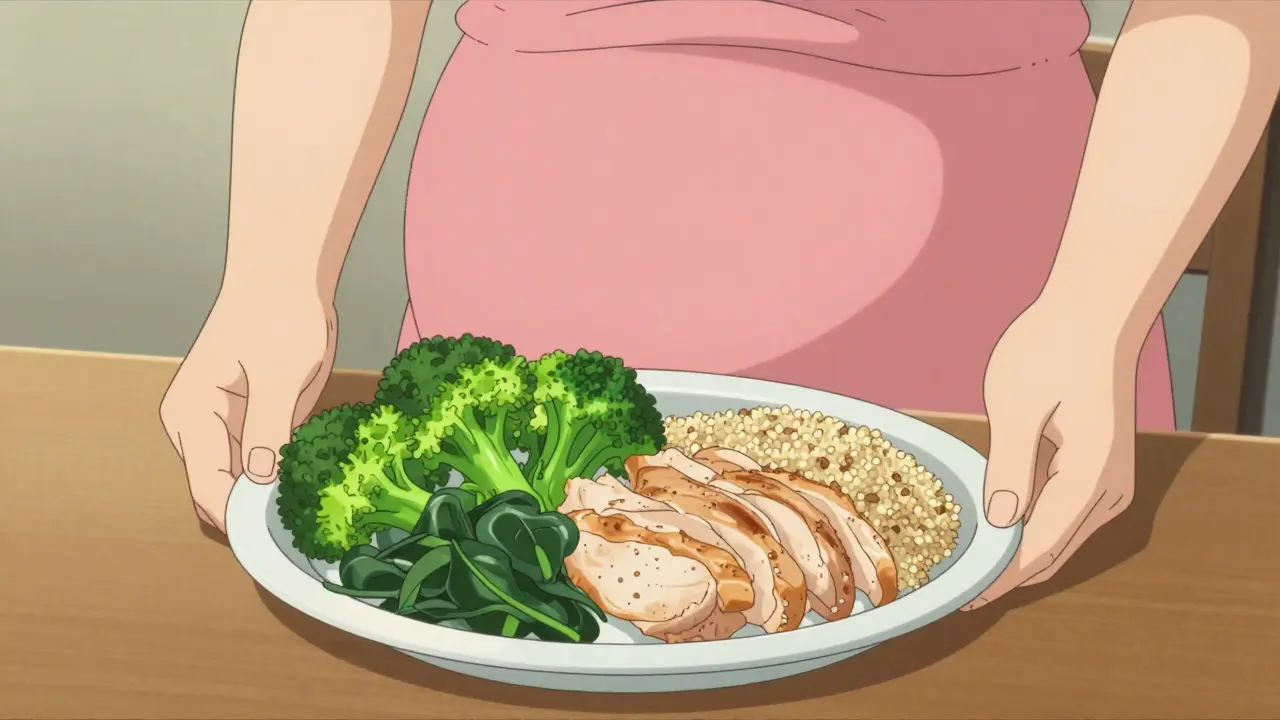
Forget complicated math. The plate method (recommended by the CDC) makes portion control visual and easy. Here's how it works:
- Take a 9-inch plate (a regular dinner plate works).
- Divide it into three sections:
- Half the plate: non-starchy vegetables (broccoli, spinach, peppers)
- One-quarter: lean protein (chicken, fish, tofu)
- One-quarter: carbohydrate sources (brown rice, sweet potatoes, whole grain bread)
This approach naturally balances nutrients while controlling carbs. A 2017 Diabetes Therapy trial with 1,200 participants found this method achieved the same blood sugar control as detailed carb counting but with 37% higher adherence. Why? Because it's simple. No measuring cups needed-just look at your plate.
Carbohydrate Counting: When Precision Matters
Some women need more precise carb tracking. The American Diabetes Association recommends 45-60 grams of net carbs per meal and about 15 grams per snack. But what counts as a serving?
- One carbohydrate serving = 15g net carbs
- 75g potatoes = 1 serving
- 50g cooked brown rice (two heaped tablespoons) = 1 serving
- One medium slice of whole grain bread = 1 serving
Net carbs = total carbs minus fiber. For example, a cup of cooked broccoli has 6g total carbs but 2.4g fiber, so net carbs are 3.6g. The Academy of Nutrition and Dietetics 2023 guidelines emphasize this because fiber slows glucose absorption. Women with pre-pregnancy insulin resistance (HbA1c >5.7%) often find carb counting more effective than the plate method.
Sample Daily Meal Plan
| Meal | Food | Net Carbs (g) |
|---|---|---|
| Breakfast | 2 scrambled eggs, 1 slice whole wheat toast, 1/2 cup berries | 28 |
| Snack | 1 small apple with 1 tbsp almond butter | 18 |
| Lunch | Grilled chicken salad (2 cups greens, 3 oz chicken, 1/4 avocado, 1/2 cup chickpeas) | 32 |
| Snack | 1 oz cheese + 1 small pear | 15 |
| Dinner | baked salmon, 1 cup roasted Brussels sprouts, 1/2 cup quinoa | 38 |
| Night Snack | 1/2 cup plain Greek yogurt + 10 almonds | 12 |
This plan keeps total daily net carbs around 143g-well within the recommended range. Maria G., 32, maintained fasting glucose at 87 mg/dL throughout her third trimester using a similar "protein-first" snack approach. She shared: "1 oz cheese plus 15g carbs like a small fruit keeps my blood sugar steady."
Pro Tips for Success
These practical strategies make managing gestational diabetes easier:
- Start meals with protein or vegetables before carbs. This slows glucose absorption.
- Choose high-fiber carbs: look for foods with at least 5g fiber per serving. A 2022 Nutrition Research study showed 76% success rate when patients mastered this.
- Spread carbs evenly across meals. Skipping meals causes blood sugar spikes later.
- Use visual references for portions: "1/2 cup cooked grains = tennis ball size" (CDC 2023 guide).
- Join support groups. The Gestational Diabetes Support Facebook group (147,000 members) reduces anxiety for 89% of users.

Common Mistakes to Avoid
Even with good intentions, these errors can derail progress:
- Over-restricting carbs. Women eating under 1,700 kcal/day risk folate and iron deficiencies, increasing neural tube defect risk by 18% (2022 JAMA Internal Medicine commentary).
- Using "diabetic-friendly" processed foods. They contain 27% more sodium than whole foods (2023 Lancet warning).
- Measuring rice inaccurately. 38% of women underestimate cooked rice portions by 22g (7g extra carbs) per 2021 Diabetes Technology & Therapeutics study.
- Skipping snacks. This causes hepatic glucose overproduction, driving fasting hyperglycemia (Dr. Loralei Thornburg, 2022 ACOG Practice Bulletin).
Frequently Asked Questions
Can I eat fruit with gestational diabetes?
Yes, but choose low-glycemic options like berries, apples, or pears. Limit portions to one small serving (e.g., one small apple = 15g carbs). Always pair fruit with protein or fat-like 1 tbsp almond butter or a handful of nuts-to slow sugar absorption. Avoid dried fruit or juice as they spike blood sugar quickly.
What if my blood sugar stays high after meals?
First, check your carb portions. Many women underestimate how much they're eating. Use the plate method or measuring cups for accuracy. If blood sugar remains high, try moving for 10-15 minutes after meals-walking lowers glucose levels. If this doesn't help, consult your healthcare provider. Some women need insulin, but 70% achieve targets with diet alone per the 2021 Diabetes Therapy study.
Do I need to avoid all carbs?
No. Carbs are essential for fetal development. The key is choosing high-fiber, low-glycemic options and controlling portions. Whole grains, legumes, and vegetables provide necessary nutrients without spiking blood sugar. The American Diabetes Association recommends 45-60g net carbs per meal. Cutting carbs too low risks nutrient deficiencies and may increase neural tube defect risk.
How does fiber help control blood sugar?
Fiber slows digestion, preventing rapid glucose spikes. Aim for meals with at least 6g fiber. For example, a cup of cooked lentils has 15g fiber and 40g carbs (net carbs 25g). A 2008 NEJM trial showed high-fiber meals reduce postprandial glucose by 20-30% compared to low-fiber options. Prioritize vegetables, beans, and whole grains over refined carbs.
What snacks are best for late-night cravings?
Choose protein-rich snacks with minimal carbs. Options include: 1 oz cheese with cucumber slices, 2 hard-boiled eggs, or Greek yogurt with chia seeds. Avoid sweet snacks before bed-this can cause morning fasting hyperglycemia. Dr. Boyd Metzger, who chaired the landmark Hyperglycemia and Adverse Pregnancy Outcomes study, emphasizes: "Evening protein stabilizes blood sugar overnight better than carb-heavy snacks."


