Running out of medication halfway across the world isn’t just inconvenient-it can be dangerous. Whether you’re on a two-week vacation in Thailand or a six-month trip through Europe, your pills don’t care about time zones, language barriers, or customs rules. If you take insulin, blood thinners, antidepressants, or seizure meds, you need a plan. And it’s not as simple as packing extra bottles and hoping for the best.
Why Your Prescription Might Not Work Overseas
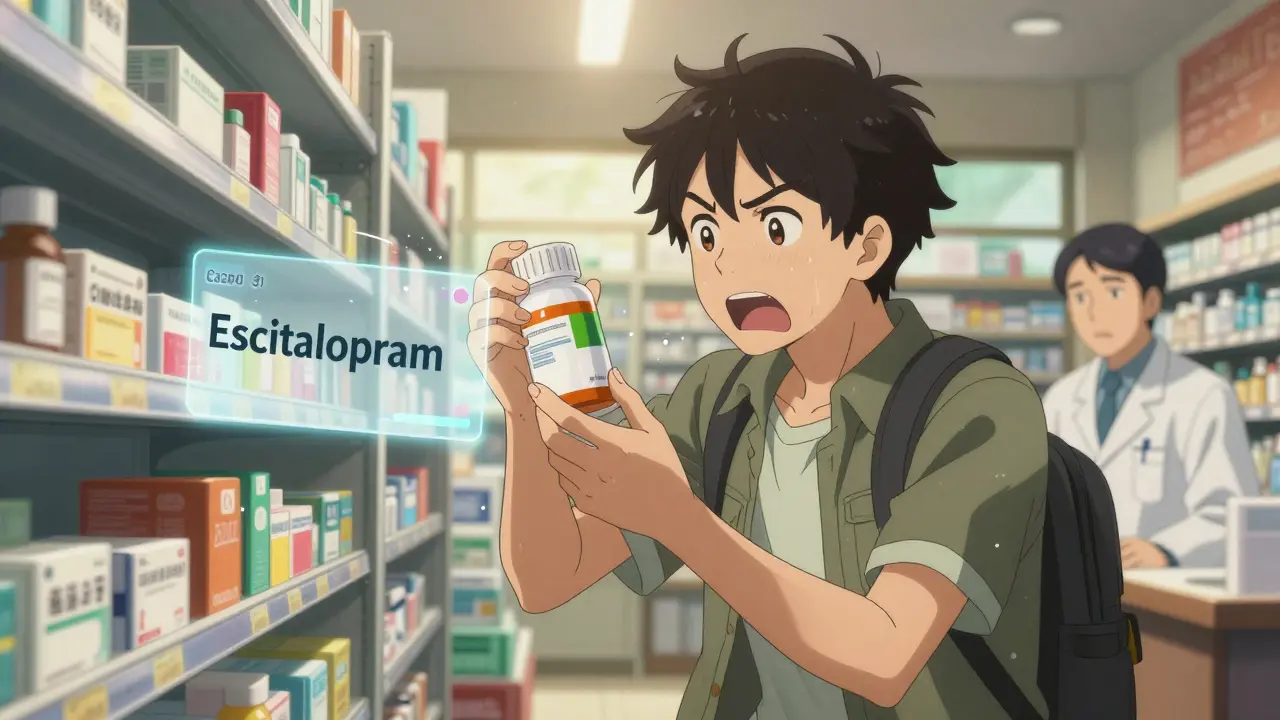
Not every drug you can buy at your local pharmacy in the U.S. or Australia is legal-or even available-abroad. About 78% of countries have strict rules on medications that are common in Western nations. That means your daily antidepressant, ADHD pill, or even certain painkillers might be classified as controlled substances overseas. In Japan, for example, pseudoephedrine (a common decongestant) is banned. In France, you can’t buy codeine without a local prescription. In some Middle Eastern countries, even melatonin is restricted. The problem isn’t just legality. Even if the drug is allowed, the formulation might be different. Your Lexapro might be called Escitalopram elsewhere, and the dosage could be 5mg instead of 10mg. Pharmacies in foreign countries often don’t recognize American brand names. One traveler in Bangkok spent three hours trying to get her medication because the pharmacist couldn’t read the brand name on her bottle. She later learned that having the generic name written down would have solved the issue instantly.What You Must Pack Before You Go
The golden rule: carry all your medications in their original containers. Not a pill organizer. Not a ziplock bag. The original bottle with the pharmacy label showing your name, the doctor’s name, the drug name, and the dosage. This isn’t optional-it’s enforced in 89% of Schengen Area countries and in many others, including Australia, Canada, and Japan. You should also carry a letter from your doctor. Not just a note. A formal letter on letterhead, written in English and translated into the language of your destination. A 2022 Johns Hopkins study found this reduces the chance of your meds being confiscated by 73%. Include:- Your full name and date of birth
- Each medication name (brand and generic)
- Dosage and frequency
- Reason for use (e.g., “for hypertension,” “for bipolar disorder”)
- Doctor’s contact info
- Signature and stamp
How to Handle Time Zone Changes
If you’re crossing three or more time zones, your medication schedule gets messy. The CDC reports that 47% of travelers face problems with timing-especially with insulin, blood thinners, and seizure meds. For once-daily pills (like blood pressure or antidepressants), keep taking them at the same clock time as you would at home for the first two or three days. Then gradually shift to the local time. For example, if you take your pill at 8 a.m. EST and fly to London (5-hour difference), keep taking it at 8 a.m. your home time for a couple of days. After that, move it to 1 p.m. London time. Insulin is trickier. Splitting doses during the transition helps. If you usually take 20 units in the morning and 15 at night, and you’re flying east, you might take 10 units at your home morning time, then 15 units at local morning time. Never skip or double up without consulting your doctor. Insulin storage failures are the #1 medication emergency for travelers, accounting for 37% of cases, according to the CDC.Where to Find Pharmacies Abroad
Pharmacies aren’t all the same. In the UK, you can walk into any pharmacy and get an emergency prescription for £9.65 (as of 2023) through the NHS-even if you’re not a resident. In France, pharmacists can legally give you a 72-hour supply of certain meds without a prescription under Article L. 5125-26. In Germany, you’ll need a local doctor’s note, but the system is well-organized. In Southeast Asia, things get risky. A 2023 WHO study found that 68% of medications bought in open markets in Cambodia and Thailand were fake or substandard. Avoid street vendors. Look for pharmacies with official signs: “Farmacia” in Spain, “Pharmacie” in France, “薬局” (yakkyoku) in Japan. In Japan, only 24 pharmacies are certified to serve foreigners. Use the IAMAT directory to find vetted clinics and pharmacies in over 110 countries. In the U.S., Walgreens and CVS have limited international presence. But Walgreens partners with pharmacies in 18 countries-3,200 locations total. If you’re in a major city like Paris, Tokyo, or Mexico City, check if there’s a Walgreens nearby. Otherwise, ask your hotel front desk. They usually know the closest legitimate pharmacy.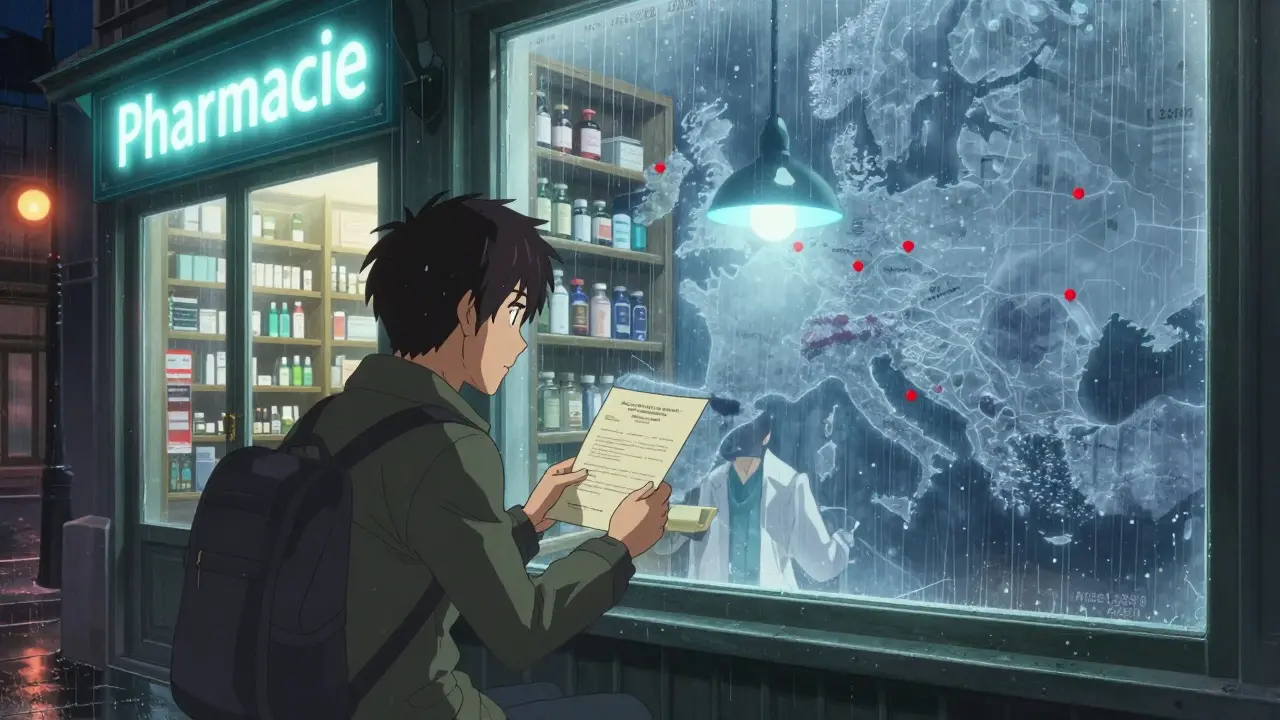
What to Do If You Run Out
If you lose your meds or they get stolen, don’t panic. First, contact your country’s embassy. They can help you find a local doctor who can write a new prescription. Second, use IAMAT’s free referral service. They connect travelers with English-speaking doctors who understand international medication needs. Third, if you’re in a European Union country, try to get a prescription from a local pharmacy. Some will issue a short-term supply if you show your original bottle and doctor’s letter. In Mexico, many travelers use pharmacies called “farmacias de la misma cadena” (chain pharmacies like Farmacias Guadalajara or Similares). They’re reliable and often have U.S.-brand drugs. But always ask for the generic name. If they say “No tenemos Lexapro,” ask for “escitalopram.”Insurance and Costs
Medicare doesn’t cover anything overseas. Most U.S. private insurance plans don’t either. That’s why travel insurance matters. World Nomads, SafetyWing, and Allianz cover up to $2,000 for emergency medication purchases. But read the fine print. Some policies require you to see a doctor first before buying meds. Others only cover what’s deemed “medically necessary”-not replacements for lost pills. If you’re from Australia, you’re lucky. If you’re from a country with a reciprocal healthcare agreement (like the UK, New Zealand, or Sweden), you can get subsidized meds under Australia’s PBS. Americans? You pay full price. Same goes for Canada and Japan.The Digital Tools That Can Save Your Trip
The CDC launched “MedAbroad” in May 2023-a free online tool that gives you country-specific rules for 195 nations. Just type in your drug and destination, and it tells you if it’s allowed, what documentation you need, and if there are quantity limits. The International Pharmaceutical Federation also rolled out a global pharmacy locator API in June 2023. It’s integrated into Google Maps. Search “pharmacy near me” while abroad, and you’ll see which ones are verified and speak English.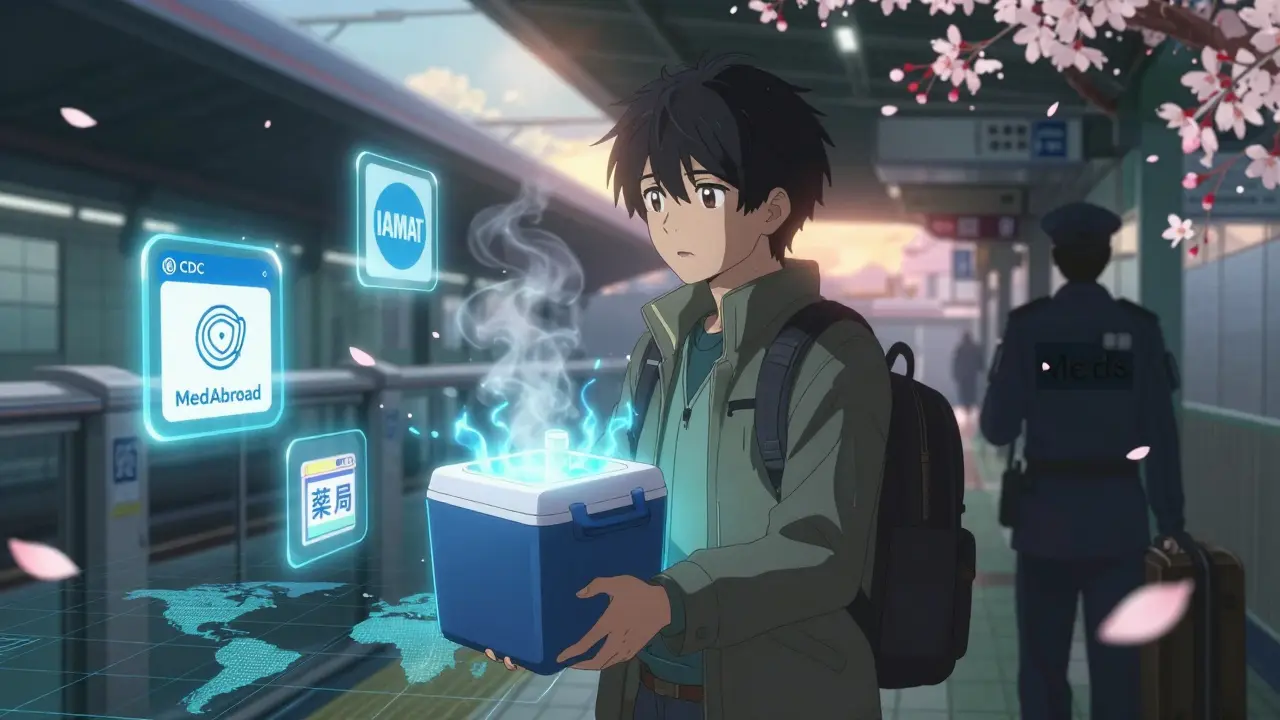
What Not to Do
Don’t mail your meds overseas. Customs will likely seize them. Don’t try to buy meds from online pharmacies that ship internationally-most are scams. Don’t assume your pharmacy in the U.S. can refill your prescription early just because you’re traveling. Most insurers won’t allow it. And don’t skip the embassy visit before you leave. 92% of travel medicine specialists say contacting your country’s embassy in your destination is the most important step. They can give you a list of local doctors, pharmacies, and even emergency contacts.Final Checklist
- ✅ Pack meds in original bottles with labels
- ✅ Carry a doctor’s letter (translated if needed)
- ✅ Bring 10+ extra days of medication
- ✅ Know generic names of all your drugs
- ✅ Download the CDC’s MedAbroad tool
- ✅ Save IAMAT’s contact info and local embassy number
- ✅ Check if your travel insurance covers meds
- ✅ Keep insulin cool with a portable cooler or insulated bag
Frequently Asked Questions
Can I bring my prescription meds on a plane?
Yes, but they must be in their original containers with your name and prescription info on the label. Keep them in your carry-on, not checked luggage. The TSA allows reasonable quantities for the duration of your trip. You may be asked to show your doctor’s letter at security. Don’t put them in a pill organizer unless you also have the original bottles with you.
What if my meds are confiscated at customs?
Stay calm and ask to speak with a supervisor. Show your doctor’s letter and original prescription. If they still won’t release them, contact your country’s embassy immediately. Many embassies have legal advisors who can help negotiate with customs. Keep a digital copy of your prescription and doctor’s letter on your phone-this can speed things up.
Can I refill my prescription abroad without seeing a doctor?
No, in most countries you need a local prescription. Even if the drug is the same, pharmacists can’t refill a foreign prescription. In France and the UK, you might get a short emergency supply, but you’ll still need to see a doctor within a few days. Always plan ahead.
Are generic drugs the same overseas?
Mostly, yes. The active ingredient is the same. But fillers, coatings, or dosages might differ slightly. If you’ve had allergic reactions to certain fillers before, ask the pharmacist for the inactive ingredients list. Always get the generic name-this is what you’ll need to find the right drug abroad.
How do I keep insulin cool while traveling?
Use a portable insulin cooler or insulated bag with ice packs. Most airlines allow these in carry-ons. Avoid checking them. Keep insulin between 2°C and 8°C (36°F-46°F). Never leave it in a hot car or direct sunlight. If you’re in a place without refrigeration, ask your hotel if they can store it in their fridge. Many will agree if you explain it’s life-saving medication.


