
Digoxin-Amiodarone Dose Calculator
Dose Adjustment Calculator
This tool calculates the safe digoxin dose adjustment when starting amiodarone based on the 2024 guidelines. The interaction can cause dangerous toxicity by doubling digoxin levels.
Recommended Adjusted Dose
When two heart medications are prescribed together, the stakes aren’t just high-they can be life-or-death. Digoxin and amiodarone are both powerful drugs used to treat irregular heart rhythms and heart failure. But when taken together, they can push each other into dangerous territory. This isn’t just a theoretical risk. It’s a real, well-documented, and often deadly interaction that still catches clinicians off guard today.
Why This Interaction Is So Dangerous
Digoxin is a classic drug with a tiny window between helping and harming. Its therapeutic range? Just 0.5 to 0.9 nanograms per milliliter of blood. Go above that, and you risk nausea, vomiting, blurry yellow vision, slow heart rate, and even fatal arrhythmias. Amiodarone, on the other hand, is a complex antiarrhythmic with a half-life of up to 100 days. It doesn’t just sit in your system-it lingers for months. The problem? Amiodarone doesn’t just add to digoxin’s effects. It multiplies them. Studies show that when amiodarone is started in someone already taking digoxin, serum digoxin levels can jump by 100% or more. That means a patient on a safe 0.125 mg daily dose of digoxin could suddenly be exposed to the equivalent of 0.25 mg-double the safe amount. And because digoxin’s effects build up slowly, toxicity often doesn’t show up for days or even weeks. By then, it’s too late.How Amiodarone Boosts Digoxin Levels
It’s not magic. It’s biology. Digoxin moves in and out of cells with the help of a protein called P-glycoprotein. Think of it like a gatekeeper. Amiodarone slams that gate shut. It blocks P-glycoprotein from doing its job, so digoxin can’t be cleared properly. This causes digoxin to pile up in the bloodstream. But that’s not all. Amiodarone also slows down how fast the liver breaks down digoxin. And because digoxin is mostly cleared through the kidneys, patients with even mild kidney problems are at even higher risk. A 2020 study in Scientific Reports found that when amiodarone is given with digoxin, digoxin exposure increases by 40-60%. That’s not a small bump-it’s a full-on overdose waiting to happen.The Real-World Consequences
This isn’t just a lab finding. It’s happening in hospitals right now. A 2021 study in Circulation: Arrhythmia and Electrophysiology looked at over 10,000 patients on cardiac meds. The digoxin-amiodarone combo was 2.3 times more likely to land someone in the hospital for toxicity than other common combinations. And it’s not just hospitalizations. A 2021 analysis in JACC: Heart Failure showed that when doctors didn’t reduce digoxin doses after starting amiodarone, 35% of heart failure patients died within 30 days-up from 8% when the dose was adjusted. One case from Massachusetts General Hospital involved a 72-year-old woman who developed a heart rate of 38 beats per minute and potassium levels of 6.8 mEq/L (dangerously high) after being started on amiodarone without a digoxin dose reduction. She spent four days in the ICU. She survived. Many don’t.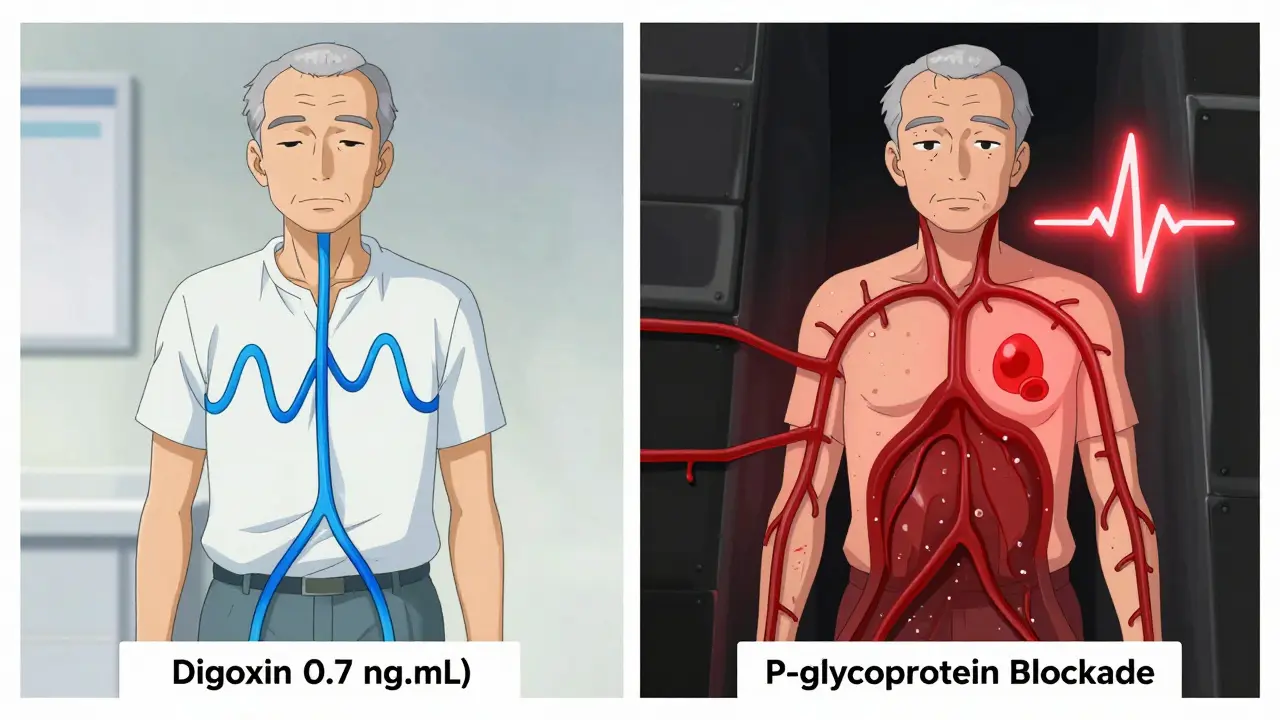
What Should You Do? The Clear Protocol
There’s no guesswork here. Guidelines are consistent and specific:- When amiodarone is started, reduce digoxin by 50% immediately. This isn’t optional. It’s mandatory.
- Check digoxin levels before starting amiodarone. Use this as your baseline.
- Check again 72 hours after starting amiodarone. Levels peak between 1 and 2 weeks, but the first check should happen early.
- If kidney function is poor (creatinine clearance under 50 mL/min), reduce digoxin by 67%-to one-third of the original dose.
- Don’t wait for symptoms. Toxicity often shows up as vague nausea, fatigue, or dizziness-symptoms easily mistaken for aging or heart failure progression.
Why This Keeps Happening
Despite decades of evidence, mistakes still happen. A 2022 study across 15 U.S. hospitals found that only 43.7% of patients had their digoxin dose reduced when amiodarone was added. In community hospitals? The rate dropped to just 31.8%. Why? Because amiodarone’s effects are delayed. Doctors see the patient feel fine at first and assume everything’s okay. They forget that amiodarone’s metabolite, desethylamiodarone, lingers for weeks-even after stopping the drug. And because digoxin is often prescribed for older patients with multiple conditions, it’s easy to overlook the interaction amid other meds.
What’s Changing Now
The tide is turning. The 2024 European Society of Cardiology guidelines now recommend avoiding digoxin altogether in atrial fibrillation patients if amiodarone is needed. Beta-blockers or diltiazem are safer alternatives for rate control. But digoxin still has a place-especially in heart failure patients with low ejection fraction who don’t respond to other drugs. That’s why the focus now isn’t on eliminating digoxin, but on managing the interaction perfectly. Health systems are catching on. The Veterans Health Administration installed EHR alerts that block prescriptions of both drugs together unless a dose reduction is confirmed. At the University of Michigan, a pharmacist-led protocol cut digoxin toxicity cases from 12.3% to 2.1% in just a year.What Patients Need to Know
If you’re on digoxin and your doctor adds amiodarone, ask:- “Will my digoxin dose change?”
- “When will my blood level be checked?”
- “What symptoms should I watch for-nausea, dizziness, vision changes, or a slow pulse?”
The Bottom Line
This interaction is predictable. Preventable. And still too often fatal. The science is clear: reduce digoxin by half when amiodarone starts. Monitor levels. Watch for symptoms. Don’t wait. The margin for error here is razor-thin. One wrong dose can cost a life.Why does amiodarone increase digoxin levels?
Amiodarone blocks P-glycoprotein, a protein that helps remove digoxin from the body. It also slows down liver metabolism of digoxin. Together, this causes digoxin to build up in the bloodstream-sometimes doubling or tripling its concentration. This is why even a small digoxin dose can become toxic when taken with amiodarone.
How soon after starting amiodarone should digoxin be reduced?
Digoxin should be reduced by 50% at the same time amiodarone is started. Don’t wait for symptoms or lab results. The interaction begins immediately, and digoxin levels rise over the next several days. Waiting increases the risk of toxicity.
Do I need to check digoxin levels if I’m on both drugs?
Yes. Always check before starting amiodarone, then again 72 hours after. For patients with kidney problems, check again at 1 week. Levels can keep rising for up to two weeks after amiodarone starts. Relying on symptoms alone is dangerous-many patients show no warning signs until it’s too late.
Can I stop digoxin instead of reducing the dose?
In some cases, yes-especially if you have atrial fibrillation without heart failure. Alternatives like beta-blockers or calcium channel blockers are safer and more effective for rate control. But if you have heart failure with reduced ejection fraction, digoxin may still be necessary. Never stop it without consulting your doctor. The goal is to reduce the dose, not necessarily eliminate it.
How long does the interaction last after stopping amiodarone?
Amiodarone has an extremely long half-life-up to 100 days. Its active metabolite, desethylamiodarone, can continue to inhibit digoxin clearance for up to 60 days after the last dose. So even if you stop amiodarone, your digoxin dose may still need to stay reduced for weeks or months. Never increase digoxin back to the original dose without checking levels first.
Are there any other drugs that interact with digoxin like amiodarone does?
Yes, but none as severely. Quinidine, verapamil, and ketoconazole can also raise digoxin levels. But amiodarone is the worst offender because of its long half-life and dual mechanism-it blocks both P-glycoprotein and liver enzymes. Macrolide antibiotics like clarithromycin raise digoxin too, but the effect is short-lived and easier to manage. Amiodarone’s interaction is persistent, unpredictable, and far more dangerous.


