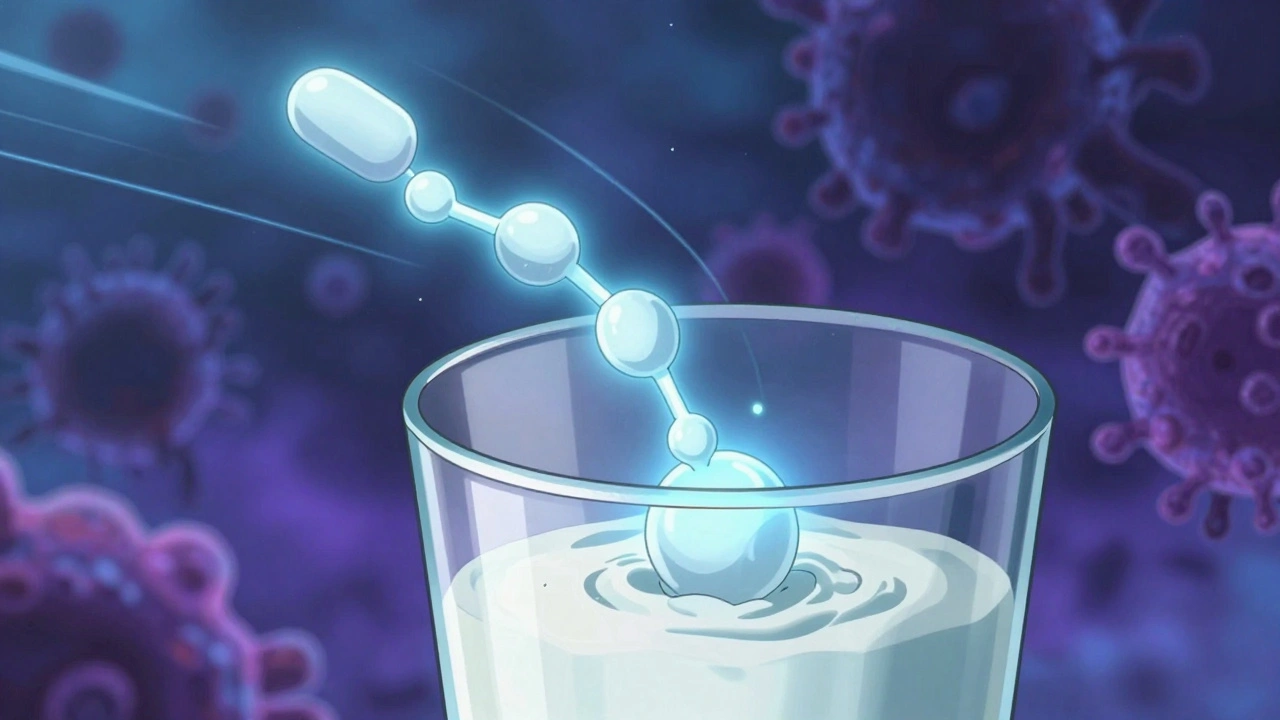
When you’re sick and prescribed an antibiotic, you want it to work - fast and fully. But what if the very thing you eat with it - like a glass of milk, a bowl of yogurt, or even a calcium-fortified orange juice - is quietly stopping that antibiotic from doing its job? This isn’t a myth. It’s chemistry. And it’s happening to thousands of people every day.
Why Dairy Gets in the Way
Dairy products like milk, cheese, yogurt, and even some plant-based alternatives are packed with calcium. That’s good for your bones. But when calcium meets certain antibiotics in your stomach, they stick together like glue. This isn’t just a minor inconvenience - it’s a chemical bond called chelation. Calcium ions latch onto antibiotic molecules, forming a solid, insoluble compound that your body can’t absorb.That means the antibiotic doesn’t enter your bloodstream. It just passes through, useless. Studies show absorption can drop by 20% to over 90%, depending on the drug and the dairy product. For example, one study found yogurt reduced ciprofloxacin absorption by 92%. Milk cut it by 70%. That’s not a small difference - that’s the difference between treating an infection and letting it grow stronger.
Which Antibiotics Are Affected?
Not all antibiotics play nice with dairy. The big offenders are two classes: tetracyclines and fluoroquinolones.Tetracyclines include the older drugs like tetracycline and the more common ones like doxycycline and minocycline. These are often prescribed for acne, Lyme disease, and respiratory infections. Tetracycline itself is the most sensitive - its absorption can drop by up to 90% with dairy. Doxycycline is a bit smarter. It’s less affected, but still not immune. Even a glass of milk can cut its effectiveness by 30% or more.
Fluoroquinolones like ciprofloxacin (Cipro), levofloxacin (Levaquin), and moxifloxacin (Avelox) are used for urinary tract infections, sinus infections, and even anthrax. They’re powerful, but they’re also highly vulnerable to calcium. A 2022 study showed that ciprofloxacin’s peak concentration in the blood dropped by 70% when taken with milk. With yogurt? 92%.
Other drugs like bisphosphonates (for osteoporosis) and some iron supplements react the same way. But penicillins, macrolides like azithromycin, and cephalosporins? They’re mostly unaffected. You can have your yogurt with amoxicillin without worry.
How Long Should You Wait?
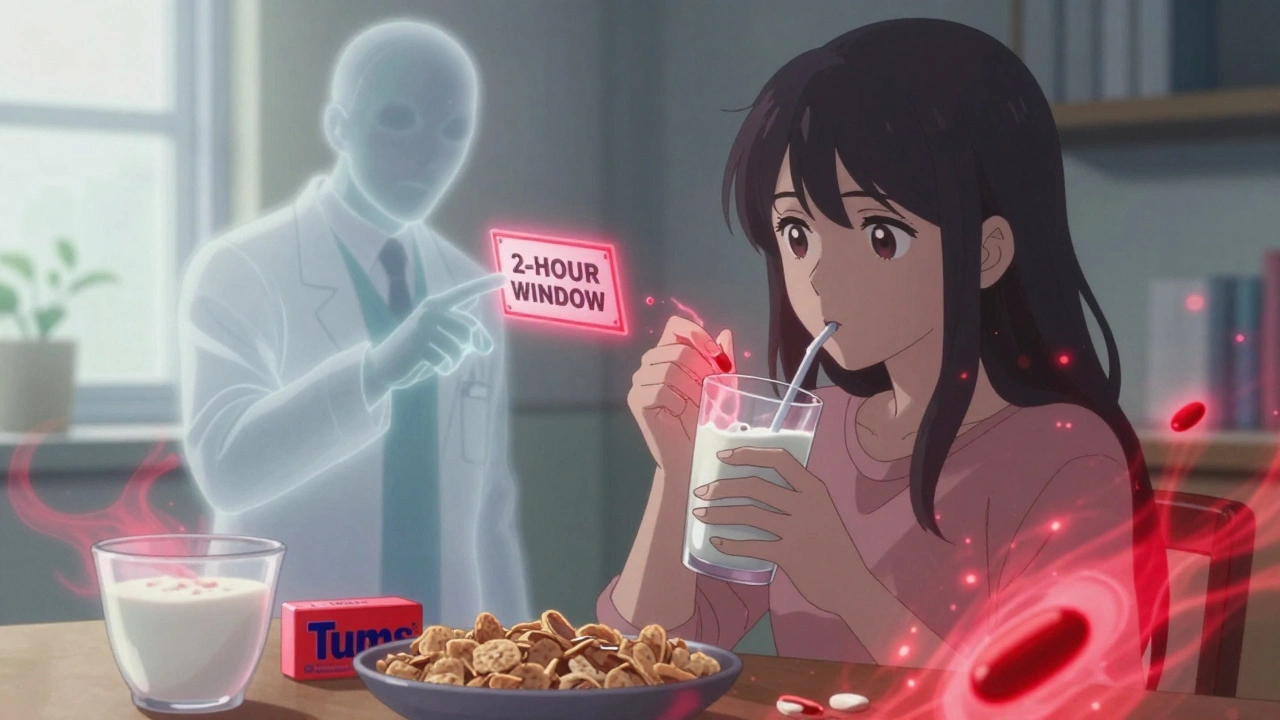
Timing isn’t optional. It’s medical protocol. And the rules vary by drug.For tetracyclines, the standard advice is to take them at least 1 hour before or 2 hours after eating dairy. Some experts suggest waiting 3 hours for maximum safety, especially with older tetracycline formulations.
For fluoroquinolones, the window is wider. Take ciprofloxacin 2 hours before dairy, and wait 4 to 6 hours after your dose before having milk, yogurt, or calcium-fortified foods. That’s because these drugs stay in your gut longer and continue absorbing over time.
Here’s the catch: if you’re taking your antibiotic twice a day - say, at 8 a.m. and 8 p.m. - you can’t just skip dairy at breakfast and dinner. You need to plan your meals. Have your yogurt at noon and again at 6 p.m. That way, you’re safely outside the critical windows. Don’t assume your lunch or snack won’t interfere. Even a small cup of yogurt can throw off absorption.
It’s Not Just Milk
Many people think only dairy milk is the problem. That’s wrong. Anything with added calcium can cause the same issue:- Calcium-fortified orange juice
- Almond milk, soy milk, or oat milk with added calcium
- Calcium supplements - even a Tums or Rolaids taken with your pill
- Some breakfast cereals fortified with calcium
A 2023 study in the Journal of the American Pharmacists Association found that nearly 40% of patients didn’t realize plant-based milks could interfere. One woman took her doxycycline with almond milk, thinking it was “healthier.” Her infection didn’t clear. Her pharmacist later found she’d been consuming calcium-fortified almond milk daily.
What Happens If You Ignore This?
You might not feel anything right away. That’s the danger. You’ll think the antibiotic isn’t working because you’re “just not responding.” But the real reason? Your body never got enough of the drug.Sub-therapeutic levels mean the bacteria aren’t fully killed. They survive. They adapt. And they become resistant. This isn’t just about your infection - it’s about the bigger picture. The World Health Organization estimates that improper antibiotic use - including timing errors with dairy - contributes to 5-10% of community-level antibiotic resistance.
Real cases are common. A Reddit user shared how her Lyme disease symptoms lingered for weeks because she took doxycycline with milk. Another person on HealthUnlocked had recurring UTIs until her pharmacist told her to wait 4 hours after ciprofloxacin before eating yogurt. She followed the advice - and her infection vanished within days.
A 2023 study in the Journal of Patient Experience found that patients who followed the 2-hour rule had a 98% success rate. Those who didn’t? Only 72% got better. That’s a 26-point gap - all because of timing.

What Should You Do?
Here’s how to get it right:- Read the label. If your antibiotic is a tetracycline or fluoroquinolone, the packaging now has clearer warnings (FDA updated labeling in January 2023).
- Ask your pharmacist. They see this every day. Don’t assume your doctor told you everything. Pharmacists are trained to catch these interactions.
- Plan your meals. If you take your antibiotic at 8 a.m., have breakfast at 10 a.m. or later. If you take it at 8 p.m., skip your evening yogurt until 1 a.m. - or better yet, have it at lunch.
- Use apps. Tools like Medisafe and MyMeds now flag dairy interactions when you enter your meds. Set a reminder: “No dairy for 2 hours after pill.”
- Track your symptoms. If your infection doesn’t improve after 48 hours, ask: “Did I take this with dairy?”
Is There Any Hope for the Future?
Yes. Pharmaceutical companies are working on new versions of tetracyclines that resist calcium binding. Early trials show promise. But these aren’t available yet - and won’t be until at least 2026.For now, the only reliable fix is timing. The chemistry hasn’t changed. Calcium still binds. Antibiotics still need absorption. And your body still needs the full dose.
There’s no magic bullet. Just patience. Just discipline. Just waiting two hours.
It’s not complicated. But it’s critical. Your infection - and the future of antibiotics - depends on it.
Can I drink milk with doxycycline if I wait a few hours?
No - you should avoid dairy for at least 2 hours after taking doxycycline. While doxycycline is less affected by calcium than older tetracyclines, even a small amount of milk or yogurt can still reduce absorption by 30% or more. Waiting 2 hours after your dose ensures your body gets the full benefit.
What if I accidentally took my antibiotic with yogurt?
Don’t panic. Take your next dose as scheduled, but make sure to separate it from dairy by at least 2 hours. Don’t double up on your dose - that won’t fix the problem and could cause side effects. Just stay consistent going forward. If you’re worried your infection isn’t improving, contact your doctor.
Are all plant-based milks safe to drink with antibiotics?
No. Many almond, soy, and oat milks are fortified with calcium - sometimes as much as dairy milk. Always check the nutrition label. If it says “calcium carbonate” or “tricalcium phosphate” in the ingredients, treat it like dairy. Stick to unfortified versions, or wait the full 2-6 hours after your antibiotic.
Why does yogurt cause more interference than milk?
Yogurt often has higher concentrations of calcium and other minerals due to fermentation and added ingredients. Some brands also contain live cultures that may affect gut pH or motility, potentially prolonging contact between calcium and the antibiotic. Studies show yogurt can reduce ciprofloxacin absorption by 92%, compared to 70% for milk.
Can I take calcium supplements with my antibiotic?
No. Calcium supplements - including Tums, Rolaids, and multivitamins with calcium - will interfere just like dairy. Take them at least 2 hours before or 4-6 hours after your antibiotic. If you take calcium daily, talk to your doctor about adjusting the timing.
Do I need to avoid dairy for the whole course of antibiotics?
Yes. The interaction happens every time you take the drug and consume calcium together. Even if you feel better after a few days, the infection isn’t fully gone. Skipping dairy only during the first few doses won’t help - you need to avoid it for the entire treatment period.


