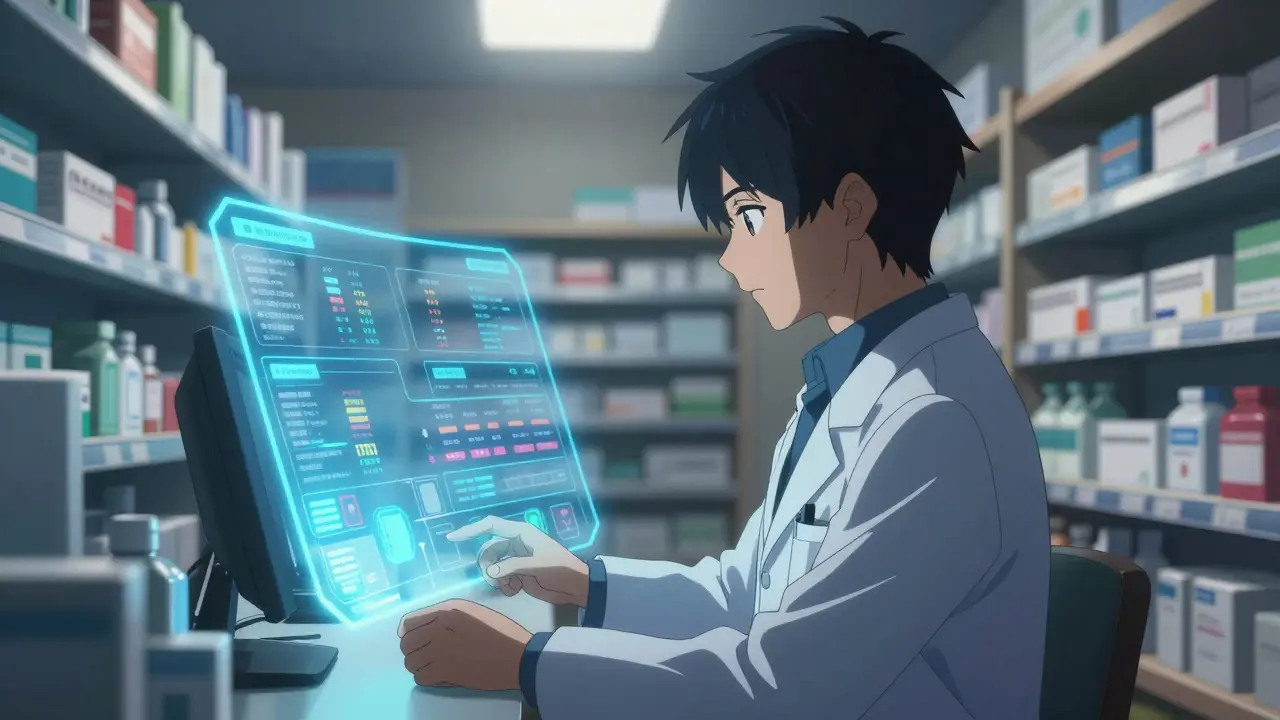
Every day, you make dozens of decisions about generic drugs that medications that are bioequivalent to brand-name products but sold at a lower cost. You check the Orange Book. You verify therapeutic equivalence ratings. You decide if a substitution is safe for your patient. But here is the hard truth: the landscape of generics changes faster than most of us realize. With over 1,200 therapeutic equivalence ratings updated monthly by the FDA, staying current isn't just a nice-to-have-it’s a critical part of your professional survival.
This is why continuing education (CE) for pharmacists focused on generics has moved from optional to essential. It is no longer enough to rely on the knowledge you gained during pharmacy school five or ten years ago. The regulatory environment, driven by acts like the CREATES Act and evolving biosimilar interchangeability rules, demands constant vigilance. If you want to protect your patients, avoid malpractice claims, and keep your license valid, you need a strategic approach to your CE hours.
Why Generic Knowledge Is a High-Stakes Priority
You might think you know enough about generics because they make up roughly 90% of all prescriptions dispensed in the United States. Yet, despite their prevalence, they account for only 23% of total drug spending. This high-volume, low-margin environment means errors have massive downstream effects. According to an analysis by the Accreditation Council for Pharmacy Education (ACPE), nearly 43% of pharmacy-related malpractice claims involve errors linked to generic substitution or misunderstandings of therapeutic equivalence.
Consider the narrow therapeutic index (NTI) drugs. A slight deviation in bioavailability can lead to toxicity or therapeutic failure. The American Society of Health-System Pharmacists (ASHP) found that 78% of hospital pharmacists felt they needed more training specifically on biosimilars, which are a complex subset of generics with unique interchangeability considerations. Ignoring these nuances isn't just risky; it’s professionally negligent. Your continuing education must bridge the gap between basic textbook knowledge and the complex reality of today’s supply chain.
Navigating the Regulatory Maze: ACPE and State Boards
Before you pick a course, you need to understand who validates your learning. Not all CE credits are created equal. In the United States, continuing education must be accredited by either your state Board of Pharmacy (BOP) or the national accrediting body, the Accreditation Council for Pharmacy Education (ACPE). ACPE defines specific topic categories for CPE activities. For generics, Category 2, "Pharmacy Law and Regulations," is often where you’ll find relevant content regarding controlled substance transfers and prescriber verification.
Here is how the math works: one CE unit equals ten contact hours. Most states require between 15 and 30 hours per biennial renewal cycle. However, the devil is in the details. Illinois, for example, requires Registered Pharmacists to complete 30 hours every two years, including specific mandates for sexual harassment prevention and implicit bias awareness. Starting January 2025, Illinois also added cultural competency training. If you hold licenses in multiple states, you face a compliance puzzle. California requires you to maintain records for two years, while New York demands you submit certificates with your renewal application. Mismanaging this administrative burden can lead to lapsed licenses, so choose CE providers that offer robust tracking and documentation features.
| State | Hours Required (Biennial) | Specific Mandates | Documentation Rule |
|---|---|---|---|
| Illinois | 30 Hours | Sexual Harassment, Implicit Bias, Cultural Competency | Retain unless requested |
| California | Varies | Pain Management, Ethics | Maintain records for 2 years |
| New York | Varies | HIV/AIDS, Pain Management | Submit with renewal |
Bioequivalence and the Orange Book: Core Concepts
To stay current on generics, you must master the science behind the substitution. The FDA requires that generic medicines meet strict batch requirements for identity, strength, purity, and quality. The cornerstone of this process is the Abbreviated New Drug Application (ANDA). When a manufacturer submits an ANDA, they must prove that their generic product is bioequivalent to the brand-name reference listed drug.
Bioequivalence means the generic drug delivers the same amount of active ingredient into a patient’s bloodstream in the same amount of time as the brand name. The FDA accepts a range of 80% to 125% for pharmacokinetic parameters. While this sounds like a wide margin, it is statistically rigorous for most drugs. However, for NTI drugs, this margin can be clinically significant. This is where the FDA Orange Book becomes your daily bible. It lists approved drug products and provides therapeutic equivalence codes. An "AB" rating means the generic is considered therapeutically equivalent to the brand. An "BX" rating indicates unknown equivalence. Understanding these codes allows you to make informed decisions when a prescriber writes "Dispense as Written" or when a patient reports adverse effects after switching manufacturers.

The Impact of the CREATES Act on Supply and Substitution
A major shift in recent years has been the implementation of the Creating and Restoring Equal Access To Equivalent Samples (CREATES) Act. Before this act, brand-name companies could refuse to sell samples of their drugs to generic developers, effectively blocking competition. The CREATES Act changed the legal landscape, requiring brand manufacturers to provide samples under certain conditions. This has accelerated the approval of new generic applications-983 new generics were approved between January 2022 and June 2023 alone.
For you, the practicing pharmacist, this means more options but also more complexity. More competitors entering the market can lead to frequent manufacturer switches due to supply chain dynamics. Your CE should cover not just the static rules of substitution, but the dynamic realities of supply shortages and parallel imports. Recent updates from ACPE now require generics-related CE to include content on Risk Evaluation and Mitigation Strategies (REMS) programs, ensuring you are aware of safety protocols tied to specific generic formulations.
Choosing the Right CE Format: Application vs. Knowledge
Not all CE courses are equally effective. ACPE distinguishes between three types of activities: knowledge-based, application-based, and certificate programs. Knowledge-based courses focus on foundational information, often through lectures or readings. Application-based courses use case studies to address the practical application of principles. Certificate programs combine didactic learning with practice experience and assessments.
User feedback strongly favors application-based learning. Reviews on platforms like CE21 show that application-based courses receive an average rating of 4.7 out of 5 stars, compared to 3.2 for knowledge-based courses. Why? Because reading about therapeutic equivalence is different from navigating a real-world scenario where a patient presents with hypothyroidism symptoms after switching levothyroxine brands. Pharmacist Sarah Johnson noted on the Pharmacy Tech Forum that an application-based module on therapeutic equivalence directly helped her prevent a dangerous substitution error. If you want to reduce errors, prioritize courses that force you to think critically rather than just passively absorb information.

Biosimilars: The Next Frontier in Generic Education
You cannot talk about generics without addressing biosimilars. These are biological products highly similar to an approved reference biological product. Unlike small-molecule generics, biosimilars are complex, large molecules produced in living systems. This complexity makes them harder to replicate and easier to mismanage. Interchangeability laws vary significantly by state, creating a patchwork of regulations that can confuse even experienced practitioners.
Twelve states currently mandate specific education on biosimilars. The ASHP survey highlighted that nearly 80% of hospital pharmacists feel unprepared for these nuances. As biosimilars gain market share, particularly in oncology and rheumatology, your ability to substitute them correctly will become increasingly vital. Look for CE modules that specifically address the difference between "similar" and "interchangeable" status, and how state laws dictate whether you can swap a biosimilar without prescriber notification.
Strategic Planning for Your CE Hours
The average pharmacist spends 27.5 hours annually on required CE, but only about 5.2 hours are dedicated specifically to generics and therapeutics. This ratio is likely too low given the rapid pace of change. If you have 10+ years of experience, experts suggest dedicating 8-10 hours annually to targeted generics education. Newer pharmacists may need 4-6 hours, as their initial education was more recent.
To maximize efficiency, integrate your CE with your workflow. AI-powered personalized CE platforms are emerging, with market share expected to grow from 12% to 35% by 2027. These tools identify individual knowledge gaps based on your dispensing history and recommend targeted micro-learning modules. Early pilot programs at CVS Health showed a 28% reduction in generics-related errors through just-in-time learning interventions. Instead of sitting through a generic two-hour lecture, imagine receiving a five-minute alert on your dashboard about a new therapeutic equivalence code for a drug you dispense weekly. This is the future of efficient, impactful continuing education.
Common Pitfalls to Avoid
When selecting CE, watch out for "cookie-cutter" courses that ignore state-specific regulations. Texas pharmacists, for instance, have reported frustration with courses that don’t address their unique substitution rules for NTI drugs. Always verify that the provider is ACPE-accredited and that the content is relevant to your jurisdiction. Additionally, avoid relying solely on self-study. Engage with peers, discuss case studies, and challenge your assumptions. The goal is not just to collect hours, but to sharpen your clinical judgment.
How many CE hours do I need for generic drug knowledge?
While there is no single federal mandate for generic-specific hours, experts recommend 4-10 hours annually depending on your experience level. Many states include generics within broader "Pharmacy Law" or "Therapeutics" categories. Check your state board’s specific requirements, as some, like Texas, have unique rules for narrow therapeutic index drugs.
What is the difference between AB and BX ratings in the Orange Book?
An "AB" rating means the generic is therapeutically equivalent to the brand-name drug and can be substituted safely. An "BX" rating indicates that the generic is bioequivalent but its therapeutic equivalence is unknown, often due to lack of clinical trials comparing efficacy. Substituting BX-rated drugs requires greater caution and potentially prescriber consultation.
Does the CREATES Act affect my ability to substitute generics?
Indirectly, yes. The CREATES Act facilitates the entry of more generic competitors by preventing brand-name companies from withholding samples. This leads to more manufacturer options and potential supply chain shifts, requiring you to stay vigilant about manufacturer changes and therapeutic equivalence updates.
Are online CE courses accepted for license renewal?
Yes, provided they are accredited by ACPE or your state Board of Pharmacy. Ensure the platform provides immediate access to certificates and tracks your hours accurately. Some states may have restrictions on the percentage of CE that can be completed via self-study, so verify local rules.
How do biosimilars differ from traditional generics in CE requirements?
Biosimilars require specialized education due to their complex molecular structure and varying state interchangeability laws. Twelve states mandate specific biosimilar training. CE modules for biosimilars focus on immunogenicity, interchangeability statutes, and REMS programs, which are distinct from small-molecule generic education.