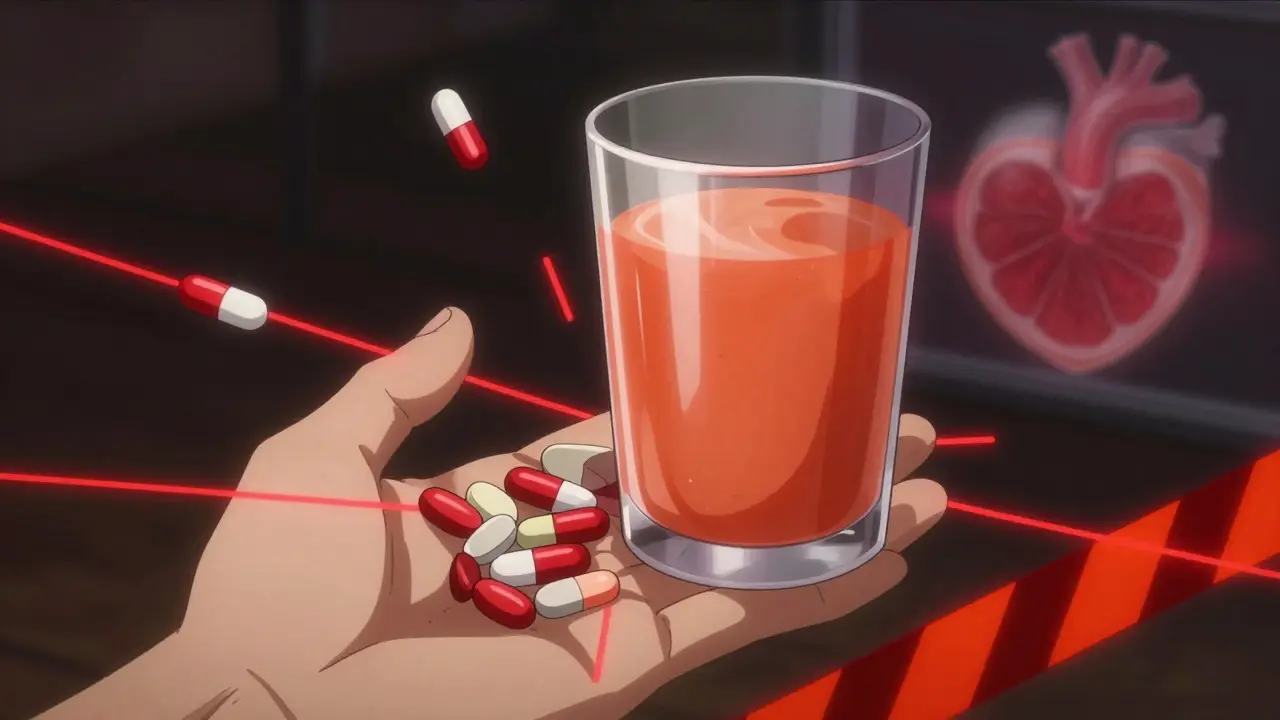
When you’re managing heart disease, taking multiple medications is often unavoidable. But what happens when those pills don’t just work together-they fight? Mixing heart drugs might seem harmless if your doctor prescribed them, but the real danger lies in what’s not on the prescription pad: over-the-counter painkillers, herbal supplements, even your morning glass of grapefruit juice. These everyday choices can turn lifesaving meds into silent threats.
Why Heart Medications Are Especially Risky
Heart medications don’t play nice with most other substances. Why? Because they’re designed to act on delicate systems-your blood pressure, heart rhythm, cholesterol levels, and fluid balance. Even small changes in how these drugs are absorbed, broken down, or cleared from your body can throw everything off. A study from Jimma University Medical Center found that nearly 8 out of 10 hospitalized heart patients were taking at least two drugs that could interact dangerously. That’s not rare. It’s the norm.And it gets worse with more pills. If you’re on just two heart medications, your risk of a harmful interaction is around 13%. With four, it jumps to 38%. If you’re taking seven or more, that number soars to 82%. These aren’t theoretical numbers-they come from real-world data tracked by researchers at the National Institutes of Health. For older adults, especially those over 65, this isn’t just a concern. It’s a daily gamble.
Unsafe Combinations You Need to Avoid
Grapefruit Juice and Statins
Grapefruit juice is often touted as healthy. But if you’re on a statin-like atorvastatin, simvastatin, or lovastatin-it’s a red flag. The juice blocks an enzyme in your gut called CYP3A4 that normally breaks down these cholesterol drugs. Without it, statin levels in your blood can spike. Just one quart a day can inhibit this enzyme by nearly half. That means your body is flooded with a drug meant to be carefully dosed. Result? Muscle breakdown (rhabdomyolysis), kidney failure, and in rare cases, death.St. John’s Wort and Blood Pressure Drugs
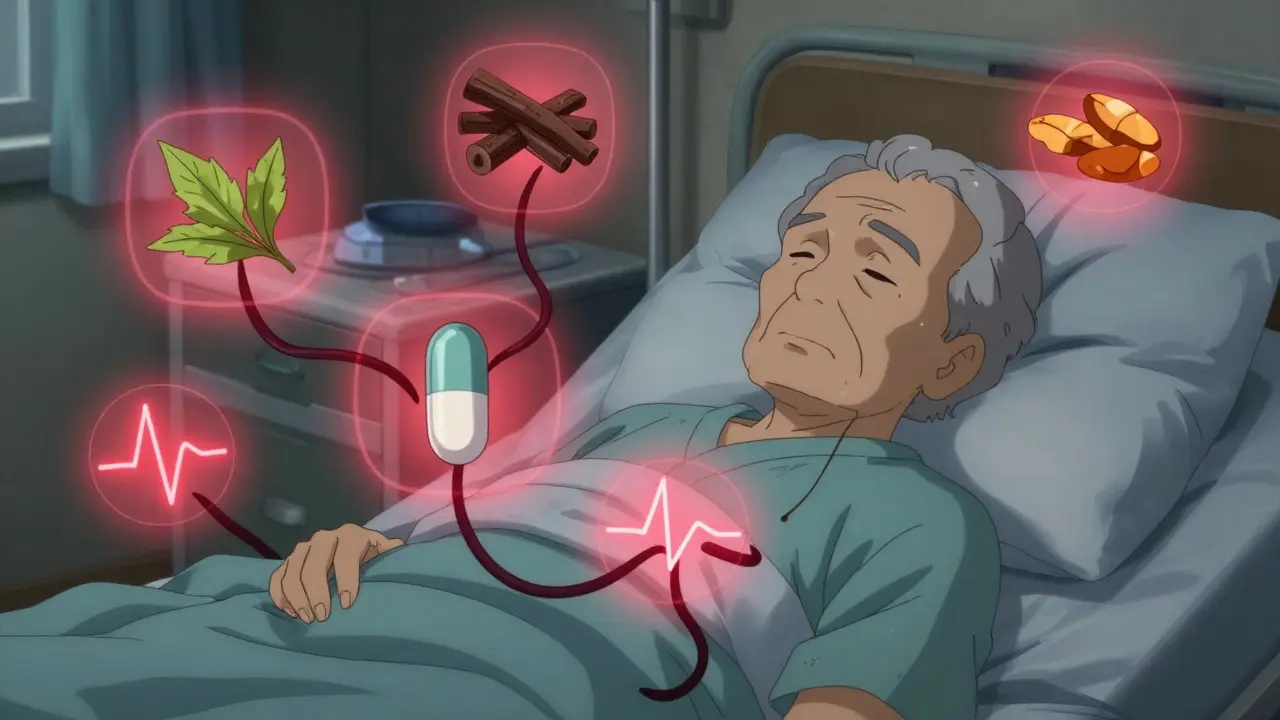
People turn to St. John’s wort for mood support, but it’s a hidden saboteur for heart patients. This herbal supplement speeds up the liver’s ability to clear out several heart medications, including beta blockers, calcium channel blockers, and even some antiarrhythmics. If your blood pressure pill suddenly stops working, it’s not your condition worsening-it’s the herb flushing it out. The FDA has issued warnings about this interaction, and it’s one of the most common reasons patients end up in the ER with uncontrolled hypertension or irregular heartbeat.Black Licorice and Heart Medications
Natural black licorice contains glycyrrhizin, a compound that mimics aldosterone-a hormone that makes your body hold onto salt and water. That raises blood pressure. When combined with beta blockers, calcium channel blockers, or diuretics, it doesn’t just cancel out the meds-it reverses their effect. One study from Rush University found patients who ate just two ounces of black licorice daily for two weeks saw their systolic blood pressure rise by 15 points. For someone already struggling to control hypertension, that’s dangerous.NSAIDs Like Ibuprofen and Blood Pressure Meds
It’s tempting to grab ibuprofen or naproxen for a headache or sore knee. But these NSAIDs interfere with how ACE inhibitors, ARBs, and diuretics lower blood pressure. They also reduce kidney function, which is already compromised in many heart patients. Worse, when paired with blood thinners like warfarin or apixaban, they increase bleeding risk. A 2023 review in Circulation showed that NSAID use in heart failure patients doubled the chance of hospitalization for worsening heart function.Alcohol and Nearly Every Heart Drug
Alcohol doesn’t just affect your liver-it affects how your heart responds to medication. It can amplify the blood pressure-lowering effect of some drugs, causing dizziness or fainting. With beta blockers, it can slow your heart too much. With anticoagulants, it increases bleeding risk. And when combined with certain antidepressants often prescribed to heart patients, it can trigger dangerous heart rhythm changes. The National Institute on Alcohol Abuse and Alcoholism lists over 150 medications that react badly with alcohol-and most heart drugs are on that list.What About Over-the-Counter and Supplements?
You might think OTC meds and supplements are safe because you can buy them without a prescription. That’s a myth.- Antacids (like Tums or Pepcid) can block absorption of medications like digoxin and certain antibiotics used in heart infections.
- First-gen antihistamines like diphenhydramine (Benadryl) can cause QT prolongation-a dangerous heart rhythm issue-especially when mixed with amiodarone or sotalol.
- Decongestants like pseudoephedrine (Sudafed) raise blood pressure and heart rate, undoing the work of your hypertension meds.
- Turmeric and ginger may sound harmless, but they can thin the blood and increase bleeding risk when taken with warfarin or rivaroxaban.
The American Heart Association warns that nearly half of heart failure patients take at least one supplement without telling their doctor. That’s a major blind spot.
Safe Practices to Protect Yourself
One Pharmacy, One List
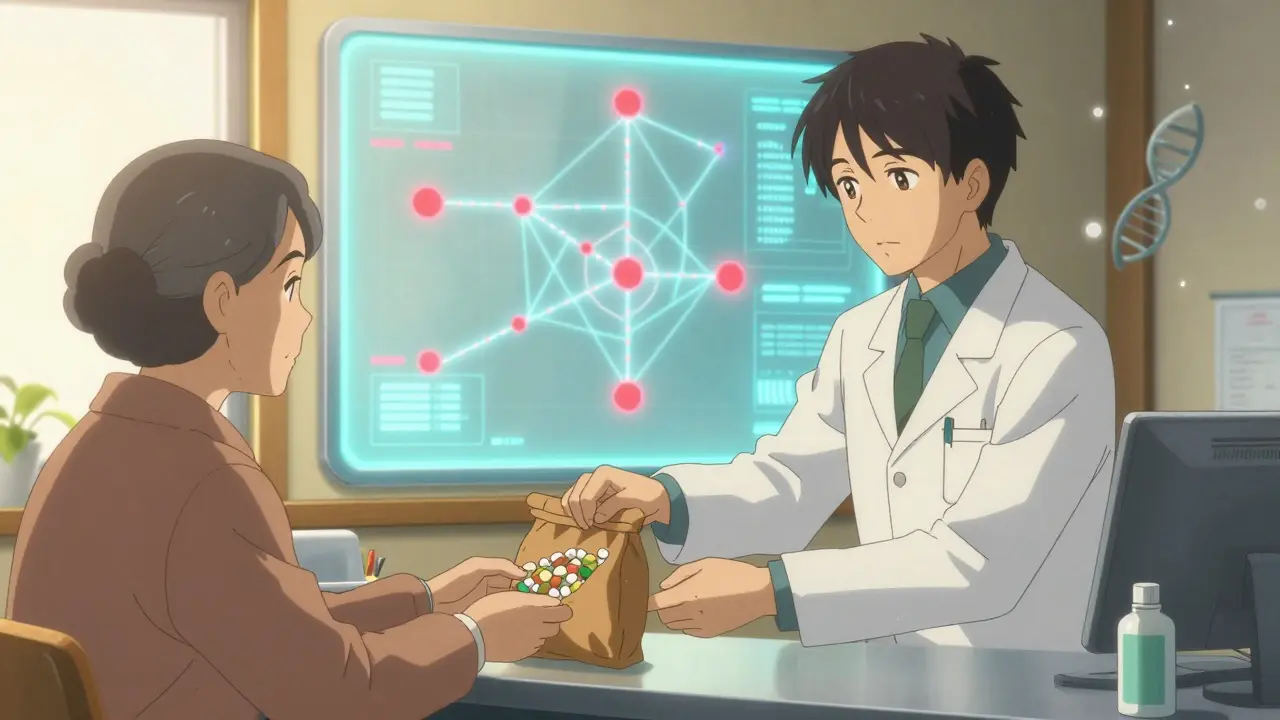
Use the same pharmacy for every prescription-whether it’s your blood pressure pill, your antidepressant, or your daily aspirin. Pharmacists are trained to spot interactions. When all your meds are in one system, they can flag problems before you even leave the counter. Many pharmacies now offer free interaction screenings if you ask.Do a Brown Bag Review
Every six months-or after any hospital visit-take all your medications out of the cabinet. Put them in a brown bag. Bring them to your doctor. Don’t just say, “I take this and that.” Show them. Include vitamins, herbal teas, protein powders, and even cough syrup. Many patients don’t realize their daily turmeric capsule or melatonin tablet could be interacting with their heart meds.Know Your High-Risk Drugs
Some medications are more likely to cause trouble:- Statins (especially simvastatin)
- Beta blockers (metoprolol, carvedilol)
- Calcium channel blockers (amlodipine, diltiazem)
- Anticoagulants (warfarin, apixaban)
- Antiarrhythmics (amiodarone, dofetilide)
If you’re on any of these, be extra cautious with anything new-prescribed or not.
Ask About Alternatives
If your doctor prescribes a new drug, ask: “Is there a version that doesn’t interact with my current meds?” Sometimes, switching from simvastatin to pravastatin avoids the grapefruit issue. Sometimes, switching from ibuprofen to acetaminophen cuts bleeding risk. Don’t assume the first option is the only one.What About Genetic Testing?
Your genes play a bigger role than you think. Some people have variations in the CYP450 enzyme system that make them slow or fast metabolizers. If you’re a slow metabolizer, even a normal dose of a statin or beta blocker can build up to toxic levels. Fast metabolizers might clear the drug too quickly, making it useless.Pharmacogenomic testing-analyzing your DNA to predict how you’ll respond to drugs-is becoming more accessible. While not yet standard for all heart patients, it’s being used in major hospitals to tailor treatments for those on five or more meds. If you’re on a complex regimen and keep having unexplained side effects or treatment failures, ask your cardiologist if genetic testing might help.
When to Call Your Doctor Immediately
Don’t wait for a checkup if you notice:- Sudden muscle pain or weakness, especially with dark urine
- Unexplained swelling in your legs or ankles
- Heart palpitations, dizziness, or fainting
- Unusual bleeding or bruising
- Blood pressure readings that suddenly spike or drop
These aren’t normal side effects. They’re warning signs. Call your doctor or go to urgent care. Don’t wait.
Why This Isn’t Just About Pills
Polypharmacy-the use of multiple drugs-isn’t just a medical issue. It’s a human one. Many patients are afraid to stop taking anything, even if it’s causing problems. They worry their doctor thinks they’re “giving up.” But research from the University of Rochester shows that carefully reducing unnecessary meds can improve energy, reduce falls, and even extend life.Heart patients often take meds for multiple conditions: high blood pressure, diabetes, depression, arthritis. Each condition gets its own prescription. But no one is looking at the whole picture. That’s why you need to be your own advocate. Keep a list. Review it. Speak up.
Medications save lives. But when they clash, they can end them. The difference between safety and danger often comes down to one question you ask before swallowing your pills: “Could this interact with something else I’m taking?”
Can I still drink grapefruit juice if I take a statin?
No. If you’re on simvastatin, atorvastatin, or lovastatin, grapefruit juice can cause dangerous drug buildup in your blood-even with just one glass a day. Switch to orange juice or water instead. Some statins like pravastatin or rosuvastatin are safer with grapefruit, but you should still check with your pharmacist or doctor before making any changes.
Are herbal supplements always safe for heart patients?
No. Supplements like St. John’s wort, black licorice, turmeric, and garlic can interfere with heart medications. St. John’s wort can make your blood pressure drugs useless. Black licorice can raise your blood pressure. Turmeric can increase bleeding risk if you’re on a blood thinner. Just because something is “natural” doesn’t mean it’s safe with your meds.
Why do I need to use the same pharmacy for all my prescriptions?
Pharmacists use software that checks for interactions between all the drugs you take. If you use multiple pharmacies, each one only sees part of your list. That means they can’t catch dangerous combinations. One pharmacy, one record, one safety net.
Can alcohol interact with my heart meds even if I only drink occasionally?
Yes. Even small amounts of alcohol can affect how your body processes heart medications. It can lower blood pressure too much, slow your heart rate, or increase bleeding risk. If you’re on beta blockers, anticoagulants, or antiarrhythmics, it’s safest to avoid alcohol entirely. Talk to your doctor about what’s safe for your specific meds.
What should I do if I forget to tell my doctor about a supplement I’m taking?
Don’t wait for your next appointment. Call your doctor’s office or pharmacist right away. Many interactions don’t show symptoms right away, but they can build up over time. It’s better to report it late than to risk a dangerous reaction. Bring a list of everything you’re taking-including vitamins and herbal teas-on your next visit.
Is it safe to take ibuprofen for pain if I’m on blood pressure medication?
Not usually. Ibuprofen and other NSAIDs can reduce the effectiveness of ACE inhibitors, ARBs, and diuretics, making your blood pressure harder to control. They can also harm your kidneys and increase bleeding risk if you’re on a blood thinner. For pain relief, acetaminophen (Tylenol) is usually a safer choice-but always check with your doctor first.
Next Steps: What to Do Today
- Grab your brown bag and list every pill, capsule, and drop you take daily.
- Call your pharmacy and ask if they’ve flagged any interactions in your current meds.
- Write down one question to ask your doctor at your next visit: “Could any of my medications be interacting with each other?”
- If you take grapefruit juice, herbal supplements, or NSAIDs regularly, plan to stop them until you’ve talked to your doctor.
Heart medications are powerful tools. But they’re not magic. Their safety depends on you being informed, involved, and proactive. You’re not just taking pills-you’re managing a system. And systems work best when all the parts are working together.


