Drug-Citrus Interaction Checker
Check Medication Interactions
Important Information
Most people know grapefruit can mess with medications. But if you’re eating pomelo or Seville orange-even just once-you might be at risk too. These fruits aren’t just exotic snacks. They’re powerful enough to change how your body handles drugs, sometimes dangerously. And no, you won’t always know you’re in danger. Labels don’t warn you. Your pharmacist might not ask. And if you think "it’s just a fruit," you’re not alone. But the science says otherwise.
What Makes These Fruits So Dangerous?
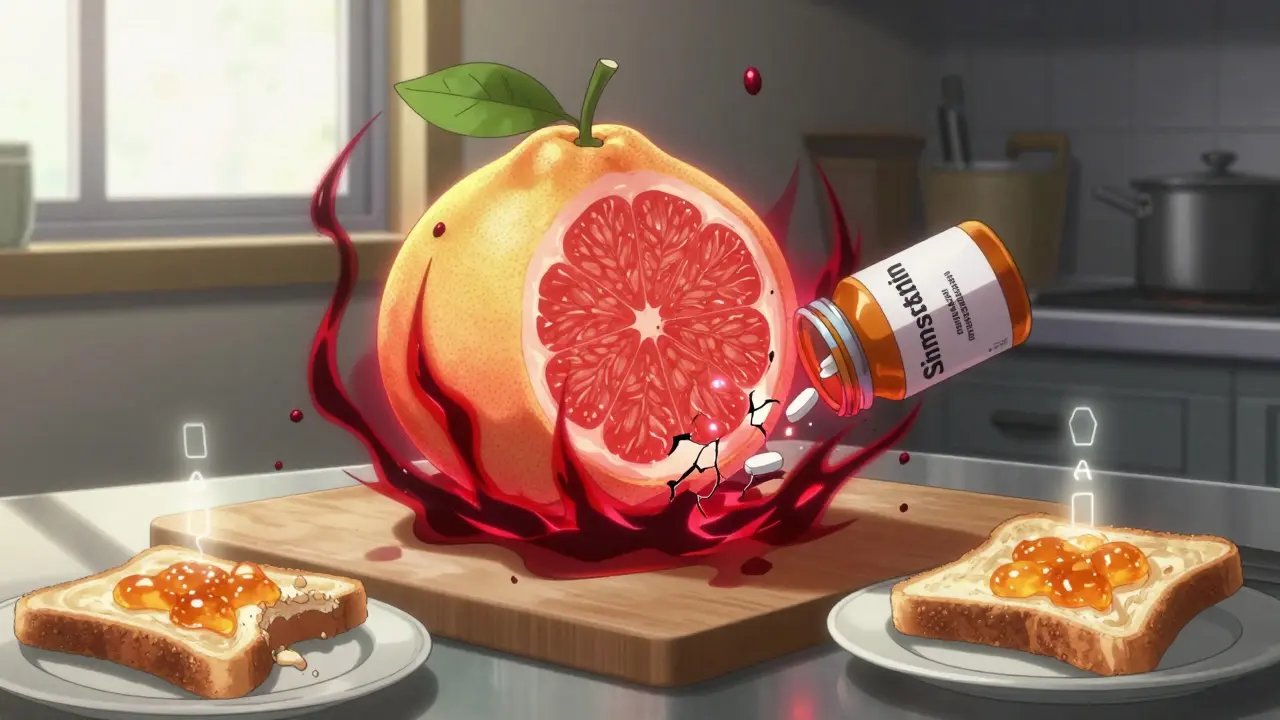
Pomelo and Seville orange aren’t just big or bitter versions of grapefruit. They’re chemically similar-and in some cases, even more potent. Both contain high levels of furanocoumarins, especially bergamottin and 6’,7’-dihydroxybergamottin. These compounds shut down an enzyme in your gut called CYP3A4. That enzyme normally breaks down drugs before they enter your bloodstream. When it’s blocked, the drug floods into your system. Doses meant to be safe suddenly become too strong.
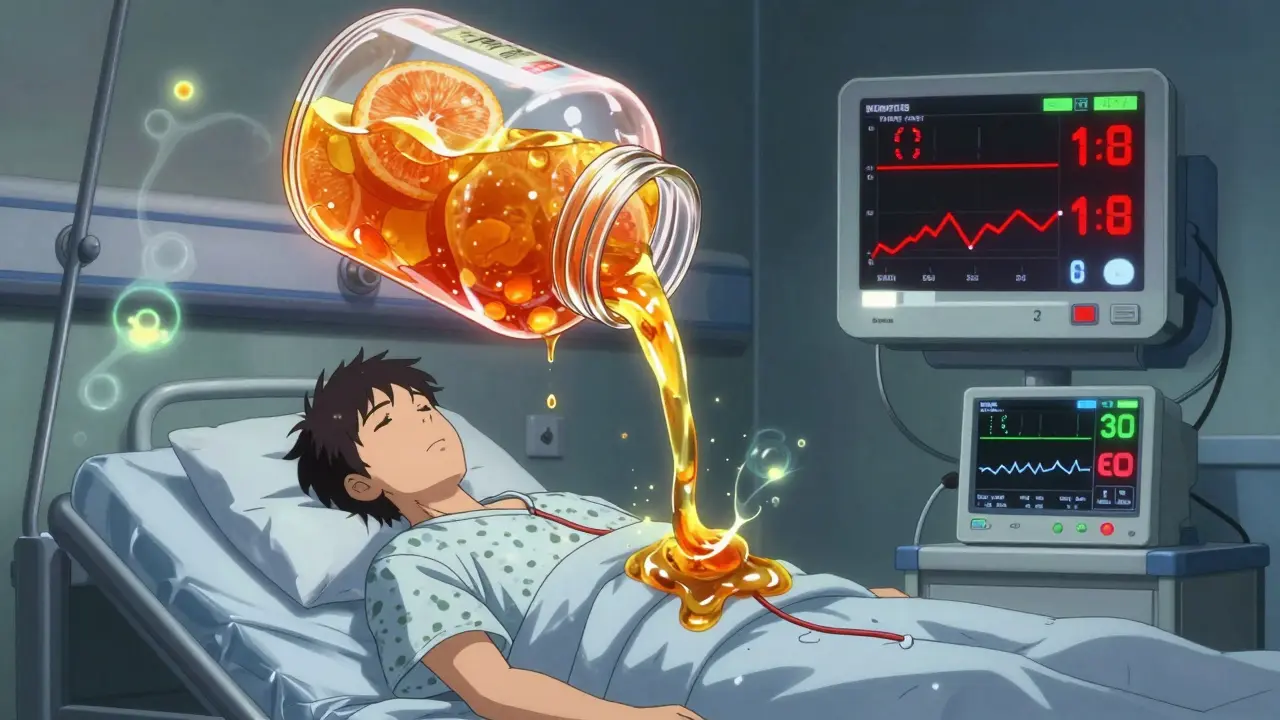
Studies show pomelo has 1.5-2.5 μM of bergamottin-higher than grapefruit’s 1.0-2.0 μM. Seville orange? It can hit 3.0-4.0 μM in some varieties. That’s not a small difference. It’s enough to push drug levels up by 30% to over 400%. One case report found a transplant patient’s tacrolimus (a life-saving immune drug) spiked to toxic levels after eating Seville orange marmalade. The patient ended up in the hospital.
Which Medications Are at Risk?
This isn’t about every drug. But if you take any of these, you need to pay attention:
- Statins like simvastatin and atorvastatin-used for cholesterol. Pomelo can raise simvastatin levels by 350%, increasing risk of muscle damage (rhabdomyolysis).
- Calcium channel blockers like amlodipine and felodipine-used for high blood pressure. Too much can drop your blood pressure dangerously low.
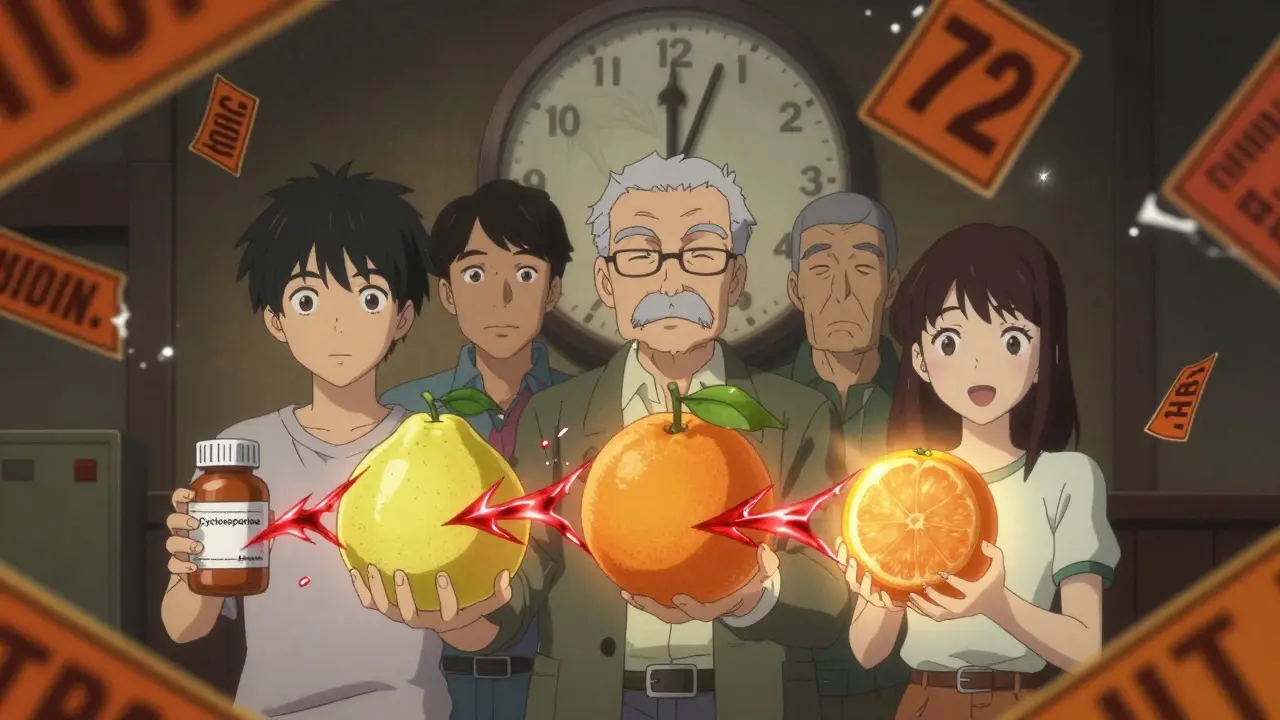
- Immunosuppressants like cyclosporine and tacrolimus-critical for organ transplant patients. A tiny change in level can mean rejection or toxicity.
- Benzodiazepines like midazolam and triazolam-used for anxiety or sleep. Can cause extreme drowsiness or breathing problems.
- Some anti-arrhythmics like amiodarone and dronedarone-used for irregular heartbeat. Can lead to dangerous heart rhythms.
These drugs are all metabolized by CYP3A4. If your medication isn’t on this list, you’re likely safe. But if you’re unsure? Don’t guess. Ask your doctor or pharmacist. And remember: it’s not just juice. It’s the fruit itself, the peel, the marmalade, even the zest in baked goods.
Why Pomelo and Seville Orange Are Worse Than You Think
Grapefruit gets all the attention. But pomelo? It’s bigger, juicier, and often sold as "Chinese grapefruit"-which tricks people into thinking it’s safe. In reality, it’s often more potent. A 2018 study in the British Journal of Clinical Pharmacology found pomelo increased simvastatin exposure more than grapefruit did.
Seville orange is sneakier. Most people think of it as marmalade-something sweet, traditional, harmless. But the peel and pulp in marmalade are packed with furanocoumarins. One study found marmalade made from Seville oranges caused a 400% spike in tacrolimus levels. That’s not a typo. That’s life-threatening.
And here’s the kicker: the effect lasts up to 72 hours. Even if you eat it on Monday, the enzyme is still blocked on Wednesday. So skipping grapefruit juice on your morning cereal isn’t enough. You have to stop all these fruits completely if you’re on a risky drug.
What About Other Citrus? Are Oranges Safe?
Yes. Sweet oranges (like Valencia or Navel), tangerines, and clementines are generally safe. They have almost no furanocoumarins. The problem is only with fruits that have a bitter, pithy peel and pink or red flesh: grapefruit, pomelo, and Seville orange.
But confusion is common. Many grocery stores label pomelo as "large grapefruit." People buy it thinking they’re being healthy. They’re not. A 2022 FDA review found only 37% of pomelo products carry interaction warnings-compared to 78% for grapefruit. That’s not an accident. It’s a gap in regulation.
Real People, Real Consequences
Reddit threads and patient forums are full of stories. One user, u/PharmTech2021, shared how a patient developed rhabdomyolysis after eating pomelo daily for two weeks. No one warned them. Another patient on PatientsLikeMe had a transplant rejection after eating Seville orange marmalade for years, thinking it was just "a flavor."
And it’s not just older adults. Young people on statins, transplant patients on immunosuppressants, even teens on anxiety meds-all are at risk. The problem? Only 42% of community pharmacists routinely ask about pomelo or Seville orange. Most still just ask about grapefruit.
What Should You Do?
If you take any medication on the risk list:
- Stop all pomelo, Seville orange, and grapefruit. Not just juice. The whole fruit. The zest. The marmalade.
- Check your labels. If you see "bitter orange" or "citrus aurantium," it’s Seville orange. If you see "pomelo," "shaddock," or "Chinese grapefruit," it’s the same risk.
- Ask your pharmacist. Don’t assume they know. Say: "Does this interact with pomelo or Seville orange?"
- Wait 72 hours. If you accidentally ate one, don’t take your dose for at least three days. And call your doctor if you feel dizzy, weak, or have dark urine (signs of muscle damage).
- Switch to sweet oranges. They’re safe. You won’t miss the bitterness.
There’s no middle ground. One bite can be enough. Especially if you’re on a narrow-therapeutic-index drug-where the difference between a safe dose and a toxic one is tiny.
Why Isn’t This Common Knowledge?
Because grapefruit stole the spotlight. The science on pomelo and Seville orange is real-but fewer studies exist. Only 15 clinical studies as of 2023. The FDA didn’t update its warnings until recently. Pharmacies still don’t flag these in their systems. Only 29% of major pharmacy chains include them in their electronic drug interaction alerts.
And then there’s culture. Pomelo is a New Year’s tradition in many Asian households. Seville orange marmalade is a British staple. People don’t see them as threats. They see them as food. That’s exactly why the danger is so high.
The Future: What’s Changing?
The FDA is pushing to expand warning labels to include all furanocoumarin-containing citrus by 2025. The University of Washington just got $2.1 million from the NIH to study pomelo-drug interactions specifically. And the European Medicines Agency already says these fruits should be treated as equal to grapefruit.
But until then? You can’t wait for regulation. You have to protect yourself.
Final Thought
You don’t need to give up citrus. Just know which ones to avoid. If you’re on a medication that interacts with grapefruit, assume pomelo and Seville orange are just as dangerous-maybe more so. A fruit isn’t just a fruit. Sometimes, it’s a hidden drug amplifier. And in the wrong hands, it can be deadly.
Can I eat pomelo if I’m not on medication?
Yes. If you’re not taking any prescription drugs, especially statins, blood pressure meds, or immunosuppressants, eating pomelo is perfectly safe. The risk only exists when these fruits interact with medications that are processed by the CYP3A4 enzyme. For healthy individuals without medication use, there’s no known harm.
Is Seville orange marmalade worse than the juice?
Yes, often. Marmalade is made from the peel and pulp of Seville oranges, which contain the highest concentrations of furanocoumarins. A single tablespoon can deliver more of these compounds than a glass of juice. Many people don’t realize they’re consuming a potent drug-interacting substance when they spread marmalade on toast.
How long does the interaction last after eating one of these fruits?
Up to 72 hours. Furanocoumarins permanently disable the CYP3A4 enzyme in your gut. Your body needs to make new enzymes to replace them, which takes about three days. That means even if you eat pomelo on Monday, you should avoid your medication until Thursday. Don’t assume one serving is safe if you take your pill later the same day.
Are all grapefruit varieties equally risky?
Yes. Whether it’s white, pink, or red grapefruit, the furanocoumarin content is similar. The color doesn’t matter. The risk comes from the chemical compounds, not the flesh color. So if your doctor warns you about grapefruit, it applies to all types.
Can I just reduce the amount instead of cutting it out completely?
No. Even small amounts-like 200 mL of juice or one segment of pomelo-can trigger a significant interaction. There’s no safe threshold. Unlike alcohol or caffeine, where moderation works, these compounds act like a switch: either the enzyme is blocked, or it isn’t. There’s no middle ground.
What if I’m on a medication that doesn’t interact with grapefruit?
That doesn’t mean it’s safe with pomelo or Seville orange. Some drugs interact with these fruits but not grapefruit, because of differences in how they’re metabolized. The safest approach is to assume all three fruits have the same interaction profile unless confirmed otherwise by your pharmacist or a reliable drug interaction checker.


