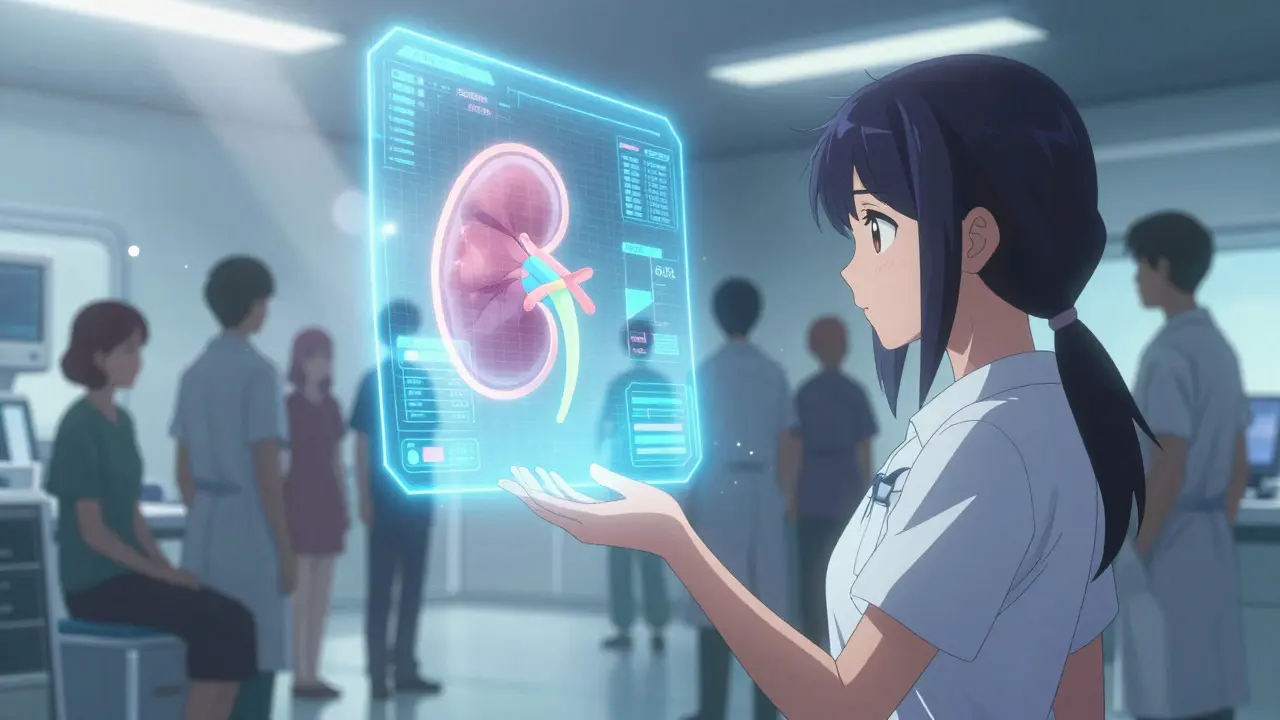
Your kidneys are working hard right now. They filter waste, balance fluids, and produce hormones that keep your blood pressure steady. But if they get damaged, the problem often stays silent for years. By the time you feel sick, significant damage may have already occurred. This is why understanding chronic kidney disease (CKD) is not just about knowing a medical term-it’s about protecting your future health.
Chronic kidney disease is defined as kidney damage lasting three months or more. It isn't a single sudden event; it's a slow decline. The good news? If caught early, you can slow or even stop the progression. The key lies in understanding the staging system, recognizing the subtle signs, and knowing when to ask for specific tests.
The Silent Progression: Why Early Detection Matters
Most people don’t know they have CKD until it’s advanced. According to data from the Centers for Disease Control and Prevention, about 37 million adults in the U.S. have CKD, yet an estimated 90% remain undiagnosed. Why? Because the kidneys are resilient. They can lose a lot of function before symptoms like fatigue, swelling, or nausea appear.
Consider this scenario: You go in for a routine physical for something unrelated, like knee pain. Your doctor runs standard blood work. That’s how many people find out their kidney function has dropped. Without that incidental check, they might not have known for years. This is why relying on symptoms alone is dangerous. You need numbers to tell the real story.
Early detection changes everything. Patients diagnosed at Stage G3 or earlier report significantly higher confidence in managing their condition compared to those found at Stage G4 or later. That "warning period" gives you time to adjust your diet, manage blood pressure, and protect the remaining kidney function.
Understanding the Stages: The KDIGO Framework
Doctors use a standardized system to classify CKD severity. Established by the Kidney Disease: Improving Global Outcomes (KDIGO) organization, this framework looks at two main factors: how well your kidneys filter blood (eGFR) and whether protein is leaking into your urine (albuminuria).
The filtration rate is measured as estimated glomerular filtration rate (eGFR). Think of eGFR as your kidney’s speedometer. A normal score is 90 or higher. As the number drops, the filtering slows down. Here is what each stage means:
- Stage G1 (eGFR ≥90): Normal filtration, but there is evidence of kidney damage, such as protein in the urine or structural issues seen on imaging.
- Stage G2 (eGFR 60-89): Mildly reduced function with persistent damage. This is often where early detection happens incidentally.
- Stage G3a (eGFR 45-59): Mild to moderate loss of function. This is a critical window for intervention.
- Stage G3b (eGFR 30-44): Moderate to severe loss. Patients here face a higher risk of progressing to kidney failure within five years.
- Stage G4 (eGFR 15-29): Severely reduced function. Preparation for dialysis or transplant usually begins here.
- Stage G5 (eGFR <15): Kidney failure. Dialysis or transplantation is required for survival.
Notice the split in Stage 3. Many patients wonder why G3 is divided. It matters because the jump from G3a to G3b signals a sharper increase in risk. Moving from G3b to G4 is a faster slide than moving from G2 to G3a. Knowing exactly which sub-stage you are in helps doctors tailor treatment intensity.
The Second Metric: Albuminuria Explained
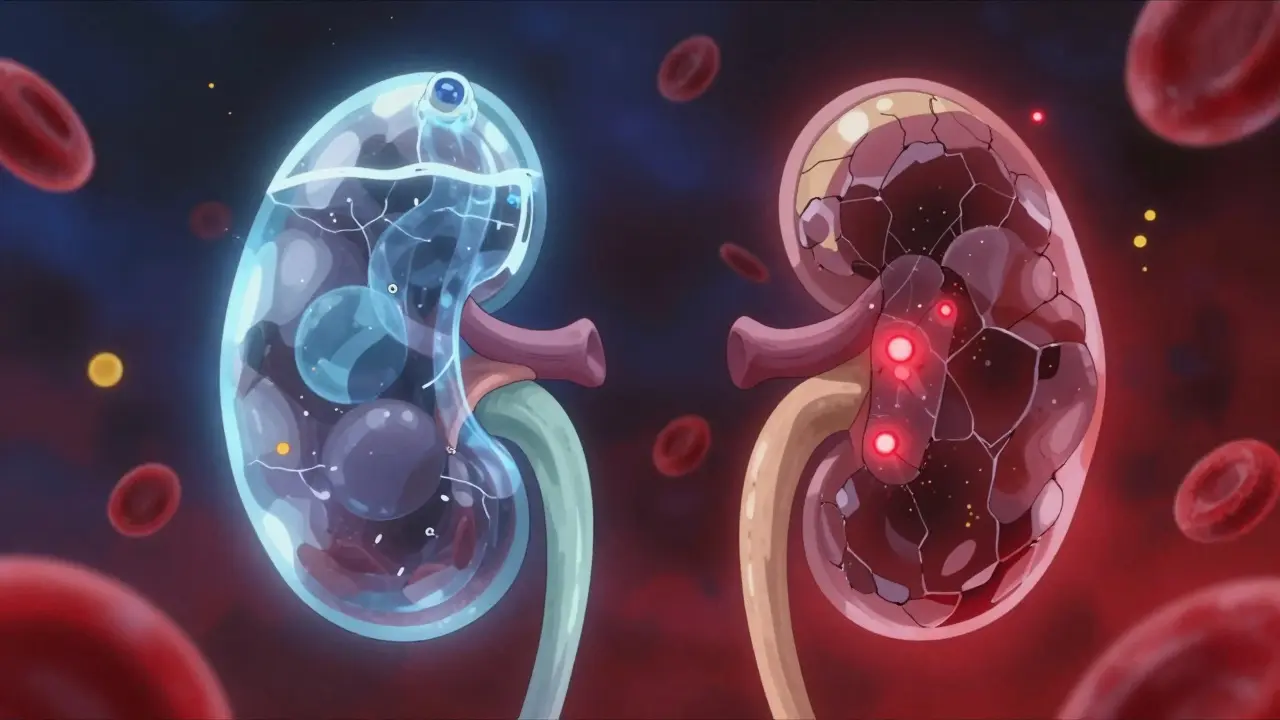
eGFR tells half the story. The other half is albuminuria-the presence of albumin, a type of protein, in your urine. Healthy kidneys keep protein in the blood. Damaged filters let it leak out.
KDIGO categorizes albuminuria into three groups:
- A1 (<3 mg/mmol): Normal to mildly increased.
- A2 (3-30 mg/mmol): Moderately increased.
- A3 (>30 mg/mmol): Severely increased.
Why does this matter? Research shows that high albuminuria (A3) carries a mortality risk independent of your eGFR stage. Even if your filtration rate looks okay, heavy protein leakage indicates active damage. Combining these two metrics creates a grid that predicts your risk much more accurately than eGFR alone. For example, a patient with Stage G3a but A3 albuminuria needs more aggressive care than a patient with G3a and A1.
| eGFR Stage | Filtration Status | Key Action |
|---|---|---|
| G1-G2 | Normal to Mildly Reduced | Monitor annually; control blood pressure and sugar. |
| G3a | Mild to Moderate Loss | Referral if protein is high; start protective meds (ACE inhibitors). |
| G3b-G4 | Moderate to Severe Loss | Nephrology care; prepare for renal replacement therapy. |
| G5 | Kidney Failure | Dialysis or transplant evaluation. |
Who Is at Highest Risk?
CKD doesn’t affect everyone equally. Certain conditions and demographics carry heavier burdens. Diabetes is the leading cause, accounting for over 37% of cases. Hypertension (high blood pressure) follows closely at nearly 26%. If you have either of these, your kidneys are under constant stress.
Racial disparities also play a significant role. African Americans have a 3.5 times higher incidence of CKD compared to White Americans. Native Americans face some of the highest rates of diabetes-related kidney disease globally. These statistics highlight the need for targeted screening in high-risk communities.
Age is another factor. While eGFR naturally declines slightly as we age, a rapid drop is not normal aging. However, experts caution against over-diagnosing elderly patients. A modest eGFR below 60 in a stable 80-year-old might reflect normal physiological change rather than progressive disease. Context matters.

How to Get Tested: The Diagnostic Protocol
You don’t need to wait for symptoms. Two simple tests can reveal early CKD:
- Serum Creatinine Blood Test: This measures creatinine, a waste product from muscle wear and tear. Doctors use this value to calculate your eGFR using the CKD-EPI 2021 equation, which recently removed race coefficients for greater accuracy.
- Urine Albumin-to-Creatinine Ratio (ACR): A first-morning urine sample checks for protein leakage. This test is sensitive and can detect damage long before filtration drops significantly.
Important note: One abnormal result doesn’t confirm CKD. To diagnose chronic kidney disease, you need two abnormal results at least 90 days apart. This rule prevents misdiagnosis due to temporary factors like dehydration or intense exercise.
If you are diabetic, hypertensive, or over 60, ask for these tests during your annual physical. Primary care providers can manage early stages (G1-G2) effectively. Referral to a nephrologist (kidney specialist) becomes crucial once you hit Stage G3a with high protein levels or rapid decline.
Living with CKD: Management and Hope
A diagnosis of CKD is serious, but it is not a death sentence. Many people live full lives with managed kidney disease. The goal is to preserve function for as long as possible.
Treatment focuses on controlling the underlying causes. This means tight blood sugar control for diabetics and strict blood pressure management for everyone. Medications like ACE inhibitors or ARBs are often prescribed not just for blood pressure, but because they specifically reduce protein leakage and protect kidney filters.
Lifestyle changes also play a huge role. Reducing sodium intake, staying hydrated (unless restricted), avoiding NSAIDs (like ibuprofen) which can harm kidneys, and eating a balanced diet low in processed proteins can slow progression. Some patients benefit from working with a renal dietitian to customize their nutrition plan.
Technology is also advancing. New AI-based tools can now predict progression with high accuracy, helping doctors intervene sooner. Mobile screening units in high-risk communities are identifying thousands of previously undiagnosed cases, proving that proactive outreach saves kidneys.
What are the first signs of chronic kidney disease?
In early stages (G1-G2), there are often no symptoms. Later signs may include fatigue, swelling in ankles or feet, frequent urination (especially at night), foamy urine (indicating protein), and difficulty concentrating. However, waiting for symptoms is risky; blood and urine tests are the only reliable way to detect early CKD.
Can chronic kidney disease be reversed?
Generally, CKD is irreversible because scar tissue replaces healthy kidney cells. However, early-stage damage can sometimes be stabilized or slowed significantly with proper treatment. In rare cases of acute-on-chronic injury, some function may return, but the focus is usually on preserving remaining function rather than reversing damage.
What eGFR level requires dialysis?
Dialysis is typically considered when eGFR drops below 15 (Stage G5) and symptoms of kidney failure become unmanageable. However, the decision is based on overall health, symptom burden, and complications like fluid overload or high potassium, not just the number alone.
Is protein in urine always a sign of kidney disease?
Persistent protein in urine (albuminuria) is a strong marker of kidney damage. Temporary proteinuria can occur after fever, intense exercise, or dehydration. If protein remains elevated in two tests spaced 90 days apart, it strongly suggests chronic kidney disease.
How often should I test my kidney function if I am at risk?
If you have diabetes, hypertension, or a family history of kidney disease, you should have your eGFR and urine ACR checked at least once a year. If abnormalities are found, testing frequency increases to every 3-6 months depending on the stage and stability of your condition.