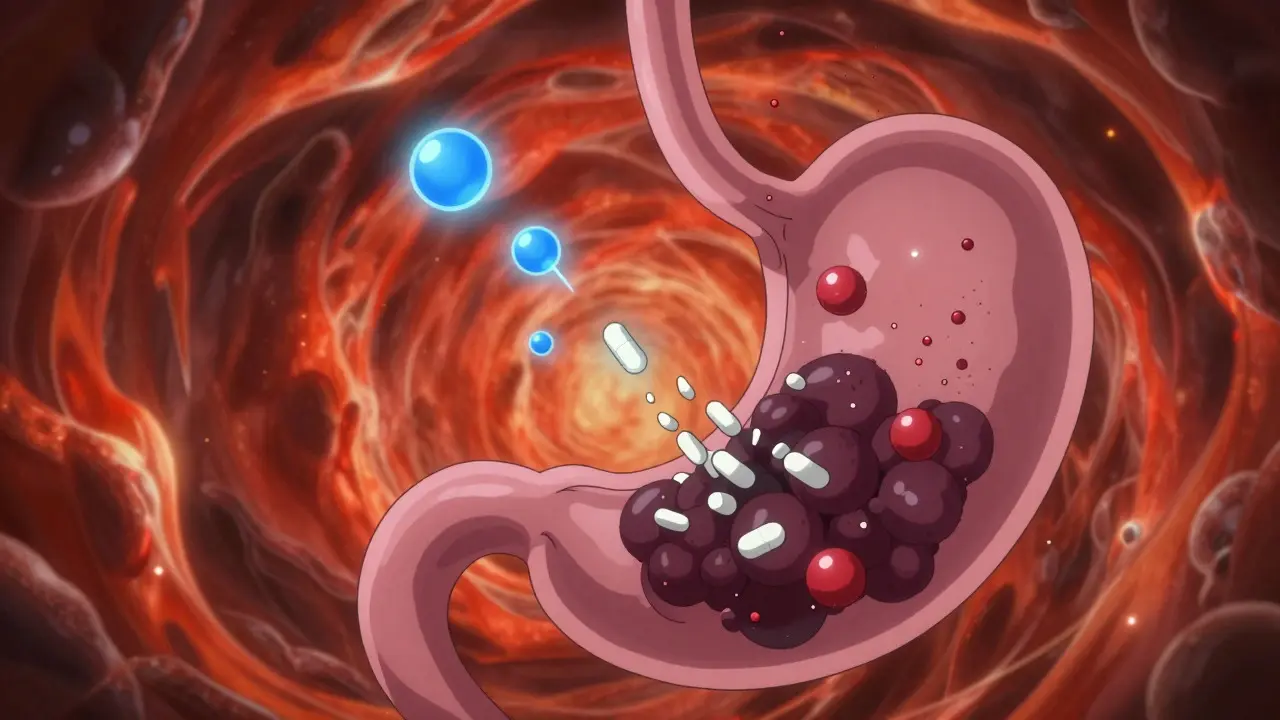
You take your morning pill. You swallow it with a glass of water, maybe alongside that daily calcium or iron supplement you’ve been told is good for your bones or blood count. It feels responsible. It feels safe. But what if that harmless habit is quietly sabotaging your treatment?
It’s not just a hunch. Science shows that minerals like calcium and iron can bind to certain prescription drugs in your stomach, forming clumps that your body simply cannot absorb. This process, known as chelation, means the medicine passes right through you without ever reaching your bloodstream. For some conditions, this isn’t just inconvenient-it’s dangerous.
The Mechanics of Mineral-Medication Clashes
To understand why this happens, we have to look at chemistry. Minerals are charged particles. Many medications are too. When they meet in the acidic environment of your stomach, they can attract each other like magnets. They form insoluble complexes-essentially, heavy rocks that your digestive system can’t break down.
Chelation is a chemical process where a molecule binds to a metal ion, rendering it inactive or unabsorbable. In the context of pharmacology, this is the primary culprit behind reduced drug efficacy. According to data from U.S. Pharmacist, this interaction is widespread because mineral supplementation is incredibly common. Research indicates that 67% of women and 25% of men regularly consume calcium supplements. That’s a massive portion of the population potentially interfering with their own prescriptions without realizing it.
When you take a drug that relies on precise absorption levels, even a small reduction in bioavailability can lead to treatment failure. For example, a study highlighted in the South Medical Journal showed that calcium can significantly decrease the bioavailability of levothyroxine, a critical thyroid hormone replacement. If your thyroid levels drop because your body didn’t absorb the full dose, you’re left feeling fatigued, cold, and sluggish, wondering why your medication “stopped working.”
Calcium: The Silent Blocker
Calcium is often viewed as the ultimate health booster, especially for bone density. However, its interaction profile is aggressive. It primarily targets two major classes of antibiotics: tetracyclines and fluoroquinolones.
- Tetracyclines: These include drugs like doxycycline and minocycline. Calcium binds tightly to them, preventing absorption entirely during short treatment courses.
- Fluoroquinolones: Drugs like ciprofloxacin are heavily impacted. A critical finding shows that calcium carbonate can reduce the bioavailability of ciprofloxacin by up to 40%. That means nearly half of your antibiotic dose is wasted. For a serious infection, this margin of error can lead to complications or antibiotic resistance.
Beyond antibiotics, calcium interferes with thyroid medication. The South Medical Journal documents that patients taking levothyroxine must separate their doses from calcium by at least four hours. Dr. Robert L. Talbert, a professor of pharmacy and medicine at the University of Texas, emphasized this four-hour window based on clinical studies showing substantially reduced thyroid hormone absorption when timing was ignored.
So, how do you manage this? The general rule from U.S. Pharmacist is a minimum separation of two hours between calcium and most interacting drugs. However, for high-stakes medications like levothyroxine or bisphosphonates (used for osteoporosis), pushing that gap to four or six hours is safer. It’s about giving your stomach enough time to clear one substance before introducing the next.
Iron: The Acid-Dependent Problem
Iron behaves differently than calcium. While it also causes chelation issues with antibiotics, its biggest enemy is actually your stomach acid-or lack thereof. Iron, specifically in forms like ferrous fumarate, requires an acidic environment to be absorbed effectively.
This creates a tricky triangle of interactions:
- Antibiotics: Like calcium, iron binds to tetracyclines (including tetracycline, doxycycline, and minocycline) and quinolones. GoodRx medical reviewers note that this binding prevents antibiotic absorption, potentially rendering the treatment less effective. The recommended spacing is strict: take the antibiotic at least 2 hours before or 4 hours after the iron supplement.
- Heartburn Medications: Proton pump inhibitors (PPIs) like omeprazole and pantoprazole, as well as H2 blockers like famotidine, work by reducing gastric acidity. Since iron needs acid to dissolve and enter the bloodstream, these heartburn meds directly inhibit iron absorption. The NHS (2023) confirms that patients on long-term PPI therapy often struggle with maintaining adequate iron levels.
- Dietary Conflicts: Milk contains calcium, which binds to iron. HealthyChildren.org points out that taking iron supplements with milk is counterproductive. Instead, pairing iron with mild acids like orange juice enhances absorption.
If you are taking both iron and heartburn medication, the strategy shifts. GoodRx suggests taking the iron up to 2 hours before the heartburn medication to maximize acid availability. Alternatively, your doctor might need to adjust your oral iron dose or switch you to intravenous iron if absorption remains poor.

Comparison of Interaction Profiles
| Feature | Calcium Supplements | Iron Supplements |
|---|---|---|
| Primary Mechanism | Chelation (binding) | Chelation & pH dependence |
| Key Drug Targets | Tetracyclines, Fluoroquinolones, Levothyroxine | Tetracyclines, Quinolones, PPIs/H2 Blockers |
| Recommended Spacing | 2-6 hours (depending on drug) | 2-4 hours before/after antibiotics |
| Absorption Aid | Vitamin D | Vitamin C / Mild Acids (Orange Juice) |
| Absorption Inhibitor | High-fiber foods, Antacids | Milk, Coffee, Tea, Antacids |
Practical Timing Strategies for Patients
Knowing the theory is one thing; living with it is another. Managing multiple pills and supplements requires a schedule. Here is how to structure your day to minimize conflicts.
The Morning Window: If you take levothyroxine, take it first thing in the morning on an empty stomach. Wait at least 30-60 minutes before eating or drinking anything other than water. Then, wait another 3-4 hours before taking your calcium supplement. This ensures your thyroid hormone absorbs fully without competition.
The Antibiotic Protocol: If you are prescribed a tetracycline or fluoroquinolone antibiotic, treat it as the priority. Take it with water only. Avoid dairy products, calcium-fortified juices, and iron supplements for at least 2 hours before and 4 hours after the dose. Set alarms if you have to. Missing this window can mean the difference between curing an infection and watching it persist.
The Iron-High-Acid Strategy: Take your iron supplement with a source of vitamin C, such as a small glass of orange juice. Avoid coffee, tea, or milk around this time, as tannins and calcium block iron. If you need an antacid for heartburn, take the antacid at least 2 hours after the iron, or consider asking your pharmacist if a different formulation of iron (like ferrous bisglycinate) might be less sensitive to pH changes.
Pediatric Considerations
Parents face unique challenges here. Children often require iron supplements for anemia while simultaneously needing antibiotics for infections. HealthyChildren.org notes that parents frequently struggle with the timing of these regimens. A child might refuse to take a bitter antibiotic with water alone, leading parents to mix it with milk-a mistake that neutralizes the drug.
The solution is simplicity and consistency. Use a dosing chart. Keep iron and calcium-containing foods (like yogurt or cheese) away from antibiotic times. If your child is on long-term iron, monitor their growth and blood counts closely, especially if they are also on any acid-reducing medications for reflux.
Why Pharmacists Are Your Best Resource
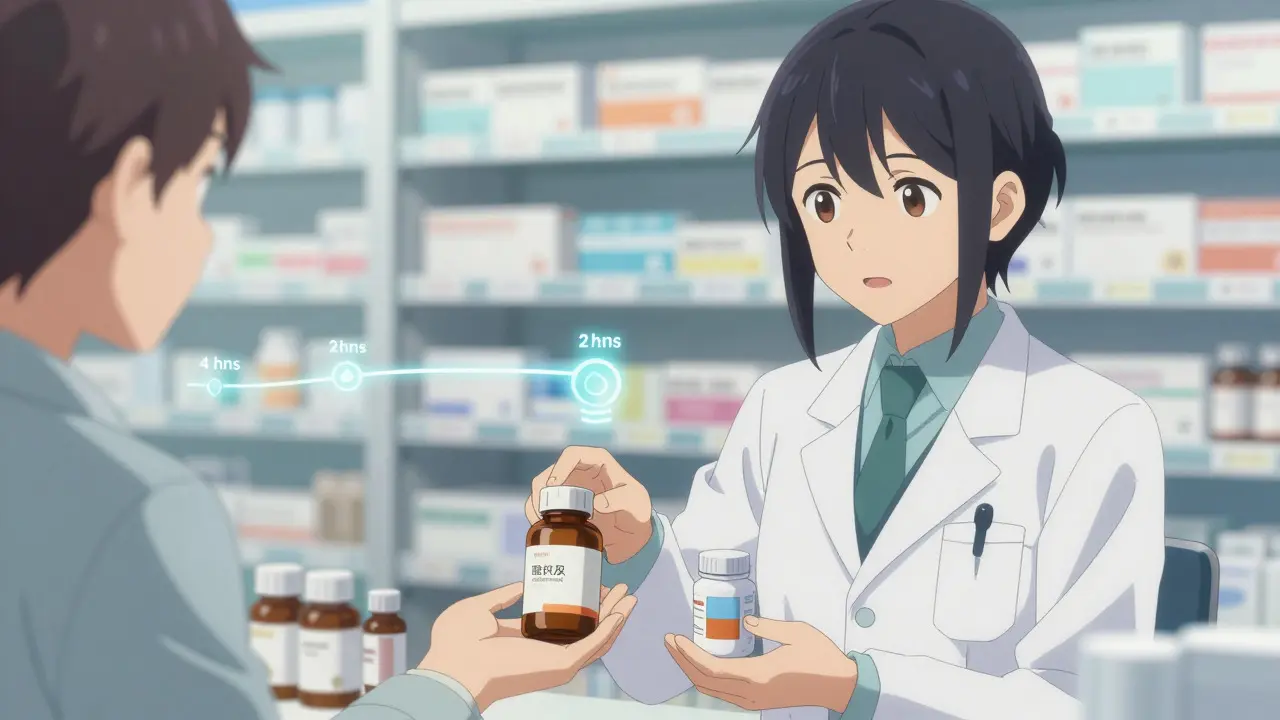
The U.S. Pharmacist journal states unequivocally that pharmacists should question patients about calcium intake. Why? Because patients rarely volunteer this information. They see vitamins as “food,” not “medicine.” But in the eyes of pharmacokinetics, they are potent drugs.
Before starting any new supplement, ask your pharmacist: “Does this interact with my current prescriptions?” Most pharmacies now have interaction checker tools that flag these specific mineral-drug conflicts. Don’t guess. The cost of a wrong guess is ineffective treatment, unnecessary doctor visits, and prolonged illness.
How long should I wait after taking calcium before taking antibiotics?
You should generally wait at least 2 hours after taking calcium before consuming tetracycline or fluoroquinolone antibiotics. However, for maximum safety and absorption, many experts recommend a gap of 4 to 6 hours. Always check the specific label instructions for your antibiotic, as some may require longer intervals.
Can I take iron and omeprazole together?
It is not ideal. Omeprazole is a proton pump inhibitor (PPI) that reduces stomach acid. Iron requires an acidic environment to be absorbed effectively. Taking them together can significantly reduce iron absorption. Ideally, take your iron supplement at least 2 hours before your omeprazole dose to maximize acid availability for the iron.
Does milk affect iron absorption?
Yes. Milk contains calcium, which binds to iron in the digestive tract, forming an insoluble complex that the body cannot absorb. To improve iron absorption, avoid drinking milk or eating high-calcium dairy products within 1-2 hours of taking your iron supplement. Instead, pair iron with vitamin C-rich foods like orange juice.
Which antibiotics interact most strongly with calcium?
The two main classes of antibiotics that interact strongly with calcium are tetracyclines (such as doxycycline and minocycline) and fluoroquinolones (such as ciprofloxacin and levofloxacin). Calcium can reduce the bioavailability of ciprofloxacin by up to 40%, potentially leading to treatment failure.
How does calcium affect thyroid medication?
Calcium decreases the bioavailability of levothyroxine, a common thyroid hormone replacement. Clinical studies suggest separating calcium supplements from levothyroxine by at least 4 hours. Taking them too close together can result in inadequate thyroid hormone levels, causing symptoms of hypothyroidism to return.