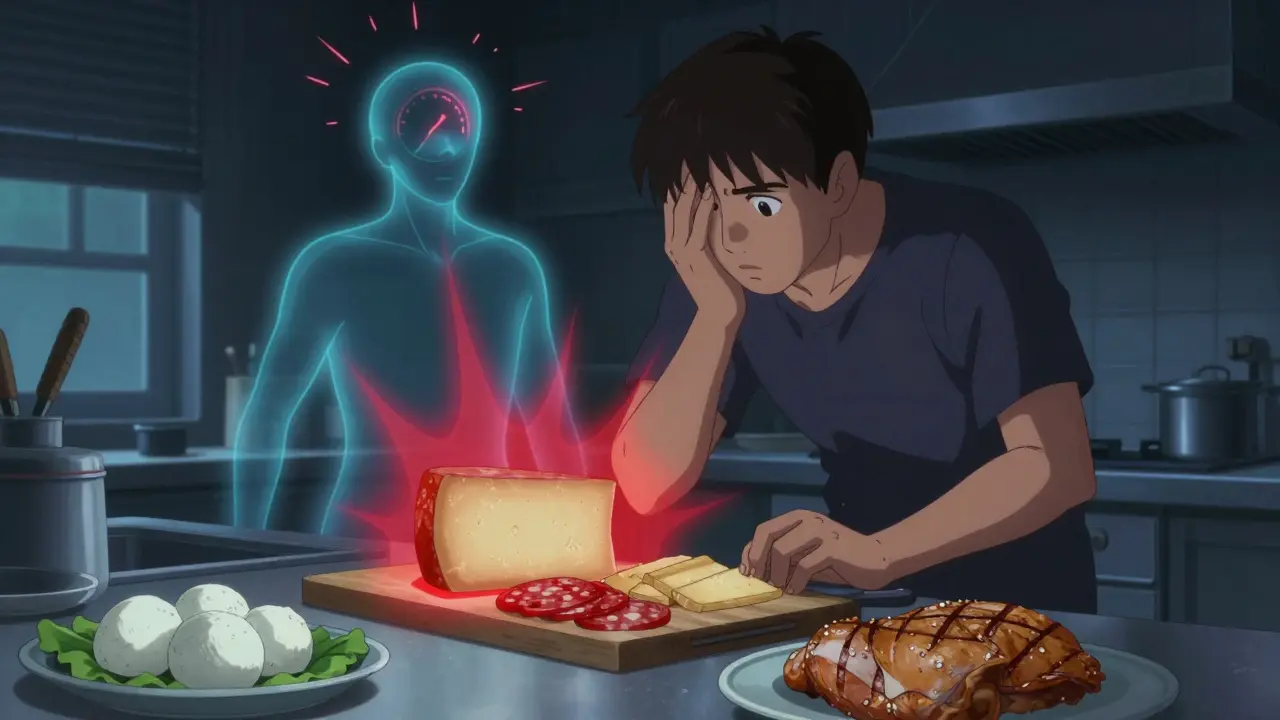
MAOI Dietary Safety Calculator
Calculate Your Food's Tyramine Risk
Enter the food item and amount you're considering to see if it's safe to eat while on MAOI medications.
When you take certain antidepressants or Parkinson’s medications, your diet isn’t just about nutrition-it can be a matter of life or death. Specifically, if you’re on a MAOI (monoamine oxidase inhibitor) drug like phenelzine (Nardil) or tranylcypromine (Parnate), eating aged cheeses or processed meats could trigger a sudden, dangerous spike in blood pressure. This isn’t a vague warning from an old textbook. It’s a real, documented risk that still sends people to the ER today.
Why Tyramine Is the Hidden Culprit
Tyramine is a natural compound found in foods that have been aged, fermented, or cured. It’s not toxic on its own. But when your body can’t break it down properly-because you’re on an MAOI-it becomes dangerous. MAOIs block the enzyme monoamine oxidase, which normally clears tyramine from your system. Without it, tyramine builds up and forces your nerves to release too much norepinephrine. That’s what causes your blood pressure to skyrocket.A single bite of aged cheddar or a slice of pepperoni can push systolic pressure past 180 mmHg in minutes. Symptoms hit fast: a pounding headache at the back of your skull, sweating, heart palpitations, blurred vision, and sometimes chest pain. These aren’t side effects-they’re signs of a hypertensive crisis. According to the Mayo Clinic, systolic pressure can jump 50 to 100 mmHg within 30 minutes of eating high-tyramine food. That’s enough to cause stroke, heart attack, or organ damage.
Which Cheeses Are Safe? Which Are Not?
Not all cheeses are created equal when it comes to tyramine. Fresh cheeses made from pasteurized milk and eaten soon after production contain almost none. American cheese, cottage cheese, ricotta, cream cheese, and fresh mozzarella all have less than 50 micrograms per gram. You can eat these without worry.Aged cheeses? That’s where the danger lies. The longer cheese sits, the more tyramine forms. Here’s what you need to avoid:
- Aged cheddar: 72-953 mcg/g. A 30g serving can contain over 28 mg of tyramine-well above the 6 mg safety threshold.
- Blue cheeses (Stilton, Gorgonzola): 1,000-3,500 mcg/g. These are among the highest-risk foods.
- Parmaesan: 610-1,400 mcg/g. Even a sprinkle on pasta can be risky.
- Swiss: 400-1,200 mcg/g.
- Feta (brined): 350-800 mcg/g.
- Camembert and Brie: 200-600 mcg/g. Moderate risk, but still dangerous if eaten in quantity.
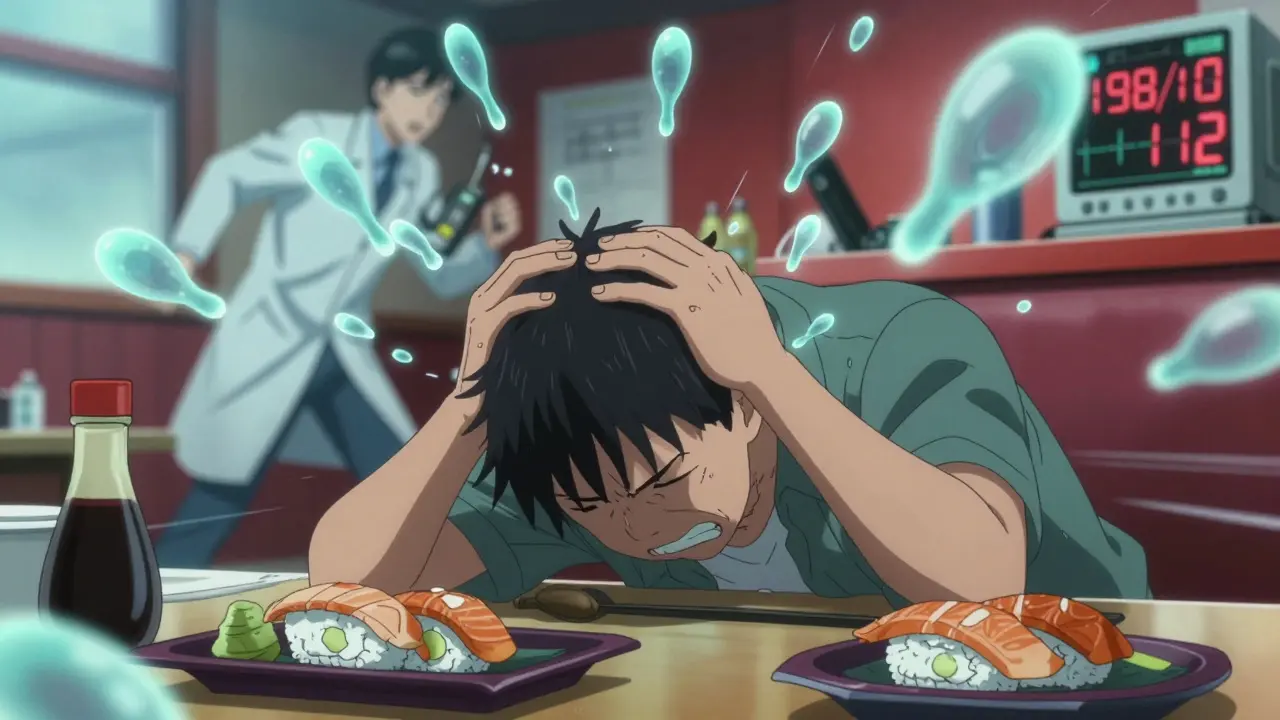
Some people think “organic” or “artisan” means safer. It doesn’t. In fact, traditional aging methods often produce higher tyramine levels. A 2023 Drugs.com user reported a hypertensive crisis after eating a Parmesan salad while on Nardil. Their blood pressure hit 198/112. They ended up in the ER with a headache they described as “worse than labor.”
Processed Meats and Other Hidden Sources
Cheese isn’t the only problem. Cured, smoked, and fermented meats are equally risky:- Dry sausages (summer sausage): 300-900 mcg/g
- Pepperoni: 200-600 mcg/g
- Salami: 150-500 mcg/g
- Bacon: 75-250 mcg/g
- Corned beef: 60-180 mcg/g
- Bologna: 50-200 mcg/g
Freshly cooked meats like grilled chicken, turkey, or beef are safe. But if it’s been cured, smoked, or aged-even if it’s labeled “natural” or “no nitrates added”-it likely contains tyramine. The same goes for fermented sauces: soy sauce (1,000-2,500 mcg/g), miso (800-2,000 mcg/g), and fish sauce (1,200-3,000 mcg/g). A tablespoon of soy sauce on stir-fry can contain more tyramine than a slice of cheddar.
What’s the Safe Threshold?
There’s no universal “safe” amount. For some people, 6 mg of tyramine triggers symptoms. For others, it takes 25 mg. That’s why guidelines say: avoid high-tyramine foods entirely. The NSW Agency for Clinical Innovation defines any serving under 6 mg as low risk, but warns that doses over 25 mg can cause emergencies. A single 30g serving of aged cheddar can easily exceed 20 mg. You can’t guess. You can’t taste it. You can’t tell by looking.One Reddit user, who’s been on MAOIs for five years, says their personal limit is 15g of aged cheddar. But they’re the exception. Most people don’t know their threshold until it’s too late. That’s why experts say: don’t test it.
How Long Do You Need to Stay on the Diet?
You might think once you stop the MAOI, you’re free to eat cheese again. Not true. The enzyme that breaks down tyramine doesn’t bounce back overnight. It takes 14 to 21 days for your body to fully recover. That means you must stick to the diet for two to three weeks after your last dose. Stopping the medication doesn’t mean the risk stops.
Real People, Real Consequences
In 2023, the GoodRx interaction tracker recorded 1,247 reports of MAOI-food reactions. Sixty-eight percent involved cheese. Twenty-two percent involved processed meats. The most common symptoms? Headache (92%), palpitations (76%), sweating (68%), and sensitivity to light (54%). Most cases occurred within 15 to 30 minutes of eating.One patient described it like this: “I had a sandwich with pepperoni. Within 20 minutes, my head felt like it was splitting open. My hands shook. I couldn’t breathe. I called 911.”
But it’s not all doom. Many people manage this safely. With education, planning, and tools, it’s doable. Some use the Mayo Clinic’s “MAOI Diet Tracker” app, which scans barcodes to flag high-tyramine products. Others keep a food diary, noting what they eat and their blood pressure readings. A dietitian can cut the learning curve from six weeks to just two or three.
What’s Changing? What’s Coming?
The food industry is starting to respond. Companies like Sargento now sell “MAOI-safe” fresh mozzarella cups labeled with tyramine levels under 20 mcg/g. In 2022, they made $14.7 million selling these products. The FDA requires warning labels on MAOI packaging. The EU mandates tyramine content on cheese labels. And research is moving fast.A NIH-funded trial (NCT05214387) is testing a supplement that helps break down tyramine before it enters the bloodstream. Early results look promising. In five years, scientists predict we might see genetically modified cheeses with 90% less tyramine-designed specifically for people on MAOIs.
But until then, the rule remains simple: if it’s aged, fermented, or cured-skip it. Fresh is safe. Processed is risky. And when in doubt, don’t eat it.
What to Do If You’re on an MAOI
- Stick to fresh cheeses: cottage, ricotta, cream cheese, fresh mozzarella.
- Choose freshly cooked meats-never cured, smoked, or aged.
- Avoid soy sauce, miso, fish sauce, and aged cheeses entirely.
- Read labels. Look for words like “fermented,” “cured,” “dry-aged,” or “traditional.”
- Carry an emergency card explaining your dietary restrictions.
- Monitor your blood pressure twice daily.
- Wait 2-3 weeks after stopping MAOIs before reintroducing high-risk foods.
This isn’t about being picky. It’s about survival. You can still enjoy meals. You can still eat well. You just need to know what’s safe-and what’s not.
Can I eat blue cheese if I only have a small amount?
No. Blue cheeses like Stilton or Gorgonzola contain 1,000-3,500 mcg of tyramine per gram. Even a small bite can deliver more than 25 mg-enough to trigger a life-threatening spike in blood pressure. There is no safe portion size for these cheeses if you’re on an MAOI.
Is fresh mozzarella safe to eat on MAOIs?
Yes. Fresh mozzarella made from pasteurized milk and eaten within days of production contains less than 25 mcg/g of tyramine. It’s considered safe. Avoid aged mozzarella or mozzarella stored in brine for long periods.
Do I need to avoid bananas and chocolate?
No. Bananas have less than 10 mcg/g of tyramine, and chocolate contains 50-150 mcg/g-well below dangerous levels. These foods were once wrongly restricted. Current guidelines from the NSW Agency for Clinical Innovation and Mayo Clinic confirm they’re safe in normal amounts.
What if I accidentally eat aged cheese?
If you experience sudden headache, chest pain, rapid heartbeat, or high blood pressure, seek emergency care immediately. Do not wait. Call 911 or go to the nearest ER. Bring your medication list. Tyramine reactions can escalate quickly-minutes matter.
Can I drink alcohol while on MAOIs?
Avoid alcohol entirely. Beer, red wine, and some liquors contain tyramine or can interfere with MAOIs. Even small amounts can raise blood pressure or cause dangerous reactions. If you’re unsure, skip it.


