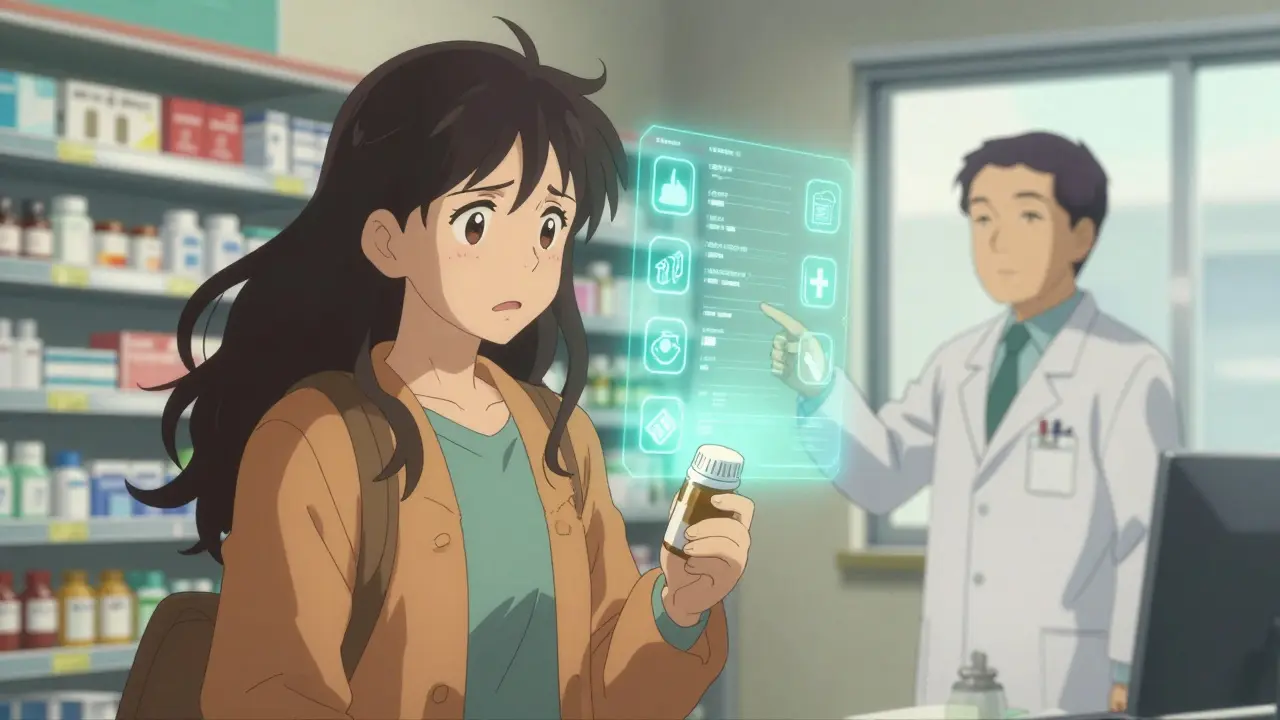
Starting a new medication can feel overwhelming. You’ve got a prescription in hand, maybe a handful of pills in a bottle, and a doctor’s voice echoing in your head: "Take this once a day." But what does that really mean? What if you miss a dose? What if the pill looks different than last time? What if you’re taking something else too? These aren’t just questions-they’re critical safety checks that can keep you out of the emergency room.
Why Medication Safety Matters More Than You Think
Every year in the U.S., over 1.3 million people end up in the emergency room because of problems with their medications. That’s not rare. That’s common. And nearly half of those cases happen because of simple mistakes-like taking the wrong dose, mixing pills that shouldn’t be mixed, or using an old bottle of antibiotics that expired last year. The good news? Most of these errors are preventable. Research from the Agency for Healthcare Research and Quality shows that following basic safety steps can cut your risk of a bad reaction by up to 50%. That’s not a guess. That’s backed by data from hospitals and pharmacies across the country. It’s not about being perfect. It’s about being aware. Even if you’ve never taken a prescription before, you can learn the rules that keep people safe. And you don’t need a medical degree to do it.The Six Rights of Taking Medication
Healthcare professionals use a simple checklist called the “Six Rights” to make sure medications are given correctly. You can use it too. It’s your personal safety net.- Right patient: Make sure the name on the bottle matches yours. If you’re picking it up at the pharmacy, double-check your birthdate or another ID detail. Mistakes happen when names are similar.
- Right medication: Look at the label. Is it the drug your doctor told you about? If the name looks unfamiliar, ask the pharmacist. Generic versions are common-they work the same but might look different.
- Right indication: Why are you taking this? Is it for high blood pressure? Pain? Infection? If you’re not sure, ask. Taking the wrong drug for the wrong reason can be dangerous.
- Right dose: Never guess. Don’t use kitchen spoons. They vary in size by up to 50%. Use the measuring cup, syringe, or dosing spoon that came with the medicine. If it didn’t come with one, ask the pharmacy for one.
- Right route: Is it meant to be swallowed, applied to the skin, inhaled, or injected? Swallowing a patch or putting eye drops in your ear can cause serious harm.
- Right time: Some meds need to be taken with food. Others must be taken on an empty stomach. Some work best in the morning. Others at night. Timing affects how well they work-and how safe they are.
Keep a Medication List-All of Them
Most people don’t realize they’re taking more than they think. You’re not just on your prescription. You’ve got vitamins, painkillers, herbal supplements, and maybe even over-the-counter sleep aids. All of them can interact. A 2022 study found that patients who kept a full list of everything they took had 27% fewer medication errors. That’s huge. Start a simple list: write down every pill, liquid, patch, or injection. Include:- The name (brand or generic)
- The dose (e.g., 10 mg, 5 mL)
- How often you take it (e.g., once daily, every 8 hours)
- Why you take it (e.g., "for blood pressure", "for allergies")
- Who prescribed it (doctor’s name)
Storage Isn’t Just About Keeping It Clean
Your medicine doesn’t just sit there. It’s alive-kind of. Heat, moisture, and light can break it down. And if it degrades, it might not work-or worse, it could make you sick.- Insulin: Must be refrigerated until opened. After that, it can stay at room temperature for up to 28 days.
- Most pills: Keep them in a cool, dry place. A bathroom cabinet? Bad idea. Humidity ruins them.
- Liquids and eye drops: Check the label. Some need refrigeration after opening. Others should be thrown away after 30 days, even if they’re not empty.
- Temperature limit: If your house gets hotter than 86°F (30°C), find a cooler spot. A bedroom drawer is better than a kitchen counter.
Never Ignore the Expiration Date
You’ve probably got a drawer full of old pills. Maybe antibiotics from last year’s cold. Maybe painkillers from a sprained ankle. Don’t use them. Merck’s 2023 safety report found that 18% of medication errors come from expired drugs. Antibiotics and liquid medicines degrade fastest. Taking them could mean your infection doesn’t clear-or worse, your body develops resistance. If you’re unsure whether a medicine is still good, don’t guess. Take it to your pharmacy. They’ll dispose of it safely for free.Ask Questions-Even If They Feel Stupid
Pharmacists are trained to help you understand your meds. But only 65% of patients actually ask them questions during a consultation, according to AHRQ. That’s a missed opportunity. Here are three questions you should ask every time you get a new prescription:- "What should I do if I miss a dose?" Only 22% of patients ask this. But the answer matters. Some meds you skip. Others you take as soon as you remember. Some you never double up. Don’t assume.
- "How should I store this?" Forty percent of medications have specific storage needs. If you don’t ask, you might ruin it.
- "What side effects should I watch for?" Not all side effects are bad. But some-like swelling, trouble breathing, or sudden dizziness-are red flags. Know what’s normal and what’s not.
Don’t Share Medications-Not Even With Family
Your grandma takes a pill for her arthritis. You have sore knees. Can you take one? No. The FDA says sharing meds causes 8% of emergency visits for bad reactions. Why? Because your body is different. Your weight, your other meds, your allergies-all of it matters. A dose that’s safe for someone else could be deadly for you. Even if it’s the same drug, the strength might be different. Or your condition might need a different approach. Never borrow. Never lend.Watch for Changes in Appearance
You’ve been taking a blue pill for months. Now it’s white. And smaller. Did you get the wrong thing? Chances are, you didn’t. About 90% of prescriptions in the U.S. are filled with generic versions. Generics work the same as brand names-but they look different. That’s legal. That’s normal. But if you notice a change in shape, color, or taste-and you didn’t get a new prescription-you should call your pharmacy. Ask: "Is this the same medicine?" Don’t take it until you’re sure.
Use Tools to Stay on Track
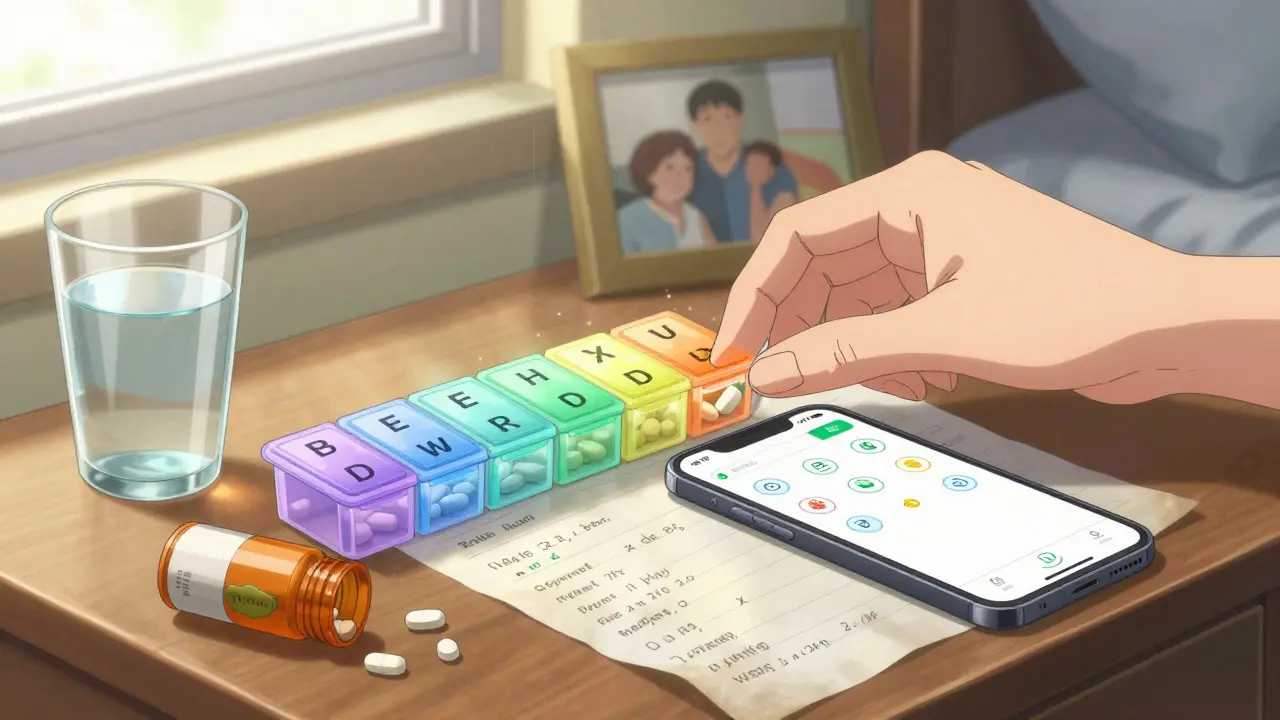
Remembering when to take pills is hard. Especially if you’re on more than one. A 2022 study found that people who used medication reminder apps like Medisafe or MyMeds improved their adherence by 28%. The best apps do more than just buzz. They scan barcodes to confirm you’re taking the right pill, show you what the drug does, and even alert you if a new med might interact with your current ones. If you don’t like apps, try this: set phone alarms. Put your pills in a pill organizer with morning, afternoon, evening, and night slots. Tape a note to your bathroom mirror: "Did I take my pill?" It takes most people 2 to 3 weeks to build a routine. Be patient. You’re learning.What to Do When You’re Leaving the Hospital
One in five medication errors happens right after you’re discharged. You get a stack of new prescriptions, maybe a change in dose, and you’re sent home with no clear instructions. Before you leave, ask:- "What meds have changed?"
- "What should I stop taking?"
- "What should I start taking?"
- "Can I get a written list of all my meds now?"
When to Call for Help
You’re not alone if you’re confused. But if you feel something’s wrong, don’t wait. Call your doctor or pharmacist right away if you notice:- Sudden swelling in your face, lips, or throat
- Difficulty breathing
- Unusual bruising or bleeding
- Severe dizziness or fainting
- Thoughts of self-harm or extreme mood changes


